


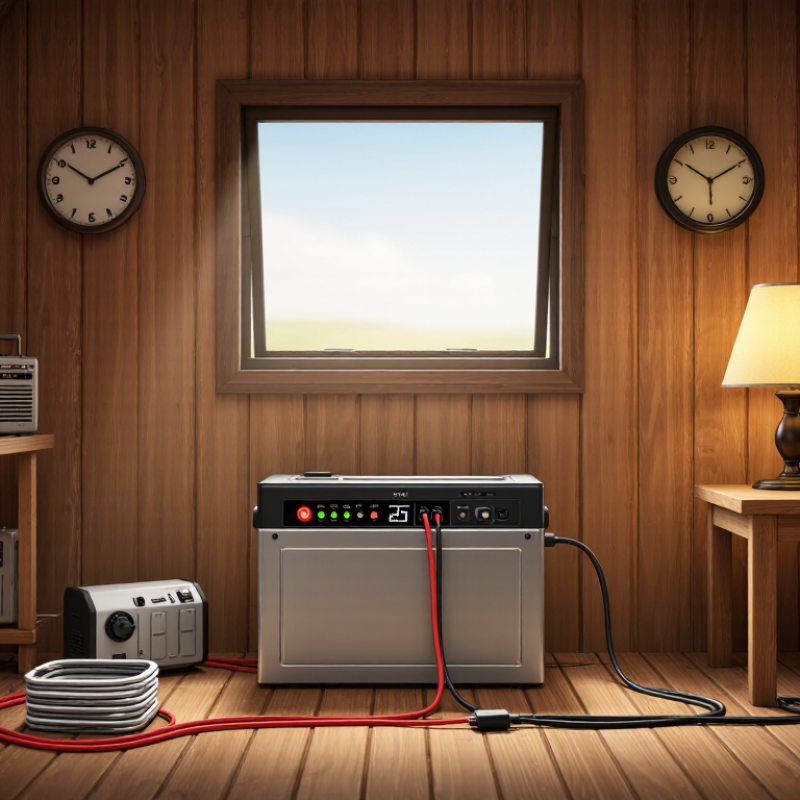
A Modified Sine Wave Inverter can be a practical choice when you need basic, off-grid AC power without paying for features your equipment may not require. It converts battery power into a stepped waveform for common household-style loads. Picture a small cabin setup: a battery, a compact inverter, and a lamp glowing beside a phone charger. For simple devices, that arrangement may be enough.
The important question is what you plan to connect. Many lamps, heaters, and basic chargers can work with modified sine wave output, but compatibility varies. Some motors may run noisier or warmer, while sensitive electronics can behave unpredictably. Check each device’s manual and the inverter’s specifications before buying. Pay attention to continuous wattage, startup surges, battery voltage, and protection features. Small details matter.
Not every load fits. That distinction is easy to miss.
A pure sine wave inverter may be the safer option for equipment that requires a smoother waveform, including some medical, audio, or variable-speed devices. The right choice depends on the actual load, not just the price tag or wattage printed on the box. Efficiency also changes with operating conditions, so real-world performance may differ from a simple estimate. A Modified Sine Wave Inverter can offer useful value for compatible, straightforward applications. It is not a universal solution, and that limitation deserves an honest look before purchase.
A modified sine wave inverter converts DC power from a battery into AC power using stepped voltage levels. Instead of a smooth sine-shaped curve, its output rises and falls in distinct stages. The waveform may look like a small staircase on an oscilloscope. The term “modified” can sound reassuring, but it does not mean the output matches utility power. Not quite. The exact waveform and its distortion vary by inverter, so check the manufacturer’s specifications rather than relying on the name alone.
This matters because some devices respond poorly to the extra harmonics in a stepped waveform. Motors may hum or run hotter, while certain chargers, audio equipment, and timing-sensitive electronics may behave unpredictably. IEEE 519-2022 recommends a voltage total harmonic distortion limit of 5% at the point of common coupling for systems from 120 V to 69 kV. That standard concerns power-system conditions at that connection point; it is not a pass-or-fail rating for a standalone inverter. For a practical check, compare the inverter’s stated waveform and compatibility guidance with the appliance manual. A lamp may work perfectly, while a motor beside it may not. That distinction is easy to overlook.
| Comparison Dimension | Modified Sine Wave Inverter | Pure Sine Wave Inverter |
|---|---|---|
| What it is | Produces a stepped approximation of AC power, with changes in voltage level rather than a smooth sinusoidal waveform. | Produces an AC waveform that closely follows a smooth sine wave. |
| Typical reason to choose it | Can be a practical, lower-cost option for basic loads that are confirmed to work with the inverter’s output. | Often preferred when equipment needs cleaner AC power or broad compatibility. |
| Potentially suitable loads | Some simple resistive loads, such as basic incandescent lighting or heating elements, may operate satisfactorily if their voltage and power requirements are met. | Suitable for a wider range of loads, subject to the inverter’s continuous and surge ratings. |
| Sensitive electronics | Compatibility varies. Some computers, audio equipment, and devices with electronic power supplies may buzz, run poorly, or fail to operate correctly. | Generally the safer choice for sensitive electronics, but check the device and inverter specifications. |
| Motors and transformers | Some motor-driven appliances may run hotter, make more noise, or perform less efficiently. Starting loads can also require substantial surge capacity. | Usually provides more suitable power for many AC motors and transformers, provided its ratings are adequate. |
| Chargers and control circuits | Some chargers and electronically controlled devices may be incompatible; consult the device manufacturer’s guidance. | Typically offers broader compatibility, although some equipment still has specific input requirements. |
| Efficiency considerations | Actual efficiency depends on the inverter and connected load. A stepped waveform can increase losses in some equipment. | Actual efficiency also depends on the inverter and load; a smoother waveform may reduce losses for some appliances. |
| How to decide | Choose only after checking the load’s waveform compatibility, operating wattage, starting surge, and required AC voltage and frequency. | Consider it when compatibility is uncertain or when equipment instructions specify sine-wave power. |
Note: Performance and compatibility vary by inverter design and appliance. Check the manuals and ratings for both before connecting a device.
It converts battery DC power into AC using stepped voltage levels. The output looks like a small staircase, not a smooth curve.
Electronic switches rapidly change the voltage’s polarity, often leaving brief zero-voltage intervals. The edges are abrupt.
Many simple lamps work normally, and basic heating elements may also be suitable. Check the appliance label and inverter limits.
Some motors may buzz, run hotter, or draw extra power when starting. A quiet fan might still sound different.
Some chargers and televisions work, but results vary. A device turning on does not prove it is a good match.
Sensitive audio equipment, variable-speed appliances, and some medical devices may require a pure sine wave. Follow the device manual.
Continuous capacity covers normal operation. Surge capacity handles brief startup demand, which can be several times a motor’s usual draw.
Connect one noncritical device at a time. Watch for unusual heat, noise, or unreliable timing, and stop if anything seems wrong. I’d still be cautious.
A Modified Sine Wave Inverter converts direct-current power from a battery or other source into alternating-current power for compatible devices. Instead of producing a smooth sine-shaped output, it creates a stepped waveform. This design can make the inverter a practical, straightforward option for basic power needs, but compatibility depends on the equipment being used.
It can generally run simple devices such as some lights, chargers, and basic appliances, while sensitive electronics, motors, or equipment that requires a stable waveform may work inefficiently, make extra noise, or need a different inverter type. Its advantages may include a lower cost and simple operation; its limitations include reduced compatibility and potential performance issues. When choosing one, consider the devices’ wattage and startup requirements, the inverter’s continuous and peak ratings, input voltage, safety features, and whether its output suits the intended equipment.

