Explore engineered DC-to-AC power conversion platforms for off-grid, mobile C&I, and utility-interactive systems.
The global transition toward decentralized microgrids, resilient Commercial & Industrial (C&I) backup architectures, and off-grid electrification has reshaped procurement paradigms for power conversion hardware. Among these, the Split Phase Inverter stands out as an indispensable engineering component specifically designed to satisfy North American (NEC) electrical standards and dual-voltage international installations.
Operating primarily across a 120V/240V AC split-phase topology (comprising two 120V live lines out of phase by 180 degrees and a shared neutral), these advanced inverters enable enterprise buyers, OEM system integrators, and engineering procurement teams to deploy unified energy storage solutions capable of powering simultaneously standard 120V branch circuits and high-draw 240V heavy machinery (such as HVAC units, well pumps, industrial compressors, and EV charging stations).
As a leading international exporter and manufacturer of specialized power electronics, our production protocols prioritize operational longevity, extreme thermal resilience, and galvanic isolation. This technical brief details the technological roadmap, industrial engineering standards, and strategic procurement frameworks governing modern split phase power conversion devices.
Understanding the fundamental electrical differences between single-phase, three-phase, and split-phase topologies is vital for project engineering compliance. A true split phase inverter generates two AC outputs (L1 and L2) referenced to a central Neutral wire (N). The phase angle displacement between L1-N and L2-N is precisely 180 electrical degrees.
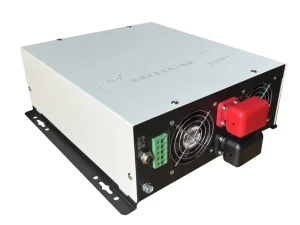
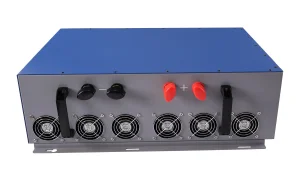
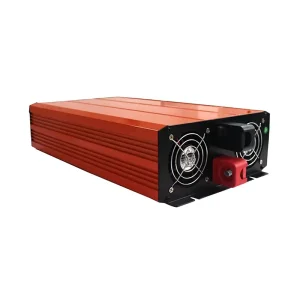
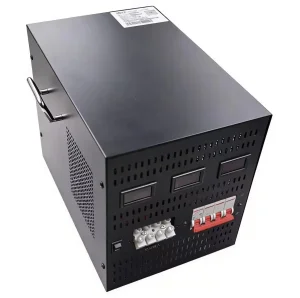
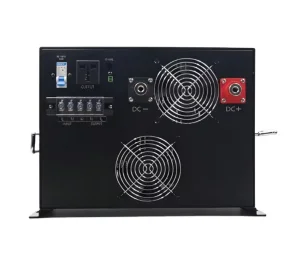
Utilizes heavy-duty copper toroidal transformers to provide robust galvanic isolation between DC battery banks and AC loads. Highly recommended for heavy inductive loads due to unmatched surge absorption capabilities during motor start-ups.
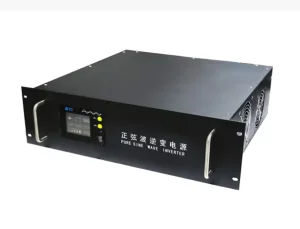
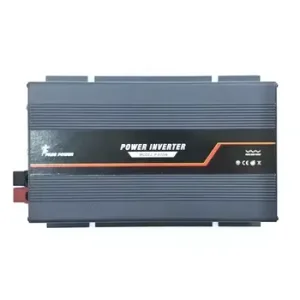
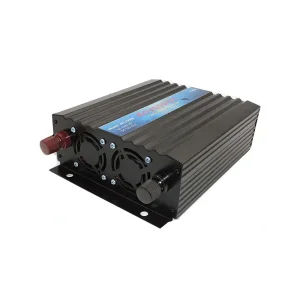
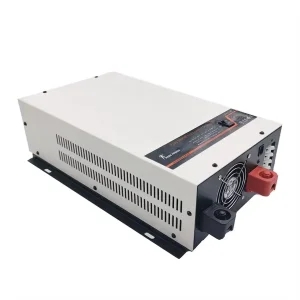
Employs high-speed Digital Signal Processors (DSP) paired with advanced IGBT/MOSFET switching stages. Ideal for space-constrained installations, mobile command units, and high-density rack systems.
| Performance Vector | Industrial Low-Frequency Split Phase | High-Frequency Modular Split Phase | Standard Single Phase (230V) |
|---|---|---|---|
| Nominal Output Voltage | 120V / 240V AC (L1-N-L2) | 120V / 240V AC (L1-N-L2) | 230V AC Single Line |
| Phase Angle Displacement | 180° ± 0.5° | 180° ± 0.1° (DSP Controlled) | N/A |
| Peak Surge Capability | 300% Nominal (Up to 20s) | 150-200% Nominal (100ms) | 150% Nominal |
| Galvanic Isolation | Full Copper Toroidal Transformer | Electronic / High-Freq Transformer | Optional External Transformer |
| THD (Linear vs Non-Linear) | < 3% Linear Load | < 2% Pure Sine Wave | < 3% Standard |
| Target Application | Off-Grid C&I, Motors, Heavy Pumps | Solar Storage, Telecom Racks, RVs | European / Asian Domestic Grid |
Global demand patterns for split phase inverter products vary according to local grid stability, commercial transport needs, and renewable energy mandates. Our enterprise export programs serve four main global commercial sectors:
Microgrids integrated with commercial solar arrays require split phase inverters to bridge high-capacity lithium iron phosphate (LiFePO4) battery banks with existing building distribution panels without re-balancing phases.
Emergency medical vehicles, mobile broadcast centers, and luxury overland vehicles utilize split phase platforms to run medical compressors, HVAC systems, and high-grade AV machinery on the move.
Remote cell towers and relay stations rely on rack-mounted split phase units offering extreme operating temperature ranges (-20°C to +50°C) alongside seamless dual-bus AC transfer switching.
Purchasing split-phase systems directly from ISO 9001:2015 certified production lines guarantees total compliance with international electrical codes. We supply fully customizable firmware settings for voltage threshold cutoffs, charge profile curves (AGM, GEL, LiFePO4, NMC), and MODBUS/CAN-bus protocol integration for centralized SCADA monitoring.
As smart grids become more interconnected, split-phase inversion platforms are evolving beyond simple off-grid energy converters. Next-generation architectures prioritize intelligent power routing, grid-forming capabilities, and ultra-wide DC input voltage ranges.
Transitioning from traditional silicon MOSFETs to Wide Bandgap (WBG) Silicon Carbide (SiC) power switches allows our split phase inverters to operate at triple the switching frequencies with reduced switching losses, driving thermal dissipation down by 35% and overall weight down by 20%.
Unbalanced neutral line loads have historically caused voltage distortion on split-phase systems. Our proprietary firmware employs real-time DSP cycle monitoring to actively correct voltage drops on unevenly loaded L1 or L2 legs, maintaining tight output regulation under 100% unbalanced load conditions.
Navigating international market access mandates rigorous product compliance. Our split-phase products undergo multi-stage testing, including high-potential dielectric withstand tests, full-load burn-in at elevated ambient temperatures, and strict electromagnetic compatibility (EMC) screening.
Products are engineered to align with CE, RoHS, SGS, and FCC Class B directives. Systems engineered for North American export incorporate UL 1741 SA/SB grid-tie safety compliance frameworks.
Complete flexibility over hardware specifications: customized DC inputs (12V/24V/48V/96V/380V), output socket types, chassis colorways, brand labeling, and specialized LCD display user interfaces.
Robust component sourcing featuring Tier-1 electrolytic capacitors, Japanese microcontrollers, and high-purity copper windings to ensure predictable factory lead times and zero-defect target rates.
Detailed technical answers to common queries submitted by industrial distributors, procurement leads, and microgrid integrators.
Explore our complete export line up of low-frequency transformers, rack-mount conversion units, and high-amp intelligent chargers.