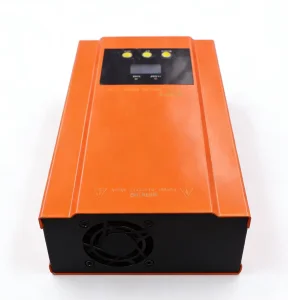
Direct factory-engineered MPPT solar charge controllers, hybrid inverters, and intelligent battery chargers customized for harsh commercial and industrial environments.
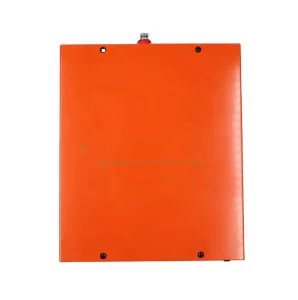
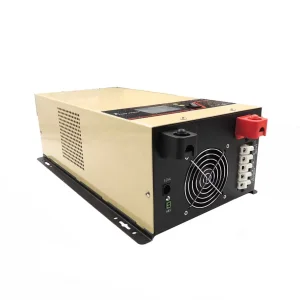
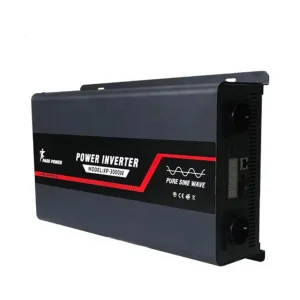
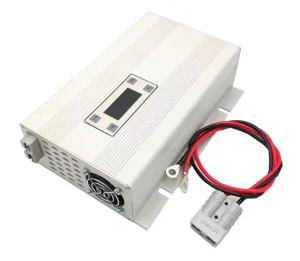
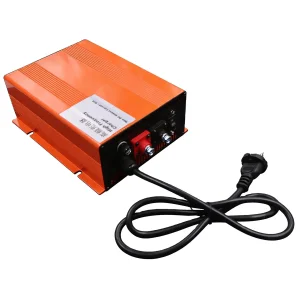
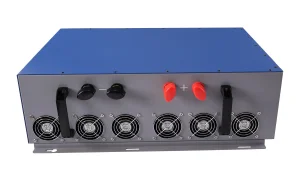
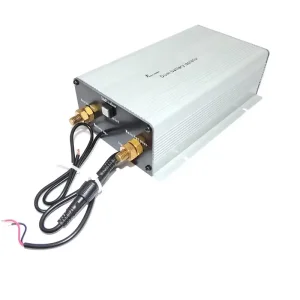
As global energy transitions accelerate, solar PV harvesting efficiency has evolved from a passive consideration into a critical metric driving return on investment (ROI) across utility, industrial, and off-grid solar deployments.
The global market for Maximum Power Point Tracking (MPPT) solar charge controllers is undergoing structural transformation. Traditionally dominated by basic Pulse Width Modulation (PWM) regulation, modern off-grid energy storage systems (BESS), industrial telecommunications microgrids, and remote agricultural pumping infrastructure now mandate advanced digital MPPT control topologies. By dynamically calculating the Maximum Power Point along the voltage-current ($I-V$) curve, state-of-the-art MPPT algorithms extract up to 30% more usable energy from photovoltaic strings compared to legacy PWM units under identical irradiance levels.
In high-voltage commercial applications—ranging from 150V to 600V PV Voc string arrays—the efficiency of the MPPT tracking mechanism directly dictates battery lifecycle, thermal stress on power electronics, and total system levelized cost of energy (LCOE). Global procurement managers, system integrators, and OEM distributors require charge controllers engineered with high-speed DSP (Digital Signal Processing) architectures, ultra-fast sweep speeds under multi-peak shading conditions, and industrial-grade galvanically isolated communications.
Understanding the hardware engineering and mathematical precision behind industrial-grade Maximum Power Point Tracking.
Unlike simple Perturb & Observe (P&O) loops that continuously oscillate around the peak power point, our multi-core processors execute Incremental Conductance ($\mathrm{d}P/\mathrm{d}V = 0$). This guarantees instantaneous lock-on during rapid atmospheric cloud cover transitions, eliminating power loss spikes.
When partial shading from trees, structures, or dust creates multiple local power peaks on panel strings, standard controllers get trapped at suboptimal voltage points. Our controllers scan the entire $I-V$ curve within milliseconds to identify the true global peak power point.
By replacing standard power diodes with ultra-low $R_{DS(on)}$ MOSFET power switches, internal thermal dissipation is cut by over 60%. This dual-phase synchronous buck technology guarantees up to 98.2% peak DC-DC efficiency even under full 100A output loads.
Supporting solar array Voc inputs up to 150V, 250V, and 500V DC allows EPC installers to connect more PV modules in series. High voltage series strings minimize cable gauge requirements, reduce line voltage drop ($I^2R$ losses), and simplify combiner box routing.
How our integrated Suzhou production base delivers unrivaled cost-efficiency, strict ISO9001 quality control, and rapid custom engineering turnarounds.
China's power electronics ecosystem represents the world's most concentrated supplier network for wide-bandgap semiconductors, custom magnetic transformers, and extruded aluminum heat sinks. Operating at the core of this industrial cluster, our manufacturing facilities harness massive economies of scale to deliver enterprise-grade MPPT hardware at competitive price points.
Quality reliability is enforced through fully automated High-Speed SMT surface-mount lines, automated optical inspection (AOI), conformal coating application for humidity/salt-mist protection, and mandatory 100% full-load thermal burn-in testing at $50^\circ\mathrm{C}$ ambient temperatures before dispatch.
| Engineered Feature | Standard Market Spec | Our Factory Output |
|---|---|---|
| Tracking Speed | 1.5s – 3.0s | < 15 milliseconds |
| Max PV Voc Input | 100V – 150V | Up to 500V DC Series |
| BMS Auto-Wakeup | Manual reset required | Lithium 0V Auto Activation |
| Parallel Stacking | Not supported | Up to 12 Units Parallel (CAN) |
| Operating Temp Range | -20°C to +40°C | -30°C to +65°C Industrial |
| OEM Custom Branding | MOQ > 1,000 Units | Low MOQ Flexible Program |
Field-proven MPPT controller deployment architectures designed to meet distinct regional and operational electrical constraints.
Remote off-grid BTS stations demand uninterrupted 48V DC power under ambient temperatures exceeding $50^\circ\mathrm{C}$. Our heavy-duty MPPT controllers integrate Modbus SNMP monitoring for remote grid telemetry, eliminating generator fuel expenses and reducing site visits by 80%.
Dynamic motor start-up surges require specialized MPPT controllers with direct VFD (Variable Frequency Drive) communication. Designed for deep-well irrigation, our units dynamically adjust PV voltage to compensate for sudden cloud cover without tripping pump protection relays.
Mobile power systems require ultra-compact form factors and silent natural cooling. Our dual-battery isolated MPPT charge controllers route excess solar power to maintain both auxiliary house lithium banks and starter lead-acid batteries simultaneously.
Village microgrids utilize 96V, 192V, and 384V DC bus voltage architectures. Our high-voltage MPPT controllers enable efficient centralization of solar arrays, reducing copper wiring costs across multi-household off-grid energy storage networks.
Anticipating technological shifts in power electronics topology, semiconductor material science, and edge-AI integration.
Transitioning from traditional Silicon MOSFETs to GaN power devices elevates switching frequencies beyond 500 kHz. This yields a 40% reduction in physical inductor enclosure size, higher thermal thresholds, and peak conversion efficiencies approaching 99.1%.
Integrating onboard machine learning models allows MPPT charge controllers to predict weather patterns, learn historical cloud motion behaviors, and preemptively optimize $I-V$ tracking curves, maximizing daily energy yield by an additional 4-7%.
Future MPPT platforms are shifting from unidirectional solar-to-battery charging toward multi-port bidirectional power routers. This enables seamless Vehicle-to-Grid (V2G), direct DC bus coupling, and high-frequency active cell balancing.
Next-gen controllers feature embedded cellular eSIM and TLS 1.3 encrypted Modbus communication directly to cloud platforms, allowing automated predictive maintenance alerts and remote over-the-air (OTA) firmware enhancements.
A strategic evaluation matrix for B2B buyers, EPC contractors, and brand owners seeking high-reliability manufacturing partners.
Verify factory testing protocols. A trustworthy manufacturer must provide thermal imaging camera reports under 100% continuous rated load, proving heat sink hotspots do not exceed MOSFET junction limits ($T_J < 105^\circ\mathrm{C}$).
Ensure full certification compliance including CE (EN62109-1, EN61000-6-1/3), RoHS hazardous material compliance, FCC Class B, and ISO 9001 quality management verification for seamless customs clearance.
Audit the Bill of Materials (BOM). Premium controllers utilize Japanese 105°C long-life electrolytic capacitors (Nichicon/Rubycon), STMicroelectronics/Infineon MOSFETs, and Texas Instruments DSP processors.
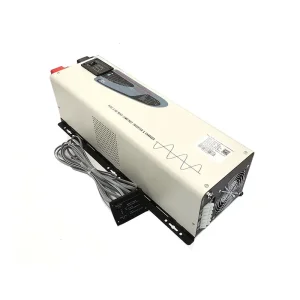
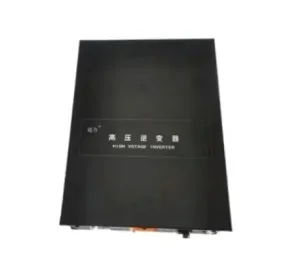
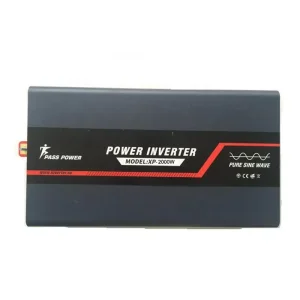
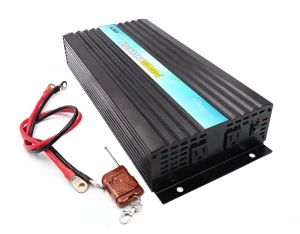
Explore our full portfolio of low frequency pure sine wave inverters, high-voltage vehicle power converters, split-phase power systems, and intelligent multi-stage smart battery chargers.
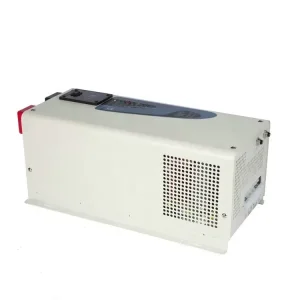
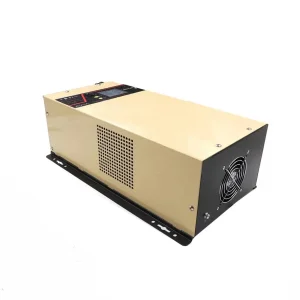
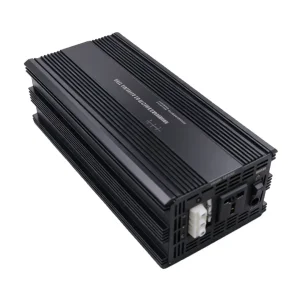
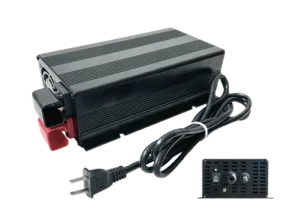
In-depth answers to core engineering, installation, and procurement questions compiled by our senior power electronics R&D team.
A PWM (Pulse Width Modulation) controller acts as a mechanical switch connecting the solar array directly to the battery. This forces the solar panel voltage down to match the battery voltage, wasting significant excess solar panel potential. In contrast, an MPPT (Maximum Power Point Tracking) controller operates as a highly efficient DC-DC converter. It measures the panel's optimal voltage ($V_{mp}$) and current ($I_{mp}$), converts higher PV voltage into higher charging current, and yields 15% to 30% more energy harvest under real-world conditions.
Solar panel open-circuit voltage ($V_{oc}$) increases inversely with ambient temperature based on the panel's temperature coefficient of voltage ($\beta_{Voc}$). In freezing environments (e.g., $-20^\circ\mathrm{C}$), string $V_{oc}$ can rise 10% to 15% above its STC ($25^\circ\mathrm{C}$) rating. Ensure that the total series panel string $V_{oc}$, multiplied by the cold temperature safety factor, never exceeds the controller's absolute maximum input voltage specification (e.g., 150V, 250V, or 500V DC) to prevent permanent MOSFET breakdown.
Yes. Our industrial MPPT controllers feature dedicated Lithium charge profiles with fully customizable Absorption Voltage, Float Voltage, and Low-Temperature Charging Cutoff options. Furthermore, if a Lithium Battery Management System (BMS) enters a low-voltage protection state and disconnects output, our controllers feature a 0V Battery Activation function that supplies a gentle constant-voltage pulse to reset the BMS and restore normal charging automatically.
Our MPPT controllers feature automatic current-limiting protection. If the connected solar array capacity exceeds the maximum rated charging power (for example, connecting a 1500W PV array to a 1000W rated controller), the internal algorithm dynamically moves the operating point off $V_{mp}$ to clamp charging current to its maximum rated rating (e.g., 60A). As long as the array's $V_{oc}$ does not exceed the controller's limit, moderate overpaneling improves low-light early morning and late afternoon harvesting efficiency without damaging the hardware.
As a direct factory exporter, we provide comprehensive white-label and ODM customization including custom aluminum enclosure extrusion colors, laser-engraved logos, custom LCD display graphics, non-standard DC input voltage ranges (e.g., 36V, 72V, 96V, 384V DC), custom Modbus/CAN communication protocols, tailored PC software, and specialized export packaging compliant with international distribution standards.
For large-scale energy storage installations, up to 12 of our MPPT units can be linked via an integrated CAN-bus network. In a synchronized master-slave architecture, the master controller measures battery state of charge (SoC) and temperature, broadcasting real-time phase commands to all slave controllers. This prevents individual units from premature transition to float charge, ensuring uniform multi-unit current delivery and maximizing battery bank lifespan.