


Factory-direct smart chargers, high-frequency pure sine wave inverters, and hybrid energy systems engineered for maximum conversion efficiency.
Navigating the global transition from traditional lead-acid chemistries to high-density LiFePO4 energy storage systems.
In an era defined by rapid energy transition, electrification of mobile assets, and decentralization of power generation, stages battery charger factories stand at the critical intersection of chemical energy storage and power electronics reliability. Modern industrial equipment, electric transport fleets, marine yachts, off-grid telecommunications stations, and residential solar energy storage systems demand sophisticated DC charging topologies. Legacy constant-voltage or linear single-stage charging methods fail to meet the thermal, mechanical, and electro-chemical constraints of modern energy storage chemistries, often causing accelerated plate sulfation in lead-acid batteries or dendrite formation and thermal runaway risks in lithium-ion (LiFePO4/NMC) packs.
Advanced multi-stage battery charging—ranging from standard 3-stage algorithms to fully micro-controlled 7-stage and 8-stage intelligent profiles—implements real-time closed-loop pulse-width modulation (PWM) and phase-shifted full-bridge DC-DC transformation. By continually sensing battery internal impedance, temperature, open-circuit voltage, and dynamic current absorption, automated multi-stage chargers optimize energy transfer efficiency beyond 95%, reduce active thermal dissipation, and extend battery operational lifespan by up to 300%.
Global logistics networks, automated guided vehicles (AGVs), and commercial electric support vehicles require ruggedized, wide-voltage input chargers capable of fast DC replenishment while maintaining battery health across high cycle counts.
Industrial deployments in sub-zero mining sites or high-ambient desert installations require real-time temperature-compensated charging profiles to prevent overcharging or electrolyte freeze-up.
Seamless synchronization between solar photovoltaic (PV) array MPPT controllers, AC grid inputs, and backup generator power ensures continuous power availability in mission-critical applications.
An engineering analysis of pulse-width modulated stage transitions for Lead-Acid, AGM, Gel, and LiFePO4 battery banks.
To appreciate the industrial value offered by top-tier stages battery charger manufacturers, electrical engineers must evaluate the precise electrochemical progression during a multi-stage charge cycle. Each stage serves a dedicated physical objective—from breaking down lead sulfate crystals during desulfation to precisely balancing lithium cell voltages via active communication with the Battery Management System (BMS).
| Stage Phase | Operational Name | Electrical Characteristics | Target Electrochemical Outcome |
|---|---|---|---|
| Stage 1 | Desulfation / Soft Start | Pulsed High-Voltage Low Current (10-20% I-max) | Breaks down lead-sulfate buildup on aged plates; pre-conditions deeply discharged cells. |
| Stage 2 | Bulk Charging (Constant Current) | Maximum Constant Current (100% I-max), Ramp V | Rapidly restores 80% state of charge (SOC) with minimal thermal degradation. |
| Stage 3 | Absorption Phase (Constant Voltage) | Constant Target Absorption Voltage, Current Decays | Fully tops off chemical saturation up to 98% SOC without gas venting or overheating. |
| Stage 4 | Battery Analysis / Diagnostic | Zero Current Input, Voltage Drop Monitoring | Tests self-discharge rate and verifies structural integrity/shorted cells before float. |
| Stage 5 | Equalization / Recondition | Controlled Controlled Current, High Voltage Ramp | Removes acid stratification in flooded lead-acid batteries; balances passive cell potentials. |
| Stage 6 | Float Charging (Maintenance) | Reduced Constant Voltage (13.5V-13.8V for 12V system) | Indefinitely counters internal self-discharge while powering continuous DC loads. |
| Stage 7 | Pulse Maintenance / Storage Phase | High-Frequency Pulse Injections at Low Voltage | Keeps idle batteries at 100% capacity over winterization/storage with minimal grid draw. |
| Stage 8 | LiFePO4 BMS Wake-Up & Balance | Precision Low-Voltage Pulse Signal Activation | Resets tripped lithium BMS protective circuits and balances series-connected cells. |
Consists of Bulk, Absorption, and Float phases. Ideal for standard industrial SLA and AGM battery installations where robust, straightforward automatic replenishment is required without high software overhead.
Incorporates desulfation, soft start, analysis, recondition, and active pulse topping. Designed for high-performance automotive recovery, premium RV power hubs, and extended seasonal storage.
Eliminates the absorption maintenance stress required by lead-acid. Switches directly from constant current bulk to a precise voltage cut-off, preventing lithium plating and cathode degradation.
Inside our ISO 9001:2015 certified production facility: Advanced SMT assembly, automated testing rigs, and rigorous aging procedures.
As a leading stages battery charger factory, our manufacturing footprint utilizes high-speed Surface Mount Technology (SMT) lines combined with automated optical inspection (AOI) to eliminate soldering defects on high-frequency switcher mainboards. Every unit undergoes 100% full-load high-temperature burn-in testing inside isolated environmental chambers prior to final packaging.
We collaborate with international automotive manufacturers, marine system integrators, and industrial brands to develop tailored power products.
From rugged overland expedition rigs to heavy industrial logistics, our charger architectures adapt to demanding environments.
Fast portable 12V/24V car battery chargers with dynamic LCD telemetry, ideal for automotive service centers, fleet maintenance hubs, and roadside emergency response units requiring high amperage recovery.
Dual and triple-bank multi-stage chargers equipped with spark-proof connection circuits, moisture protection, and galvanic isolation to eliminate hull corrosion while topping off house and starter batteries.
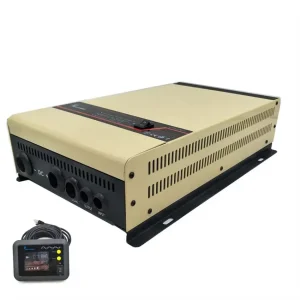
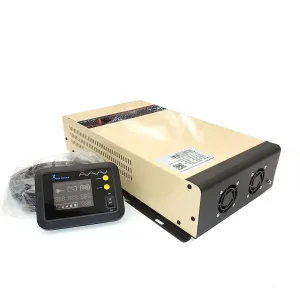
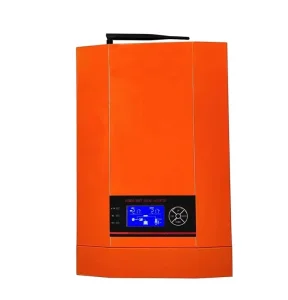
Hybrid inverter-charger units featuring integrated high-efficiency MPPT charge controllers and automatic generator starting triggers for uninterrupted residential and commercial off-grid microgrids.
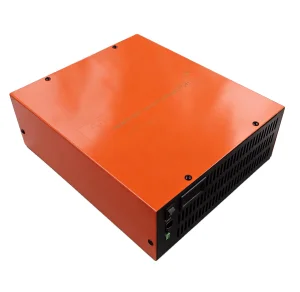
Low-frequency power inverter-chargers with rapid transfer times (<8ms), sustaining critical life-support medical devices, emergency lighting, and mobile power tools under heavy surge loads.
Heavy-duty multi-stage battery chargers designed for 24V/36V/48V warehouse forklifts, floor scrubbers, and automated warehouse robotics operating on tight 24/7 charging schedules.
Rack-mounted high-frequency inverter-chargers engineered for 48V DC telecom shelters, delivering ultra-clean pure sine wave output and remote network management SNMP protocols.
Pioneering wide bandgap semiconductors, AI-driven diagnostics, and bidirectional V2G charging topologies.
Transitioning from traditional silicon MOSFETs to GaN and Silicon Carbide (SiC) semiconductors allows switching frequencies above 500kHz. This shrinks magnetic transformer sizes by 40% while pushing power conversion efficiency past 97%.
Integrating IoT Wi-Fi/4G modules directly into stages battery chargers enables real-time predictive algorithm modeling. System operators receive early warnings regarding cell degradation, thermal hotspots, and impending battery failure.
Developing bidirectional DC-AC converter modules capable of feeding stored battery energy back into the municipal grid or home load panel during peak utility pricing periods, turning passive energy storage into an active revenue asset.
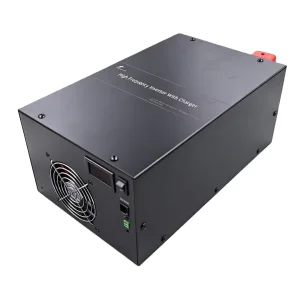
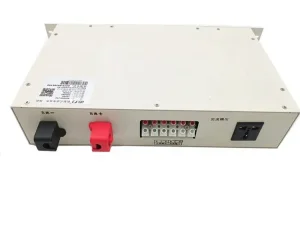
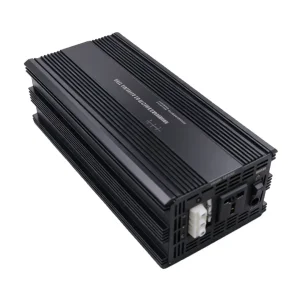
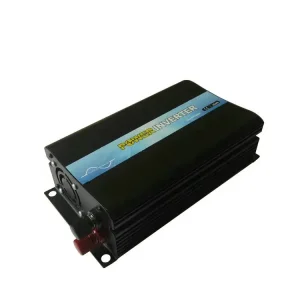
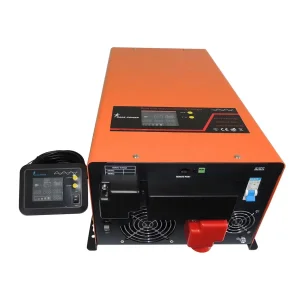
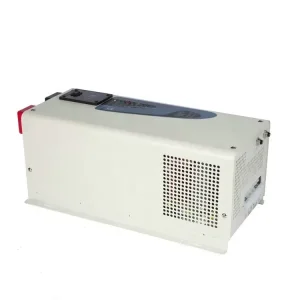
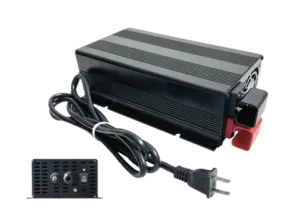
Explore our complete range of pure sine wave inverters, off-grid low frequency units, rack-mounted chargers, and hybrid solar converters.
Expert answers to technical procurement, system integration, and charging algorithm selection inquiries.
Constant-voltage chargers continuously force amperage into a battery regardless of its electrochemical saturation state. This leads to thermal runaway, electrolyte boiling, plate warping, and severe capacity loss. A stages battery charger dynamically alters voltage and current across multiple operational phases (e.g., Bulk, Absorption, Float, Equalization), maximizing energy uptake while preserving the internal chemistry and extending overall battery operational lifespan up to 300%.
An 8-stage intelligent charger incorporates dedicated Desulfation and Recondition phases. During Desulfation, high-frequency voltage pulses penetrate hardened lead-sulfate crystals that build up on plates when batteries remain discharged. Once dissolved back into the liquid electrolyte, a controlled Soft Start phase slowly introduces DC current before initiating standard bulk fast charging.
Yes. Premium stages battery chargers feature selectable charging profiles. While lead-acid batteries require prolonged absorption and float maintenance stages to counteract self-discharge, LiFePO4 batteries require a constant current/constant voltage (CC/CV) profile with strict voltage cut-offs and zero float pressure to prevent lithium metallic plating. Selectable modes adjust microprocessor thresholds accordingly.
Our OEM/ODM capabilities encompass custom AC input ranges (90V-264V AC), tailored DC output voltages (12V through 72V DC), customizable current limits, integrated communication protocols (CAN-bus, RS485, Modbus), proprietary LCD digital user interface designs, custom metal/plastic enclosures, and private label branding.
Our manufacturing facilities operate under strict ISO 9001:2015 quality control systems. Individual product lines hold CE, RoHS, CB, and SGS compliance certificates, satisfying international safety standards including IEC 60335-2-29 for battery chargers and EN 62109-1/2 for solar power inverters.
High-frequency inverter-chargers utilize electronic switching circuits and compact transformers, offering lightweight, highly efficient operation ideal for electronics, mobile setups, and telecommunications. Low-frequency units utilize heavy copper toroidal transformers, delivering massive surge capacity (up to 300% rated capacity for 20 seconds) required to start inductive motor loads such as air conditioners, air compressors, and heavy power tools in harsh mobile environments.
