Industrial-grade pure sine wave low frequency & high frequency inverters, multi-stage smart battery chargers, and automatic battery isolators.
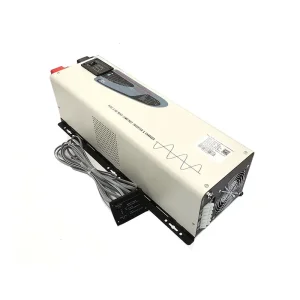
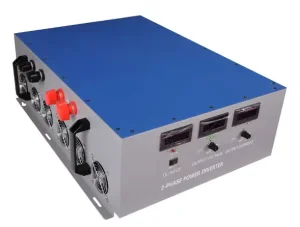
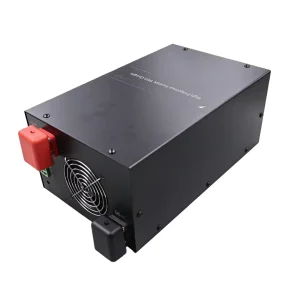
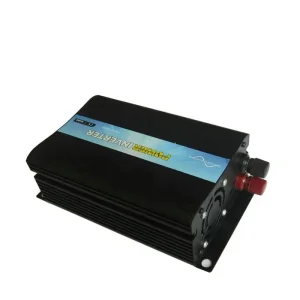
Understanding the fundamental magnetic and semiconductor design choices that dictate durability, surge rating, and thermal management in mission-critical applications.
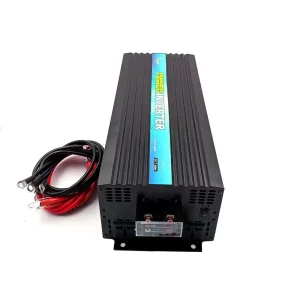
In global B2B energy storage, emergency vehicle outfitting, and off-grid power distribution, selecting between low frequency inverter factories and high-frequency alternatives represents a foundational engineering decision. A low frequency inverter relies on a heavy-duty line-frequency magnetic component—typically a custom-wound toroidal transformer—to boost AC voltage directly from low-voltage DC buses (12V, 24V, 48V, or 96V DC) to standard utility voltages (110V/120V/220V/230V/380V AC). This classic design offers unmatched mechanical robustness, galvanic isolation, and extreme peak surge tolerance.
Conversely, high-frequency inverters utilize multi-stage pulse-width modulation (PWM) and switch-mode high-frequency transformers to step up DC voltage before converting it to AC via an H-bridge output. While high-frequency units deliver superior power density and reduced physical mass, low-frequency topologies remain indispensable across industrial, marine, EMS, and remote telecommunication environments where inductive motors, heavy power tools, and air conditioning compressors generate immense initial lock-rotor currents.
Modern low frequency inverter factories leverage advanced grain-oriented silicon steel toroidal cores over traditional E-I laminated cores. Toroidal transformers exhibit a near-perfect magnetic circuit, significantly minimizing no-load iron losses (magnetizing current) and electromagnetic radiation (EMI). When paired with high-speed digital signal processor (DSP) control loops, these inverters deliver true pure sine wave outputs with Total Harmonic Distortion (THD) strictly engineered below 3% under linear loads and under 5% under heavy non-linear loads.
| Performance Metric | Low Frequency Inverter (Toroidal) | High Frequency Inverter (Switch-mode) | Industrial Application Advantage |
|---|---|---|---|
| Surge Capacity | 300% for 20 Seconds | 150% - 200% for <2 Seconds | Runs heavy compressors, air conditioners, & pumps |
| Isolation Architecture | Full Galvanic Isolation | Non-isolated / Capacitive coupling | Enhanced safety against back-feed & ground faults |
| Thermal Resilience | High Thermal Mass (Robust) | Moderate (Requires continuous active airflow) | Functions reliably in ambient temperatures up to 60°C |
| THD (Harmonic Distortion) | < 3% Pure Sine Wave | < 3% Pure Sine Wave | Clean AC voltage for sensitive medical & lab devices |
| Weight & Dimensions | Heavy (Toroidal Core Mass) | Ultra-Compact & Lightweight | High-frequency ideal for space-restricted mobile setups |
| Lifespan (MTBF) | > 100,000 Hours | ~ 40,000 - 60,000 Hours | Lower total cost of ownership over 10+ year deployment |
Every low frequency pure sine wave inverter manufactured in specialized facilities incorporates multi-layered hardware protection and modular digital controls.
Engineered with high-permeability silicon steel and 100% pure copper windings to maximize energy efficiency while eliminating hum and audible electrical noise under full load conditions.
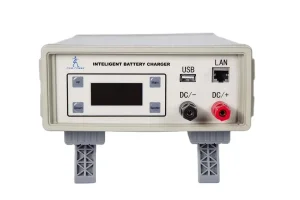
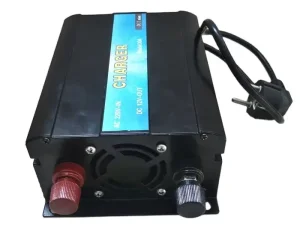
Integrated micro-processor controlled 3-stage and 8-stage battery charging algorithms, compatible with Lithium (LiFePO4), AGM, GEL, and flooded lead-acid chemistry.
Hardware-level safeguards against DC over-voltage, low-voltage alarm, short-circuit, AC output overload, reverse polarity, and intelligent dual-fan thermal dissipation.
Real-time LCD telemetry displaying input DC voltage, output AC voltage, battery capacity percentage, load ratio, operating mode, and real-time diagnostic fault codes.
Built-in ultra-fast AC transfer switch (transfer time < 10ms) guarantees uninterrupted power continuity for critical operational equipment during utility power outages.
DIP switch configurable output parameters supporting 100V/110V/120V/220V/230V/240V AC and 50Hz/60Hz frequencies for worldwide project deployment.
How international enterprise buyers, OEM bodybuilders, and solar integrators are navigating technical evolution, supply chain resilience, and compliance.
The global demand for low frequency inverters is experiencing accelerated growth driven by emergency medical services (EMS), commercial work fleets, recreational vehicle (RV) manufacturing, and off-grid residential energy security. Modern fleet vehicle integrators no longer look at inverters merely as standalone DC-to-AC converters; they require integrated power management hubs. These systems must combine pure sine wave inversion, multi-chemistry battery charging, automatic dual-battery isolation, and generator auto-start signaling into unified hardware footprints.
In developing microgrids across Africa, Southeast Asia, and Latin America, utility power grids often suffer from severe voltage sags, frequency fluctuations, and complete brownouts. High-frequency inverters installed in these harsh environments frequently experience premature MOSFET gate breakdown due to grid voltage spikes. Low frequency inverter factories have responded by implementing heavy-duty input choke filtering and rugged iron-core magnetic barriers, isolating internal DC components from unstable utility grid stress.
International procurement managers sourcing from low frequency inverter factories focus heavily on manufacturing quality control standards. ISO 9001:2015 certification serves as the bare minimum baseline. Advanced buyers inspect automated SMT (Surface Mount Technology) assembly lines, double-sided conformal coating applications (preventing moisture, dust, and salt spray corrosion in marine environments), and 100% full-load thermal burn-in testing chambers prior to packaging and dispatch.
Tailored power inversion architectures designed for high-demanding deployment environments worldwide.
Ambulances, fire command vehicles, and mobile rescue units require zero-fail AC power for onboard life support, communication rigs, and high-draw tools. Low frequency inverters with galvanic isolation prevent ground loops and protect delicate medical sensors.
Powering remote cabins, solar water pumps, and refrigeration units where power tools and motor pumps create continuous inrush currents. The toroidal surge capacity easily starts 2HP–5HP inductive motors without tripping protection limits.
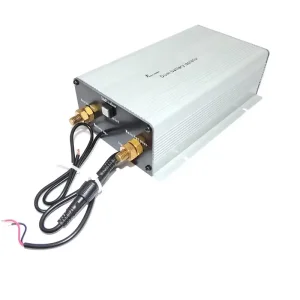
Designed to withstand high humidity and salt spray exposure. Integrated dual-battery isolators enable smart charging between propulsion engine alternators and auxiliary deep-cycle battery banks without battery drain risk.
Navigating international grid codes, safety certifications, and next-generation power electronics design.
Navigating global market access requires low frequency inverter suppliers to comply with stringent safety and electromagnetic compatibility (EMC) standards. Modern factory production lines are strictly audited to support international compliance:
The future of low frequency inverter manufacturing lies in hybrid digital integration. While the heavy core transformer remains the ultimate defense against mechanical overload, low frequency inverter factories are upgrading control boards with Silicon Carbide (SiC) switches and AI-assisted digital signal processors. This hybrid approach increases baseline operating efficiency by 3-5%, reduces idle self-consumption, and introduces smart IoT remote telemetry for predictive battery system maintenance.
Expert answers to common engineering, procurement, and technical queries regarding low frequency inverters.
Explore our complete range of high-performance pure sine wave power equipment for industrial, automotive, and residential applications.