


Featured high-voltage direct current (HVDC) power conversion systems engineered for heavy industrial, EV microgrid, commercial solar, and backup applications.
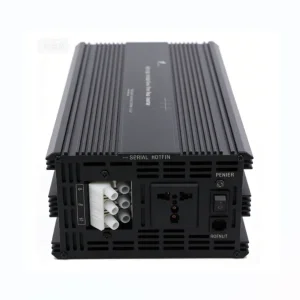
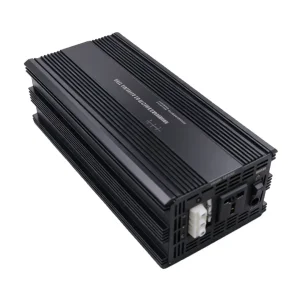
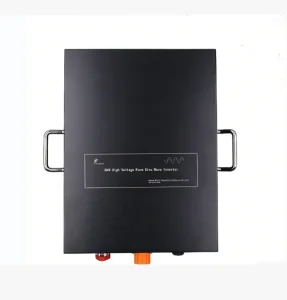
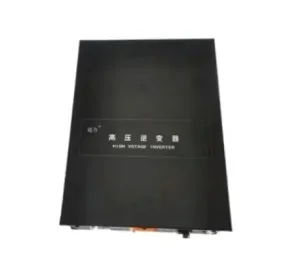
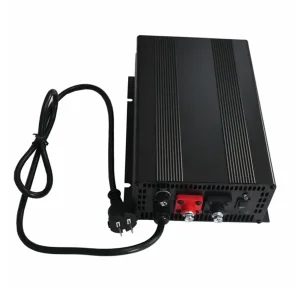
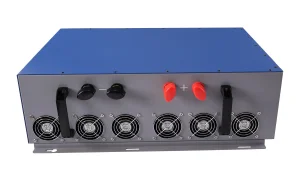
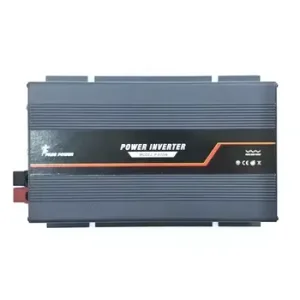
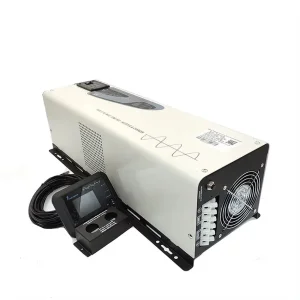
Why modern energy infrastructure is migrating from traditional low-voltage (12V/24V/48V) systems to 380V high-voltage direct current microgrids.
In the evolving landscape of industrial power electronics, global energy infrastructure is undergoing a decisive transition toward High Voltage Direct Current (HVDC) architectures—specifically centered around the standard 380V DC nominal bus topology. Historically, off-grid power conversion relied heavily on low-voltage DC inputs (12V, 24V, or 48V). However, as power capacity demands scale into megawatts across Commercial & Industrial (C&I) energy storage systems, Electric Vehicle (EV) hyper-charging stations, and hyperscale data centers, low-voltage topologies hit physical and thermodynamic barriers.
The physics driving this shift is defined by Joule's First Law ($P_{loss} = I^2 R$). Transmitting high power at low voltages requires extremely high currents, resulting in exponential thermal dissipation, voltage drops over distance, and colossal copper cabling cross-sections. By elevating the DC bus voltage to 380V DC (ranging dynamically from 300V DC to 450V DC or up to 540V DC), system current is reduced by up to 87.5% compared to a 48V system delivering equivalent power. This drastic reduction in current unlocks monumental gains in round-trip efficiency (RTE), drastically reduces copper material costs, and diminishes thermal stress on switching semiconductors.
An in-depth technical analysis of high-voltage pure sine wave conversion, wide-bandgap semiconductors, and thermal design principles.
By substituting conventional Silicon IGBTs with third-generation Silicon Carbide (SiC) MOSFETs, our 380V DC inverters achieve switching frequencies exceeding 60kHz to 100kHz. This dramatically shrinks inductor and capacitor physical footprints while cutting switching losses by over 60%.
Engineered with dual Texas Instruments 32-bit floating-point Digital Signal Processors (DSP), our control algorithms execute Space Vector Pulse Width Modulation (SVPWM) with sub-microsecond dead-time compensation. The result is an ultra-pure sine wave output with THD < 2.5% under non-linear loads.
High-voltage 380V DC inputs carry stringent isolation requirements. Our designs incorporate reinforced galvanic isolation (>3750V AC dielectric withstand) between the DC bus and AC output, preventing DC injection into AC grids and protecting sensitive downstream equipment.
| Performance Metric | Legacy Low-Voltage (48V DC) Systems | Next-Gen High Voltage (380V DC) Inverters | Engineering Benefit |
|---|---|---|---|
| Nominal Input Current (10kW) | ~220A DC | ~27.5A DC | 87.5% Current Reduction (Thinner Cable/Less Heat) |
| Full-Load Thermal Dissipation | High (I²R copper loss dominated) | Ultra-Low (Optimized SiC switching) | Reduces cooling HVAC energy by up to 40% |
| Inverter Weight / Energy Density | 0.15 kW/kg (Bulky copper busbars) | 0.55 kW/kg (Compact high-freq design) | Simplified rack mounting & transport logistics |
| Dynamic Step-Load Response | >50ms recovery time | <10ms recovery time (DSP controlled) | Seamless support for heavy inductive transients |
| System Round-Trip Efficiency | 88% – 91% | 94% – 96.5% | Higher cumulative energy yield over 10-year TCO |
Why tier-1 global importers, EPC contractors, and OEM brands source high-voltage power electronics directly from leading Chinese power ecosystems.
Manufacturing sophisticated high-voltage power converters demands a mature industrial cluster combining precision magnetics fabrication, automated Surface Mount Technology (SMT), rigorous thermal testing infrastructure, and end-to-end component traceability. Based in Suzhou's high-tech industrial park, our production facilities leverage the Yangtze River Delta's unparalleled power electronics ecosystem.
From automated winding of high-frequency transformers and toroidal inductors to CNC chassis fabrication and PCB SMT assembly, over 85% of structural and electrical components are processed in-house, ensuring stringent quality control and cost optimization.
Every 380V DC inverter unit undergoes strict 4-stage quality gatekeeper testing: automated Optical Inspection (AOI) of SMT boards, high-pot isolation withstand verification (>3.75kV), high-temperature full-load aging testing (45°C ambient for 12 hours), and dynamic transient load verification.
Our experienced R&D team of 35+ power engineers offers custom voltage adjustments (DC 190V–540V), single-phase or three-phase split configurations, custom communications protocols (CANbus, Modbus RTU/TCP), and custom enclosure colors or OEM branding within 15–20 business days.
Deploying 380V DC inverters across extreme environmental conditions and diverse industrial operational environments globally.
In modern EV charging depots, grid infrastructure often lacks the capacity to support instantaneous mega-watt surges. Operators install local battery banks operating at 380V–540V DC. Our high-voltage DC inverters act as bidirectional energy controllers—feeding power from battery buffers back into 3-phase 380V/400V AC site facilities or stabilization circuits during peak pricing hours.
Mining rigs, heavy pumps, and crushers operating in remote off-grid regions present immense inductive surge loads (up to 300% starting surge). Utilizing a high-voltage 380V DC power backbone allows heavy machinery to start without triggering severe line voltage collapse, offering seamless continuous power even under ambient temperatures from -25°C to +55°C.
Mission-critical IT workloads require uninterrupted zero-millisecond power transfers. Traditional double-conversion UPS systems lose efficiency through continuous AC-DC conversions. Integrating high-efficiency 380V DC inverters directly onto high-voltage DC busbars elevates backup power plant efficiency to 96%+, saving hundreds of megawatt-hours annually per server farm.
In rural electrification programs across Southeast Asia, Africa, and Latin America, high-voltage off-grid inverters (DC 190V/380V to 3-Phase AC 380V) power entire island microgrids. Integrated solar MPPT controllers convert direct rooftop PV energy into clean AC power for agricultural cold storage and village grids.
Essential verification guidelines for corporate procurement directors, system integrators, and import managers sourcing high-voltage power converters.
Procuring industrial-grade power conversion equipment requires careful evaluation of safety compliance, regulatory certifications, total cost of ownership (TCO), and manufacturer lifecycle support. Importers should execute systematic technical audits using the following verification criteria:
High-voltage equipment must comply with regional and international grid connection and safety standards:
When evaluating supply partners, initial hardware purchase cost represents only 25% to 30% of total lifetime operational expenditures. High-efficiency 380V DC inverters amortize upfront investment rapidly through reduced energy losses:
Annual Energy Loss Savings ($) = System Power (kW) × Operating Hours/Year × Efficiency Difference (Δη) × Electricity Tariff ($/kWh)
For a 100kW system operating 8,760 hours/year with a tariff of $0.15/kWh, upgrading system conversion efficiency from 90% to 95.5% yields over $7,200 in direct operational savings every year per unit.
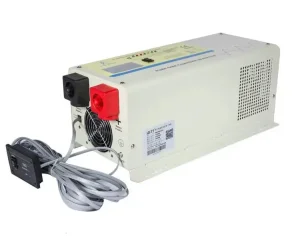
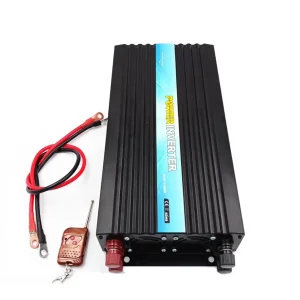
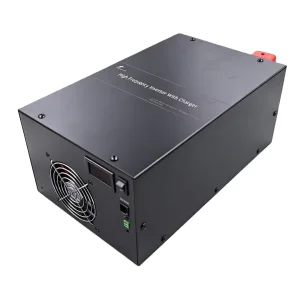
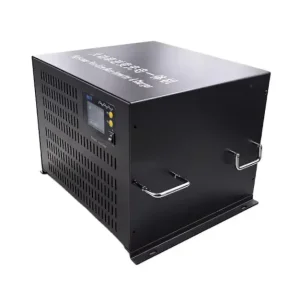
Explore our extended OEM/ODM product series including low-frequency off-grid solar inverters, high-frequency pure sine wave converters, and smart battery chargers.
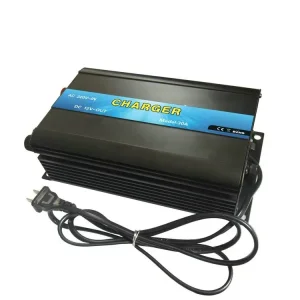
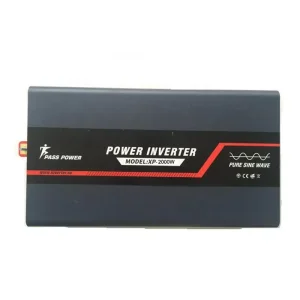
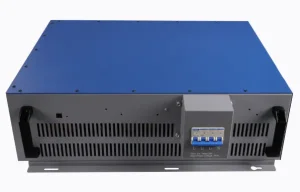
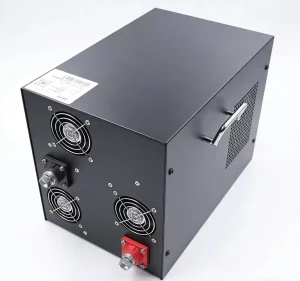
Key technological shifts reshaping the high-voltage power conversion landscape over the next decade.
Next-generation inverter topologies combine GaN switches in high-frequency modulation stages with SiC devices in main power conduction paths, pushing operational switching speeds past 200kHz and achieving power densities over 1.2 kW/kg.
Integrated micro-controllers sample thermal gradients, capacitor ESR degradation, and harmonic distortion in real time. Machine learning models analyze cloud telemetry via MQTT/Modbus TCP to predict component failures prior to occurrence.
As solid-state battery chemistry reaches commercial deployment with wide dynamic discharge voltage windows, high-voltage 380V DC inverters are evolving wide-input MPPT and adaptive DC-DC boost algorithms to maintain constant peak efficiency.
In-depth technical answers addressing engineering, operational, and commercial procurement inquiries for high-voltage DC inverters.
The main advantage is dramatic current reduction for identical power throughput ($P = V \times I$). Delivering 10kW at 48V requires ~208A DC, whereas at 380V DC it requires only ~26.3A. Lower current minimizes $I^2R$ copper losses, allows thinner cable gauges (reducing cabling cost and weight by up to 85%), diminishes thermal stress on components, and elevates total system conversion efficiency above 96%.
Yes. Our 380V DC high-voltage inverter series features a dynamic DC input voltage window (typically 300V DC to 450V DC or up to 540V DC), making it natively compatible with high-voltage Lithium Iron Phosphate (LiFePO4) and NMC battery stacks without requiring intermediary step-up boost converters.
Single-phase inverters convert DC power to single-phase AC (e.g., 220V/230V AC) suitable for standard commercial branch circuits and specialized equipment. Three-phase inverters convert DC power to 3-phase AC (e.g., 380V/400V/415V AC line-to-line), ideal for heavy industrial motors, factory automation, commercial HVAC, and grid-tied microgrids requiring balanced 3-phase power delivery.
High-voltage operation demands comprehensive safety measures. Our units feature reinforced galvanic isolation between DC input and AC output (>3750V AC dielectric rating), dual-stage DC reverse polarity protection, rapid DC arc fault detection (AFCI), over-voltage and under-voltage lockout, output short-circuit protection, dynamic thermal throttling, and hardware-level surge isolation (Class II SPD).
Silicon Carbide (SiC) MOSFETs offer higher thermal conductivity, faster switching speeds, and lower switching resistance compared to legacy Silicon IGBTs. This allows our inverters to switch at frequencies above 60kHz–100kHz, reducing inductor size, lowering heat output, and maintaining peak efficiency across a wider load spectrum (20% to 100% load).
Our industrial inverters support industrial communication interfaces including RS485, CANbus, Ethernet (Modbus TCP), and Wi-Fi/4G telemetry modules. This enables real-time integration into Building Management Systems (BMS), Energy Management Systems (EMS), and industrial SCADA platforms.
We offer comprehensive OEM/ODM customization covering custom DC input voltage ranges (190V DC to 540V DC), custom AC output voltages (110V, 220V, 380V split/3-phase), firmware control algorithm tuning, custom industrial chassis enclosure designs, branded LCD interfaces, and customized terminal pinouts or socket types.
Standard catalog models are typically dispatched within 7–12 business days. Custom OEM/ODM orders require 15–20 business days for engineering prototype sign-off, followed by expedited mass production in our ISO 9001:2015 certified Suzhou manufacturing facility.
Our high-voltage inverters are rated for continuous operation at full load up to +45°C ambient temperature, with linear derating up to +60°C. For high-altitude installations (>2,000 meters above sea level), dielectric air breakdown insulation and thermal cooling derating curves are provided in our technical application manual.
All industrial inverter products come with a standard 3-year factory warranty, extendable to 5 years upon request. We provide complete technical support including engineering documentation, spare power board replacement modules, and direct 24/7 technical assistance from our senior power electronics engineering team.
