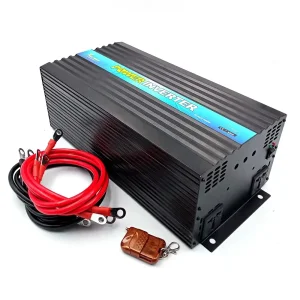
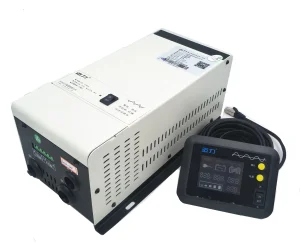
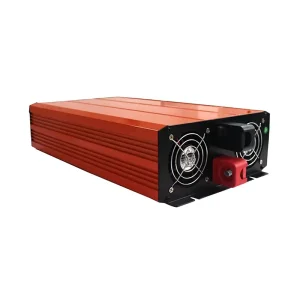
Factory-direct pure sine wave MPPT inverters, hybrid converters, and smart power management hardware designed for critical residential and commercial power needs.
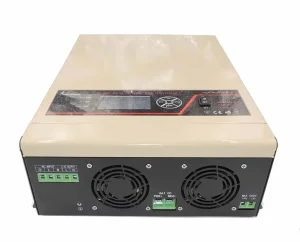
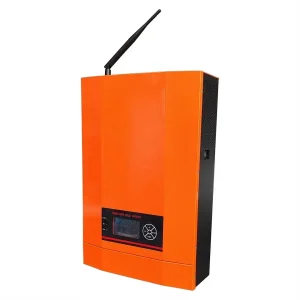
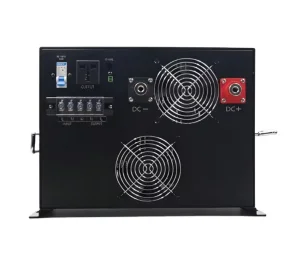
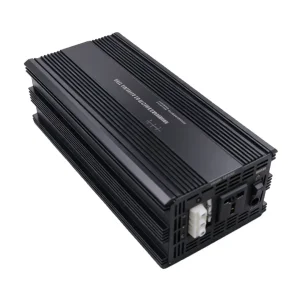
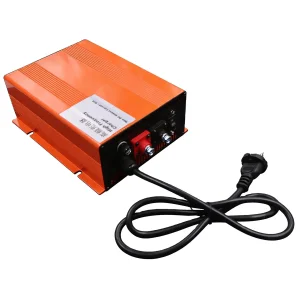
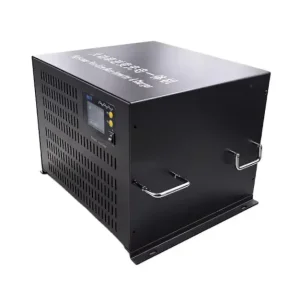
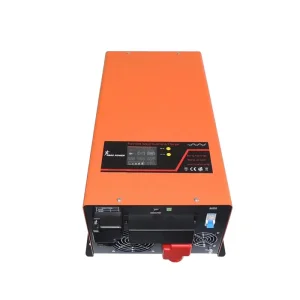
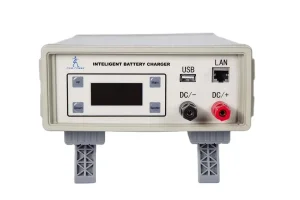
Understanding the engineering mechanics, thermal dissipation parameters, and maximum power point tracking efficiency in industrial solar systems.
In modern renewable energy architectures, the Pure Sine Wave Solar MPPT Inverter stands as the core power management node. Unlike legacy modified sine wave inverters—which output a blocky, square-wave approximation that induces harmonic distortion, thermal stress, and audible humming in sensitive inductive loads—a true pure sine wave unit yields a clean sinusoidal AC output with Total Harmonic Distortion (THD) strictly controlled below 2% to 3%. This pristine power profile matches or exceeds commercial grid electricity quality, protecting sensitive electronics, medical appliances, variable-speed motor drives, and heavy inductive equipment like compressors, HVAC systems, and water pumps.
Maximum Power Point Tracking (MPPT) technology represents a paradigm shift over conventional Pulse Width Modulation (PWM) solar charge controllers. A PWM controller acts essentially as a direct electronic switch between the photovoltaic (PV) array and the battery bank. This forces the solar panel operating voltage down to match the battery voltage, discarding up to 30% of the array's available potential output—particularly in cold ambient temperatures or low-irradiance conditions where PV voltage spikes significantly above battery charging thresholds.
In contrast, an advanced MPPT Solar Inverter incorporates a high-speed Digital Signal Processor (DSP) executing Perturb and Observe (P&O) or Incremental Conductance algorithms. By scanning the PV current-voltage (I-V) curve hundreds of times per second, the MPPT controller dynamically calculates the dynamic resistance of the array to lock onto the precise Maximum Power Point ($P_{max} = V_{mpp} \times I_{mpp}$). It then utilizes a high-efficiency DC-DC buck converter to step down excess solar voltage while simultaneously ramping up output charging current. This process guarantees an MPPT tracking accuracy exceeding 99.5% and increases overall energy harvest by 15% to 35% compared to PWM topology.
Why premier global renewable energy OEMs, B2B importers, and engineering contractors partner with leading Chinese inverter exporters.
China’s Yangtze River Delta and Pearl River Delta power electronics hubs concentrate raw material refining, silicon semiconductor fabrication, copper toroidal transformer winding, SMT PCB assembly, and housing fabrication within a tight geographic radius. This structural proximity reduces component procurement lead times, minimizes logistics overheads, and accelerates rapid hardware iterative prototyping.
Premier Chinese export factories operate under fully integrated Quality Management Systems (QMS). Automated Optical Inspection (AOI) and In-Circuit Testing (ICT) verify PCB assembly integrity, while 100% full-load thermal burn-in aging tests (conducted in environmental chambers at 50°C for 12–24 hours) ensure zero infant mortality rates prior to sea or air freight shipment.
High-volume automated assembly lines allow Chinese manufacturers to offer highly competitive factory-direct wholesale pricing without compromising component grade. High-tier power switches from leading international brands (e.g., Infineon IGBTs, Texas Instruments DSPs, STMicroelectronics FETs) are integrated directly into modular production lines.
Technological shifts shaping high-voltage PV architectures, wide-bandgap semiconductors, and intelligent energy management.
Silicon Carbide (SiC) MOSFETs and Gallium Nitride (GaN) high-electron-mobility transistors (HEMTs) are systematically replacing legacy silicon switches. Operating at switching frequencies exceeding 100 kHz, SiC devices cut switching losses by up to 60%, drastically shrink passive components (inductors and capacitors), and enable inverter power densities up to 30% higher while maintaining passive or low-noise forced-air cooling.
To eliminate complex multi-string combiner boxes and lower DC cable line losses ($I^2R$), modern off-grid hybrid inverters incorporate high-voltage MPPT front-ends accepting solar array voltages from 120VDC up to 500VDC. High-voltage strings reduce wiring cross-sectional area demands and simplify installation for installers and system integrators.
Advanced hybrid topologies now support batteryless direct-power execution. In scenarios where battery energy storage is depleted or delayed, the solar MPPT inverter directly drives AC house loads straight from available solar power, seamlessly blending grid/generator power in real-time if solar radiation drops temporarily.
As Lithium Iron Phosphate ($LiFePO_4$) replaces lead-acid across off-grid installations, inverters must interface natively via CANbus or RS485 communication protocols (Modbus RTU). Native BMS handshake enables real-time voltage balancing, temperature compensation, dynamic charge current throttling, and extended battery cycle life protection.
Engineered versatility across diverse operating environments—from harsh off-grid desert climates to mobile vehicle platforms and marine transport.
In locations lacking grid coverage or suffering frequent load shedding, high-frequency and low-frequency hybrid MPPT inverters deliver uninterrupted 110V/220V AC single-phase or split-phase output. Coupled with solar arrays and LiFePO4 batteries, they run lighting, refrigeration, home entertainment, and kitchen appliances continuously.
Mobile living demands compact form factors, high vibration resistance, and exceptional surge capabilities to start high-inductance roof air conditioners (12,000–15,000 BTU) and induction cooktops. Low-frequency toroidal transformer inverters withstand up to 3x rated surge power for 10 seconds without tripping.
Remote 4G/5G cell towers, weather monitoring stations, and border security outposts require ultra-reliable DC-to-AC conversion with zero maintenance downtime. Smart MPPT inverters with SNMP/Wi-Fi/GPRS modules support remote parameter adjustments and automated fault telemetry logging.
Comprehensive OEM/ODM capabilities, turnkey microgrid engineering support, and worldwide exporter distribution logistics.
For international energy equipment brand owners, regional distributors, and engineering procurement contractors (EPCs), choosing an inverter factory goes beyond buying off-the-shelf catalog products. It requires tailored hardware customization, rigorous international certification compliance (CE, RoHS, CB, SAA, UL 1741 standards), and flexible ODM engineering capability.
Export-oriented factories provide full custom development pathways across 8 distinct hardware and software domains:
To streamline import clearance and regulatory compliance across target markets, products are manufactured in compliance with international testing regimes:
In-depth expert answers addressing technical selection, topology trade-offs, installation protocols, and wholesale factory ordering.
Additional commercial power converters, smart multi-stage chargers, isolator relays, and custom-engineered off-grid power products.