Industrial Energy Conversion Whitepaper

Solar Inverter Engineering & Global Product Architecture

A Comprehensive Analysis of Hybrid Topologies, Wide-Bandgap Semiconductors, Grid-Forming Dynamics, and Decentralized Commercial Photovoltaic Infrastructure

Featured Solar & Hybrid Inverter Series (Top Portfolio)

High-efficiency off-grid, hybrid MPPT, and pure sine wave converters engineered for residential resilience and industrial power stability.
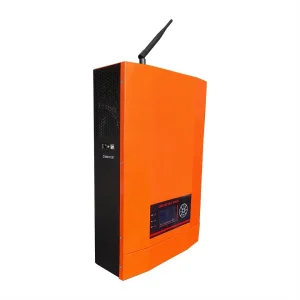
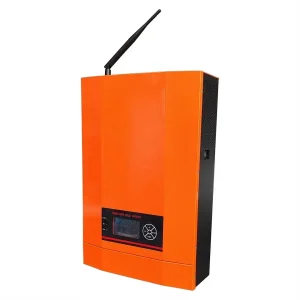
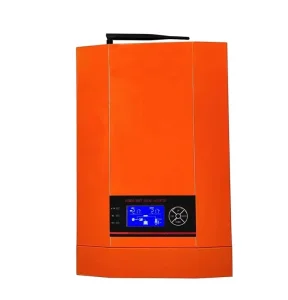
Wholesale MAILI Home Use Rated Power 5.5KW 5500KW Off Grid Hybrid Solar Inverter Pure Sine Wave Output

Wholesale MAILI Home Use Rated Power 5.5KW Off Grid Hybrid Solar Inverter Pure Sine Wave Output 5500w Solar Power Inverter Factory

View Specifications
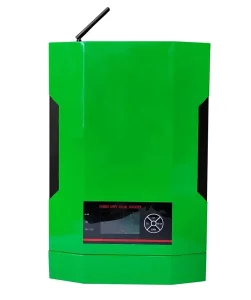
Wholesale CE ROHS Hybrid Solar Inverter 24VDC 230VAC 3.5KW 3500 Watt Pure Sine Wave Single 50Hz LCD

Wholesale CE ROHS Hybrid Solar Inverter 24VDC 230VAC 3.5KW 3500 Watt Pure Sine Wave Single 50Hz LCD Grid Solar Power MPPT for Home Use

View Specifications
Wholesale MAILI PPS Series 3.5kw MPPT Hybrid Solar Inverter

Wholesale MAILI PPS Series 3.5kw MPPT Hybrid Solar Inverter Wholesale Price for Off-Grid Home Solar System

View Specifications
High-Quality CE ROHS Ready Stock 5.5KW 48V Single Phase MPPT Solar Inverter with LCD Display Wifi Function

High-Quality CE ROHS Ready Stock 5.5KW 48V Single Phase MPPT Solar Inverter with LCD Display Wifi Function 100A Output

View Specifications
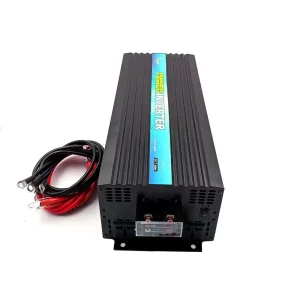
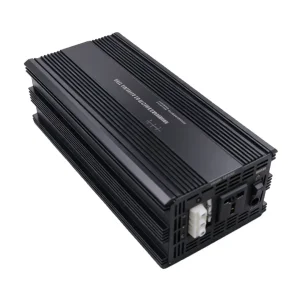
High-Quality OEM 6000 Watts Pure Sine Wave Inverter High Frequency 24VDC to 230VAC

High-Quality OEM 6000 Watts Pure Sine Wave Inverter High Frequency 24VDC to 230VAC with Remote Control Function For Caravan

View Specifications
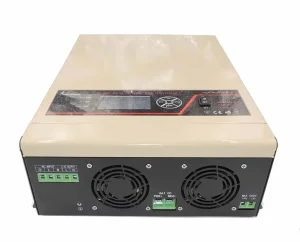
Best PASSPOWER All-in-One Hybrid Solar Inverter 5.5KVA 5500W Batteryless MPPT 100A

Best PASSPOWER All-in-One Hybrid Solar Inverter 5.5KVA 5500W Batteryless MPPT 100A with Max 120V-500V 220VAC 48V PV Input

View Specifications
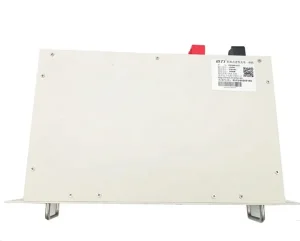
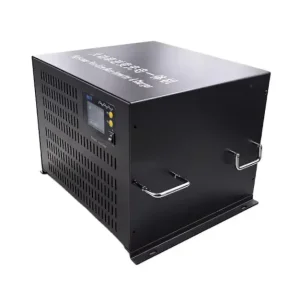
Custom Maili 2KW Rack-mounted Pure Sine Wave Integrated Inverter Charger

Custom Maili 2KW Rack-mounted Pure Sine Wave Integrated Inverter Charger, 110V/220V AC, 50/60Hz, Multiple Protections

View Specifications
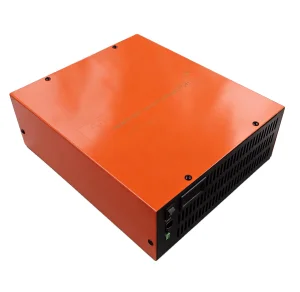
Custom CE ROHS 6kw high voltage dc 380v to ac 110v and 220v pure sine wave inverter efficiency 94%

Custom CE ROHS 6kw High Voltage DC 380V to AC 110V & 220V Pure Sine Wave Inverter Efficiency 94% Factory

View Specifications

Global Commercial & Industrial Solar Inverter Landscape

Macroeconomic drivers, grid interconnection policies, and the structural pivot toward high-voltage hybrid energy storage systems.

98.8%
Peak European Conversion Efficiency
< 10 ms
UPS-Grade Automatic Grid Switching
500 VDC
Maximum PV Input Voltage Window
300%
Inductive Load Surge Power Capacity

The global solar inverter market is undergoing a seismic paradigm shift. No longer viewed simply as direct-current (DC) to alternating-current (AC) power bridges, modern solar inverters have evolved into intelligent grid-edge computing platforms. Driven by accelerating decarbonization mandates, volatile energy pricing, and grid destabilization resulting from intermittent renewable penetration, commercial and industrial (C&I) sectors are mandating advanced inverter topologies capable of bidirectional energy routing, dynamic frequency regulation, and seamless integration with localized Energy Storage Systems (ESS).

In mature markets such as North America and Western Europe, regulatory compliance—specifically NEC 2023 690.12 rapid shutdown requirements, UL 1741 SB/SA grid-support standards, and IEEE 1547-2018 communication protocols—has elevated the engineering baseline. Concurrently, developing regions across Latin America, Southeast Asia, and Sub-Saharan Africa are witnessing exponential growth in off-grid and hybrid solar inverter deployments to bypass unstable municipal utility infrastructure, providing crucial continuous power for telecommunications, agricultural cold chains, and manufacturing facilities.

Technical Insight: The transition from central inverters to high-power string inverters and hybrid off-grid converters has drastically reduced Levelized Cost of Energy (LCOE) while eliminating single-point system failures. Modern multi-MPPT topologies allow energy managers to optimize power yield across multi-directional roof orientations and variable shading profiles.

North American Grid Compliance

Strict enforcement of Rule 21, IEEE 1547-2018, and UL 1741 SB mandates that modern inverters provide dynamic reactive power voltage support (Volt-VAR), frequency-watt droop control, and standardized SunSpec Modbus communication capabilities.

European CBAM & Storage Push

Driven by energy independence mandates and Carbon Border Adjustment Mechanisms (CBAM), European commercial enterprises favor hybrid all-in-one inverters capable of time-of-use (TOU) arbitrage and zero-export control.

Emerging Market Off-Grid Electrification

Regions plagued by frequent load-shedding rely heavily on low-frequency toroidal transformer inverters capable of handling severe motor-starting surges and wide AC input voltage fluctuations without entering fault lockout.

Inverter Topologies & Wide-Bandgap Semiconductor Engineering

Analyzing transformerless vs. galvanic isolation, Maximum Power Point Tracking algorithms, and Silicon Carbide (SiC) switching efficiency.

1. High-Frequency Switching vs. Low-Frequency Toroidal Transformer Topology

Inverter engineering hinges upon selecting the optimal power conversion architecture based on operational environmental demands and load characteristics:

High-Frequency (HF) Inverters: HF designs utilize pulse-width modulation (PWM) executed across high-speed MOSFETs or IGBTs operating at frequencies typically exceeding 20 kHz to 100 kHz. This enables the replacement of bulky iron-core transformers with ultra-compact ferrite transformers. HF units (such as high-frequency pure sine wave hybrid solar inverters) offer exceptionally high energy density, lightweight form factors, low idle self-consumption, and high full-load conversion efficiency (up to 97%-98.5%). They excel in residential clean power setups, server back-up power, and portable commercial arrays.

Low-Frequency (LF) Inverters: LF architecture pairs solid-state inverter bridges with heavy line-frequency toroidal transformers. Although heavier and physically larger, galvanic isolation provided by the transformer offers near-indestructible electrical isolation between DC battery banks and AC loads. LF inverters feature tremendous peak surge capacities—frequently supporting 200% to 300% of nominal rating for up to 10 seconds. This capability is paramount when starting heavy inductive loads containing high initial inrush currents, such as air conditioners, well pumps, air compressors, and heavy power machinery in industrial mobile units or harsh off-grid installations.

2. Advanced MPPT Tracking Dynamics & Silicon Carbide (SiC) Revolution

The operational core of modern photovoltaic energy harvesting lies within the Maximum Power Point Tracking (MPPT) charge controller stage. Utilizing high-speed Perturb and Observe (P&O) or Incremental Conductance algorithms, advanced MPPT units dynamically sweep the PV array's voltage-current curve to lock onto the global maximum power point, even under rapid cloud passage or partial shading.

Furthermore, the integration of Wide-Bandgap (WBG) semiconductors—specifically Silicon Carbide (SiC) MOSFETs and Gallium Nitride (GaN) switching devices—is revolutionary. Compared to legacy silicon IGBTs, SiC semiconductors exhibit significantly lower switching losses, higher thermal conductivity, and the ability to operate reliably at elevated junction temperatures. This transition yields higher switching frequencies without thermal runaway, enabling smaller passives (inductors and capacitors), reducing chassis dimensions by up to 40%, and maintaining conversion efficiencies above 98.5% across a broad load spectrum.

Pure Sine Wave Total Harmonic Distortion (THD)

High-end industrial solar inverters enforce THD levels < 2% on total voltage waveform outputs. This clean power signature prevents thermal buildup in induction motors, eliminates audio/visual interference in communications equipment, and ensures long-term operational integrity for sensitive microprocessor-controlled industrial systems.

Intelligent BMS Handshake & Batteryless Operation

Modern hybrid inverters incorporate native CANbus / RS485 communication interfaces to communicate directly with Lithium Iron Phosphate (LiFePO4) Battery Management Systems (BMS). Advanced units feature dynamic high-voltage PV input stages (up to 500VDC) allowing direct PV-to-load powering without battery bank connection during daylight hours.

Localized Application Scenarios & Industrial Solutions

From remote off-grid telecommunication towers to mobile commercial fleets and 3-phase high-voltage industrial setups.

RVs, Ambulances & Mobile Work Vehicles

Vehicle-integrated auxiliary power relies heavily on compact integrated inverter-chargers paired with dual-battery isolators. High-frequency 12V/24V to 110V/220V pure sine wave units power critical emergency equipment, climate control, and mobile power tools without depleting starter batteries.

Off-Grid Residential & Remote Commercial Microgrids

In regions isolated from reliable power grids, hybrid off-grid solar inverters serve as the centralized power hub. Combining 5.5kW+ power stages with high-voltage MPPT inputs, these systems automatically seamlessly blend solar harvest, energy storage, and backup diesel generators.

3-Phase Industrial & High-Voltage DC Infrastructure

Manufacturing facilities, commercial agricultural solar pumps, and data centers demand balanced three-phase AC output (190V/380V/415V). High-voltage DC input inverters (DC 380V) minimize line copper losses, enhancing systemic round-trip efficiency in large-scale solar arrays.

System Architecture Design: 12kW 3-Phase Off-Grid Solar Installation

In high-demand industrial installations, such as agricultural processing plants or heavy-duty telecom hubs, power engineering relies on modular parallel inverter topologies. By interconnecting three single-phase units or utilizing specialized 3-phase hybrid inverters (e.g., 12000W 3-Phase 24V/48V DC to 190V/380V AC), system designers achieve dynamic phase balance across motor loads.

These industrial platforms feature zero-transfer-time static switches, programmable dry contact relays for automatic generator start triggers, and multi-stage battery equalization charging. Integrated Wi-Fi/GPRS modules transmit telemetry data to cloud analytics platforms, enabling remote monitoring of phase voltages, active power factor (cos φ), heatsink thermal gradients, and real-time battery State of Charge (SoC).

Solar Inverter Technology Roadmap & Future Outlook

Anticipating technological convergence: Grid-forming algorithms, AI-driven predictive MPPT, and Next-Gen solid-state energy storage compatibility.

2025 - 2026

Grid-Forming Inverters (GFM)

Transition from grid-following (GFL) to grid-forming algorithms. Inverters simulate synthetic inertia via internal voltage source modeling, stabilizing weak grids against rapid loss of rotational inertia.

2026 - 2027

AI Predictive Thermal & Yield Tuning

Embedded microcontrollers executing neural network models predict shading patterns based on local satellite weather feeds, dynamic optimizing MPPT tracking speeds while proactively controlling cooling fan curves.

2027 - 2028

Solid-State & Na-Ion Compatibility

Expansion of BMS communication protocols to support high-rate Sodium-Ion (Na-Ion) and emerging Solid-State battery chemistries with dynamic multi-stage charging algorithms.

2028+

Virtual Power Plant (VPP) Integration

Distributed residential and commercial inverter fleets aggregated via secure IEC 61850 / OpenADR protocols to provide instantaneous grid frequency control and localized energy trading.

Industrial Commercial & Specialized Inverter Directory (Bottom Portfolio)

High-voltage DC, multi-phase, and specialized wind/solar pure sine wave converters designed for demanding industrial applications.
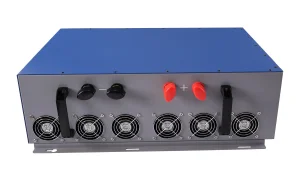
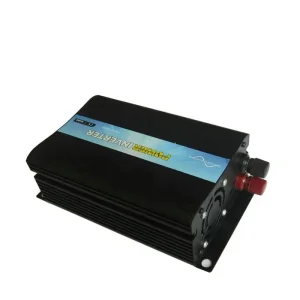
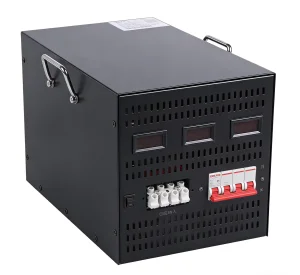
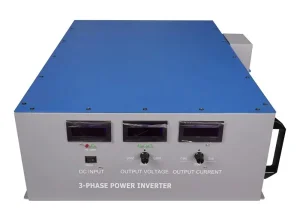
OEM CE ROHS 12000W Off-Grid Pure Sine Wave Inverter 24V 48V DC 190V 380V 3-Phase 24000W Peak Power

OEM CE ROHS 12000W Off-Grid Pure Sine Wave Inverter 24V/48V DC to 190V/380V 3-Phase 24000W Peak Power Inverter 3-Year Warranty

View Specifications
Custom 48V 220V 300W High Frequency Pure Sine Wave Solar Inverter Off-Grid Soft Start

Custom 48V 220V 300W High Frequency Pure Sine Wave Solar Inverter Off-Grid Soft Start Power From DC to AC for Home Use

View Specifications
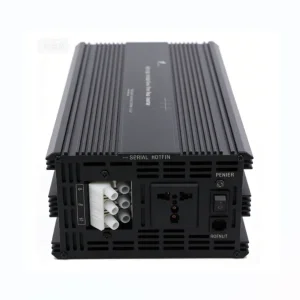
CE Certification MLP1500W CE RoHS Compliant Inverter New Design 1.5KW Pure Sine Wave Inverter for Wind Turbines

CE Certification MLP1500W CE RoHS Compliant Inverter New Design 1.5KW Pure Sine Wave Inverter for Wind Turbines

View Specifications
Wholesale High Frequency Customized CE CB Rohs 3 Phase 3KW Power 12V24V48VDc to 110V190V220V380V AC Out

Wholesale High Frequency Customized CE CB Rohs 3 Phase 3KW Power 12V/24V/48VDC to 110V/190V/220V/380V AC Out Off-grid Tie Inverters

View Specifications
Wholesale Maili 3000W 110V220V AC Single Phase 30A 5060Hz Pure Sine Wave High Frequency Inverter Charger All-in-One

Wholesale Maili 3000W 110V/220V AC Single Phase 30A 50/60Hz Pure Sine Wave High Frequency Inverter Charger All-in-One

View Specifications
Best Maili QSP-9000 9KW 5060Hz Single Phase High-power Pure Sine Wave DC/AC Inverter Multiple Protection 95% Efficiency

Best Maili QSP-9000 9KW 50/60Hz Single Phase High-power Pure Sine Wave DC/AC Inverter Multiple Protection 95% Efficiency

View Specifications
High-Quality CE ROHS 3kw dc 380v to ac 220v high voltage pure sine wave inverter

High-Quality CE ROHS 3kw DC 380V to AC 220V High Voltage Pure Sine Wave Inverter Exporter

View Specifications
Best ML-10KW-3P CE CB Rohs 3 Phase 10kva High Frequency Power 24v 48v Dc to 190v 380v Ac Out

Best ML-10KW-3P CE CB Rohs 3 Phase 10kva High Frequency Power 24V/48V DC to 190V/380V AC Out 10kw Inverter Price

View Specifications

Technical & Procurement FAQ (Frequently Asked Questions)

Expert analysis addressing common system design, topology selection, and engineering procurement questions.

What key architectural differences distinguish Low-Frequency from High-Frequency Solar Inverters?
Low-frequency (LF) inverters integrate heavy line-frequency copper/toroidal transformers that provide physical galvanic isolation between DC battery circuits and AC power loads. This architecture provides exceptionally robust surge power capacity (up to 300% nominal capacity for several seconds), making LF inverters the gold standard for starting heavy inductive loads like air conditioning compressors, well pumps, and power tools in rugged off-grid environments or mobile commercial vehicles. High-frequency (HF) inverters replace bulky transformers with compact electronic switching circuits and high-speed MOSFETs/IGBTs. HF inverters are significantly lighter, smaller, offer slightly higher idle conversion efficiency (up to 98%), and are ideal for office electronics, home power back-up, and space-constrained installations.
How does MPPT efficiency directly impact levelized energy costs in hybrid off-grid systems?
Maximum Power Point Tracking (MPPT) charge controllers continuously adjust the electrical operating point of the photovoltaic array to extract maximum available power regardless of irradiance drops, thermal changes, or partial array shading. Advanced MPPT algorithms execute fast voltage-current sweeps with tracking efficiencies over 99.5%. In hybrid solar inverter systems, this elevated efficiency maximizes daily kilowatt-hour yields, speeds battery bank recharge cycles, and minimizes reliance on secondary diesel backup generators—directly reducing overall operational expenditures (OPEX) and shortening system pay-back horizons.
Why is Pure Sine Wave output critical for industrial commercial loads versus Modified Sine Wave?
A Pure Sine Wave inverter outputs a smooth, sinusoidal AC voltage waveform with low Total Harmonic Distortion (THD < 2-3%), matching or exceeding municipal utility grid power quality. Modified Sine Wave inverters deliver blocky, stepped square waves containing high harmonic content. Running sensitive equipment—such as variable-frequency drives (VFDs), medical devices, laser printers, server power supplies, or induction motors—on modified sine waves leads to high thermal dissipation, audible buzzing, reduced operational lifetime, and potential component failure due to harmonic voltage spikes.
What advantages do High-Voltage DC 380V inverters provide in industrial installations?
High-Voltage DC (such as DC 380V input) inverter systems significantly lower line currents compared to traditional low-voltage 24V or 48V systems powering equivalent wattage. According to Joule's Law ($P_{loss} = I^2 R$), reducing current ($I$) dramatically diminishes resistive thermal losses in cabling. This allows power engineers to utilize significantly thinner copper wiring across long cable runs, reducing initial balance-of-system (BOS) material costs while simultaneously raising system round-trip efficiency in large commercial arrays and 3-phase industrial microgrids.
Can Maili / Pass Power Hybrid Solar Inverters operate safely without a battery connected?
Yes, specific Pass Power All-in-One Hybrid Solar Inverters feature advanced batteryless operational modes. When solar irradiance is sufficient, the internal high-voltage MPPT bus (supporting 120V - 500V PV input) feeds power directly into the internal DC-AC inverter stage to drive AC connected loads in real-time without requiring an energy storage buffer. This provides incredible installation flexibility and lowers upfront equipment capital requirements for daytime-centric commercial operations.
All solar inverter Products