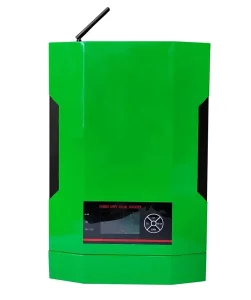
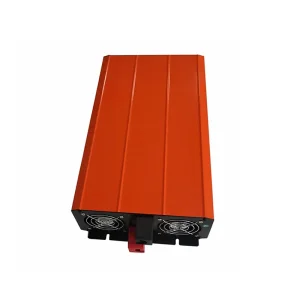
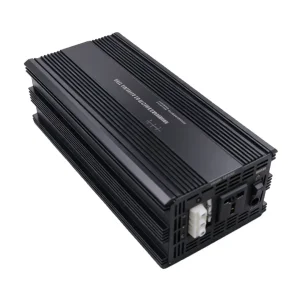
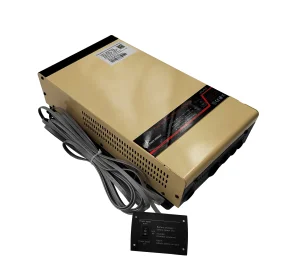
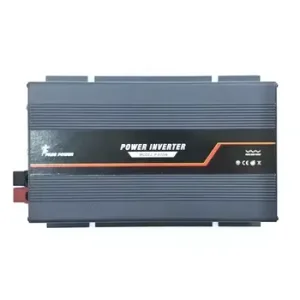
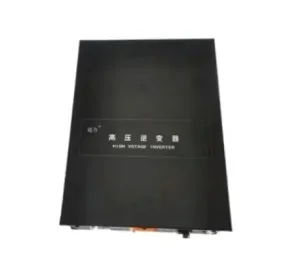
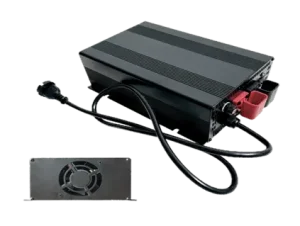
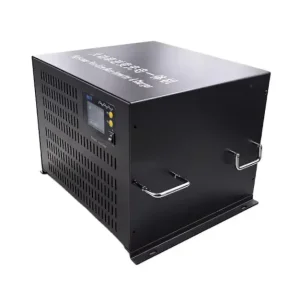
Engineered for extreme surge capacities, continuous inductive motor starting, and uninterrupted off-grid microgrid operations.
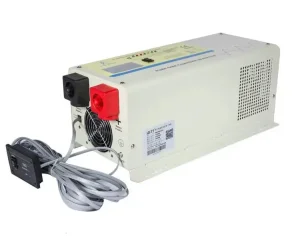
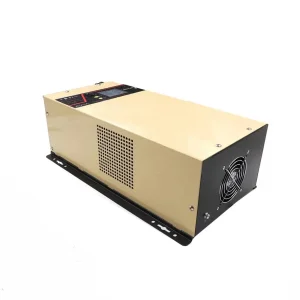
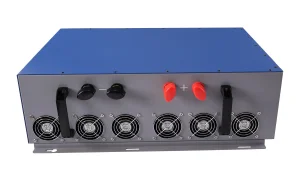
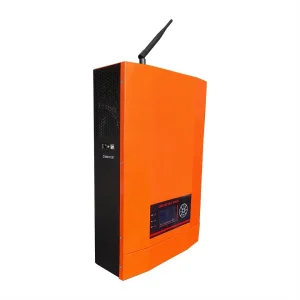
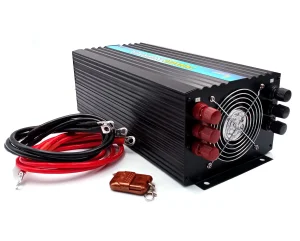
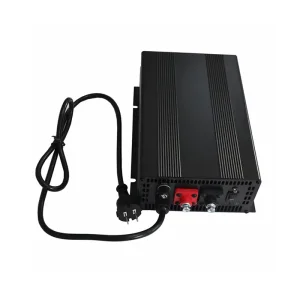
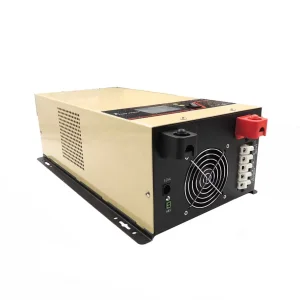
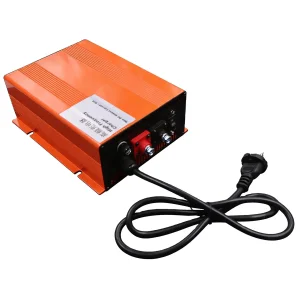
A deep technical analysis of why heavy-duty iron-core and toroidal transformer-based power electronics remain the gold standard for rugged energy resilience worldwide.
In the modern power conversion landscape, the global market for energy storage systems (ESS) and off-grid hybrid power platforms is undergoing a rapid paradigm shift. While high-frequency switching topology dominated consumer electronics due to lightweight profiles, industrial, agricultural, and mission-critical applications are overwhelmingly returning to Low Frequency Hybrid Inverters. As global power grids face increasing volatility, extreme weather disruptions, and high harmonic distortion from expanding industrial loads, commercial buyers require inverters built on robust electromagnetic physical foundations rather than vulnerable high-speed semiconductor switching circuits alone.
A low-frequency hybrid inverter leverages a heavy-duty line-frequency copper toroidal or iron-core transformer located directly between the DC inverter stage and the AC load. This structural configuration creates complete galvanic isolation between DC energy sources (such as Photovoltaic arrays, LiFePO4 battery banks, or diesel generators) and sensitive or heavy industrial equipment. Consequently, current spikes, electromagnetic interference (EMI), and back-EMF voltage spikes generated by heavy inductive motor starts are completely dampened before reaching delicate DC battery management microprocessors.
Across emerging economies in Latin America, Sub-Saharan Africa, Southeast Asia, and remote Outback Australia, electrical infrastructure suffers from unstable line frequency fluctuations, line voltage sags, and frequent blackout events. In these environments, high-frequency transformerless inverters often experience premature failure due to semiconductor thermal fatigue caused by repeated voltage surges and line transients. Conversely, a tier-1 manufactured Low Frequency Hybrid Inverter incorporates massive thermal mass and magnetic saturation headroom within its toroidal core, absorbing severe grid shocks that would otherwise destroy high-frequency MOSFET/IGBT arrays.
From an operational total cost of ownership (TCO) perspective, enterprise users in mining camps, telecommunication base stations (BTS), cold-chain refrigeration units, and agricultural irrigation sites realize significantly lower downtime expenses. The initial capital expenditure (CapEx) investment in a heavy-duty low-frequency inverter yields up to a 15-year operational lifecycle, outlasting high-frequency alternatives by a ratio of 3:1 in aggressive, high-ambient-temperature, and dust-prone industrial environments.
Evaluating magnetic saturation capacity, surge factor endurance, thermal dissipation vectors, and total harmonic distortion metrics.
To accurately specify equipment for commercial power deployment, procurement officers and electrical systems engineers must understand the core electrical differences between low-frequency line-interactive architecture and high-frequency switching circuits. The table below outlines key engineering metrics compiled from OEM laboratory testing and field operational data.
| Engineering Parameter | Low Frequency Hybrid Inverter (Toroidal Core) | High Frequency Transformerless Inverter | Information Gain & Engineering Impact |
|---|---|---|---|
| Surge Capacity Ratio | 300% rated power (up to 20 seconds) | 120% - 150% rated power (under 0.5 seconds) | Low-frequency easily starts high-surge inductive loads like air compressors, water pumps, and HVAC motors. |
| Galvanic Isolation | Fully Isolated via Heavy Copper Winding Transformer | Non-Isolated / Capacitive Coupling | Low-frequency eliminates earth leakage current risks, protecting DC battery systems from high-voltage AC feedback. |
| Transient Spike Resistance | High Thermal Mass & Magnetic Energy Saturation Storage | Low Isolation; relies heavily on Varistors/MOVs | Toroidal transformer absorbs lightning-induced line spikes and voltage transients without silicon junction breakdown. |
| Continuous Load Durability | Industrial Duty (24/7/365 full rating operation) | Intermittent / Consumer Rating (frequent de-rating) | Superior heat dissipation allows continuous high-ambient temperature operation without thermal throttling. |
| Output Waveform Quality | Pure Sine Wave (THD < 2.5% across all load profiles) | Pure Sine Wave (THD < 3.0% under linear load only) | Clean, ripple-free sinusoidal output prevents acoustic noise and overheating in medical and laboratory devices. |
| Unit Weight & Shell Profile | Heavy Mass (Heavy Iron/Copper Core Build) | Lightweight / Compact Aluminum Alloy Chassis | Low-frequency requires solid mounting brackets; high-frequency suits portable low-power consumer gadgets. |
Traditional low-frequency inverters utilized square or E-I laminated iron cores, which suffered from high stray magnetic fields, noticeable acoustic hum, and standby no-load current consumption. Modern Tier-1 factories—such as Maili Power facilities—utilize 100% grain-oriented silicon steel Toroidal Transformers wrapped with oxygen-free copper wire.
Toroidal geometry minimizes magnetic flux leakage, reducing no-load losses down to less than 1% of rated capacity during idle standby modes, dramatically conserving precious battery SOC overnight.
Integrated automatic transfer switches (ATS) sense grid failure instantly, transitioning from utility power to battery inverter mode in under 10 milliseconds, maintaining continuous server and PLC operation.
Hybrid architectures seamlessly merge high-efficiency Solar MPPT controllers (up to 99.5% tracking efficiency) with intelligent AC grid charging profiles tailored specifically for LiFePO4 chemistry.
How customized low frequency hybrid power electronics fulfill specialized regional electrical standards and environmental challenges.
Commercial vehicle builders, overland camper van manufacturers, and mobile medical unit integrators across North America demand Split-Phase 120V/240V Output low-frequency systems. Heavy air conditioning compressor units (such as 15,000 BTU roof units) exhibit extreme locked-rotor amperage (LRA) upon startup. Maili Power low-frequency inverter-chargers absorb this initial 3-fold current burst seamlessly without tripping internal protection circuits or causing voltage dips on auxiliary 12V DC systems.
Operating under strict CE, EN 62109, and AS/NZS grid connection regulations, European and Australian households require intelligent hybrid energy management. In seasonal winter climates with limited daylight hours, our low-frequency hybrid units interface directly with backup diesel generators, automatically triggering remote auto-start dry contacts when battery voltage drops below set thresholds.
Deep-well submersible pumps and agricultural processing machinery rely heavily on 3-Phase 380V/400V power. In rural off-grid farming sectors where grid connection is non-existent, engineered 3-Phase low-frequency hybrid inverters convert battery and solar DC input directly into balanced 3-phase AC power, withstanding harsh dust environments and ambient temperatures exceeding 50°C.
ISO 9001:2015 certified manufacturing workflows designed to deliver zero-defect power electronics for international distributors.
As an authoritative global supplier and factory operating since 2012, Maili Electric (Pass Power) enforces stringent quality assurance standard operating procedures (SOPs) at every stage of production within our 2,770m² specialized facility in Suzhou, China. Building reliable power electronics requires meticulous attention to raw material selection, component testing, and automated stress screening.
We recognize that regional energy distributors and vehicle original equipment manufacturers require specific functional adaptations. Our engineering team provides comprehensive customization across 8 key structural areas:
How Silicon Carbide (SiC) semiconductors, AI-assisted predictive analytics, and solid-state energy storage integration are redefining next-generation power inverters.
The next decade will mark a major technological leap forward in low-frequency power conversion systems. While the fundamental mechanical advantage of the line-frequency transformer remains irreplaceable for heavy surge absorption, the control and switching subsystems are undergoing a smart digital transformation.
By replacing traditional silicon MOSFETs with Wide-Bandgap Silicon Carbide (SiC) power devices on the primary driver side, inverter standby conversion efficiency increases to 96.5%, while drastically reducing harmonic heat dissipation on primary switching channels.
Embedded IoT microcontrollers analyze high-frequency voltage ripple patterns, ambient temperature curves, and battery internal resistance shifts in real time. Cloud AI models predict capacitor aging and cooling fan maintenance weeks before failure occurs.
As solid-state lithium chemistry transitions from laboratory environments to commercial deployment, our software-defined charge controllers offer field-upgradeable firmware to accommodate precise multi-stage charging algorithms.
Detailed, authoritative answers addressing technical sizing, electrical wiring, grid compliance, and operational maintenance.
A low-frequency hybrid inverter utilizes a heavy copper toroidal line-frequency transformer that provides absolute galvanic isolation and an extraordinary peak surge capacity (up to 300% of rated capacity for up to 20 seconds). Inductive loads—such as air conditioning compressors, water pumps, power tools, and refrigeration equipment—require massive initial starting current (Locked Rotor Amperage). High-frequency inverters frequently shut down or suffer MOSFET thermal breakdown under these loads due to their limited surge duration (<0.5s). Low-frequency units absorb these surges effortlessly while protecting battery systems from voltage spikes.
Our toroidal transformers are manufactured using continuous 100% grain-oriented silicon steel rings wrapped with high-purity copper windings. Unlike traditional laminated square (E-I) transformers, toroidal cores have no air gaps in their magnetic circuit. This reduces stray magnetic field emissions by 90%, lowers mechanical acoustic noise to virtually silent levels, and decreases idle no-load standby current consumption down to less than 1% of rated power, ensuring maximum energy retention in battery banks.
Yes. All Maili low-frequency hybrid inverter-chargers feature intelligent multi-stage programmable AC grid/generator chargers and MPPT solar controllers. Users can configure precise constant-current (CC), constant-voltage (CV), and float charging voltage parameters via the digital LCD screen or DIP switches, ensuring full compatibility with LiFePO4, AGM, GEL, and flooded lead-acid chemistries. Furthermore, integrated dry contact terminals support BMS low-voltage disconnect and wake-up signals.
The integrated high-speed Automatic Transfer Switch (ATS) transitions from utility grid/generator power to battery inverter mode in less than 10 milliseconds (<10ms). This seamless transfer easily satisfies the hold-up time requirements of modern IT power supplies (IEC 62040-3 standard), preventing server reboots, PLC logic resets, or data loss in commercial communications rooms.
Maili Power provides comprehensive turn-key OEM/ODM services. We customize DC input voltages (12V/24V/48V/72V/96V/380V), AC output voltages and frequencies (110V/120V/220V/230V/240V at 50Hz or 60Hz, Split-Phase 120V/240V, or 3-Phase 380V), output socket styles, branded powder-coated metal housing colors, customized packaging, communication interfaces (CANbus, RS485, Modbus), and custom LCD menu software tailored to your company's branding.
Our manufacturing factory operates under an ISO 9001:2015 certified quality management system. Our product lines hold CE, RoHS, IP30 ingress protection ratings, and SGS inspection reports. Compliance documentation and safety lab test reports are available upon request for B2B distributors submitting local grid interconnection permits.
High-voltage DC converters, multi-stage intelligent chargers, high-frequency pure sine wave units, and 3-phase off-grid solar generators.