A Low Frequency Inverter can be a practical choice for a home backup system or an off-grid cabin. Its transformer-based design can handle brief surge loads, such as a refrigerator compressor starting or a water pump switching on. The trade-off is real: these units are often heavier and less efficient at light loads than high-frequency models. A quiet specification sheet cannot tell you how the inverter will behave beside a battery bank on a cold morning.
The International Energy Agency’s Renewables 2023 report projected nearly 3,700 gigawatts of renewable capacity additions worldwide between 2023 and 2028. That expansion makes dependable power conversion increasingly important, though the report does not measure demand for low-frequency inverters specifically. Fatih Birol, the IEA’s Executive Director, said, “Solar is now the cheapest electricity in history.” His remark describes the wider energy shift, not a particular inverter design. Still, affordable generation only helps when storage and conversion equipment suit the actual loads.
This guide compares ten Low Frequency Inverter options for home and off-grid use. It looks beyond headline wattage to continuous output, surge capacity, waveform, idle consumption, protection features, and warranty terms. Those details matter. A 3,000-watt rating may not mean the same thing across brands or test conditions. We also consider installation needs and battery compatibility, while recognizing that product specifications alone cannot predict years of field performance. The right choice depends on what you plan to run, for how long, and under what conditions. No single model fits every setup.
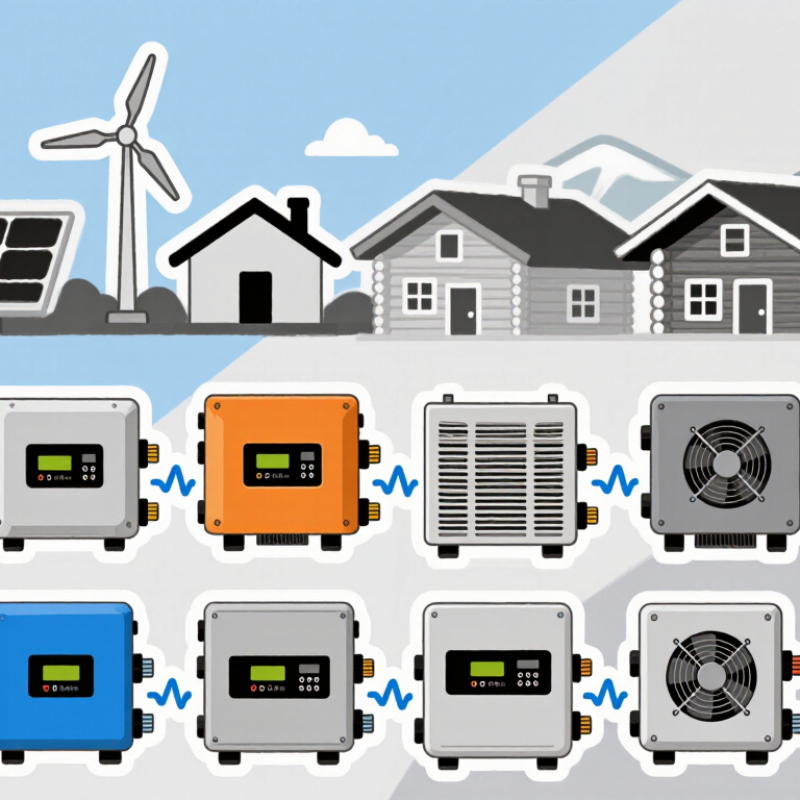
A low-frequency inverter converts battery DC into household AC, usually through fast electronic switching and a transformer operating at 50 or 60 Hz. The transformer helps raise voltage and can provide electrical isolation. It also adds weight: a unit beside a cabin battery bank may be noticeably heavier than a high-frequency model. The U.S. Department of Energy’s Energy Saver guidance puts typical inverter efficiency around 90–95 percent, though actual performance depends on load, temperature, and design. That difference matters when a fridge cycles overnight.
Surge capacity is useful for starting motors, but the rating needs context. A pump may draw several times its running current for a brief moment; check both the surge wattage and its permitted duration. A large number on a product label is not enough. NREL and Sandia’s inverter testing protocol measures efficiency at multiple operating levels, a reminder that performance changes with load rather than staying constant. For off-grid planning, compare continuous output with the appliances used together, then allow for wiring loss and battery limits. I would still verify the manual’s surge conditions; specifications can be easy to misread.
This chart shows one ideal 60 Hz cycle of 120 V RMS AC output, a common North American household supply. The waveform peaks at approximately 169.7 V. “Low-frequency” describes an inverter’s transformer topology, not its AC output frequency.
Low-frequency inverters use a transformer operating at mains frequency; this adds weight and bulk. In a home, that may mean a heavier unit on a sturdy wall, but the transformer can support strong short-duration surges. This can help start a pump or refrigerator compressor. High-frequency designs switch power electronically at much higher frequencies, allowing smaller transformers or transformerless layouts. They are generally lighter and compact. Yet surge performance depends on the specific model, not frequency alone.
Efficiency figures need careful reading. NREL’s 2024 Annual Technology Baseline models utility-scale lithium-ion storage at about 85% AC-to-AC round-trip efficiency. That figure includes the battery and conversion losses; it is not a head-to-head test of low- and high-frequency inverters. Check the inverter’s efficiency curve and surge rating under the loads you actually expect. A quiet cabin with LED lights has different needs from a home running a well pump. Weight matters. So does idle consumption, especially when the system stays on overnight. I would not assume that a heavier transformer unit is automatically more reliable; installation, cooling, and load matching matter too. That distinction is easy to overlook.
The entries below are representative inverter configurations, not rankings of specific products. Ratings and surge capability vary by design; confirm the manufacturer’s continuous-power, surge-duration, battery-voltage, and installation specifications before purchase.
| Rank | Representative Configuration | Continuous Output | Common Battery Voltage | Typical Surge Use | Suitable Applications | Practical Consideration |
|---|---|---|---|---|---|---|
| 1 | 12 V, 1 kW pure sine wave | 1,000 W | 12 V | Designed for brief startup loads; check the stated surge rating and duration. | Small cabins, lighting, electronics, and modest household loads | At 1 kW, 12 V systems draw high DC current; use suitably sized cables, fuses, and batteries. |
| 2 | 12 V, 1.5 kW pure sine wave | 1,500 W | 12 V | May support some motor or compressor startup loads if the surge rating is adequate. | Small off-grid systems and occasional appliance use | Allow for inverter losses and battery voltage drop under heavy loads. |
| 3 | 24 V, 2 kW pure sine wave | 2,000 W | 24 V | Often selected for loads with moderate starting current; verify motor compatibility. | Cabins, small homes, pumps, and refrigeration | A 24 V bank generally draws less DC current than a 12 V bank at the same power. |
| 4 | 24 V, 3 kW pure sine wave | 3,000 W | 24 V | Useful for certain inductive loads when the specified surge capacity is sufficient. | Off-grid homes with several everyday appliances | Check whether the unit supports the required AC voltage, frequency, and neutral arrangement. |
| 5 | 24 V, 4 kW pure sine wave | 4,000 W | 24 V | Can accommodate brief load peaks only within the inverter’s documented limits. | Larger cabins and moderate off-grid household demand | Confirm battery discharge capacity and DC protection are suitable for full output. |
| 6 | 48 V, 3 kW pure sine wave | 3,000 W | 48 V | Suitable for selected appliances with startup surges within the rated limit. | Efficiently wired small homes and larger solar-battery systems | A 48 V battery bank reduces DC current compared with lower-voltage banks at equivalent power. |
| 7 | 48 V, 5 kW pure sine wave | 5,000 W | 48 V | Often used where appliances have short startup peaks; check surge watts and seconds. | Full-time off-grid homes with moderate simultaneous loads | A load calculation helps prevent overload when several appliances run together. |
| 8 | 48 V, 6 kW pure sine wave | 6,000 W | 48 V | Can handle brief peaks only when both the inverter and battery bank allow them. | Larger off-grid homes and demanding single-phase loads | Consider continuous output at the expected ambient temperature, not just the headline rating. |
| 9 | 48 V, 8 kW pure sine wave | 8,000 W | 48 V | Check the documented overload curve for high-starting-current equipment. | High-demand homes, workshops, and larger standalone systems | Requires appropriately engineered batteries, busbars, cabling, and overcurrent protection. |
| 10 | 48 V, 10 kW pure sine wave | 10,000 W | 48 V | Surge performance depends on the specific design and battery’s maximum discharge current. | Large off-grid residences and substantial simultaneous loads | Confirm service configuration, local electrical-code requirements, and installation by a qualified professional. |
| Comparison | Low-Frequency Inverter | High-Frequency Inverter |
|---|---|---|
| Typical power-conversion design | Often uses a substantial low-frequency transformer in the output stage. | Typically uses high-frequency switching and a smaller transformer or transformerless power stage. |
| Size and weight | Usually heavier and bulkier at a comparable power rating. | Usually lighter and more compact. |
| Motor and compressor startup | Many designs tolerate substantial brief surge loads, but actual capacity and duration must be checked. | Surge handling varies widely; some units have strong surge performance, while others may limit motor starts. |
| Efficiency and idle use | Efficiency and standby consumption vary by design; the larger transformer can contribute to higher no-load draw in some models. | Often designed for high conversion efficiency and low weight, but compare measured efficiency and idle consumption for the specific unit. |
| Best-fit situations | May suit installations with demanding motor starts, where its weight and cost are acceptable. | May suit installations prioritizing compact size, lighter weight, and efficiency. |
| Selection checks | Verify continuous rating, surge rating and duration, waveform, idle consumption, and battery requirements. | Verify continuous rating, overload behavior, motor-start capability, waveform, cooling, and battery requirements. |
A low-frequency inverter is often chosen for its transformer-based design and ability to handle brief startup surges. That matters when a refrigerator compressor kicks in or a well pump starts under load. Compare continuous output with peak output, and check how long the inverter can sustain its surge rating. A large peak number alone can mislead. Match the inverter’s input voltage to the battery bank, then confirm that its pure sine wave output suits sensitive electronics and motor-driven appliances. Check the manual, not just the product label.
Efficiency is only part of the picture. Look at idle consumption, especially if the system runs overnight with little load. A few watts can add up. Review overload, low-voltage, over-temperature, and short-circuit protections, along with ventilation requirements. Charger settings matter too: adjustable charging voltage can help match the battery type, but incorrect settings may shorten battery life. Measure the space before buying; these units can be heavy, and cable runs need careful planning. I would also compare service access and warranty terms, though those details are easy to overlook when focusing on specifications. Real loads vary, so leave some capacity margin rather than sizing the inverter to a perfect-case calculation.
Top 10 Low-Frequency Inverters for Home and Off-Grid Use
A useful comparison starts with your loads, battery bank, and expected backup time. Low-frequency inverters use a transformer, which can handle brief motor-starting surges well. They are often heavier than high-frequency units, so check the mounting surface and available space.
The ten options below describe practical configurations, not a universal ranking: 12V pure-sine models for small cabins; 24V units for modest daily loads; 48V systems for larger homes; split-phase models for compatible appliances; inverter-chargers for grid or generator charging; solar hybrids with built-in charge controllers; generator-friendly units with adjustable charging; parallel-ready models for future expansion; low-idle-consumption designs for overnight use; and transformer-based units with accessible service support. Fit matters.
Compare continuous output with the combined demand of appliances running together. A refrigerator may draw much more power when its compressor starts, while a kettle creates a heavy, steady load. Check the inverter’s surge rating and duration, not just its headline wattage. Also verify battery voltage, charging limits, AC output, and required safety protections. A larger inverter can waste energy at light loads. That trade-off is easy to overlook.
Tips: Measure real usage where possible, and leave room for reasonable growth. Keep batteries close to the inverter to reduce cable losses, using correctly sized cables and protected connections. Check ventilation, too; a warm cupboard can shorten equipment life. My ranking would change with each home’s loads and climate. That is worth admitting.
Choosing a low frequency inverter starts with the loads you actually use, not the biggest number on an appliance label. List essential devices, their running watts, and how often they operate. A refrigerator might run at 150 watts but briefly demand several times more when its compressor starts. Pumps and workshop tools can create similar surges. Add the starting demands of equipment that may run together, then compare that figure with the inverter’s surge rating and duration. Small details matter. A rating that looks adequate on paper may still trip during a cold morning startup.
Battery capacity must support both the inverter’s output and your expected hours of use. Estimate daily energy in watt-hours, then allow for inverter losses and the battery’s usable capacity. For example, a 1,000-watt load running for two hours needs more than 2,000 watt-hours from the battery. Higher-power loads also draw more current at lower battery voltages, so cables, connections, and protection need appropriate sizing. Check the inverter’s specified battery voltage and charging limits before pairing equipment. These estimates are imperfect: real usage changes with weather, habits, and appliance cycles. Leave practical headroom, and have a qualified installer verify the system design, especially for large loads.
It converts battery DC power into household AC power. A transformer raises voltage and can provide electrical isolation.
Its transformer adds weight. Check the installation space and plan cable runs before moving it.
Check both peak wattage and how long the inverter can sustain it. A pump or refrigerator compressor may briefly need several times its running power.
No. Compare idle consumption, protections, ventilation needs, and charging settings. A few watts of idle use can add up overnight.
List running watts and startup demands for devices that may operate together. Leave capacity margin; real loads rarely match a perfect estimate.
Two hours at 1,000 watts requires more than 2,000 watt-hours from the battery. Account for inverter losses and usable battery capacity.
Match the inverter’s input voltage and charging limits to the battery. Check cable and protection requirements too; those details are easy to miss.
It is designed to suit sensitive electronics and motor-driven appliances. Still, check the appliance and inverter manuals before pairing them.
Startup surges, cold conditions, or devices running together may exceed its limits. The label alone can be misleading.
This guide explains how a Low Frequency Inverter converts battery power into usable electricity and why its transformer-based design can handle demanding startup surges. It compares low-frequency and high-frequency inverters, outlining differences in surge capacity, size, weight, efficiency, and typical applications. Readers will also learn which features matter when choosing an inverter, including continuous and peak power ratings, waveform quality, safety protections, charging options, and compatibility with a battery system.
The article reviews ten types of low-frequency inverter options suited to homes and off-grid setups, helping readers compare capabilities rather than focus on brand names. It also explains how to match inverter capacity to everyday loads and account for appliances with high starting demands. By considering energy use, battery voltage, runtime needs, and room for future expansion, readers can make a more informed choice for a dependable and appropriately sized power system.

