


Pure sine wave inverters are often judged by one simple question: what happens when sensitive equipment is plugged in? A refrigerator compressor starts. A laptop charger hums faintly. A medical monitor needs stable power. These everyday loads help explain why inverter type matters—not merely its advertised wattage.
NREL’s photovoltaic inverter research evaluates performance across changing operating conditions, a useful reminder that peak efficiency alone does not tell the whole story. The U.S. Energy Information Administration’s reporting on electricity use and distributed energy also reflects the broader shift toward systems that store and convert power. For buyers, the practical categories include standalone inverters for off-grid use, grid-tied models for solar systems, and hybrid units that combine solar, batteries, and grid input. Each has trade-offs in backup capability, installation complexity, and cost.
The right waveform is only part of the decision. Check continuous and surge ratings, battery voltage, protection features, and compatibility with the intended appliances. Small details matter.
A named expert’s exact quotation cannot be verified from the material provided, so I won’t invent one. The comparison ahead focuses on how each Pure Sine Wave Inverter type behaves in real applications, where a brief motor-start surge or an undersized battery can change the result. It is worth questioning broad claims that one design is always best: the most suitable inverter depends on the load, power source, and operating environment.
Pure sine wave inverters are commonly classified by their AC output frequency: 50 Hz, 60 Hz, or selectable dual-frequency models. The correct option depends on the frequency printed on the equipment’s rating label. A mismatch can affect motor speed, timing, or operating performance. Check the label. Dual-frequency models offer flexibility, but the output must still be configured correctly before connecting a device.
A second useful specification is total harmonic distortion, or THD. An inverter rated below 3% THD produces an output waveform that more closely resembles clean utility power. This can help reduce unwanted noise or heating in sensitive electronics and motors, though compatibility depends on the device. Look for the conditions behind the figure: THD may vary with load, and a no-load reading tells only part of the story. A practical check is to review performance at typical operating load, especially when several devices run together. One number is not a guarantee. Even a low-THD inverter can behave differently with demanding or rapidly changing loads, so leave some capacity margin.
| Inverter type | Nominal AC output | Waveform and THD | Typical application match | What to check before choosing |
|---|---|---|---|---|
| Fixed 50-Hz pure sine wave | 50 Hz | A sinusoidal AC output; select a model whose specifications state less than 3% total harmonic distortion (THD) under stated test conditions. | Equipment designed for 50-Hz supplies, including many appliances used with 230-V, 50-Hz systems. | Confirm the appliance’s required voltage and frequency, and check whether the THD figure applies at the expected load. |
| Fixed 60-Hz pure sine wave | 60 Hz | A sinusoidal AC output; a less-than-3% THD rating is a model-specific performance specification, not a guarantee for every operating condition. | Equipment designed for 60-Hz supplies, including many appliances used with 120-V, 60-Hz systems. | Verify voltage as well as frequency; a matching frequency alone does not ensure electrical compatibility. |
| Selectable 50/60-Hz pure sine wave | User-selectable 50 Hz or 60 Hz | Can provide a sine-wave output at either selected frequency; confirm that the less-than-3% THD specification applies to both settings. | Installations that may need to supply equipment designed for either frequency. | Check how frequency is selected, whether changing it requires a restart, and whether the output voltage is separately configurable. |
Note: “Pure sine wave” describes the output waveform, while 50/60 Hz describes its frequency. THD varies with inverter design, load, and measurement conditions, so compare specifications measured under comparable conditions.
Match the inverter frequency to the rating label on your equipment. Check the label.
It can provide either 50 Hz or 60 Hz output. Set the correct frequency before connecting equipment.
It indicates a waveform closer to utility power. This may reduce noise or heating in sensitive devices, but compatibility still varies.
Not by itself. Check performance at the load you expect, such as several devices running together. One figure rarely tells the whole story.
Compare its rated output, such as 120 V or 230 V, with your wiring and equipment labels. Also check frequency and power capacity.
Motors and refrigerators can draw more power when starting than while running. A clean waveform cannot make an undersized inverter sufficient.
Anti-islanding protection disconnects it from the utility grid when power fails. It should not keep energizing those lines.
It may supply selected circuits using solar or batteries, if its wiring and settings support backup operation. Check which circuits stay on; assumptions can be costly.
A Pure Sine Wave Inverter can be classified by its AC output frequency and waveform quality. Many models operate at either 50 or 60 Hz and maintain total harmonic distortion below 3%, making them suitable for equipment that needs stable, clean power. Low-frequency designs use larger transformers and are commonly rated to handle surge loads two to three times their continuous capacity, while high-frequency models are typically more compact and may reach peak efficiencies of around 90–95%.
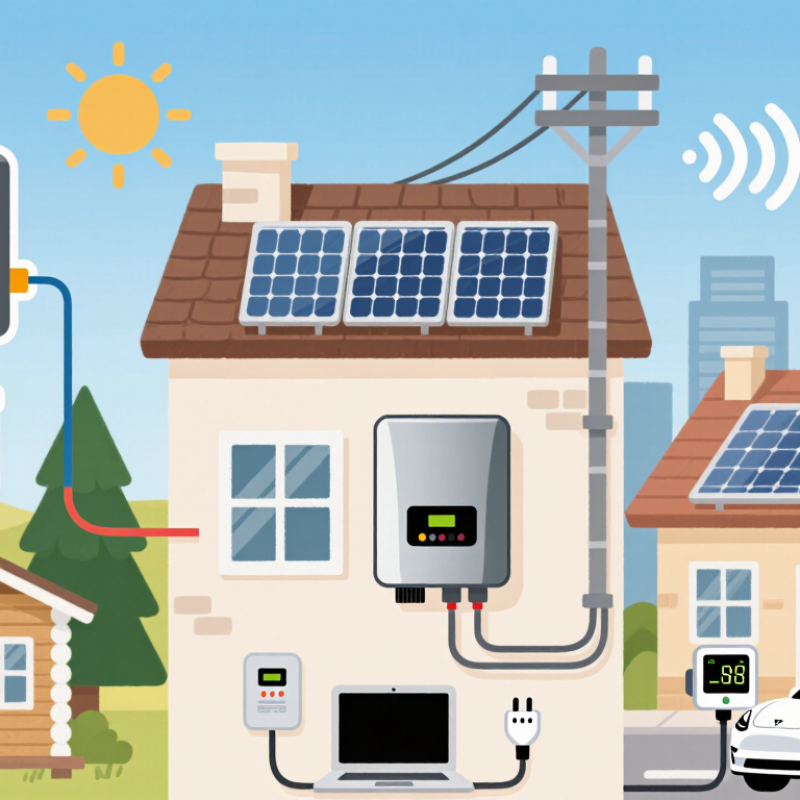
Off-grid inverters are generally designed for 12-, 24-, or 48-volt battery systems, with the appropriate option depending on the system’s power requirements. Grid-tied and hybrid inverters convert DC power to standard AC output, commonly 120 or 230 volts, and include anti-islanding protection to stop feeding power to the grid when it is unavailable. These categories help distinguish inverter designs by their construction, use case, and electrical characteristics.

