Industrial Grade Power Electronics Whitepaper

Best 30 Amp Battery Charger Manufacturer & Factory

Next-Generation Smart 3-Stage & Multi-Phase Charging Systems, Smart BMS Synchronization, and High-Efficiency Industry 4.0 Manufacturing for Global OEM/ODM Distribution.

Executive Industry Technical Report

Redefining 30 Amp Battery Charger Engineering & Manufacturing

In the rapidly evolving landscape of global industrial power conversion, the 30 Amp Battery Charger represents a critical sweet spot of high current density, thermal stability, and multi-chemistry adaptability. Whether deployed across automotive fleets, commercial marine vessels, remote telecommunication infrastructure, or off-grid solar storage arrays, modern 30A charging solutions are no longer mere linear DC rectifiers—they are sophisticated, micro-processor-driven power management hubs.

As global industries transition from conventional flooded lead-acid topologies toward high-energy-density Lithium Iron Phosphate (LiFePO4) and Lithium-ion chemistries, the technical requirements placed upon tier-1 battery charger OEMs have escalated exponentially. Modern commercial deployments demand dynamic multi-stage algorithm execution (Bulk, Absorption, Float, Equalization, and BMS Wake-Up), Power Factor Correction (PFC > 0.99), high-frequency switching conversion efficiencies exceeding 94%, and ruggedized IP65/IP67 mechanical enclosures.

This technical whitepaper provides an exhaustive analysis of the global 30 Amp battery charger market, examining underlying switching topologies, global B2B procurement benchmarks, China’s Industry 4.0 automated manufacturing resilience, localized application scenarios, and strict compliance paradigms (CE, RoHS, CB, SAA, UL).

95.2%
Max Peak Conversion Efficiency
>100k Hrs
MTBF Industrial Reliability
< 1%
Ultra-Low DC Voltage Ripple
3-Stage
Smart IUoU Algorithm Control
Featured Product Catalog

High-Performance 30A Chargers & Inverter Systems

Explore our tier-1 industrial battery chargers, pure sine wave inverter chargers, and hybrid power management units built for heavy-duty commercial deployment.
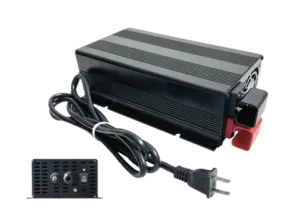
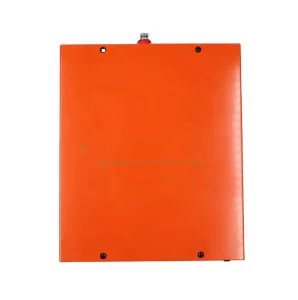
Wholesale 3 Stages Maili 12V 40A Smart charger 110/220VAC
Wholesale 3 Stages Maili 12V 40A Smart charger 110/220VAC 12/24/48VDC Intelligent Lead Acid Battery Charger
View Product Specifications
Best Maili 6KW 50A High Frequency Inverter Charger All-in-One
Best Maili 6KW 50A High Frequency Inverter Charger All-in-One 110V/220V AC Pure Sine Wave 95% Efficiency
View Product Specifications
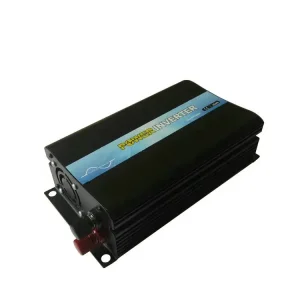
OEM High Quality 600W Power Inverter Pure Sine Wave
OEM High Quality 600W Power Inverter Pure Sine Wave 24V DC to 120V AC Soft-start Factory Direct
View Product Specifications
Best Maili QSP-9000 9KW 50/60Hz Single Phase Inverter
Best Maili QSP-9000 9KW 50/60Hz Single Phase High-power Pure Sine Wave DC/AC Inverter 95% Efficiency
View Product Specifications
Custom ROHS Approved 1500W Low Frequency Solar Inverter
Custom ROHS Approved 1500W Low Frequency Pure Sine Wave Off-Grid Solar Inverter 1.5KW Factory
View Product Specifications
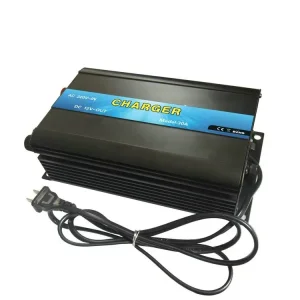
Best Business direct sales 3-Stage 12V 30A Intelligent Battery Charger
Best Direct Sales 3-Stage 12V 30A Intelligent Battery Charger Lead Acid 110/220VAC 12/24VDC Smart Charger
View Product Specifications
Best Maili 7KW High-power Pure Sine Wave Inverter Charger
Best Maili 7KW High-power 110V/220V AC Pure Sine Wave Inverter Charger & Protection Converters
View Product Specifications
ODM Maili Direct sale CE CB Rohs 9000W High Frequency Inverter
ODM Maili CE CB RoHS 3 Phase Single Phase 9000W High Frequency 12V/24V/48VDC Inverters Supplier
View Product Specifications
Technology Evolution

Global Market Trends Shaping the 30A Charger Industry

The worldwide demand for 30 Amp battery chargers is undergoing a seismic architectural shift driven by three primary industrial vectors: electrification of auxiliary transport, expansion of off-grid energy storage systems (BESS), and strict decarbonization mandates across commercial sectors.

1. Multi-Chemistry & LiFePO4 Primacy

Legacy battery chargers were engineered around fixed lead-acid profile voltages (14.4V bulk, 13.6V float). Today’s 30A commercial chargers feature digital signal processors (DSP) capable of switching algorithms seamlessly between AGM, Gel, Sealed Lead-Acid, and specialized Lithium Iron Phosphate (LiFePO4) curves. Integrated BMS wake-up pulses ensure that lithium cells in low-voltage disconnect states are safely recovered.

2. Telemetry & Smart Connectivity

Modern fleet managers and OEM system integrators demand continuous visibility into battery State of Charge (SoC), State of Health (SoH), temperature, and power throughput. Leading 30A chargers now integrate CANbus, RS485 (Modbus-RTU), or Bluetooth wireless modules, transmitting real-time operating metrics directly to vehicle ECUs or IoT cloud telematics platforms.

3. Thermal Resilience & IP Ratings

With operating environments spanning sub-zero Arctic telecom shelters to tropical marine engine rooms, chargers must deliver full 30A output without thermal throttling up to +50°C ambient. Enclosure standards have shifted from simple ventilated metal boxes to die-cast aluminum heat-dissipating shells rated at IP65 or IP67 for total dust and water ingress protection.

Technical Sourcing Guide

Global B2B Procurement Demands: What Sourcing Engineers Evaluate

When high-volume distributors, emergency vehicle builders, and industrial equipment OEMs audit a 30 Amp battery charger factory, they look far beyond basic nameplate current ratings. Rigorous evaluation protocols focus on electrical design efficiency, component margins, safety certifications, and customization flexibility.

Electrical Architecture & Switch-Mode Topology

High-efficiency 30A chargers utilize LLC resonant half-bridge or active-clamp flyback converters paired with synchronous rectification. Active PFC (Power Factor Correction) ensures compliance with EN 61000-3-2 standards, keeping line harmonics low and preventing breaker trips when multiple chargers share a single AC bus bar.

  • Wide Universal Input Voltage: 90V – 264V AC (50/60 Hz)
  • Peak Conversion Efficiency: > 94% at nominal loads
  • DC Output Voltage Ripple: Less than 100mV peak-to-peak
  • Zero-Voltage Switching (ZVS) for reduced MOSFET thermal stress

Multi-Layer Safety & Protection Circuits

Industrial reliability mandates redundant, hardware-level hardware protection loops that act independently of microprocessor software routines to prevent catastrophic thermal or electrical battery runaway.

  • Reverse Polarity Protection via solid-state MOSFET switches (no sparks)
  • Output Short-Circuit & Over-Current Auto-Recovery
  • NTC Remote Temperature Compensation Sensing
  • Over-Voltage Protection (OVP) & Thermal Derating Protection
Manufacturing Advantage

China Factory 4.0: Supply Chain Resilience & Manufacturing Scale

The global competitive advantage of tier-1 Chinese power electronics factories stems from deep supply chain clustering, fully automated Surface Mount Technology (SMT) lines, and computerized quality assurance frameworks.

Integrated Component Ecosystem

By locating manufacturing in advanced electronics clusters such as Suzhou and the Pearl River Delta, factories maintain direct, immediate access to top-tier semiconductor distributors, custom magnetic transformer winders, aluminum heatsink extruders, and PCB fabricators. This proximity reduces prototyping turnarounds from months to days.

Automated SMT & AOI Inspection

High-speed Yamaha and Panasonic SMT lines place micro-components with sub-micron precision. 100% of populated PCBA boards undergo Automated Optical Inspection (AOI) and In-Circuit Testing (ICT) to eliminate cold solder joints, bridging, or incorrect component placement prior to potting and assembly.

100% Burn-in & Aging Chambers

Quality is verified through rigorous full-load thermal burn-in protocols. Every single 30 Amp battery charger undergoes a continuous 4 to 8 hour burn-in cycle inside elevated temperature chambers (45°C) under full electrical load, eliminating early-life infant component mortality before export packaging.

Real-World Deployment

Localized Application Scenarios for 30A Chargers

The 30 Amp output capacity is specifically engineered for systems requiring rapid replenishment without overwhelming standard 15A/20A AC shore power circuits or small auxiliary generator outputs.

Recreational Vehicles (RV) & Overland Caravans

In RV electrical systems, a 30A 12V charger delivers approximately 360 to 440 Watts of continuous DC power. This allows campers connected to campsite shore power to quickly charge a 200Ah LiFePO4 bank in under 7 hours while simultaneously powering onboard DC loads such as LED lighting, water pumps, absorption refrigerators, and USB charging hubs.

Marine & Commercial Nautical Vessels

Marine installations demand corrosion-resistant, ignition-protected, and conformal-coated chargers. 30A multi-bank marine chargers distribute output current intelligently across starter batteries and deep-cycle house banks, ensuring yachts and fishing fleets maintain reliable engine starting power and navigational instrument back-up.

Emergency Vehicles & Work Truck Fleets

Ambulances, fire engines, and utility service trucks operate heavy auxiliary equipment (lights, communications gear, power tools). A ruggedized 30A auto-eject charger maintains onboard battery banks in optimal float condition while parked inside stations, guaranteeing instant response readiness.

Telecom Towers & Off-Grid UPS Systems

Remote 24V and 48V telecom repeater stations require continuous, highly stable DC float charging. 30A rack-mounted high-frequency chargers provide uninterrupted power to backup battery strings, maintaining critical communication links during grid blackouts.

Technical Comparison

30A Charger Topology: High-Frequency vs. Legacy Linear Chargers

Understanding the mechanical and electrical performance differences between modern switch-mode 30A chargers and legacy transformer-based designs is essential for selecting the correct OEM solution.

Technical Parameter Modern High-Frequency 30A Charger Legacy Linear / Transformer Charger
Conversion Topology Switch-Mode (LLC Resonant / Active PFC) Low-Frequency Iron-Core Transformer
Energy Efficiency 92% – 95% (Low Thermal Losses) 65% – 75% (High Heat Dissipation)
Weight & Dimensions Ultra-Compact (~1.5 kg – 2.8 kg) Heavy & Bulky (~8.0 kg – 14.0 kg)
Charge Control Algorithm Microprocessor 3/7-Stage Smart IUoU Simple Unregulated Single or Dual Stage
Lithium (LiFePO4) Support Native Profile + Auto BMS Activation Pulse Not Supported (Risk of Overcharging/Damage)
Input AC Voltage Range Universal 90V – 264V AC with PFC Narrow Narrow 110V or 220V ±10% Only
DC Voltage Ripple < 100 mV Peak-to-Peak (Battery Safe) > 1.5 V RMS (Causes Battery Heating)
Expanded OEM Selection

Additional Specialized Chargers, Controllers & Inverters

Explore our complete product lineup including rack-mounted chargers, ultra-thin off-grid inverters, and high-efficiency MPPT solar charging controllers.
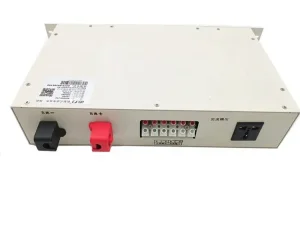
Wholesale Maili 1500W Rack-mounted Pure Sine Wave Inverter Charger
Wholesale Maili 1500W Rack-Mounted Pure Sine Wave Inverter & Charger 110V/220V Full Protection
View Product Specifications
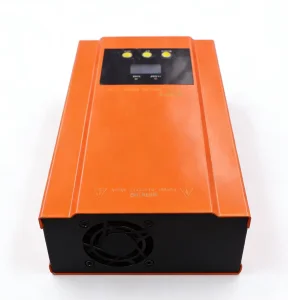
Wholesale MPPT Solar Charging Controller Manufacturer
Wholesale MPPT Solar Charging Controller High Efficiency Manufacturer Direct Factory
View Product Specifications
CE Certification Ultra-thin 1000W Inverter Charger
CE Certified Ultra-Thin 1000W 12V to 220V Offgrid Pure Sine Wave Inverter with AC Charger for RV Truck
View Product Specifications
Custom CE ROHS 6kw High Voltage DC 380V Inverter
Custom CE ROHS 6KW High Voltage DC 380V to AC 110V/220V Pure Sine Wave Inverter 94% Efficiency
View Product Specifications
2000W Solar Inverter Battery Charger Kit 24V 120V
Cheap 2000W Solar Inverter Battery Charger Kit 24V 120V Pure Sine Wave Off-Grid Inverter for Electronics
View Product Specifications
Maili High Efficiency 95% Pure Sine Wave Inverter Charger 1500W
CE ROHS CB Certified Maili 95% High Efficiency 1500W Inverter Charger 24VDC to 110VAC LCD Display
View Product Specifications
Peak 9000W Rated 3000W Solar Hybrid Inverter Charger
Cheap CE RoHS CB SAA Peak 9000W Rated 3000W Pure Sine Wave Solar Hybrid Inverter with 60A MPPT
View Product Specifications
Best Maili 1KW Rack-mounted Pure Sine Wave Charging Inverter
Best Maili 110V/220V AC 1KW Rack-Mounted Pure Sine Wave Charging Inverter Integrated Converter
View Product Specifications
Frequently Asked Questions

30 Amp Battery Charger Procurement & Technical FAQ

Comprehensive expert answers addressing critical engineering, integration, OEM customization, and sourcing inquiries for global buyers.

1. How long does a 30 Amp charger take to fully recharge a 100Ah or 200Ah battery bank?
Charging time is calculated using the formula: Time (Hours) = Battery Capacity (Ah) ÷ Charger Amperage (A) × Efficiency Compensation Factor (~1.15 for lead-acid, ~1.05 for lithium).

• 100Ah LiFePO4 Battery: 100Ah ÷ 30A × 1.05 ≈ 3.5 Hours (from 0% to 100% SoC).
• 200Ah LiFePO4 Battery: 200Ah ÷ 30A × 1.05 ≈ 7.0 Hours.
• 100Ah AGM Lead-Acid: Requires an extended float/absorption stage, taking approximately 4.5 to 5 Hours.
2. Can a 30 Amp battery charger safely charge Lithium Iron Phosphate (LiFePO4) batteries?
Yes, provided the 30A charger features a dedicated 2-stage or 3-stage CC/CV (Constant Current / Constant Voltage) Lithium profile. Unlike lead-acid chargers, lithium chargers must not apply automatic high-voltage equalization phases, as this can trip the battery's Internal Battery Management System (BMS) over-voltage protection or damage the lithium cells. Our smart 30A chargers also include an automatic BMS wake-up pulse to reset triggered protection circuits.
3. What gauge DC output cable wire size is required for a 30 Amp continuous charging current?
To prevent excessive DC voltage drop and wire overheating, cable selection depends on conductor run length:
• 0 to 6 Feet (0 – 1.8 m): Minimum 10 AWG (6 mm²) pure copper cable.
• 6 to 12 Feet (1.8 – 3.6 m): Recommended 8 AWG (10 mm²) pure copper cable.
• 12+ Feet (> 3.6 m): Recommended 6 AWG (16 mm²) copper cable to keep voltage drop strictly below 2%.
4. What is the difference between a 3-Stage and 7-Stage smart battery charger algorithm?
A 3-Stage Charger executes Bulk (Constant Current), Absorption (Constant Voltage), and Float (Maintenance). This is ideal for general daily fast charging and lithium batteries.

A 7-Stage Charger adds diagnostic and conditioning routines: Desulphation (Pulse recovery), Soft Start, Bulk, Absorption, Battery Test, Recondition (Equalization for lead-acid), and Float/Maintenance. 7-stage charging is ideal for recovering heavily discharged or aged flooded/AGM lead-acid battery banks.
5. What OEM and ODM customization options are available for factory direct orders?
As a direct manufacturer, Suzhou Maili Electrical Appliance Co., Ltd. provides full-tier OEM/ODM engineering customization, including:
• Custom Charging Profiles: Tailored voltage setpoints and stage timers for proprietary battery packs.
• Communications Integration: Custom CANbus, RS485 (Modbus-RTU), or Bluetooth telematics protocols.
• Mechanical Enclosures: Extruded aluminum housing color customization, custom mounting brackets, and IP65/IP67 waterproofing.
• Branding & Packaging: Private label silkscreening, customized LCD display boot logos, and branded packaging.
6. What safety certifications must a 30A battery charger hold for global market distribution?
Global market authorization requires compliance with regional safety and electromagnetic compatibility (EMC) standards:
• European Union: CE (LVD EN 60335-2-29 safety & EMC EN 55014), RoHS environmental directive.
• North America: UL 1236 (Battery Chargers for Engine-Generator Starting) and CSA C22.2.
• International/Oceania: CB scheme test certificates, SAA certification for Australia and New Zealand.
OEM / ODM Partnership Program

Partner with a Leading China 30A Charger Manufacturer

Accelerate your market expansion with field-proven power electronics engineered in Suzhou. Gain access to factory-direct wholesale pricing, robust supply chain guarantees, and complete engineering customization.

Request Technical Quote & OEM Catalog