Engineered for extreme reliability, zero-gap switching, high peak surge performance, and global grid integration.
An authoritative analysis of technical standards governing energy conversion hardware across European, Australasian, and North American markets.
In the rapidly evolving global energy transition, off-grid power infrastructure, solar photovoltaic (PV) systems, and industrial energy conversion electronics must adhere to stringent multi-jurisdictional regulatory frameworks. As global enterprise buyers, EPC contractors, and OEM distributors procure high-frequency inverters, hybrid power supplies, and intelligent multi-stage battery chargers, verifying comprehensive regulatory compliance is no longer a mere administrative check—it is a core engineering requirement for operational risk mitigation and market access.
Historically, power electronics manufacturers produced localized hardware tailored to fragmented regional requirements. Modern global supply chains demand a unified production strategy where a core power architecture simultaneously complies with European Union directives (CE & RoHS), international electrotechnical safety schemes (CB Scheme), and Australian/New Zealand mandatory standards (SAA/RCM).
Mandatory for EU commercialization. Mandates strict compliance with the Low Voltage Directive (LVD 2014/35/EU) and Electromagnetic Compatibility Directive (EMC 2014/30/EU). Inverters must demonstrate immunity to conducted and radiated RF interference while maintaining total harmonic distortion (THD) below 3% under peak inductive loads.
Restricts 10 hazardous substances in electronic assemblies, including Lead (Pb), Cadmium (Cd), Mercury (Hg), Hexavalent Chromium (Cr6+), and specific phthalates (DEHP, BBP, DBP, DIBP). Guarantees eco-friendly manufacturing, lead-free surface mount technology (SMT) reflow, and sustainable end-of-life recycling compatibility.
Operated by the International Electrotechnical Commission for Electrical Equipment (IECEE). Provides a single, globally recognized safety test report under IEC 62109-1 / IEC 62109-2 (safety of power converters for solar PV) and IEC 60335-2-29 (battery chargers), drastically shortening regulatory lead times across 50+ participating nations.
Accredited by JAS-ANZ to certify electrical equipment in compliance with AS/NZS 4777.2 (grid connection of energy system inverters) and AS/NZS 3100 (general requirements for electrical equipment). Mandatory for legal distribution across Australia and New Zealand.
Addressing complex electrical loads, remote microgrids, commercial vehicle electrification, and harsh environmental deployments.
Enterprise buyers operating in utility, marine, commercial fleet, telecom, and off-grid residential sectors face unique hardware challenges. Sourcing off-the-shelf power equipment without rigorous testing often leads to voltage sags, thermal throttling, harmonic pollution, and premature component failure. Enterprise procurement strategies now center around verifiable mean time between failures (MTBF), total cost of ownership (TCO), and architectural modularity.
| System Topology | Typical Capacity | Target Load Applications | Primary Certification Requirements | Core Technical Advantage |
|---|---|---|---|---|
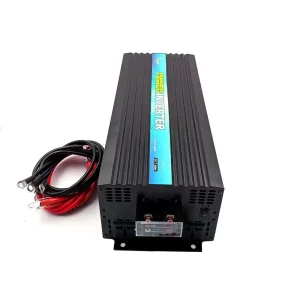
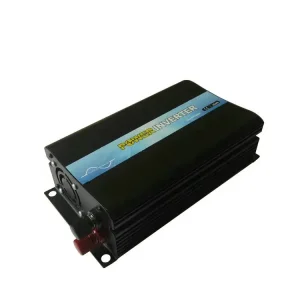
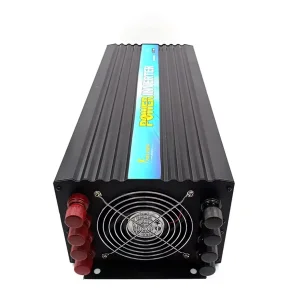
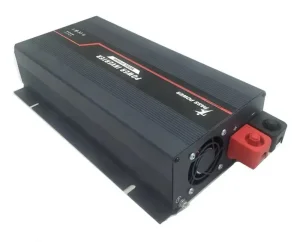
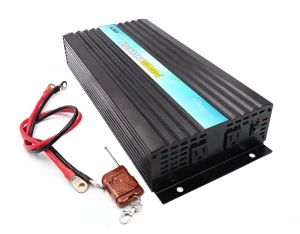
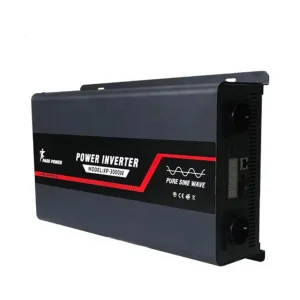
| High-Frequency Pure Sine Wave Inverter | 300W - 8,000W | Sensitive Electronics, RV Campers, Mobile Telecommunications, Laptops | CE (EMC/LVD), RoHS, SAA | High power density, light weight (>95% peak efficiency), rapid soft-start. |
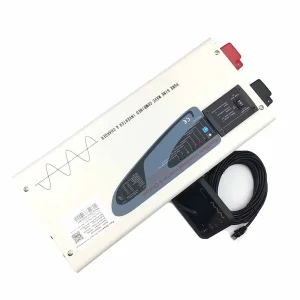
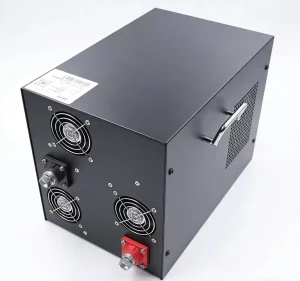
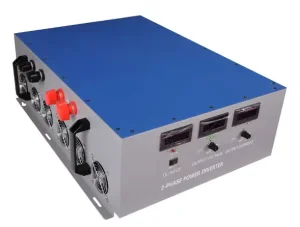
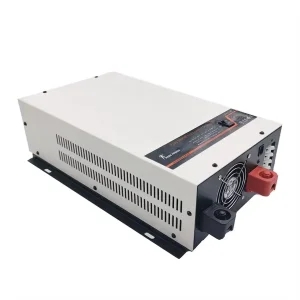
| Low-Frequency Inverter Chargers with Toroidal Transformer | 1,000W - 20,000W | Air Conditioners, Submersible Water Pumps, Heavy Power Tools, Motors | CE, CB (IEC 62109), SAA, RoHS | 300% peak surge capacity for 20 seconds, galvanically isolated transformer design. |
| Hybrid Solar MPPT Inverter & Storage | 2kW - 10kW (Single/Split/3-Phase) | Off-grid Residential Energy, Remote Telemetry Stations, Microgrids | CE, CB Scheme, SAA (AS/NZS 4777.2) | Integrated MPPT controller (up to 98% tracking efficiency), AC grid auto-bypass. |
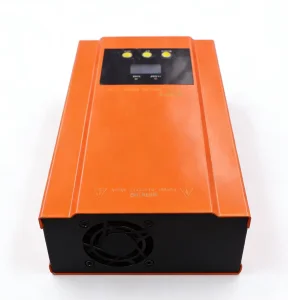
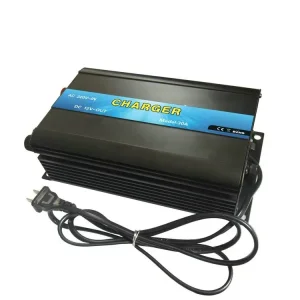
| Intelligent Multi-Stage Battery Chargers | 12V/24V/48V (10A - 60A) | AGM, GEL, Flooded Lead-Acid, LiFePO4 Lithium Battery Packs | CE, CB (IEC 60335-2-29), RoHS, SAA | 3-Stage (Bulk, Absorption, Float) automated charging profiles, temperature compensation. |
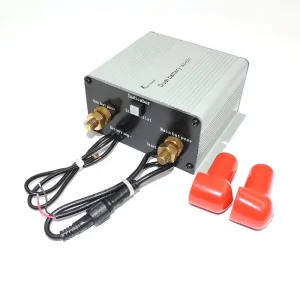
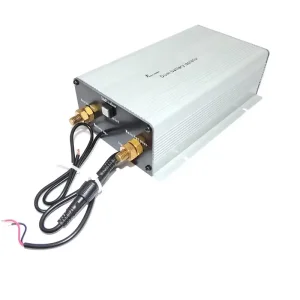
| Dual Battery Isolators & Voltage Relays | 12V/24V (200A - 400A) | 4x4 Overland Vehicles, Marine Boats, Emergency Service Trucks (EMS) | CE, RoHS, IP67 Waterproof Compliance | Automated smart sensing, zero voltage drop, dual battery protection. |
Inductive loads such as motor-driven water pumps, refrigeration compressors, and industrial power tools exhibit high inrush currents during startup—frequently reaching 3 to 5 times their nominal watt rating. A standard high-frequency inverter may immediately trip into overload protection under these transients. To solve this macro industrial bottleneck, our low-frequency pure sine wave inverter series incorporates a heavy-duty toroidal copper transformer, delivering an extraordinary 300% peak surge tolerance for up to 20 continuous seconds.
Conversely, for lightweight automotive and mobile office applications where spatial footprint and weight optimization are critical, our high-frequency inverter platforms utilize advanced high-speed Pulse Width Modulation (PWM) and planar transformer topologies. This achieves power densities exceeding 400W/kg while suppressing total harmonic distortion (THD) below 2.5%, ensuring pristine AC power output identical to or cleaner than utility grid electricity.
Rigorous quality control protocols, automated SMT lines, full-load burn-in testing, and bespoke engineering.
Full customization across DC input vectors (12V, 24V, 48V, 96V, up to 380V DC) and AC output configurations (100V, 110V, 120V, 220V, 230V, 240V at 50Hz or 60Hz pure sine wave).
Every exported inverter unit undergoes a rigorous 4-hour full-load thermal burn-in cycle inside environmental chambers to eliminate early component mortality and verify heatsink dissipation efficiency.
Optional RS485, CAN-bus, SNMP, and Wi-Fi/Bluetooth communications interfaces for real-time remote telemetry monitoring, grid interaction, and custom app integration.
How Gallium Nitride (GaN), Silicon Carbide (SiC), and AI-driven MPPT algorithms are reshaping the industry landscape.
The global power conversion hardware industry is experiencing a technological leap toward wide-bandgap (WBG) semiconductors. By transitioning from traditional Silicon MOSFETs to Silicon Carbide (SiC) switches and Gallium Nitride (GaN) power transistors, next-generation inverters achieve higher switching frequencies with dramatically reduced thermal losses.
Integration of Silicon Carbide Schottky diodes into high-power inverter boost stages, reducing switching power loss by up to 35% and elevating overall conversion efficiency beyond 96%.
Deployment of artificial intelligence neural-network Maximum Power Point Tracking (MPPT) algorithms that calculate dynamic solar irradiance curves under partial shading conditions in under 100 milliseconds.
Bidirectional Vehicle-to-Home (V2H) and Vehicle-to-Grid (V2G) power flow integration, allowing off-grid and automotive inverters to back-feed energy directly into intelligent microgrids.
Native multi-voltage firmware compatibility with solid-state lithium-metal batteries and high-voltage (800V DC) electric vehicle power platforms.
Procuring certified power hardware is only half the equation—seamless international trade logistics require absolute compliance with export/import customs document verification. As a premier CE, RoHS, CB, and SAA exporter, our technical department provides importers with complete compliance dossiers, including:
Direct, engineer-verified answers regarding international certifications, system sizing, and OEM manufacturing.
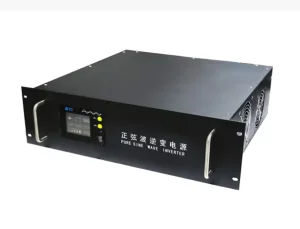
High-capacity hybrid inverters, rack-mounted systems, three-phase power converters, and automotive battery isolators.