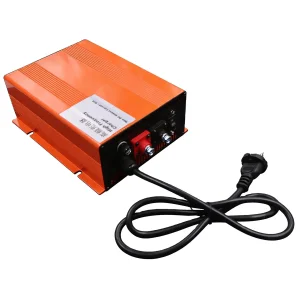
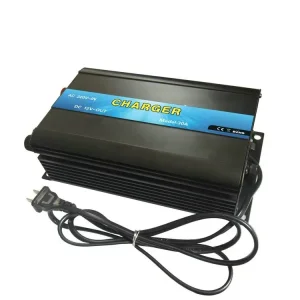
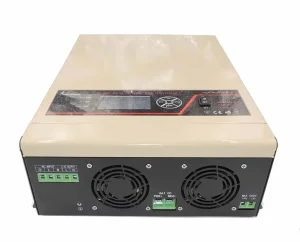
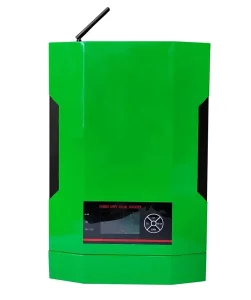
Industrial-grade power conversion and high-precision battery charging solutions engineered for global distributors and OEM integrators.
Why precise voltage calibration across multi-stage charging algorithms dictates battery cycle lifetime, safety parameters, and overall energy conversion efficiency.
In modern power electronics, charge voltage is not merely a static numerical output; it is a dynamically regulated potential differential applied across battery terminals to drive reversible electro-chemical reactions. According to the Nernst equation, the thermodynamic cell potential varies continuously with state-of-charge (SOC), internal resistance, and electrolyte temperature.
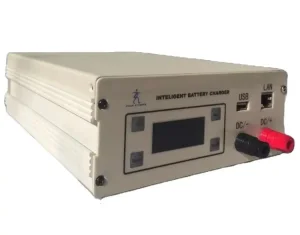
If a charger applies an uncalibrated bulk charge voltage, it induces overpotential losses, causing electrolyte thermal runaway in lead-acid chemistries or lithium plating on the graphite anode in Lithium Iron Phosphate (LiFePO4) cells. Premier exporters like Suzhou Maili Electrical Appliance Co., Ltd. (Maili Electric / Pass Power) design intelligent 3-stage and 8-stage charging microcontrollers with steady-state voltage tolerance within ±0.05V.
Achieving maximum energy density and preventing capacity degradation requires precise stage transitions within the charger firmware:
Inexpensive off-grid inverters often use fixed single-stage voltage regulation. Operating LiFePO4 batteries under uncompensated 14.8V absorption voltage triggers internal BMS safety lockouts or destroys cathode crystalline lattice structures. Sourcing from certified Chinese charge voltage factories ensures customized DIP-switch or LCD-programmed charge profiles optimized for specific cell chemistries.
Comprehensive voltage threshold reference sheet utilized by Maili Electric OEM/ODM power electronics engineers.
| Battery Chemistry | Nominal System Voltage | Bulk / Absorption Voltage (25°C) | Float Voltage (25°C) | Equalization Voltage | Temp. Coefficient (mV/°C/Cell) | Recommended Cut-Off Current |
|---|---|---|---|---|---|---|
| Lithium Iron Phosphate (LiFePO4) | 12.8V / 25.6V / 51.2V | 14.4V - 14.6V | 13.5V - 13.8V | Disabled / N/A | 0 (BMS Monitored) | 0.02C Amperes |
| Sealed Lead Acid (SLA / AGM) | 12.0V / 24.0V / 48.0V | 14.2V - 14.6V | 13.5V - 13.8V | 14.8V (Optional) | -3.0 mV/°C | 0.01C Amperes |
| GEL Cell Battery | 12.0V / 24.0V / 48.0V | 14.0V - 14.2V | 13.5V - 13.7V | Disabled / Prohibited | -4.0 mV/°C | 0.01C Amperes |
| Flooded / Open Lead Acid | 12.0V / 24.0V / 48.0V | 14.6V - 14.8V | 13.2V - 13.5V | 15.2V - 15.5V (Periodic) | -3.0 mV/°C | 0.03C Amperes |
| Ternary Lithium (NMC / NCM) | 11.1V / 22.2V / 44.4V | 12.6V / 25.2V / 50.4V | 12.3V / 24.6V | Disabled / N/A | 0 (BMS Monitored) | 0.02C Amperes |
* Note: All voltage thresholds scaled linearly for 24V (2x) and 48V (4x) systems. Custom charge voltage profiles are flash-programmable across all Maili Pass Power low-frequency and high-frequency inverter-chargers.
Examining the engineering ecosystem, cost efficiencies, and quality management protocols of leading Suzhou export factories.
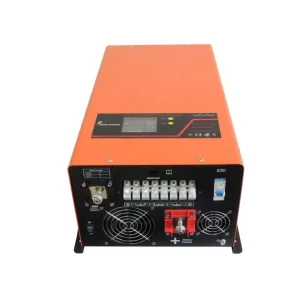
Maili Electric utilizes pure copper heavy line-frequency toroidal transformers in its low-frequency inverter-charger range. Toroidal architecture provides exceptional thermal inertia, extremely low electromagnetic interference (EMI), and a 300% surge capacity for inductive loads such as motor-compressors, pumps, and RV air conditioners.
Our charge voltage controller boards feature high-speed Digital Signal Processor (DSP) units. Dual feedback loops monitor output voltage and current simultaneously at 50kHz sampling rates, filtering voltage ripple to under 1% Vpp to guarantee maximum chemical stability during fast bulk charging.
Every unit undergoes strict quality control across our 2,770m² Suzhou manufacturing plant: SMT automated optical inspection (AOI), high-voltage dielectric insulation testing (1500VAC), and full-load burn-in aging chambers operated at 45°C ambient temperatures.
Empowering global B2B partners with robust, customizable power equipment since 2012.
Navigating grid voltages, safety certifications, and custom electrical interfaces for seamless market access.
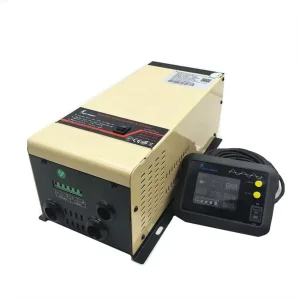
Procurement managers in the USA, Canada, and Mexico require split-phase or single-phase 120V AC inverter-chargers compliant with UL 1741 and UL 458 vehicle guidelines. Maili Electric supplies custom high-frequency and low-frequency pure sine wave units equipped with GFCI sockets, customized heavy terminal studs, and remote LCD wall displays engineered specifically for RV, marine, and mobile service fleets.
For European, Middle Eastern, and African markets operating on 230V 50Hz grids, compliance with CE-LVD (EN 62109-1/-2) and CE-EMC directives is mandatory. Our products feature integrated dynamic charge voltage temperature compensation probes (RTS), programmable dry contact relays for automated generator starting, and robust IP30/IP65 ingress protection enclosures.
From rugged travel trailers to remote solar microgrids, see how Maili charge voltage controllers perform under extreme operation.
Running travel trailer air conditioning requires stable charge voltage profiles to keep auxiliary house batteries healthy. Our low-frequency inverter-chargers integrate seamless automatic transfer switches (ATS) with under 10ms transfer times between shore power and battery power.
Integrating hybrid MPPT solar charge controllers with automated absorption-to-float voltage logic maximizes photovoltaic power utilization while protecting stationary lithium storage banks against overcharging.
Ambulances, fire trucks, and mobile command vehicles rely on Maili dual battery isolators and high-output 80A 3-stage smart chargers to prioritize starting batteries while safely maintaining auxiliary medical equipment banks.
Direct answers from Maili Electric's chief power electronics engineers regarding voltage configuration, OEM options, and system safety.
Explore our complete export catalog of smart battery chargers, automotive solar charge controllers, and pure sine wave power converters.
Whether you require customized DC absorption voltage thresholds, localized 110V/220V AC input standards, private label chassis colors, or bulk distributor OEM pricing, our engineering team in Suzhou is ready to accelerate your power products business.