ISO 9001:2015 Certified Power Electronics Factory

Best Golf Cart Battery Charger 48 Volt Factory & Products

Engineering Whitepaper & Enterprise Buying Guide: Industrial-Grade High-Frequency 48V Charging Architectures, Smart LiFePO4 & Lead-Acid Curves, and OEM Supply Chain Excellence from China.

Featured Power Electronics & Inverter Chargers (Part 1)

Direct-from-factory pure sine wave converters, high-frequency smart chargers, and industrial power management products engineered for extreme operational reliability.
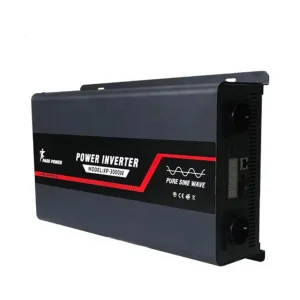
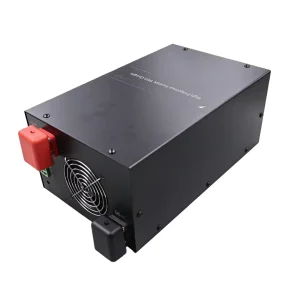
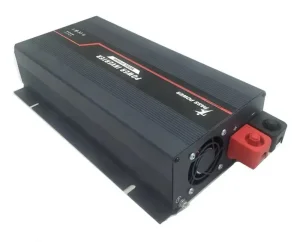
XP3000 3000W Pure Sine Wave Power Inverter 24V to 120V Converter
High-Quality Hot Selling XP3000 3000Watt Pure Sine Wave Power Inverter 24V DC to 120V AC Converter with New LCD Display
View Product Details
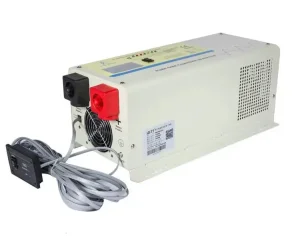
2000W High Frequency Pure Sine Wave Inverter with 90A Battery Charger
High-Quality CE ROHS 2000w High Frequency Pure Sine Wave Inverter with 90A Battery Charger
View Product Details
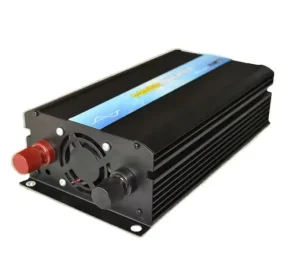
1000W 12V DC to 120V AC Inverter with Soft-start
High-Quality New Off-grid Single Phase Output Type 1000w 12v DC to 120v AC Pure Sine Wave Power Inverter
View Product Details
1500W Low Frequency Pure Sine Wave Off-Grid Solar Inverter
Custom ROHS Approved 1500W Low Frequency Pure Sine Wave Off-Grid Solar Inverter 1.5KW High Efficiency
View Product Details
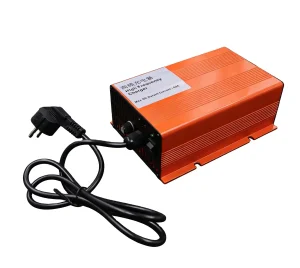
Portable High-Frequency Charger 110V/220V to 12V DC 60A
OEM Maili CE ROHS Portable High-Frequency Charger 110V/220V AC to 12V DC 60A Lithium GEL AGM Charger
View Product Details
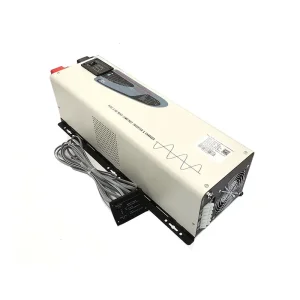
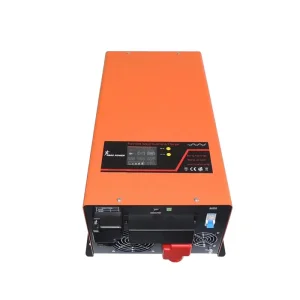
5KW Low Frequency Inverter Charger with Toroidal Transformer
Custom Maili 5kw High Quality LCD Screen Power 5000w Low Frequency Pure Sine Wave Inverter Charger
View Product Details
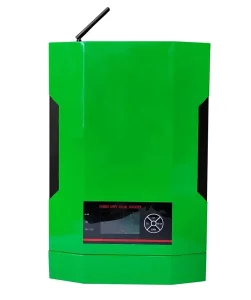
5.5KW 48V MPPT Solar Inverter Wifi Function
High-Quality CE ROHS Ready Stock 5.5KW 48V Single Phase MPPT Solar Inverter with LCD Display Wifi Function
View Product Details
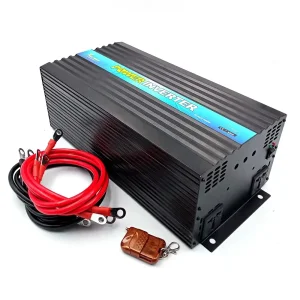
4KW 4000W Pure Sine Wave Power Inverter 48V to 120V
Wholesale CE RoHS Certified 4kva 4kw 4000 Watts Pure Sine Wave Power Inverter 48V to AC120V Remote Control
View Product Details
94.8%
Peak Charging Efficiency
IP67
Ingress Protection Rating
100,000+
Units Shipped Globally
<0.5%
RMA Warranty Failure Rate

Executive Summary: The Evolution of 48V Golf Cart Power Platforms

A technical synthesis of modern high-frequency charging topologies, battery chemistry transitions, and power conversion standards for commercial golf cart fleets and utility vehicles.

The global light electric vehicle (LEV) sector—encompassing golf carts, resort shuttles, neighborhood electric vehicles (NEVs), and industrial tuggers—has undergone a massive paradigm shift. Historical reliance on 36-volt legacy flooded lead-acid battery banks with primitive linear chargers has been rapidly phased out in favor of high-density 48-volt architectures paired with smart, high-frequency resonant converter chargers. Selecting the best golf cart battery charger 48 volt factory is no longer merely a procurement task; it is a strategic engineering decision directly dictating fleet uptime, total cost of ownership (TCO), and battery pack lifespan.

Modern 48V electric golf carts require high-efficiency power electronics capable of interfacing with diverse battery chemistries—ranging from traditional Deep-Cycle Flooded Lead-Acid (FLA), Absorbed Glass Mat (AGM), and Gel Cell to cutting-edge Lithium Iron Phosphate (LiFePO4 / LFP). A modern enterprise-grade 48V golf cart charger must combine dynamic multi-stage micro-processor algorithms, active power factor correction (PFC), thermal compensation, and robust mechanical enclosures (IP65/IP67) to withstand tough outdoor environments, voltage spikes, and heavy operational duty cycles.

High-Frequency Resonant LLC Topology vs. Legacy Transformer Chargers

Legacy golf cart chargers utilized heavy 50Hz/60Hz low-frequency step-down transformers. While mechanically robust, these units suffered from dismal energy efficiency (often below 70%), high heat dissipation, excessive weight (>15 kg), and poor power factor performance. Modern Tier-1 Chinese power electronics factories have pioneered High-Frequency LLC Resonant Switching Architectures operating at switching frequencies from 100 kHz to 300 kHz.

Active PFC Integration

Delivers Power Factor >0.99 and Total Harmonic Distortion (THD) <5%, complying with stringent global grid compatibility standards (IEC 61000-3-2) and dramatically reducing AC line draw.

Thermal Efficiency >94%

Advanced planar transformers and dynamic synchronous rectification cut thermal energy losses by half, allowing fully sealed fanless or smart-fan cooling setups.

CAN-Bus 2.0B Communication

Enables real-time telemetry exchange between the Battery Management System (BMS) and charger, dynamically modulating voltage/current to prevent thermal runaway.

Why Global B2B Buyers Choose China 48V Charger Factories

Unmatched supply chain integration, automated SMT manufacturing, rigorous testing protocols, and cost-effective customization capabilities.

China has solidified its position as the world's primary power electronics manufacturing hub. When sourcing 48-volt golf cart chargers, B2B procurement officers, golf cart brands, and aftermarket distributors leverage China’s unmatched industrial ecosystem. From raw semiconductor procurement (Infineon, STMicroelectronics, Cree SiC MOSFETs) to magnetic core winding, aluminum casting, and automated Surface Mount Technology (SMT) assembly, Chinese factories offer an unbeatable mix of speed, quality control, and competitive unit economics.

1. Complete Vertical Integration & Supply Chain Clustering

In key electronic manufacturing clusters such as Suzhou, Shenzhen, and Dongguan, all primary sub-components—such as PCB boards, heatsinks, customized wire harnesses, waterproof DC plugs (EZGO 3-pin, Club Car 3-pin round, Yamaha 2-pin triangle, Anderson SB50/SB175)—are sourced within a 50-kilometer radius. This clustering reduces lead times for prototype development from months to days.

2. Advanced Quality Assurance & Automated Burn-In Testing

Tier-1 factories operate under strict ISO 9001:2015 quality management systems. Every 48V golf cart charger leaving the assembly line undergoes rigorous multi-stage quality control:

  • Automated Optical Inspection (AOI): Validates 100% of SMT solder joints to eliminate cold joints and component misalignments.
  • Potting & Environmental Sealing: High-grade thermally conductive epoxy potting protects internal circuitry against dust, vibrations, and water immersion (IP67 certification).
  • Full-Load Thermal Burn-In: Every unit is tested under 100% full-load output for 4 to 8 hours in elevated-temperature environmental chambers (45°C–50°C) to catch early component failure.
  • Safety Hi-Pot & Earth Leakage Tests: Validated against UL 1564, CE, RoHS, and FCC Part 15 Class B requirements.

3. OEM/ODM Customization Capabilities

Global distributors rarely sell off-the-shelf products. Chinese factories excel in comprehensive OEM/ODM programs, customizing housing colors, laser-etched branding, customized charging profile firmware, input AC cord standards (US 110V, EU 230V, UK, AU), output DC connectors, and integrated OLED/LCD status monitors.

Technical Deep-Dive: 48V Charging Curves & Chemistry Profiles

Understanding multi-stage algorithms (CC/CV/Float/Equalization) engineered specifically for Lead-Acid and LiFePO4 battery packs.

Applying an incorrect charging profile to a 48V golf cart battery pack leads to premature capacity loss, battery plate sulfation, thermal runaway, or permanent BMS shutdown. A premium 48V intelligent charger must feature micro-programmed charging profiles tailored precisely to the connected battery chemistry.

Specification Parameter Flooded Lead-Acid (FLA) AGM / GEL Sealed Lead-Acid Lithium Iron Phosphate (LiFePO4)
Nominal Voltage 48V (8x 6V or 6x 8V) 48V (4x 12V or 6x 8V) 51.2V (16S Configuration)
Bulk Absorption Voltage 57.6V – 58.8V 56.4V – 57.6V 58.4V (3.65V per cell)
Float Voltage 54.0V (2.25V/cell) 54.0V (2.25V/cell) Not Applicable (Auto Cutoff)
Equalization Stage Yes (60V–63V Controlled Controlled Gassing) NO (Prevents Dry-out) NO (Cell Balancing via BMS)
Temperature Compensation -3mV / °C / Cell (Essential) -3mV / °C / Cell (Essential) BMS Low-Temp Cutoff (<0°C)
Charging Efficiency 75% – 82% 85% – 90% 95% – 98%

Understanding the Multi-Stage Charge Algorithm

A high-performance 48-volt golf cart charger utilizes an advanced micro-controller (MCU) to execute multi-stage charging sequences:

  • Stage 1: Qualification & Pre-Charge (Soft-Start)
    The charger measures battery resting voltage and internal resistance. If the 48V pack is severely discharged (<40V), the charger supplies a low trickle current (10% of maximum current) to safely condition the cells before ramping up.
  • Stage 2: Constant Current (Bulk Charge)
    The charger supplies maximum rated DC current (e.g., 15A, 18A, 25A, or 30A) into the battery pack. Voltage rises steadily until reaching the absorption threshold (~57.6V for Lead-Acid, ~58.4V for 16S LiFePO4). This stage recovers approximately 80% of battery state-of-charge (SoC).
  • Stage 3: Constant Voltage (Absorption Charge)
    Voltage is held constant while current tapers off naturally as internal cell saturation is achieved. This ensures maximum energy density without overcharging.
  • Stage 4: Float / Maintenance Charge (Lead-Acid Only)
    Once current drops below a predefined threshold (typically 1.5A–2A), the charger steps down to a safe float voltage (~54V) to offset self-discharge during winter storage or inactive periods.
  • Stage 5: Smart Wake-Up & BMS Auto-Reset (LiFePO4 Only)
    If a LiFePO4 battery's internal BMS trips its Low Voltage Cutoff (LVC) protection, standard chargers cannot detect voltage across the battery terminals and refuse to initiate charging. Advanced Chinese 48V lithium chargers feature a zero-volt activation pulse (BMS Wake-Up) that injects a regulated voltage spike to reset the BMS switch and start normal charging.

Enterprise Procurement Matrix: Key Selection Criteria for B2B Buyers

A comprehensive checklist for fleet operators, OEM vehicle manufacturers, and regional equipment distributors when selecting 48V chargers.

1. Ingress Protection (IP Rating)

For onboard chargers mounted under golf cart seats or chassis frame rails, an IP67 rating (fully dust-tight and submersible up to 1m) is mandatory to survive rain, pressure washing, and muddy turf conditions.

2. Onboard vs. Portable Form Factors

Determine whether your market demands portable desk-side chargers with top carrying handles or onboard models integrated with vehicle interlocking relays (preventing vehicle operation while plugged into AC line).

3. Plug & Harness Compatibility

Ensure factory provision of direct-fit OEM plugs: EZGO Powerwise 3-pin, Club Car 3-pin round, Yamaha 3-pin / 2-pin triangle, Crowsfoot 2-pole, or universal Anderson SB50 connectors.

Macro Application Scenarios & Industrial Fleet Solutions

Deploying heavy-duty 48V charging systems across diverse commercial fleet operating environments.

48-Volt golf cart battery chargers are utilized across far more than golf courses. Industrialization of light mobility platforms has expanded their use into critical commercial and municipal infrastructure:

1. Golf Course Fleet Operations (50 to 200+ Carts)

Golf course fleets require centralized overnight charging infrastructure. Chargers must feature multi-voltage AC auto-switching (100V–240V AC), low thermal emissions to prevent barn overheating, and auto-restart capabilities in the event of grid power restoration after midnight storms.

2. Resort Shuttles & Commercial Passenger Vans

Commercial resort carts operate continuously throughout the day, carrying guests and luggage. These platforms rely on high-output fast chargers (48V 25A to 30A) capable of performing quick 30-minute opportunity charging during staff lunch breaks without degrading battery health.

3. Industrial Warehouses & Airport Ground Support Equipment (GSE)

Electric tuggers, maintenance carts, and personnel carriers inside manufacturing facilities require ruggedized, vibration-proof onboard chargers that can tolerate dusty ambient conditions and frequent mechanical shocks.

4. Municipal & Gated Community Mobility Vehicles

Neighborhood Electric Vehicles (NEVs) operating on public access roads require street-legal safety interlocks and smart LED display panels indicating real-time State-of-Charge (SoC) and potential diagnostic fault codes.

Emerging Trends in 48V Power Conversion Tech

Next-generation semiconductor materials, cloud IoT fleet telemetry, and solar hybrid charging integration.

GaN & SiC Power Transistors

Gallium Nitride (GaN) and Silicon Carbide (SiC) MOSFETs are replacing standard Silicon switches, boosting conversion efficiency beyond 97% while cutting physical footprint by 40%.

IoT Cloud Telemetry & App Control

Integrated Wi-Fi / Bluetooth / LTE-M modules enable fleet superintendents to monitor entire cart charging statuses, cell health, and energy costs via mobile apps.

Solar-Assisted Onboard Micro-Inverters

Hybrid 48V chargers incorporating dedicated MPPT solar inputs allow roof-mounted solar panels to continuously trickle-charge the golf cart battery pack during daylight operation.

Frequently Asked Questions (FAQ) for Enterprise & B2B Buyers

Expert engineering answers regarding 48V golf cart charger manufacturing, customization, and technical compliance.

Q1: Can a 48V lead-acid golf cart charger be used to charge a 48V LiFePO4 battery pack?
Generally, no. Traditional lead-acid chargers incorporate float charging stages and high-voltage equalization routines (up to 60V+) designed to prevent plate sulfation. These high voltages can severely damage a 48V (51.2V nominal 16S) LiFePO4 battery pack and cause its Battery Management System (BMS) to trip over-voltage protection. A dedicated lithium profile with a precise Constant Current / Constant Voltage (CC/CV) cutoff at 58.4V must be selected.
Q2: How do I select the right charging current (Amperage) for a 48V golf cart fleet?
The optimal charging current depends on battery capacity (Ah) and available charging time. As a rule of thumb for Lead-Acid batteries, charging current should equal 10% to 15% of total C20 amp-hour capacity (e.g., a 220Ah pack requires a 15A–25A charger). For LiFePO4 lithium batteries, higher charging currents (0.2C to 0.5C) are supported, allowing 25A to 30A chargers to fully recharge a 100Ah pack in under 4 hours.
Q3: What OEM/ODM customization options are available from China 48V charger factories?
Leading Chinese OEM factories offer customized AC input voltage cables (US, EU, AU, UK), custom-molded DC connectors (EZGO Powerwise 3-pin, Club Car round, Yamaha triangle, Anderson SB50), private-label silk-screen or laser branding, custom aluminum enclosure anodization, pre-programmed multi-chemistry firmware curves, custom CAN-bus communication protocols, and retail packaging design.
Q4: What safety certifications must a 48V golf cart charger have for US and EU markets?
For North American markets, chargers should comply with UL 1564 (Industrial Battery Chargers) or UL 62368-1, alongside FCC Part 15 Class B for electromagnetic interference. For European markets, CE marking is mandatory, covering the Low Voltage Directive (LVD 2014/35/EU), Electromagnetic Compatibility (EMC 2014/30/EU), and RoHS compliance.
Q5: What is the zero-volt lithium wake-up function?
When a LiFePO4 battery is over-discharged, its BMS disconnects the terminal output to protect the lithium cells, resulting in 0V reading at the terminals. Standard chargers require a voltage signal to initiate charging and will fail to recognize the battery. Smart 48V lithium chargers feature an auto wake-up circuit that sends a brief low-current pulse to reactivate the BMS and re-establish normal charging.
Q6: Why is Active PFC (Power Factor Correction) vital for fleet charging facilities?
Without Active PFC, chargers draw heavily distorted current spikes from the AC grid, leading to a low power factor (~0.65) and excessive line heating. Active PFC boosts power factor to >0.99, enabling golf courses and facilities to run more chargers simultaneously on a single AC circuit breaker without tripping it or incurring utility power-factor penalties.
Q7: What is the typical turnaround time for custom factory orders?
Standard sample evaluation units are typically dispatched within 3 to 7 business days. Full-scale OEM mass production runs (500 to 5,000 units) generally require 20 to 30 calendar days, including SMT assembly, potting, aging burn-in, and final packaging sign-off.
Q8: What is the advantage of IP67 waterproof aluminum casting over plastic fans-cooled housings?
Fan-cooled plastic housings draw ambient dust, humidity, grass clippings, and corrosive chemical vapors across internal electronics, leading to short circuits over time. Fully potted, die-cast aluminum IP67 chargers dissipate heat passively through an external finned heatsink, eliminating mechanical fan failure points and protecting against water ingress during cart pressure washing.

Featured Power Electronics & Inverter Chargers (Part 2)

Explore our complete catalog of commercial off-grid solar inverters, high-power chargers, and dual-battery isolators engineered for enterprise power needs.
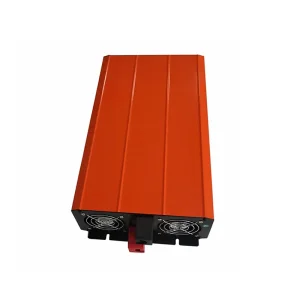
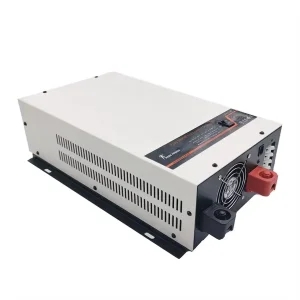
MLP1500W Pure Sine Wave Inverter for Wind Turbines
CE Certification MLP1500W CE RoHS Compliant Inverter New Design 1.5KW Pure Sine Wave Inverter for Wind Turbines
View Product Details
Maili 2000W Portable 12V DC Input 220V AC Output UPS Inverter Charger
CE Certification Maili 2000W Portable 12V DC Input 220V AC Output Automatic DC AC Power Star UPS Inverter Charger
View Product Details
Maili 800W DC to AC Pure Sine Wave Inverter 24VDC Input
Cheap Maili 800W DC to AC Pure Sine Wave Inverter 24VDC Input 220VAC & 12VDC Output for Home Use and Solar Power System
View Product Details
3000W Low Frequency DC to AC Inverter off-grid home inverter
CE Certification CE CB SAA ROHS Approved Maili High Efficient 3000w Low Frequency DC to AC Inverter with Charger
View Product Details
Maili 10KW High-power Single Phase Inverter Charger EV
ODM Maili 10KW High-power 110/220VAC Single Phase Pure Sine Wave Inverter & Charger for Electric Vehicles
View Product Details
Maili 1500W Rack-mounted Pure Sine Wave Inverter Charger
Wholesale Maili 1500W Rack-mounted Pure Sine Wave Inverter & Charger, 110V/220V 50/60Hz Full Protection
View Product Details
Maili 2KW Rack-mounted Integrated Inverter Charger
Custom Maili 2KW Rack-mounted Pure Sine Wave Integrated Inverter Charger, 110V/220V AC Multiple Protections
View Product Details
Maili BS-173 Dual Battery Isolator 12/24V 400A
OEM Maili BS-173 Efficient 90% Dual Battery Isolator 12/24 Volt 400 Amp Auto Switches Lead-Acid and Lithium
View Product Details