


Industrial-grade pure sine wave inverters, MPPT solar controllers, and multi-stage intelligent chargers tested under rigorous thermal and electrical loads.
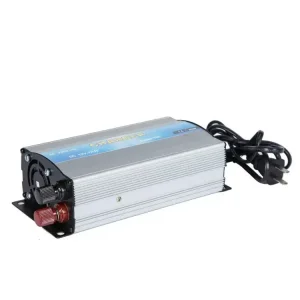
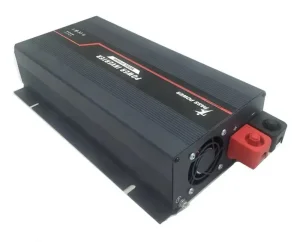
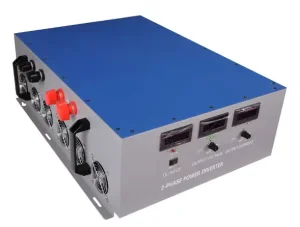
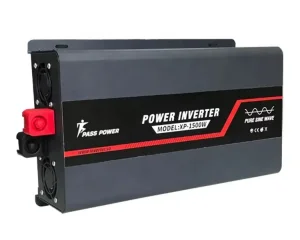
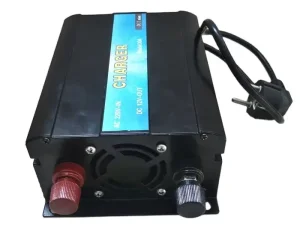
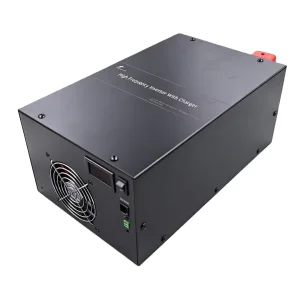
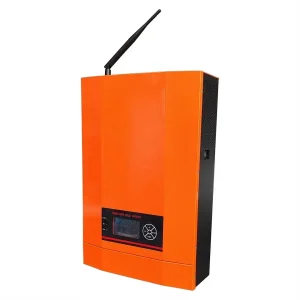
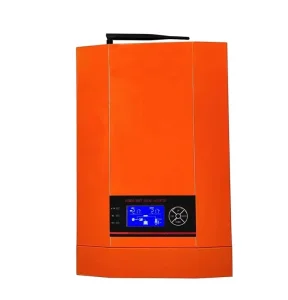
Analyzing thermal dissipation, energy density conversion, and power topologies across global industrial B2B procurement vectors.
As the global energy ecosystem undergoes a fundamental structural shift toward decentralized energy storage, electrification, and off-grid resilience, high-efficiency power electronics have transitioned from auxiliary equipment to core infrastructure components. Original Equipment Manufacturers (OEMs), engineering procurement contractors (EPCs), and commercial fleet integrators face mounting pressure to minimize energy conversion losses, maximize system uptime, and guarantee electromagnetic compatibility (EMC).
In modern industrial application environments—spanning off-grid solar microgrids, specialized vehicle conversions (ambulances, RVs, mobile command centers), and heavy industrial equipment—electrical energy conversion efficiency directly dictates operational expenditure (OpEx) and thermal management overhead. A 3% degradation in conversion efficiency across a 10kW continuously running inverter system dissipates 300 Watts of parasitic thermal energy, accelerating capacitor degradation, requiring larger heat sinks, and decreasing long-term Mean Time Between Failures (MTBF).
Technical Insight (Information Gain): Modern high-efficiency power converters must balance high-frequency switching speed with electromagnetic suppression. Achieving over 95% efficiency requires precise Pulse Width Modulation (PWM) control, low-loss toroidal core selection, and advanced synchronous rectification algorithms.
Selecting the optimal power electronic topology requires a deep understanding of load profiles, surge requirements, and spatial constraints. Global procurement officers must evaluate two primary architectural paradigms:
| Performance Metric | High-Frequency (HF) Inverters | Low-Frequency (LF) Toroidal Inverters | Hybrid Solar MPPT Inverters |
|---|---|---|---|
| Primary Topology | Fast Switching MOSFETs / Compact Transformers | Heavy-Duty Line Frequency Toroidal Transformer | Integrated High-Voltage DC Bus + MPPT Controller |
| Peak Conversion Efficiency | 91% – 94% | 92% – 95.5% | 94% – 98% (PV-to-AC) |
| Surge Capacity Multiplier | 200% (Short duration <100ms) | 300% (Continuous peak for 5–10 seconds) | 200% – 250% |
| Inductive Load Handling | Moderate (Light power tools, electronics) | Exceptional (Compressors, pumps, HVAC, motors) | High (Residential HVAC, pumps, grid-interactive) |
| Weight & Form Factor | Ultra-compact, lightweight | Heavy, ultra-rugged chassis | Medium footprint, wall-mountable |
| Target Application | Consumer vehicles, light telecom, marine IT | Heavy RVs, commercial fleets, emergency, off-grid homes | Off-grid residential, industrial solar storage |
Why Suzhou and Yangtze River Delta industrial clusters deliver unmatched cost-to-performance ratios and rapid custom engineering lifecycles.
The concentration of raw material suppliers—including high-permeability grain-oriented silicon steel cores, oxygen-free copper windings, and grade-A MOSFET/IGBT semiconductors—within a 50km radius enables instant component sourcing and eliminated logistical lead times.
State-of-the-art Surface Mount Technology (SMT) automated assembly lines combined with automatic optical inspection (AOI) and 100% full-load burn-in aging chambers guarantee strict zero-defect manufacturing standards across volume production runs.
In-house electrical, mechanical, and software engineering teams turn client specification sheets into functional prototypes within 14 working days, supporting custom DC/AC voltages (e.g., 96V DC input or split-phase 110V/220V output) with tailored firmware.
From rugged emergency transport fleets to off-grid solar microgrids: How specialized power conversion systems operate under challenging environmental conditions.
Mobile off-grid deployments present severe electrical and ambient challenges. Air conditioners, induction cooktops, and high-draw microwaves exhibit extreme startup inrush currents that trip conventional high-frequency power converters. Low-frequency pure sine wave inverter chargers equipped with heavy-duty toroidal transformers absorb these 300% surge currents seamlessly for up to 10 seconds. Integrated seamless transfer switches (swapping between generator/shore power and battery in <10 milliseconds) ensure sensitive onboard electronics, refrigeration, and communication systems experience uninterrupted power.
Ambulances, fire engine command platforms, and mobile medical centers require zero power failure tolerance. Utilizing dual-battery isolators alongside high-efficiency battery chargers, these installations automatically segregate the vehicle’s primary starter battery from auxiliary house battery banks. During idle engine operation, intelligent multi-stage chargers replenish lithium iron phosphate (LiFePO4) or AGM batteries, delivering stable, clean sine wave power free of voltage spikes or high-frequency electrical noise that could disrupt medical diagnostic sensors.
In regions with unreliable municipal electrical grids or complete off-grid remote homes, hybrid MPPT solar inverter converters serve as the master energy management hub. Featuring high-efficiency Maximum Power Point Tracking (MPPT) algorithms with >99.5% tracking effectiveness, these hybrid units dynamically balance photovoltaic array inputs, battery storage charge profiles, and generator backup feeds to supply clean AC power to appliances while reducing fuel consumption and operational costs.
As electric vehicles and industrial logistics fleets transition to higher voltage battery architectures (e.g., DC 380V or DC 540V platforms), standard 12V/24V/48V inverters are insufficient. High-voltage DC inverters step down high-voltage vehicle traction batteries directly into commercial 220V/380V single-phase or three-phase AC, powering onboard hydraulic pumps, cooling compressors, and heavy power tools without extra step-down transformers.
Key technological innovations shaping the high-efficiency power electronics landscape over the next decade.
Gallium Nitride (GaN) and Silicon Carbide (SiC) MOSFET switches are replacing silicon components, reducing switching losses by up to 60%, enabling switching frequencies above 100kHz, and slashing unit weight while raising conversion efficiency past 97%.
Embedded microcontrollers executing real-time machine learning algorithms continuously scan solar I-V curves under partial shading conditions, optimizing power extraction and dynamic thermal fan curves to prolong capacitor lifespan.
Modern power converters feature integrated CAN bus, RS485 Modbus, and IoT Bluetooth/Wi-Fi modules, enabling real-time remote telemetry, cloud diagnostic alerts, predictive battery monitoring, and over-the-air (OTA) firmware updates.
A technical procurement framework for B2B buyers evaluating manufacturer compliance, electrical safety standards, and OEM customization capabilities.
When evaluating high-efficiency power electronics manufacturers, global B2B procurement managers and system integrators must audit potential suppliers against a rigorous set of electrical, safety, and operational standards. Relying solely on advertised peak wattage leads to system failures under field conditions.
Ensure the manufacturer maintains a certified ISO 9001:2015 Quality Management System and holds internationally recognized third-party test reports for specific product lines:
A true direct-factory manufacturing partner must provide modular design flexibility without compromising safety certifications. Key OEM/ODM engineering customization options include:
Specialized industrial power converters, split-phase, and high-voltage DC inverters for OEM/ODM global deployment.
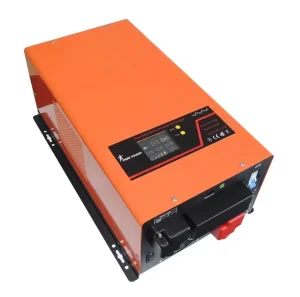
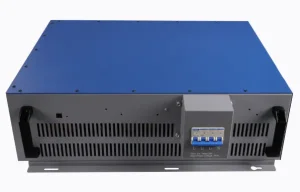
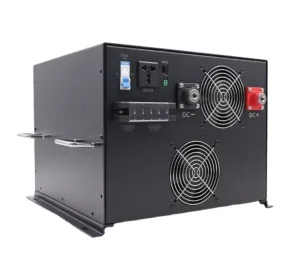
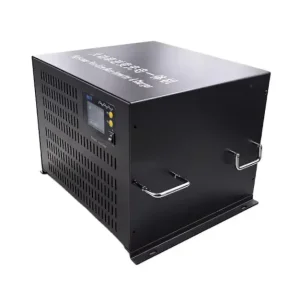
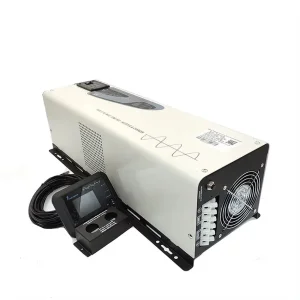
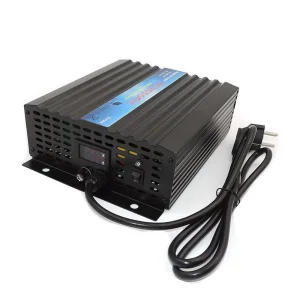
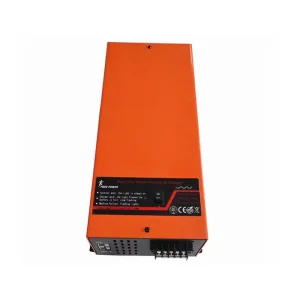
In-depth technical answers regarding inverter topology selection, surge ratios, certification, and custom manufacturing.
Low frequency inverters utilize a heavy-duty copper line-frequency toroidal transformer operating at 50Hz/60Hz. This provides immense physical magnetic inertia and galvanic isolation, allowing the unit to deliver 300% surge capacity for 5–10 seconds to start heavy inductive loads like air conditioners, industrial pumps, and compressors. High frequency inverters use electronic switching MOSFETs and compact high-frequency transformers to step up voltage at 20kHz+. They are significantly lighter and smaller with high efficiency for resistive loads (laptops, lighting, TV), but cannot sustain prolonged heavy inductive surges.
Pure Sine Wave output mirrors the smooth mathematical sinusoidal wave provided by utility electrical grids with Total Harmonic Distortion (THD) under 3%. Modified sine wave inverters generate harsh square-wave electrical steps that cause overheating in induction motors, high-frequency audible noise in audio/medical equipment, severe RF interference, and premature component breakdown in sensitive electronics.
Maximum Power Point Tracking (MPPT) continuously monitors solar panel array output voltage and current in real time, calculating the optimal electrical operating point. Unlike PWM controllers that clip excess panel voltage, MPPT controllers DC-to-DC convert excess voltage into higher charging current, achieving tracking efficiencies exceeding 99.5% and increasing battery charging yield by up to 30% under low-light or variable cloud conditions.
Yes. Our multi-stage intelligent chargers feature selectable charging profiles specifically calibrated for LiFePO4 batteries, including constant current (CC), constant voltage (CV), and automatic cell balancing stages. Our dual-battery isolators also feature adjustable voltage thresholds to prevent lithium battery management systems (BMS) from tripping during alternator charge cycles.
Engineering sample evaluation takes approximately 10–14 working days from initial PCB schematic sign-off. Every manufactured unit undergoes 100% full-load burn-in aging tests in high-temperature chambers, combined with high-voltage insulation tests, grounding resistance verification, and automatic optical inspection (AOI) to guarantee strict zero-defect delivery.
