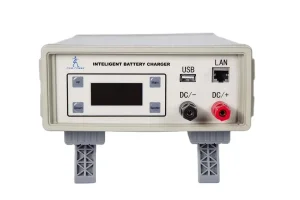
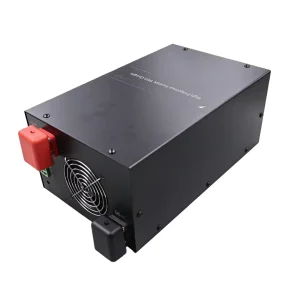
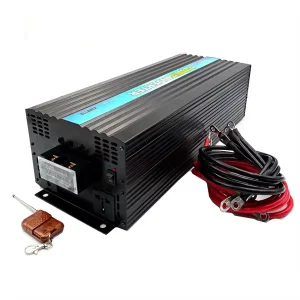
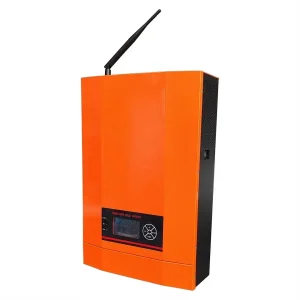
Engineered for extreme reliability, maximum energy yield, and multi-chemistry battery compatibility across demanding commercial environments.
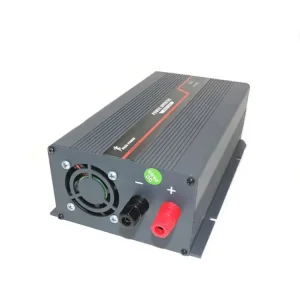
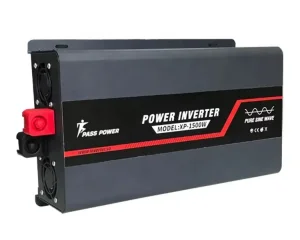
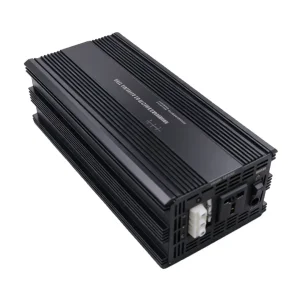
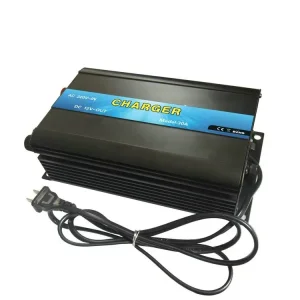
An authoritative evaluation of macro-economic demand, power grid transformation, and zero-emission electrification mandates driving high-current industrial chargers.
The global transition toward decentralized clean energy requires robust energy storage systems (BESS). Large battery chargers act as the primary interface between utility grids, renewable generation sources (PV/Wind), and mega-watt scale battery banks. Advanced Power Factor Correction (PFC > 0.99) ensures zero disturbance to regional power networks.
Commercial vehicle fleets, electric buses, mining vehicles, and logistics forklifts demand continuous high-ampere DC fast charging. Modern multi-stage large chargers drastically reduce downtime through adaptive constant-current charging phases without escalating thermal degradation within high-voltage LiFePO4 or NMC battery packs.
Mission-critical operations—ranging from offshore oil rigs and maritime vessels to 5G telecom towers—rely on heavy-duty chargers capable of operating under broad input voltage variations (110V to 380V AC). Galvanic isolation and IP30 to IP65 protective enclosures ensure survival in hostile, saline environments.
From Silicon Carbide (SiC) semiconductors to neural-network thermal management, discover the core technologies defining the modern large battery charger standard.
By substituting legacy Silicon MOSFETs with Silicon Carbide (SiC) devices, our power converters operate at significantly higher switching frequencies with up to 70% lower switching losses. This allows for compact toroidal and high-frequency transformers that deliver massive power density without excessive weight.
Charging modern large battery banks requires controlled chemical reaction phases. Our microprocessor-controlled units deliver continuous cycle optimization: Pulse Soft-Start, Bulk Constant Current, Absorption Constant Voltage, Float Maintenance, Desulfation (Lead-Acid), Equalization, and Automatic Lithium BMS Activation.
Modern commercial chargers must seamlessly talk to external Battery Management Systems (BMS) and SCADA automation platforms. Embedded RS485 and CAN 2.0B interfaces enable real-time telemetry of cell voltages, internal resistance, dynamic temperature compensation, and operational fault telemetry.
Customized system configurations tailored for mission-critical enterprise environments around the globe.
Integrating large battery chargers with hybrid solar MPPT inverters provides unbroken baseline power for remote agricultural installations, telecom shelters, and off-grid residential communities. System automatic transfer switches (ATS) shift load handling seamlessly between solar output, battery reserve, and auxiliary diesel generators.
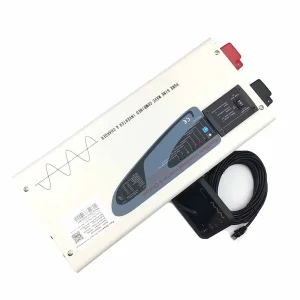
Ambulances, mobile medical labs, and luxury travel trailers demand pristine Pure Sine Wave AC output paired with high-amperage charger stages. Our split-phase and 3-phase high-frequency chargers maintain secondary auxiliary battery banks while powering sensitive medical telemetry without electromagnetic interference (EMI).
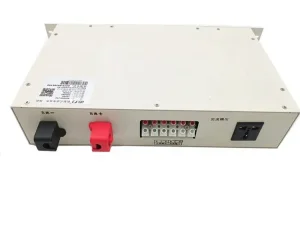
Uninterruptible Power Supply (UPS) installations in enterprise data centers require dedicated trickle and floating chargers capable of keeping vast lead-acid or lithium battery strings fully energized for instant drop-in backup during municipal blackout events.
Key criteria procurement directors and electrical engineers evaluate when choosing a large battery charger manufacturer.
Verify that your supplier possesses verified CE, RoHS, CB, and SAA certifications. Compliance guarantees adherence to strict safety standards regarding dielectric withstand voltage, clearance/creepage distances, and electromagnetic compatibility (EMC class A/B).
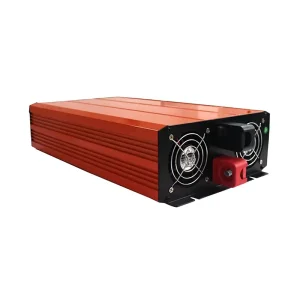
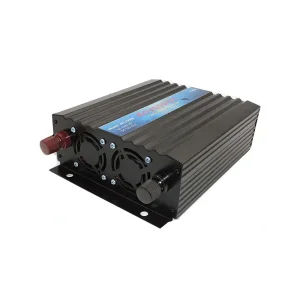
Continuous heavy charging generates significant heat. High-grade suppliers utilize heavy anodized aluminum heat sinks combined with intelligent temperature-controlled quiet cooling fans that adjust speed according to internal transformer temperatures.
Select manufacturers capable of tailored voltage scaling (e.g., custom 96V or 380V DC systems), proprietary communication protocols, customizable LCD user interfaces, and branded housing enclosures suited to specific market channels.
Expert answers regarding large battery chargers, pure sine wave inverters, and battery maintenance.
Low Frequency inverter chargers utilize heavy-duty line-frequency toroidal transformers capable of sustaining huge surge powers (up to 300% of rated capacity for several seconds). This makes them ideal for inductive motor loads like compressor air conditioners and water pumps. High Frequency chargers replace heavy transformers with compact electronic switching circuits, yielding higher energy efficiency, lighter weight, and smaller physical footprints best suited for electronic loads and tight spaces.
Single-stage charging can overheat large battery banks, causing electrolyte gassing in AGM/Lead-Acid batteries or triggering safety shutdowns in Lithium BMS circuits. Multi-stage charging applies Constant Current (Bulk) for fast capacity recovery, Constant Voltage (Absorption) to top off cells safely, and Float voltage to maintain full charge indefinitely without thermal stress or degradation.
Yes, our smart battery chargers feature user-selectable charge profiles specifically tailored for Lithium (LiFePO4/NMC) chemistry, as well as AGM, GEL, and Flooded lead-acid batteries. The lithium settings include automatic 0V BMS wake-up pulses to reset tripped protection boards.
Our chargers incorporate comprehensive active and passive protection suites: Over-Voltage Protection (OVP), Reverse Polarity Protection, Short Circuit Protection, Over-Temperature Cutoff, Over-Current Protection (OCP), and AC Input Under-Voltage Lockout.
Explore our broader range of OEM-certified power products, solar hybrid units, and smart multi-stage chargers.