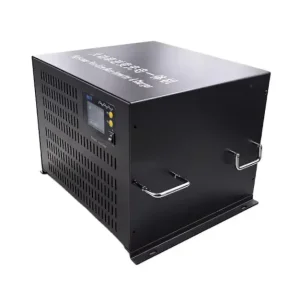
Direct factory energy conversion systems engineered for extreme industrial, marine, mobile, and off-grid power deployment.
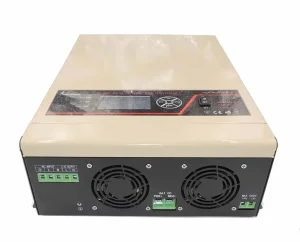
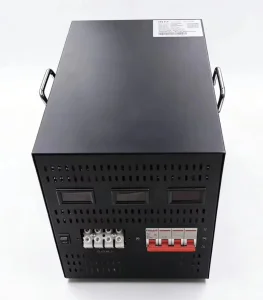
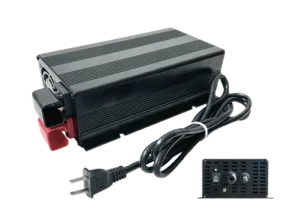
Navigating electro-chemistry trade-offs, total cost of ownership (TCO), and engineering requirements for modern commercial energy storage.
Lithium Iron Phosphate has redefined stationary storage and heavy-duty mobile applications. Offering cycle life exceeding 4,000 to 6,000 cycles at 80% Depth of Discharge (DoD), integrated smart Battery Management Systems (BMS), high volumetric energy density (~300-400 Wh/L), and non-gassing inherent thermal safety, LiFePO4 represents the gold standard for long-term Levelized Cost of Storage (LCOS).
Valve-Regulated Lead-Acid (VRLA), Absorbed Glass Mat (AGM), and Gel batteries maintain a substantial market share due to low initial CAPEX, exceptional sub-zero temperature tolerance (-30°C operational stability), simple recyclable supply chains, and tolerance to float-charge environments without complex BMS supervision—ideal for telecom backup and extreme ambient temperature duty cycles.
While lead-acid presents a 60% lower initial capital expenditure, lithium chemistry reduces lifetime dollar-per-kWh delivered costs by over 58%. Higher round-trip efficiency (95% for Lithium vs. 75-80% for Lead-Acid) drastically cuts solar PV oversizing requirements and grid charging overhead in high-throughput applications.
Direct engineering parameter benchmark for systems integrators, EPC contractors, and OEM buyers.
| Performance Parameter | Lithium Iron Phosphate (LiFePO4) | AGM / GEL Lead-Acid (VRLA) | System Impact & Procurement Significance |
|---|---|---|---|
| Gravimetric Energy Density | 140 - 180 Wh/kg | 30 - 50 Wh/kg | Lithium yields ~70% weight reduction; crucial for RV, marine, and mobile equipment payload optimization. |
| Cycle Life (80% Depth of Discharge) | 3,500 - 6,000 Cycles | 500 - 800 Cycles | LiFePO4 offers 5-7x longevity, drastically mitigating field replacement logistics and labor overhead. |
| Usable Depth of Discharge (DoD) | 90% - 100% Usable | 50% Usable (Recommended) | Lead-acid requires 2x nameplate capacity sizing to prevent rapid plate sulfation and premature wear. |
| Round-Trip Charge Efficiency | 95% - 98% Efficiency | 75% - 82% Efficiency | Lithium conserves PV panel footprint and charging power, reducing thermal heat dissipation inside enclosures. |
| Charge Acceptance / C-Rate | 0.5C - 1.0C Continuous | 0.1C - 0.2C Recommended | Lithium recharges in 1-2 hours; Lead-Acid requires 8-10 hours due to slow absorption/float stages. |
| Thermal Runaway & Safety | Ultra-stable; non-gassing thermal point ~270°C | Gassing risk under overcharge; hydrogen ventilation required | LiFePO4 eliminates thermal runaway vectors seen in NMC; Lead-Acid requires vented enclosures in high ambient temps. |
| Integrated Battery Management (BMS) | Mandatory (Cell balancing, OVP, UVP, OTP) | Optional (Passive string monitoring) | Lithium requires intelligent BMS telemetry via CANbus/RS485; Lead-acid simplifies electrical BOM. |
How specialized industrial clusters, vertically integrated manufacturing, and rigorous quality control drive international enterprise value.
China’s energy storage supply chain spans raw lithium processing, cell precursor refining, automated prismatic cell assembly, custom BMS firmware engineering, and power converter manufacturing (inverters, chargers, MPPTs). This proximity reduces prototype development cycles from months to days.
Tier-1 Chinese factories employ High-Precision Surface Mount Technology (SMT), automated laser busbar welding, X-ray non-destructive weld inspection, and 100% full-load burn-in aging chambers operating under strict ISO 9001:2015 and ISO 14001 operational frameworks.
Factory-direct engineering allows global procurement managers to specify custom DC input voltages (12V, 24V, 48V, up to 380V DC), custom communication protocols (Modbus, CAN 2.0B, SMBus), specialized rugged chassis designs (IP65, rack-mount, ultra-thin), and private-label packaging.
Key technology pivots driving industrial procurement strategies through 2030.
Legacy passive balancing dissipated excess cell energy as heat. Modern BMS architectures deploy active inductive/capacitive charge transfer, equalizing cell voltages dynamically during both charge and discharge, expanding pack yield by up to 12% over system operational lifetimes.
While LiFePO4 leads present deployments, Sodium-Ion chemistry is emerging for stationary backup in extreme cold climates due to zero risk of thermal runaway and excellent performance at -40°C, offering a cost-effective alternative to lead-acid platforms.
European Union and North American regulatory bodies mandate full material traceability. Manufacturers must now provide carbon footprint documentation, ethical cobalt/lithium sourcing verifications, and recycled content compliance for international customs approval.
Tailored power ecosystems engineered to resolve specific operational challenges across major enterprise verticals.
Challenge: Heavy inductive air conditioning starting surge loads combined with limited vehicle payload capacity.
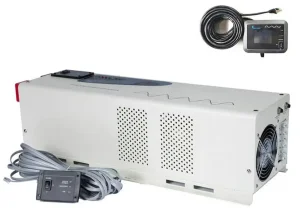
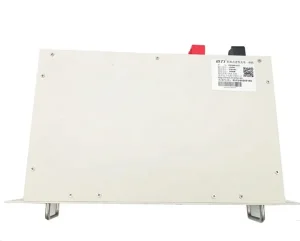
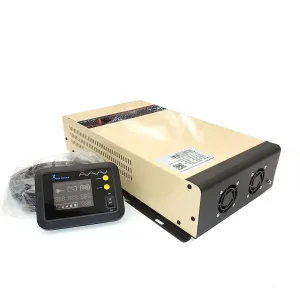
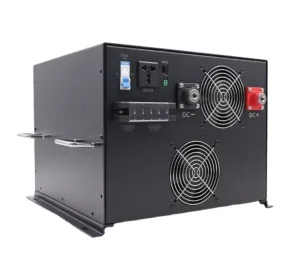
Solution: High-density LiFePO4 bank paired with a Low Frequency Pure Sine Wave Inverter Charger equipped with heavy-duty toroidal transformers. Delivers 3x peak surge capability while slashing overall battery weight by 65%.
Challenge: Unreliable grid power, severe outdoor temperature swings, and zero maintenance access in remote locations.
Solution: Hybrid Gel/Lead-Acid or specialized heated LiFePO4 battery banks paired with 48V DC smart MPPT charge controllers, enabling autonomous off-grid uptime with remote Modbus monitoring over cellular networks.
Challenge: Mission-critical medical and power tool reliability demanding zero switchover latency.
Solution: Dual Battery Isolators paired with intelligent multi-stage chargers. Isolates starter battery from auxiliary equipment banks, ensuring instant vehicle ignition while keeping sensitive sine-wave equipment fully energized.
Achieving total system synergy between electro-chemical storage cells and power electronic hardware.
Unsynchronized BMS and inverter settings cause unwanted high-voltage cutoffs or premature low-voltage tripping under heavy transient loads. Advanced factory engineering guarantees native RS485/CAN bus handshake between BMS ICs and inverter microprocessor control boards for smooth closed-loop charging profiles.
Lithium batteries require precise Constant Current / Constant Voltage (CC/CV) profiles with tight float cutoffs, whereas Lead-Acid batteries depend on bulk, absorption, float, and periodic high-voltage equalization to strip plate sulfation. Multi-stage intelligent chargers feature selectable dip switches or digital profiles for hybrid fleets.
Inductive loads like compressors, pumps, and heavy machinery demand short-duration inrush currents up to 300% of continuous nominal power. Low-frequency toroidal transformers handle massive thermal inertia, preventing BMS over-current shutdown when starting heavy motor loads.
Essential regulatory frameworks required for international distribution, customs clearing, and job site installation.
Global enterprise deployment requires rigorous certification compliance. Sourcing teams must ensure products carry verified CE, CB, RoHS, UL 1973 (for energy storage batteries), UL 1741 / UL 1741 SA (for grid-interactive inverters), IEC 62619, and IP30/IP65 environmental ingress ratings.
Lithium batteries are classified as Class 9 Dangerous Goods under international maritime (IMDG) and air transport (IATA) codes. Comprehensive UN 38.3 test reports—including altitude simulation, thermal shock, vibration, impact, external short circuit, and forced discharge testing—are mandatory along with certified Material Safety Data Sheets (MSDS).
To eliminate field failure rates, direct Chinese factory procurement mandates rigorous Quality Assurance protocols: incoming raw material testing (IQC), automated optical inspection (AOI) on PCB assemblies, continuous burn-in environmental testing under full thermal load (FQC), and pre-shipment OQC verification.
High-intent technical responses for B2B buyers, electrical engineers, and product sourcing specialists.
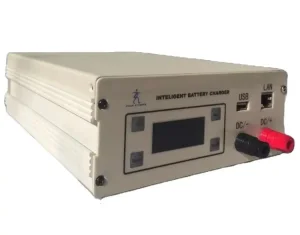
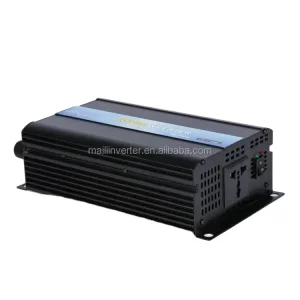
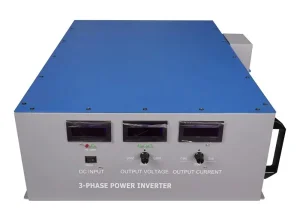
Industrial-grade pure sine wave equipment for specialized automotive, emergency infrastructure, and high-voltage applications.
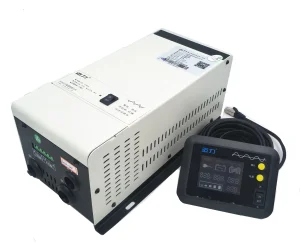
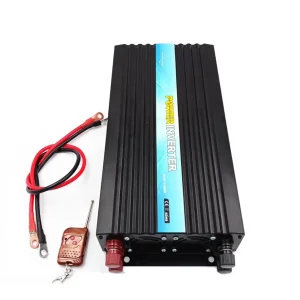
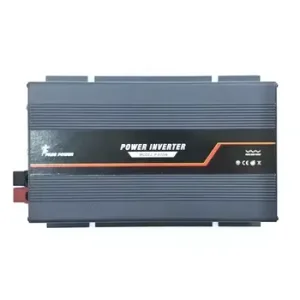
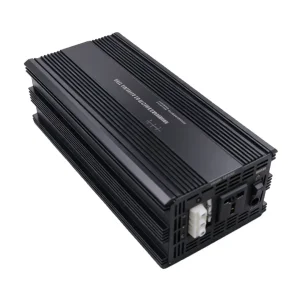
Partner with our Suzhou engineering factory for direct wholesale pricing, custom firmware development, UN38.3 shipping compliance, and dedicated technical support.