Industry Whitepaper & Global OEM Sourcing

Best Lithium Ion Battery Charger 12v Manufacturers & Exporter

Architectural Deep-Dive into High-Efficiency 12V LiFePO4 & NMC Smart Charging Systems, BMS Telemetry Integration, China Factory 4.0 Supply Chain Dynamics, and Global Industrial Procurement Metrics.

Featured 12V Charger & Power Hardware Portfolio (Top Tier)

Factory-direct high-frequency charging systems, smart dual battery isolators, and heavy-duty hybrid inverters engineered for global distribution and B2B OEM integration.
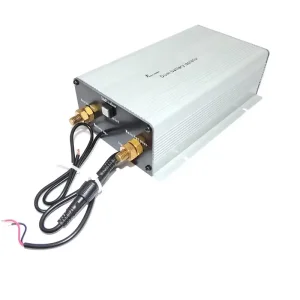
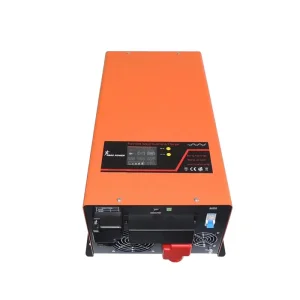
OEM Maili BS-173 Efficient 90% Dual Battery Isolator 12/24 Volt 400 Amp Auto Switches
OEM Maili BS-173 Efficient 90% Dual Battery Isolator 12/24 Volt 400 Amp Auto Switches Compatible with Lead-Acid and Lithium Battery Product
Request Wholesale Quote
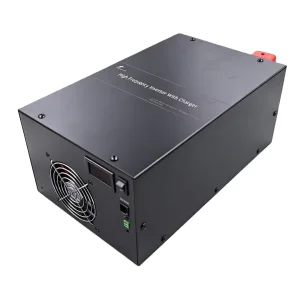
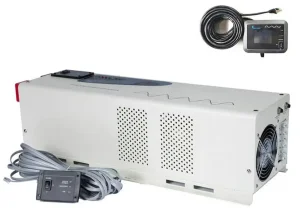
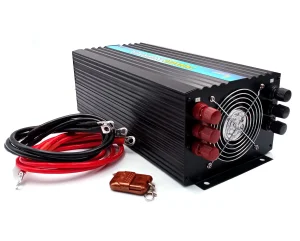
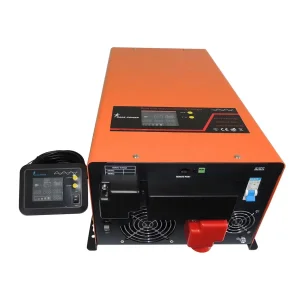
CE Certification CE CB SAA ROHS Approved Maili High Efficient 3000w Low Frequency Inverter Charger
CE Certification CE CB SAA ROHS Approved Maili High Efficient 3000w Low Frequency Dc to Ac Inverter Off-grid Home Inverter with Charger
Request Wholesale Quote
OEM CE ROHS 12000W Off-Grid Pure Sine Wave Inverter 24v 48v DC
OEM CE ROHS 12000W Off-Grid Pure Sine Wave Inverter 24v 48v DC 190v 380v 3-Phase 24000w Peak Power Inverter 3-Year Warranty
Request Wholesale Quote
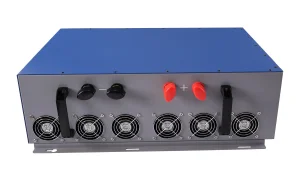
Best Maili 7KW High-power 110V/220V AC Pure Sine Wave Inverter Charger
Best Maili 7KW High-power 110V/220V AC Pure Sine Wave Inverter Charger & Multiple Protection Functions Converters Product
Request Wholesale Quote
CE Certification CE ROHS 3000w high frequency pure sine wave inverter with 110A battery charger
CE Certification CE ROHS 3000w high frequency pure sine wave inverter with 110A battery charger and high efficiency 92%
Request Wholesale Quote
DC24V 48V AC 120V AC230V 4000va Hybrid Charger for Car RV
High-Quality Maili Factory Wholesale DC24V 48V AC 120V AC230V 4000va Hybrid Charger for Car RV Pure Sine Wave Low Idle Current
Request Wholesale Quote
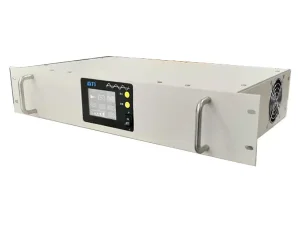
Best Maili 110V/220V AC 1KW Rack-mounted Pure Sine Wave Charging Inverter
Best Maili 110V/220V AC 1KW Rack-mounted Pure Sine Wave Charging Inverter Integrated Converter 50/60Hz Multiple Protection
Request Wholesale Quote
Best MAILI 3000W Single Output Car Power Inverters New Design 24V DC to 110V AC
Best MAILI 3000W Single Output Car Power Inverters New Design 24V DC to 110V AC High Frequency Transformer 24V DC 110V AC 50Hz
Request Wholesale Quote

1. Executive Summary & Market Intelligence: The Shift to 12V Lithium Power

Analysis of the technological transition from lead-acid (flooded, AGM, Gel) to lithium-ion chemistries (LiFePO4, NMC) in 12-volt industrial and commercial energy systems.

Global Market CAGR (2024–2030)

The global industrial 12V battery charging hardware market is projected to reach $4.85 Billion by 2030, expanding at a CAGR of 14.2%. Demand is driven primarily by fleet electrification, off-grid marine systems, RV auxiliary power, and stationary telecom energy storage systems (ESS).

LiFePO4 vs. Legacy Chemistries

Lithium Iron Phosphate (LiFePO4) offers 3,500–6,000 charge cycles at 80% Depth of Discharge (DoD), compared to 300–500 cycles for lead-acid. However, LiFePO4 requires highly controlled charging algorithms to avoid lithium plating, thermal runaway, and premature BMS shutoff.

Regulatory Compliance Shifts

Global importers face stricter compliance mandates under UL 1236, IEC 60335-2-29, CE-EMC, and FCC Part 15. High-efficiency power conversion (>93% efficiency) and active Power Factor Correction (PFC > 0.98) are now baseline requirements for European and North American markets.

94.5%
Max Conversion Efficiency (LLC Resonant)
< 1%
AC Ripple Voltage (Extends Cell Life)
> 0.98
Active Power Factor Correction (PFC)
IP67
Marine & Heavy Fleet Waterproof Rating

2. Technical Deep-Dive: Engineering Dynamics of 12V Lithium Ion Chargers

Detailed examination of high-frequency power switching topologies, CC/CV algorithm precision, and BMS telemetry integration.

Charging a 12V lithium-ion battery system—specifically 4-cell series Lithium Iron Phosphate (12.8V nominal, 14.6V peak) or 3-cell/4-cell NMC (Nickel Manganese Cobalt)—demands fundamentally different voltage dynamics than traditional lead-acid batteries. Lead-acid chargers rely on prolonged absorption and float stages with temperature-compensated voltages. In contrast, lithium-ion battery chargers require rigid Constant Current / Constant Voltage (CC/CV) stage transitions with instant cut-off protocols to prevent overcharging and cathode degradation.

A. Multi-Stage Lithium Charging Logic vs. Legacy Lead-Acid

Charging Stage 12V LiFePO4 Parameters (4S) 12V NMC Parameters (3S / 4S) Traditional Lead-Acid (AGM/Gel)
1. Pre-Charge / Soft Start 0.1C Current until voltage reaches 10.0V (protects tripped BMS) 0.1C Current until 9.0V (re-activates sleep-mode BMS) Desulfation pulse stage / High voltage pulses
2. Bulk Stage (Constant Current) Max Rated Current (0.2C to 1.0C) until terminal voltage reaches 14.4V - 14.6V Max Rated Current until voltage reaches 12.6V (3S) or 16.8V (4S) Tapered current up to 14.4V (causes gas emissions in flooded cells)
3. Absorption Stage (Constant Voltage) Hold exact 14.6V until current tapers down to < 0.05C (1-2 hours max) Hold exact 12.6V/16.8V until current tapers to < 0.03C Prolonged float stage (13.6V–13.8V) maintained indefinitely
4. Termination / Standby Complete Cut-off / Zero Current (Resting voltage ~13.3V–13.6V) Complete Cut-off to stop metallic dendrite growth Continuous Float trickle current (causes water loss / grid corrosion)
5. Auto-Reactivation Re-engage CC charge when system drops below 13.1V Re-engage CC charge when cell drops below 3.9V/cell Continuous low-amp float maintaining voltage against self-discharge

B. BMS Communication Protocols: CANbus, RS485 & Modbus Integration

Modern commercial and industrial 12V lithium chargers no longer operate in isolation. Advanced OEM chargers incorporate digital control logic interfaces to establish a dynamic telemetry handshake with the internal Battery Management System (BMS):

  • CANbus (CANopen / J1939): High-speed industrial bus allowing the battery BMS to dynamically broadcast real-time parameters (Maximum Allowable Charge Current, Target End Voltage, Cell Temperatures, and Fault Flags). The charger adjusts its PWM duty cycle in under 10 milliseconds.
  • RS485 / Modbus RTU: Standardized industrial telemetry interface for off-grid energy systems, telecom backup setups, and solar hybrid inverters, enabling remote monitoring of voltage curves, Ah delivered, and thermal metrics.
  • Sub-Zero Temperature Lockout Protection: Charging lithium batteries below 0°C (32°F) causes irreversible lithium plating on the graphite anode, inducing internal short circuits. Smart chargers sample thermal sensors via BMS or external NTC thermistors, automatically shifting to a heating-pad pre-charge cycle or locking out charge output until cell temps exceed +3°C.

3. Global Industrial Procurement Demands & Sourcing Metrics

Technical criteria and compliance benchmarks evaluated by B2B procurement managers, fleet engineers, and OEM importers.

International Certification Standard Matrix

Procurement officers must mandate complete international testing reports to clear customs and ensure operational safety:

  • North America: UL 1236 (Motor Control & Battery Charging), FCC Part 15 Class B (EMI/RFI emission limits for residential/commercial environments), CEC (California Energy Commission) Title 20 efficiency compliance.
  • European Union: EN 60335-2-29 (Safety of household and similar electrical appliances - Battery Chargers), CE-EMC (Directive 2014/30/EU), RoHS 3 (Directive 2015/863/EU hazardous substance restriction).
  • Global Logistics & Marine: UN 38.3 (Transport safety), IP65/IP67 ingress protection for splash-proof and dust-tight enclosures, DNV/ABS approvals for marine off-shore auxiliary chargers.

TCO & Operational Sourcing Factors

Beyond unit price, industrial buyers evaluate Total Cost of Ownership (TCO) across three key engineering pillars:

  • Thermal Dissipation & Power Density: Aluminum extruded heatsinks combined with intelligent temperature-controlled PWM cooling fans extend Mean Time Between Failures (MTBF) beyond 100,000 hours at 40°C ambient temperature.
  • Power Efficiency & Heat Losses: High-frequency LLC resonant converters operating at 94%+ efficiency reduce thermal output by 50% compared to legacy hard-switched flyback topologies, reducing cabinet cooling costs.
  • Wide AC Input Range: Universal 90V–264V AC wide-voltage input with active PFC allows a single OEM SKU to be deployed globally across North America (120V/60Hz), Europe (230V/50Hz), and Asia.

4. China Factory 4.0: Supply Chain Resilience & Efficiency Advantages

How advanced smart manufacturing, automated SMT lines, and localized component ecosystems deliver unprecedented quality and cost competitiveness.

Automated SMT & DIP Production

Leading Chinese power electronics manufacturers deploy high-speed Yamaha and Panasonic SMT assembly lines with 3D Automated Optical Inspection (AOI) and Solder Paste Inspection (SPI), maintaining defect rates below 10 PPM (Parts Per Million).

Vertical Transformer & Case Integration

By manufacturing custom toroidal transformers, high-frequency planar transformers, CNC metal housings, and wire harnesses in-house, manufacturing hubs in Jiangsu and Guangdong eliminate middleman markups and reduce OEM lead times to 15–20 days.

100% Full-Load Burn-In & Telemetry QC

Every manufactured 12V lithium charger undergoes automated testing via ATE (Automatic Test Equipment) systems, followed by a mandatory 4-to-12 hour full-load burn-in room cycle under elevated thermal stress (45°C ambient) to eliminate infant mortality failures.

5. Localized Industrial Application Scenarios

Deployment cases demonstrating how high-efficiency 12V lithium chargers solve unique operational challenges across key commercial sectors.

Scenario A: Caravans, RVs & Overland Vehicles

Overland rigs and motorhomes combine multiple energy inputs: Shore AC power, solar PV panels, and vehicle alternator output. Dual-input DC-DC combined lithium chargers (AC-to-DC + DC-to-DC with built-in MPPT) allow seamless switching. When connected to campsite shore power, the charger delivers an 80A bulk CC charge to 400Ah LiFePO4 house banks, reaching 100% SoC in under 5 hours while running interior 12V DC refrigeration and LED lighting.

Scenario B: Marine Yachts & Commercial Vessels

Marine environments present severe humidity, salt-spray, and constant vibration. Conformal-coated PCB assemblies combined with IP67 sealed die-cast aluminum enclosures prevent galvanic corrosion. Multi-bank isolated outputs allow a single 12V charger to independently replenish a high-capacity LiFePO4 house bank and an AGM engine starter battery with distinct charging profiles simultaneously.

Scenario C: Emergency Ambulances & Command Fleet

Mission-critical fleet vehicles require emergency fast-recharging without compromising medical equipment voltage stability. Integrated low-frequency pure sine inverter-chargers with rapid auto-transfer switches (<10ms) ensure sensitive life-support systems, suction pumps, and radio telemetry remain continuously powered whether running off the 12V lithium auxiliary system or plug-in station shore power.

Scenario D: Off-Grid Industrial Telecom & Remote ESS

Unmanned 5G repeater stations and remote weather sensors operating in extreme climate zones (-30°C to +60°C) demand chargers with wide-temperature operation and passive convection cooling (no moving fan parts that accumulate dust). Integrated Modbus interfaces send automated real-time health alerts to central network operation centers (NOC) before cell failure occurs.

Complete OEM Product Range (Bottom Tier)

Off-grid hybrid solar inverters, intelligent multi-stage battery chargers, and high-frequency DC converters for global export.
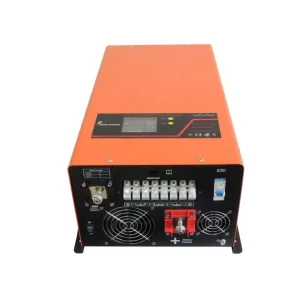
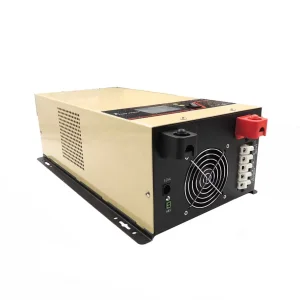
Best Maili 4KW Hybrid Solar Power Inverter 4000W 24V 230V 60A MPPT
Best Maili 4KW Hybrid Solar Power Inverter 4000W 24V 230V 60A MPPT Single Inverter LCD LED Display Low Frequency Pure Sine Wave
Request Wholesale Quote
OEM 3000 Watt Pure Sine Wave Off-grid Solar Inverter 24v 220v RV Energy System
OEM 3000 Watt Pure Sine Wave Off-grid Solar Inverter 24v 220v RV Energy System with Charger for Household Appliances 3KVA
Request Wholesale Quote
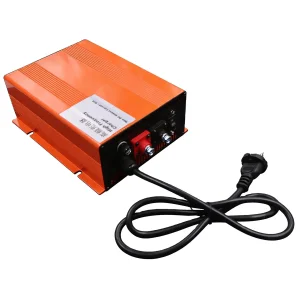
OEM Maili CE ROHS Portable High-frequency Charger 110V/220V AC to 12V DC 80A
OEM Maili CE ROHS Portable High-frequency Charger 110V/220V AC to 12V DC 80A Lithium GEL AGM Battery Charger with 1 Year Warranty
Request Wholesale Quote
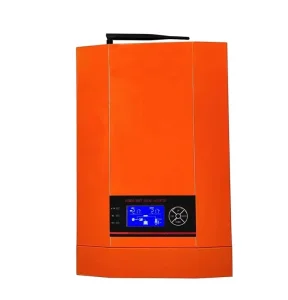
Wholesale MAILI PPS Series 3.5kw MPPT Hybrid Solar Inverter
Wholesale MAILI PPS Series 3.5kw MPPT Hybrid Solar Inverter Wholesale Price for Off-Grid Home Solar System Solar Inverter & Converter
Request Wholesale Quote
Low Frequency Hybrid Solar Pure Sine Wave Inverter Charger With LCD Display 5KW
Cheap Low Frequency Hybrid Solar Pure Sine Wave Inverter Charger With LCD Display 5KW 24V 48V to 230V with 60A MPPT Controller
Request Wholesale Quote
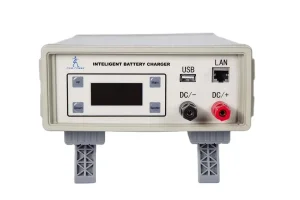
OEM High Quality 8 Stages Smart USB Battery Charger 12V 25A Automatic
OEM High Quality 8 Stages Smart USB Battery Charger 12V 25A Automatic Battery Charger With All Kinds Of Protection For Car
Request Wholesale Quote
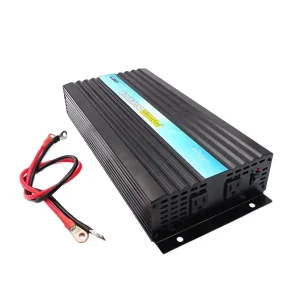
Wholesale CE Certified 500W Pure Sine Wave DC to AC Inverter Soft Start
Wholesale CE Certified 500W Pure Sine Wave DC to AC Inverter Soft Start Power Supply 12V to 230V New Program PCB Board
Request Wholesale Quote
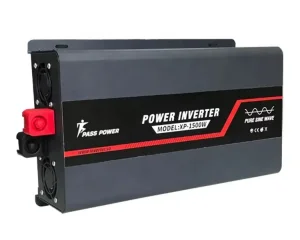
Best High Quality New Design 1500w Pure Sine Wave Power Inverter 48v 110v
Best High Quality New Design 1500w Pure Sine Wave Power Inverter 48v 110v Off-grid solar Invertor with LCD Digital Screen
Request Wholesale Quote

6. Frequently Asked Questions (FAQ) & Procurement Sourcing Guide

Technical answers addressing buyer intent, engineering specs, compliance rules, and custom manufacturing workflows.

Q1: Why can’t I use a standard lead-acid battery charger to charge a 12V LiFePO4 battery bank?
Standard lead-acid chargers utilize equalization stages (high-voltage pulses up to 15.5V to prevent sulfation) and indefinite float charging stages (13.6V–13.8V continuous). Equalization voltage will trigger the LiFePO4 battery's internal BMS over-voltage protection (OVP) and disconnect the circuit. Furthermore, holding a lithium-ion cell at 100% state of charge under continuous float voltage accelerates electrolyte breakdown and metallic lithium plating, permanently degrading capacity. A dedicated 12V lithium charger uses strict Constant Current / Constant Voltage (CC/CV) logic with automatic termination upon reaching 14.6V (for 4S LiFePO4) when current tapers below 0.05C.
Q2: What is zero-voltage BMS wakeup, and why is it critical for 12V lithium chargers?
When a lithium battery undergoes deep discharge, over-current, or short-circuit, the internal Battery Management System (BMS) opens its MOSFET switches to isolate the cells, resulting in 0V output at the battery terminals (sleep mode). Conventional smart chargers require a sensed terminal voltage above 8V–10V to initiate a charge cycle, leaving a disconnected BMS permanently locked out. Advanced OEM 12V lithium chargers feature a "BMS Wakeup / Soft Start" function, supplying a regulated low-amp pulse current (typically 0.5A–2A at 12.8V) to reset the BMS control board, closing the MOSFETs and allowing bulk charging to resume.
Q3: How does active Power Factor Correction (PFC) benefit industrial battery charging installations?
Active PFC aligns the phase of input AC current with the AC voltage waveform, increasing the Power Factor from ~0.65 (non-PFC) to >0.98. For commercial fleets, workshop charging stations, or marine docks, chargers without PFC draw high peak reactive currents, causing harmonic distortion, overheating electrical wiring, tripping AC circuit breakers, and incurring utility power factor penalties. Active PFC reduces total RMS current draw by up to 30%, allowing more high-amp chargers to run simultaneously on a single grid or generator line.
Q4: What customization parameters are available for B2B OEM / ODM manufacturing orders?
As a direct manufacturer, factory ODM/OEM capabilities include: (1) Custom charge profiles for non-standard battery chemistries (LTO, NMC, LFP); (2) CANbus J1939 or Modbus RTU communication mapping; (3) Housing redesigns including IP67 waterproof aluminum extrusions, 19-inch rack-mount chassis, or wall-mountable brackets; (4) Custom AC input plugs (NEMA, Schuko, UK, AU) and DC output connectors (Anderson powerpoles, M8 terminal posts, circular aviation plugs); (5) Custom branding, digital LCD telemetry displays, and private-label packaging.
Q5: What are the standard production lead times and Minimum Order Quantities (MOQ) for export?
Standard catalog inventory units carry an MOQ as low as 10–20 units with dispatch within 5–7 business days. Custom OEM/ODM orders with private-label branding typically carry an MOQ of 100–300 units depending on housing modifications. Prototype engineering samples are delivered within 10–14 days, followed by a 20–25 day mass production window after sample sign-off and ICT/FCT automated testing validation.
Q6: How does low-frequency transformer technology compare to high-frequency switching chargers?
Low-frequency inverter-chargers utilize heavy copper toroidal transformers, providing massive surge capabilities (up to 300% peak power for 20 seconds) making them ideal for starting heavy motor loads like air conditioners, air compressors, and power tools in emergency vehicles or off-grid RVs. High-frequency chargers use semiconductor switching circuits (MOSFET/IGBT) operating at 50kHz–200kHz, making them lightweight, highly compact, and ultra-efficient (>94%) for stationary battery charging and portable applications.