


Engineered for seamless integration with OEM tubular, gel, and LiFePO4 battery chemistries.
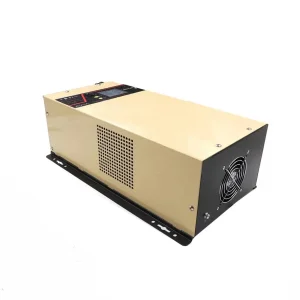
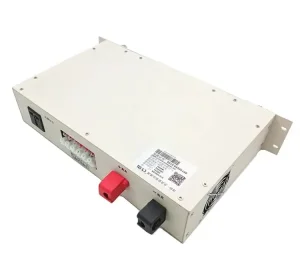
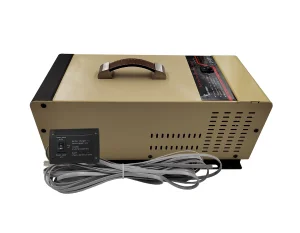
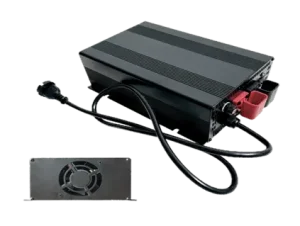
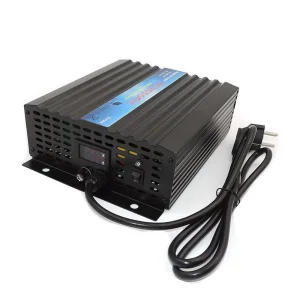
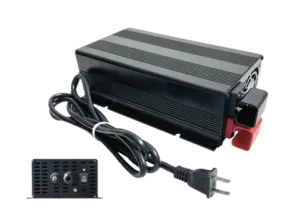
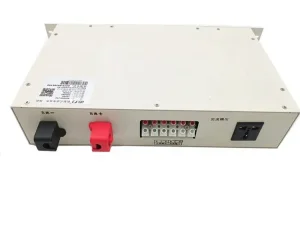
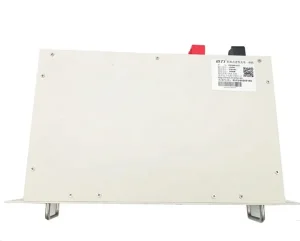
In the rapidly evolving global energy paradigm, finding the best Livfast inverter battery manufacturers and suppliers requires an in-depth understanding of power electronics topology, electrochemistry, and supply chain scalability. Livfast has carved a dominant market footprint across developing and developed energy sectors due to its robust short-tubular, long-tubular, and advanced LiFePO4 battery systems. However, a battery system is only as reliable as the power conversion infrastructure paired with it. Premium inverter-chargers, pure sine wave converters, and digital charge controllers serve as the operational neural network that dictates total battery lifecycle, round-trip efficiency, and system reliability under harsh grid conditions.
Commercial enterprises, solar integrators, and industrial B2B procurement directors face a dual challenge: navigating regional grid instability while transitioning toward high-density renewable microgrids. The synergy between high-capacity tubular battery banks and intelligent pure sine wave inverter chargers (ranging from compact 300W mobile units to heavy-duty 20kW 3-phase systems) represents the cornerstone of modern off-grid resilience.
A crucial technical failure mode in commercial off-grid deployment is the mismatch between inverter charging algorithms and battery discharge dynamics. Advanced inverter battery suppliers must design conversion topologies that precisely align with the specific internal resistance, nominal float voltages, and absorption phases of heavy-duty batteries.
When selecting OEM/ODM partners for off-grid and backup installations, B2B buyers must evaluate whether a low-frequency toroidal transformer design or a high-frequency MOSFET switching design is required:
Utilizes heavy-duty copper toroidal transformers capable of sustaining 300% surge capacity for 10–20 seconds. Essential for heavy inductive loads like air conditioners, water pumps, compressors, and industrial motors.
Employs high-speed pulse-width modulation (PWM) with high power density and up to 95% efficiency. Ideal for space-constrained rack-mount installations, telecommunications hubs, and delicate electronic loads.
Features intelligent Constant Current (Bulk), Constant Voltage (Absorption), and Float Charge profiles. Fully compatible with Gel, AGM, Flooded Tubular, and LiFePO4 batteries with adjustable current limiting.
Below is a comparative breakdown of charging profiles required by leading battery technologies to maximize system efficiency and operational lifespan:
| Battery Technology | Bulk Voltage (12V Nominal) | Float Voltage (12V Nominal) | Optimal Inverter Feature | Expected Lifecycle |
|---|---|---|---|---|
| Tall Tubular (Lead-Acid) | 14.4V - 14.8V | 13.6V - 13.8V | Temperature Compensation & Equalization | 1,200 - 1,800 Cycles |
| GEL / Sealed Maintenance Free | 14.1V - 14.4V | 13.4V - 13.6V | Strict Over-voltage Cutoff (<14.5V) | 800 - 1,200 Cycles |
| Lithium Iron Phosphate (LiFePO4) | 14.2V - 14.6V | 13.5V - 13.8V | BMS RS485/CANbus Communication & Soft Start | 3,500 - 6,000 Cycles |
| AGM Deep Cycle | 14.4V - 14.6V | 13.5V - 13.7V | 3-Stage Automatic Current Adjust | 600 - 1,000 Cycles |
Inverter systems and deep-cycle batteries are deployed across vastly different environmental and operational environments. B2B buyers must specify systems that match localized electrical requirements, ambient thermal profiles, and installation constraints.
During extended brownouts or rolling blackouts, 1kW to 5kW pure sine wave inverters paired with 12V/24V deep-cycle batteries maintain continuous operation for critical home electronics, medical equipment, refrigeration, and light HVAC systems without noise or emissions.
Mobile command units, ambulances, work trucks, and recreational vehicles (RVs) demand ultra-thin, wall-mounted, or rack-mounted pure sine wave inverter chargers with integrated dual battery isolators to charge house batteries directly from vehicle alternators.
High-power 3-phase 9kW to 20kW pure sine wave inverters enable off-grid agricultural solar pumping, remote mining camp power, and telecommunication tower back-up with soft-start functionality to prevent voltage sags on heavy motor startup.
Expanding into international markets requires strict compliance with electrical safety, electromagnetic compatibility (EMC), and environmental mandates. Top-tier manufacturers must possess ISO 9001:2015 quality management systems alongside internationally recognized product certifications.
B2B importers, private-label brand owners, and regional distributors can leverage comprehensive OEM/ODM engineering capabilities across eight distinct customization layers:
The power electronics landscape is undergoing a structural transition driven by wide-bandgap semiconductors, AI-assisted energy management, and bi-directional vehicle-to-grid (V2G) power transfer. Industry leaders are actively developing and deploying several cutting-edge innovations:
Replacing conventional IGBTs with SiC MOSFETs reduces switching losses by up to 60%, allowing inverters to achieve footprint reductions of 40% while operating at higher thermal thresholds.
Cloud-connected smart inverters utilize machine learning models to analyze battery degradation patterns, predicting thermal runaway and optimizing charging cycles based on dynamic electricity tariffs.
Seamless convergence of MPPT solar charge controllers, AC grid bypass switches, and intelligent battery chargers into single-unit hybrid platforms simplifies off-grid renewable deployment.
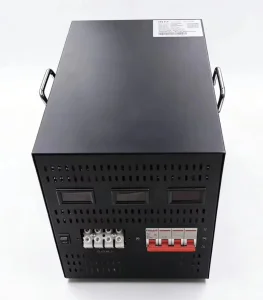
Heavy-duty power conversion units engineered for three-phase grids, solar pumps, and heavy commercial loads.
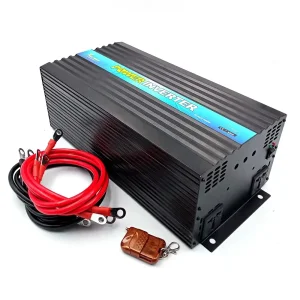
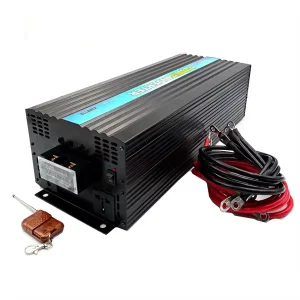
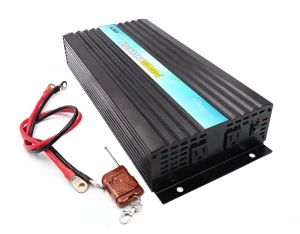
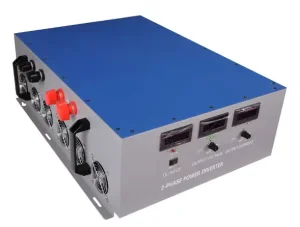
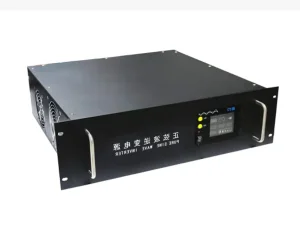
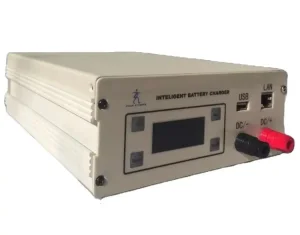
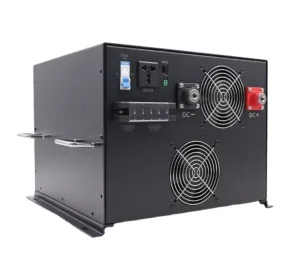
Expert answers on battery selection, inverter matching, OEM customization, and maintenance best practices.
To size an inverter accurately, calculate total continuous wattage by summing all simultaneously running electrical loads (e.g., lights, fans, computers, refrigerators). Ensure the inverter's continuous rating covers this total with a 20-30% safety margin. Next, evaluate peak surge requirements for inductive loads (like water pumps or air conditioners) and ensure the inverter features a 2x to 3x surge capability for at least 5-10 seconds. Finally, ensure the DC input voltage matches your battery bank arrangement (12V for single battery, 24V for two batteries in series, 48V for four batteries).
Low-frequency inverters utilize heavy-duty copper toroidal transformers, providing exceptional electrical isolation, thermal stability, and robust surge capacity (up to 300% of rated power). They are designed for demanding motor-driven inductive loads and severe industrial environments. High-frequency inverters use electronic switching with smaller transformers, offering lighter weight, compact form factor, and lower cost for purely resistive electronics, office computing, and portable mobile systems.
Yes. Modern multi-stage smart inverter chargers feature selectable DIP switches or LCD setup menus that allow users to customize target bulk voltage, float voltage, and low-voltage disconnect levels. Selectable battery chemical profiles include Flooded Tubular, GEL, AGM, and Lithium Iron Phosphate (LiFePO4) with custom BMS integration options via RS485 or CANbus.
Customization options include customized DC/AC voltage specs, custom charging current levels (10A to 60A+), custom chassis colors, silk-screened distributor branding, localized AC output socket types (US, EU, UK, AU, Universal), custom LCD firmware, RS485/Modbus communication protocols, and specialized packaging for global export.
Standard hardware protection suites include DC reverse polarity protection, AC over-voltage/under-voltage protection, overload shutdown with auto-restart, output short-circuit protection, high-temperature thermal cutoff, battery over-charge protection, and deep discharge cutoff to safeguard battery health.
