


Explore our flagship OEM/ODM certified power conversion devices, precision multi-stage battery chargers, and heavy-duty pure sine wave inverters engineered for global industrial and commercial deployment.
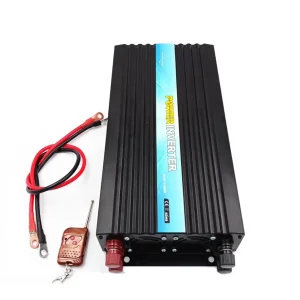
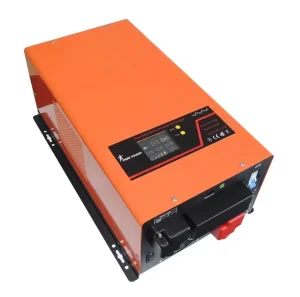
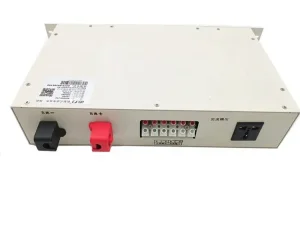
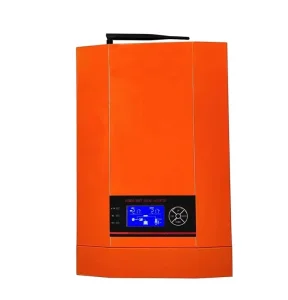
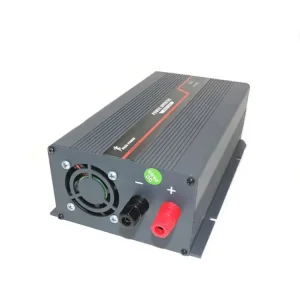
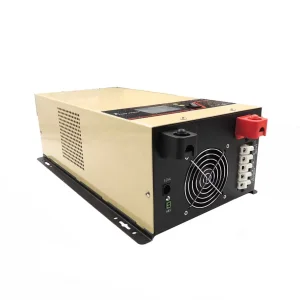
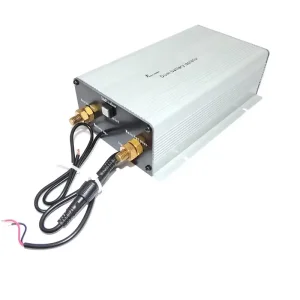
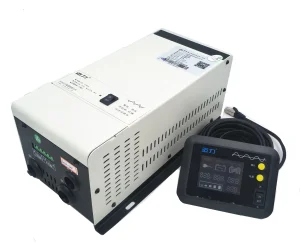
The global transition toward electrified fleets, off-grid storage integration, and high-reliability industrial power systems has fundamentally altered procurement expectations for industrial battery chargers and power inverters.
In modern industrial logistics, commercial marine transport, telecommunications, and emergency medical services (EMS), the demand for high-efficiency Powertech battery chargers and heavy-duty pure sine wave inverter-chargers has reached an unprecedented peak. Traditional analog charging devices—characterized by unregulated linear topologies, excessive heat dissipation, and rigid single-profile charging modes—are rapidly being phased out across international markets. Replacing them are intelligent, DSP-controlled (Digital Signal Processor), multi-stage switch-mode chargers and hybrid energy storage converters capable of dynamically adapting to complex battery chemistries.
As global battery technology pivots decisively from legacy Sealed Lead-Acid (SLA), Absorbed Glass Mat (AGM), and Gel batteries toward high-density Lithium Iron Phosphate (LiFePO4) and Lithium-nickel-manganese-cobalt (NMC) storage, battery charger manufacturers must provide active power factor correction (PFC), ultra-low Total Harmonic Distortion (THD), wide AC input voltage tolerance, and granularly customizable charge curves. The convergence of grid stability mandates, stringent safety certifications (UL, CE, RoHS, CB, SGS), and harsh operating environments requires industrial procurement directors to partner exclusively with experienced original equipment manufacturers (OEMs) and certified global exporters.
When evaluating top-tier Powertech battery charger suppliers and exporters, enterprise engineering teams must examine multi-dimensional performance indices beyond simple nominal power ratings.
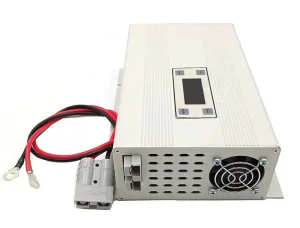
Modern industrial energy storage demands sophisticated 3-stage or 7-stage charging algorithms (Bulk, Absorption, Float, Equalization, and Refresh). Specialized suppliers offer customizable firmware profiles that prevent lithium battery thermal runaway while balancing individual cell voltages during the critical constant-current/constant-voltage (CC/CV) phase transitions.
Enterprise microgrids and fleet power platforms require seamless integration with vehicle telemetry and energy management systems (EMS). High-spec chargers feature native CANbus, Modbus-RTU (RS485), and Bluetooth smart monitoring interfaces, transmitting real-time parameters such as State of Charge (SoC), State of Health (SoH), internal temperature, and fault logs.
Off-grid commercial installations, marine vessels, and heavy machinery subject power hardware to continuous vibration, high humidity, and extreme thermal ambient ranges (-20°C to +60°C). Tier-1 exporters utilize conformal-coated PCBA boards, heavy-duty extruded aluminum heat sinks, and intelligent variable-speed cooling fans to ensure uninterrupted full-load operation.
Tailored power architectures engineered by leading OEM suppliers to address critical operational requirements across diverse global markets.
Commercial mobile work trucks, expedition RVs, and long-haul transportation fleets require high-current dual battery charging system architectures. Integrating an intelligent 12V/24V dual battery isolator with a multi-stage high-frequency battery charger allows simultaneous, isolated charging of primary starter batteries and secondary house lithium banks without risking alternator overload.
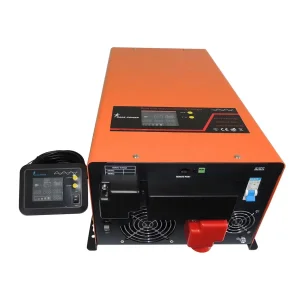
For remote agricultural sites, rural electrification, and telecommunication relay towers, hybrid solar inverter-chargers combine Maximum Power Point Tracking (MPPT) photovoltaic charge controllers with AC utility/generator fast-chargers into unified, space-saving enclosures.
Ambulances and emergency response vehicles require ultra-pure sine wave power with strict electromagnetic compatibility (EMC/EMI) compliance to operate sensitive life-support cardiac monitors, defibrillators, and radio communications without signal interference.
Selecting the optimal power architecture based on load profile, surge requirements, weight constraints, and system cost efficiency.
| Architectural Parameter | Low-Frequency Toroidal Transformer | High-Frequency Switch-Mode (SMPS) | Hybrid MPPT Inverter Charger |
|---|---|---|---|
| Primary Topology | Heavy iron-core line-frequency transformer | High-speed MOSFET/IGBT PWM switching | Integrated MPPT controller + SMPS inverter |
| Peak Surge Capacity | Extreme (300% for 20 seconds) | Moderate (150-200% for 1 second) | High (200% for 5 seconds) |
| Conversion Efficiency | 88% - 92% | 93% - 96% | 94% - 97% |
| Physical Weight & Size | Heavy / Larger industrial footprint | Ultra-compact & lightweight chassis | Medium integrated modular enclosure |
| Best Application Match | Motor pumps, compressors, heavy power tools, industrial RV ACs | Consumer electronics, sensitive medical gear, mobile workstations | Residential off-grid solar, telecommunications microgrids |
| Galvanic Isolation | Full physical transformer isolation | Electronic / High-frequency transformer | Integrated high-voltage isolation |
A frequent dilemma faced by industrial procurement teams is deciding between low-frequency and high-frequency inverter-charger designs. Low-frequency units utilizing heavy toroidal transformers deliver massive inductive surge handling. When a high-horsepower motor or refrigeration compressor starts up, it creates an instantaneous current spike up to 300% of nominal rating. Toroidal transformers naturally buffer these energy surges without driving the inverter into fault shutdown.
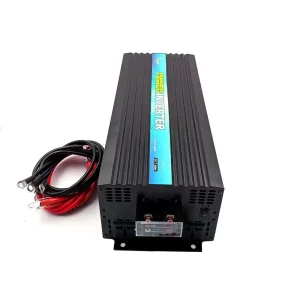
Conversely, high-frequency switch-mode chargers eliminate heavy copper-wound transformers, drastically reducing power system weight and physical dimensions. For weight-sensitive mobile vehicles, telecom cabinets, and desktop battery charging stations, high-frequency designs provide higher power density, lower idle self-consumption, and superior cost performance.
A robust global supply chain requires rigorous international certification and responsive localized engineering assistance.
Strict process control across raw material IQC, automated SMT assembly, automated optical inspection (AOI), and 100% full-load thermal burn-in aging.
Fully compliant with European LVD and EMC directives, restricting hazardous substances (RoHS) and holding international CB safety test reports.
Customization across 8 core hardware dimensions: DC voltage ranges, AC output sockets, private-label branding, customized LCD interfaces, and custom CAN/Modbus protocols.
Comprehensive export packing, fast sea/air freight fulfillment, spare parts support, and direct engineer-to-engineer remote troubleshooting guidance.
Anticipating the technological breakthroughs that will reshape industrial battery charging and energy management over the coming decade.
The transition from silicon-based MOSFETs to Gallium Nitride (GaN) and Silicon Carbide (SiC) power switches allows battery chargers and inverters to operate at significantly higher switching frequencies. This results in a 40% reduction in thermal loss, smaller inductor footprints, and lighter overall unit weight while achieving power efficiencies exceeding 97%.
Future Powertech battery chargers will transcend unidirectional energy transfer. Vehicle-to-Grid (V2G) and Vehicle-to-Everything (V2X) capability will enable connected fleet battery systems to act as distributed energy resources (DERs), feeding power back into grid networks during peak tariff hours or emergency grid dropouts.
Edge AI microcontrollers embedded within battery chargers will analyze internal impedance, ripple currents, and thermal gradient curves in real time. Predictive machine learning algorithms will detect battery cell degradation before failure occurs, dynamically adjusting charge parameters to extend battery life by up to 30%.
Complete your procurement portfolio with our factory-direct, CE/RoHS certified industrial power units engineered for global export markets.
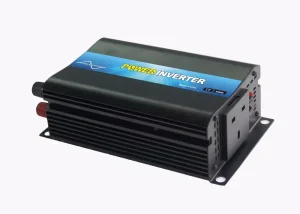
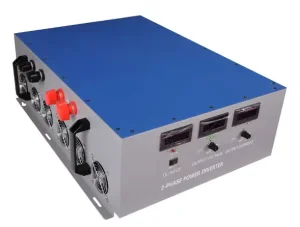
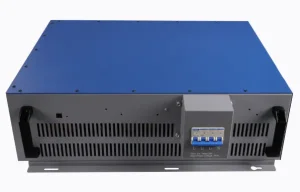
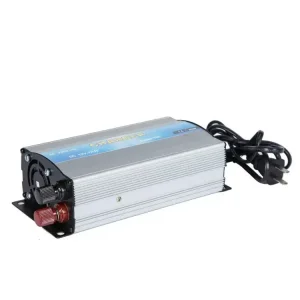
Direct technical insights answering enterprise buyers' most frequent technical, compliance, and sourcing inquiries.
Partner with a trusted, ISO 9001:2015 certified China factory direct manufacturer. Access complete technical datasheets, factory-direct OEM pricing, and custom engineering support for your market.
