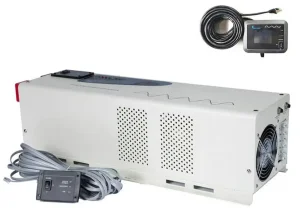
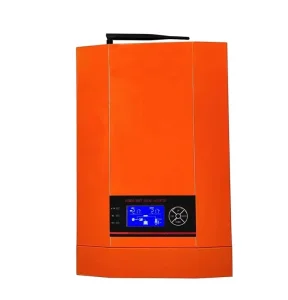
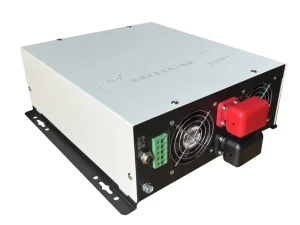
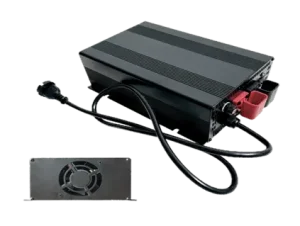
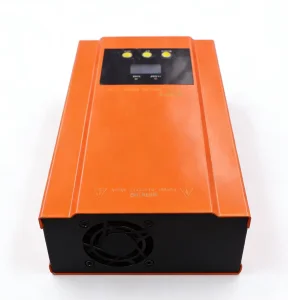
Precision-engineered conversion systems certified for global commercial, marine, solar, and emergency vehicle applications.
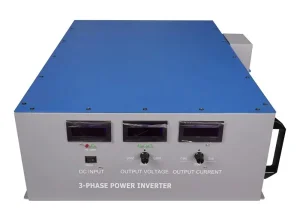
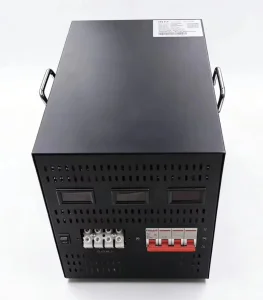
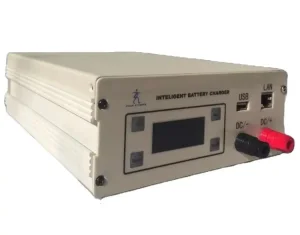
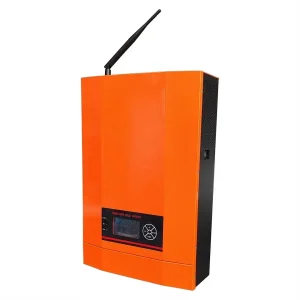
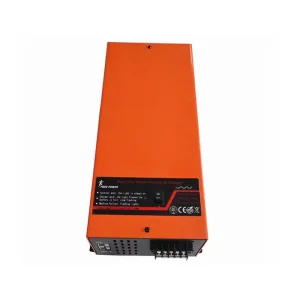
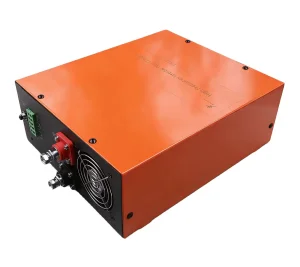
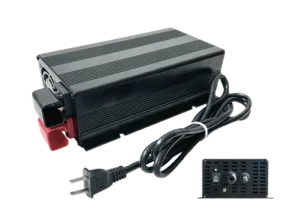
The global power electronics market has undergone a paradigm shift driven by the acceleration of decentralized energy storage, electric mobility ecosystems, off-grid recreation, and critical backup power infrastructure. Central to this transformation is the humble yet technically sophisticated 12V 10 Amp battery charger. Once considered a basic commoditized utility, contemporary 12V 10A charging units are high-frequency, microcontroller-managed Switch-Mode Power Supply (SMPS) devices designed to manage multi-chemistry battery architectures safely and efficiently.
Industrial procurement data indicates a surging demand for CE-certified 12V 10A suppliers capable of delivering high power density, active power factor correction (PFC), and seamless adaptability across Lead-Acid (AGM, Gel, Flooded) and Lithium Iron Phosphate ($LiFePO_4$) chemistry profiles. Modern industrial operators demand charging solutions that not only supply 120 Watts of continuous DC power but also mitigate thermal stress, eliminate overcharging risks, and meet stringent Electromagnetic Compatibility (EMC) standards set by European regulatory directives.
Technical Insight: A 12V 10A rating represents an optimal balance between fast charge times and thermal management. Delivering up to 14.4V–14.7V during the absorption phase, a true 10-amp output can replenish a standard 100Ah battery from 50% Depth of Discharge (DoD) in approximately 5 to 6 hours without exceeding recommended charge rate ($C/10$) limits for sealed lead-acid cells.
Securing genuine CE Certification for a 12V 10 Amp charger requires rigorous adherence to two mandatory European Union directives: the Low Voltage Directive (LVD) 2014/35/EU and the Electromagnetic Compatibility (EMC) Directive 2014/30/EU. Tier-1 China factories and OEM suppliers design their circuit layouts around these compliance guidelines to guarantee electrical safety and grid stability.
Specifies specific safety requirements for automatic battery chargers. Mandates double insulation or reinforced isolation transformers rated to withstand dielectric strength testing above 3000V AC between primary input and secondary output.
Ensures radiated and conducted electromagnetic interference (EMI) remains strictly below regulatory thresholds. Utilizes common-mode chokes, X/Y safety capacitors, and metal shielding to protect nearby electronics.
Enforces environmental stewardship by restricting hazardous substances (lead, mercury, cadmium, polybrominated biphenyls) in the soldering matrix and plastic housing materials.
| Directive / Standard | Technical Scope | Engineering Test Requirement | Impact on Reliability |
|---|---|---|---|
| EN 60335-2-29 | Household and Similar Electrical Safety (Chargers) | Thermal stress tests, abnormal operation & fault conditions | Prevents thermal runaway and structural casing ignition |
| EN 61000-3-2 | Harmonic Current Emissions (PFC Integration) | Harmonic limits for input current $\le 16\text{A}$ per phase | Reduces reactive power waste, improves grid power factor (>0.95) |
| EN 61000-4-5 | Surge Immunity Testing | 1kV line-to-line, 2kV line-to-earth voltage transient injection | Protects internal MOSFETs and bridge rectifiers during lightning surges |
| IP65 / IP67 (Optional) | Ingress Protection Rating | Dust-tight sealed enclosure & water jet spray testing | Allows reliable outdoor, marine, and harsh industrial operations |
Legacy analog chargers relied on simple constant-voltage transformer setups, which often caused battery gassing, electrolyte loss, and premature plate sulfation. Modern CE Certified 12V 10A smart chargers implement sophisticated 8-bit or 32-bit Microcontroller Units (MCUs) running proprietary PWM (Pulse Width Modulation) firmware routines.
The standard multi-stage charging profile executed by high-tier suppliers includes:
Global B2B enterprise procurement officers prioritize Chinese 12V 10A charger suppliers due to unmatchable manufacturing efficiencies, deep component integration, and robust quality assurance practices. The Pearl River Delta (Shenzhen, Dongguan) and Yangtze River Delta (Suzhou, Zhejiang) electronics clusters house fully integrated supply ecosystems.
Surface Mount Technology (SMT) pick-and-place machines place thousands of SMD capacitors, resistors, and ICs per hour with sub-millimeter precision, drastically reducing manual assembly defects.
Proximity to localized high-frequency planar transformer winders, aluminum heatsink extruders, and plastic injection molding plants shortens prototype-to-mass-production lead times down to weeks.
100% of manufactured units undergo automated burn-in testing under full 10A current load at elevated temperatures ($45^\circ\text{C}$) for 4 to 8 hours to eliminate early-life component failures (infant mortality).
The versatility of a CE-certified 12V 10A charger enables integration into numerous commercial and industrial sectors:
The future of 12V 10A charging infrastructure lies in semiconductor innovation and digital connectivity. Leading OEM manufacturers are transitioning from conventional Silicon MOSFETs to Gallium Nitride (GaN) and Silicon Carbide (SiC) power devices.
GaN switches permit switching frequencies exceeding 500kHz (compared to 65kHz–100kHz in silicon circuits). This drastically reduces the size of magnetics (transformers and inductors), yielding charger units that are 40% smaller and 30% lighter while boosting efficiency to over 96%.
Furthermore, integration of CAN-bus, RS485, and Bluetooth IoT modules allows real-time telemetry streaming (Voltage, Current, Temperature, State of Charge, Error Flags) directly to central fleet management dashboards or smartphone apps, facilitating predictive battery replacement cycles.
When evaluating prospective 12V 10A charger suppliers, enterprise sourcing directors should utilize the following technical verification checklist:
| Evaluation Parameter | Minimum Acceptable Spec | World-Class Supplier Benchmark |
|---|---|---|
| Full Power Operating Temp | $0^\circ\text{C}$ to $40^\circ\text{C}$ | $-20^\circ\text{C}$ to $+50^\circ\text{C}$ without derating |
| Peak Efficiency | > 85% | > 94% (Active PFC integrated) |
| Mean Time Between Failures (MTBF) | > 30,000 Hours | > 100,000 Hours (Telcordia SR-332) |
| Output Voltage Ripple | < 200mV p-p | < 50mV p-p (Protects sensitive electronics) |
| Protections Integrated | OVP, OCP, SCP | OVP, OCP, SCP, OTP, Reverse Polarity Protection, Spark-proof |
CE certification indicates compliance with EU health, safety, and environmental protection standards (LVD 2014/35/EU and EMC 2014/30/EU). Uncertified chargers risk customs seizure, heavy fines, legal liability, and safety hazards such as electromagnetic interference with navigation systems or severe fire hazards.
Only if equipped with a dedicated $LiFePO_4$ charging algorithm. Lithium cells require a strict Constant Current / Constant Voltage (CC/CV) profile without desulfation or float equalization stages, which can damage the lithium Battery Management System (BMS) or cause cell imbalance.
Active PFC increases power factor performance above 0.98, ensuring the charger draws sinusoidal current in phase with grid AC voltage. This minimizes reactive power losses, decreases peak current draws, and allows more chargers to run simultaneously on a single circuit breaker without tripping.
Established OEMs offer extensive customization, including input AC pin configurations (EU, US, UK, AU), output connectors (Anderson plugs, alligator clips, M8 ring terminals), customized firmware charge curves, private-label casing design, digital LCD interface customization, and CAN-bus communication protocols.
High-reliability power conversion and smart charging systems designed for commercial and off-grid infrastructure.