Certified high-frequency and low-frequency power conversion units designed for heavy industrial, automotive, and off-grid renewable deployments.
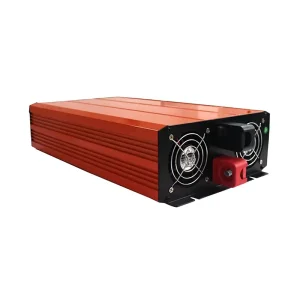
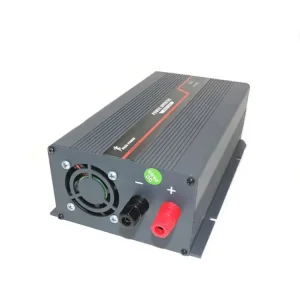
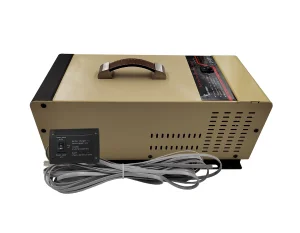
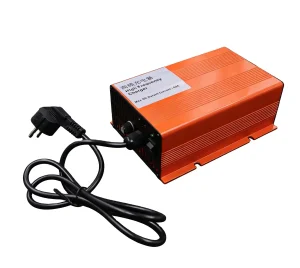
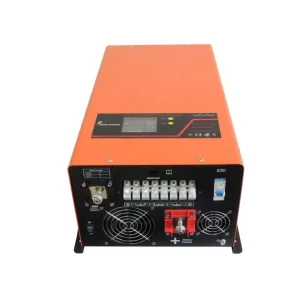
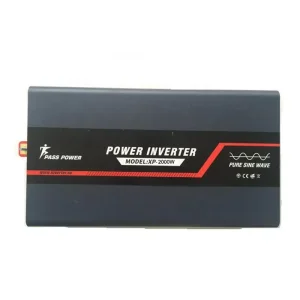
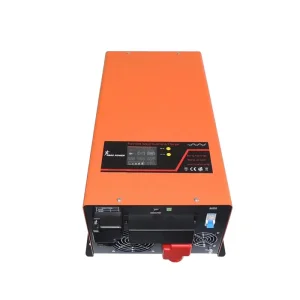
Analyzing macro supply chain transitions, power density requirements, and why enterprise buyers are standardizing on CE-certified 24V lithium battery chargers.
By transitioning system architecture from 12V to 24V nominal, enterprise applications cut conductor current in half for equivalent wattage ($P=V \times I$). This reduces copper resistive thermal losses ($I^2R$) by 75%, allowing thinner wiring harnesses, lower heat dissipation, and higher overall system energy efficiency across AGVs, marine power plants, and off-grid solar setups.
CE compliance is no longer a superficial label; European importers and OEMs demand comprehensive EN 60335-2-29 safety testing and EN 61000-6-2/4 electromagnetic compatibility. A certified 24V lithium charger guarantees zero harmonic pollution back into commercial AC grids while protecting sensitive lithium Battery Management Systems (BMS) against voltage transients.
Lithium Iron Phosphate (8S / 25.6V nominal) has dominated commercial energy storage due to its 3,000 to 6,000 cycle life and thermal stability. Modern 24V chargers must incorporate specific 8S charging profiles (29.2V absorption cut-off) to prevent over-voltage degradation and ensure balanced cell conditioning during the terminal Constant Voltage stage.
A detailed examination of high-frequency switching circuits, active PFC, zero-voltage wake-up algorithms, and smart CAN-bus telemetry.
| Electrical & Functional Parameter | 8S LiFePO4 Configuration | 7S Ternary Lithium (NMC) | Lead-Acid / AGM Baseline (Comparative) |
|---|---|---|---|
| Nominal System Voltage | 25.6V DC | 25.2V DC | 24.0V DC |
| Maximum Absorption Voltage (CV) | 29.2V ± 0.2V | 29.4V ± 0.1V | 28.8V - 29.6V (Temperature Dependent) |
| Float / Maintenance Voltage | 26.8V - 27.2V (Optional/Disabled) | 27.0V (Not Recommended) | 27.2V ± 0.2V |
| Cut-Off Current Threshold | 0.02C to 0.05C | 0.03C | Constant Float Transition |
| Active Power Factor Correction (PFC) | > 0.98 @ 230VAC Full Load | > 0.98 @ 230VAC Full Load | Passive / Optional (>0.75) |
| BMS Zero-Voltage Wake-Up | Automated Pulse Trigger (0-5V) | Automated Pulse Trigger (0-5V) | Not Applicable |
Unlike legacy chargers that risk thermal runaway by continuously trickling lithium cells, our CE-certified 24V chargers implement a precision digital signal processor (DSP) controlled CC/CV/Cut-Off cycle. Stage 1 (Constant Current): The charger supplies maximum rated current (e.g., 30A or 60A) while monitoring cell voltage ramp-up. Stage 2 (Constant Voltage): Upon reaching 29.2V (for 8S LiFePO4), voltage is clamped rigidly within ±0.1V while current exponentially decays. Stage 3 (Complete Termination): As current drops below 5% of rated output, charging halts entirely, eliminating electrolyte breakdown and lithium plating risks.
Utilizing zero-voltage switching (ZVS) on the primary side and zero-current switching (ZCS) on the secondary rectifiers, the charger achieves efficiency exceeding 94.5%. This high efficiency dramatically decreases internal ambient temperature, allowing fanless aluminum extrusion designs or silent intelligent temperature-controlled cooling.
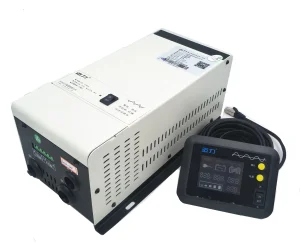
Integrated CAN communications (compatible with CANopen, J1939, or custom protocols) allow real-time handshake between the battery charger and the vehicle/rack BMS. Dynamic adjusting of charge current based on real-time cell temperatures and voltage deltas prevents localized cell overcharging.
When a lithium pack trips its internal protective low-voltage disconnect (LVD), traditional chargers fail to detect open terminal voltage. Our 24V units emit a safe low-current activation pulse to re-energize the BMS MOSFETs, restoring charge acceptance safely without human intervention.
How tier-1 manufacturers ensure rigorous quality assurance, customized charging algorithms, and streamlined export logistics for global distributors.
We offer factory-programmed charging profiles optimized for custom battery chemistry formulations, including high-density NCM, LiFePO4, LTO (Lithium Titanate), and hybrid lead-lithium multi-mode operation. MCU firmware can be customized with client-specific cut-off thresholds, delay timers, and LED/LCD indicator behaviors.
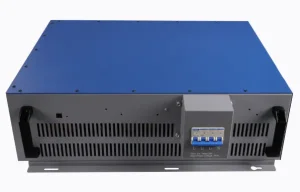
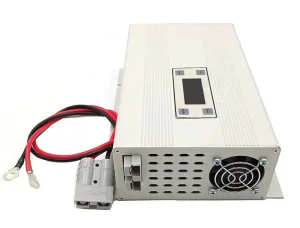
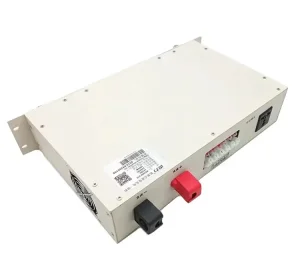
From ultra-compact aluminum die-cast housings with IP67 waterproofing for harsh marine/mining environments to lightweight 1U rack-mount chassis for telecom servers, our engineering team provides complete hardware customization including custom paint, laser-etched branding, and specialized DC plugs (Anderson, REMA, XLR, M12).
Every production batch undergoes automated optical inspection (AOI), high-voltage isolation breakdown testing (2000VAC primary-to-secondary), and a minimum 4-hour full-load thermal burn-in under dynamic ambient temperature chambers. ISO 9001:2015 certified workflows guarantee zero-defect shipment standards.
Navigating European directives, safety standard EN 60335-2-29, EMC emissions testing, and environmental compliance for hassle-free customs clearance.
Compliant with EN 60335-1 and EN 60335-2-29 (particular requirements for battery chargers). Verification includes creepage and clearance distances, impulse voltage insulation, fire-retardant V-0 plastic component enclosures, and dual-redundant over-temperature thermal cutouts.
Tested to EN 61000-6-3 (Emissions for residential/light-industrial) and EN 61000-6-1 (Immunity). Built-in multi-stage EMI filters suppress conductive radio frequency noise, ensuring no interference with onboard navigation, radio communications, or sensitive sensors.
Complete supply chain audit ensuring zero restricted hazardous substances (lead, mercury, cadmium, hexavalent chromium, PBBs, PBDEs, and phthalates). Safe for global distribution, eco-design recycling standards, and long-term environmental sustainability.
How our 24V lithium charging systems deliver robust performance across specialized sector deployments worldwide.
Intelligent automated guided vehicles require ultra-fast, high-current 24V charging during short break intervals (opportunity charging). Our CAN-controlled chargers interface directly with fleet management systems, automatically adjusting current output up to 100A while regulating battery pack temperatures to maximize warehouse uptime.
Salt fog corrosion and persistent vibration challenge electronic integrity. Our marine-grade 24V charger series features conformal-coated PCBs, stainless steel hardware, IP65 ingress protection, and low-noise cooling modes. They integrate seamlessly with dual-battery isolators and AC shore power distribution systems.
In hybrid renewable microgrids, 24V lithium battery banks serve as crucial backup energy reservoirs. Our chargers sync with solar MPPT controllers and auxiliary diesel generators, providing fast AC-to-DC bulk charging when solar irradiance falls below operational thresholds.
Strategic development trajectory of high-frequency power electronics, solid-state battery compatibility, and IoT smart grid integration.
Replacing silicon MOSFETs with GaN systems enables switching frequencies exceeding 500kHz. This shrinks internal transformers and filter inductors by 40%, delivering ultra-compact, lightweight 24V chargers with volumetric power density over 1.5 W/cm³ and reduced heat signature.
Future 24V chargers feature onboard Wi-Fi / Bluetooth Low Energy (BLE) and MQTT protocol stacks. Facility engineers and fleet operators can monitor real-time charging curves, internal MOSFET thermal states, and total amp-hour throughput remotely, enabling predictive maintenance before failures occur.
Advancing beyond unidirectional charging, upcoming architectures support bidirectional power flow. A 24V mobile battery pack can feed clean 230VAC back into emergency tools or micro-grids during power outages, acting as both an intelligent battery charger and a grid-tied inverter.
Answers to common B2B engineering and procurement queries regarding 24V lithium battery chargers and export compliance.
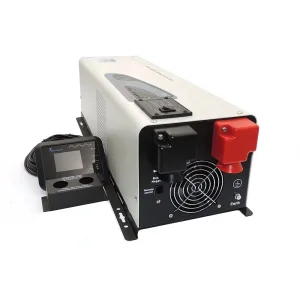
Industrial-grade 3-phase inverters, intelligent battery chargers, and rack-mounted pure sine wave power units for commercial exporters.