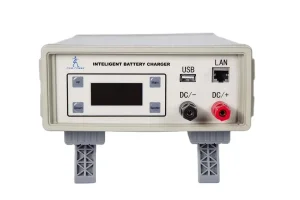
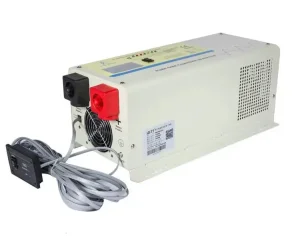
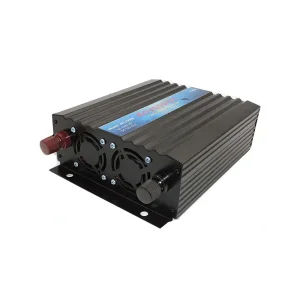
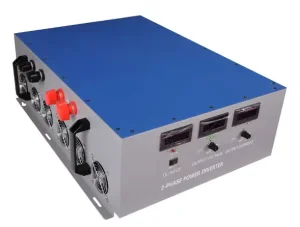
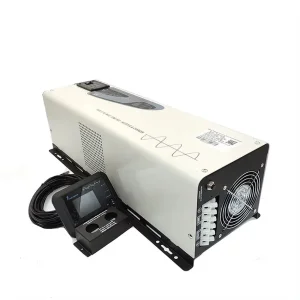
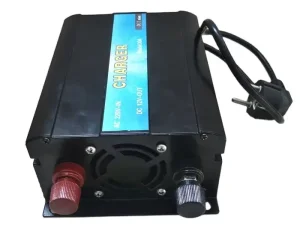
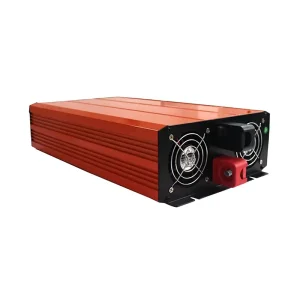
Explore our flagship series of CE-certified pure sine wave power inverters, high-frequency smart battery chargers, and hybrid MPPT solar converter platforms engineered for precision and reliability.
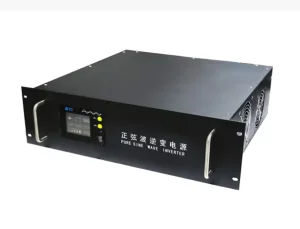
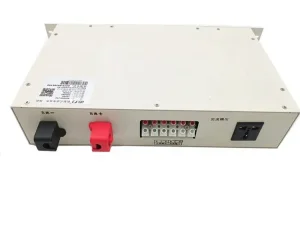
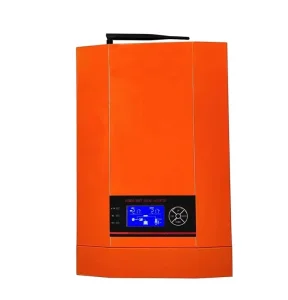
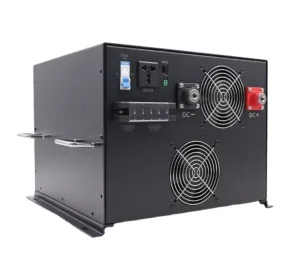
In modern energy conversion systems, battery health and operational reliability depend critically on charging architecture precision. As global markets transition toward advanced energy storage, electric vehicles (EVs), recreational vehicles (RVs), and off-grid renewable infrastructure, the demand for high-reliability, microcontroller-driven battery chargers has increased exponentially. A CE Certification 3 Stages Intelligent Charger represents the benchmark for power electronics entering the European Economic Area (EEA) and global markets requiring rigid compliance with European Union directives.
CE marking is not merely a commercial standard; it is a mandatory legal requirement verifying that power equipment meets severe safety and electromagnetic criteria. For industrial intelligent chargers, CE conformity spans three key directives:
Compliant with EN 60335-2-29 (Safety of household and similar electrical appliances - Particular requirements for battery chargers) and EN 62233. Guarantees creepage distance isolation, dielectric strength protection (>3000V AC isolation between primary and secondary circuits), and thermal safety during full-load current delivery.
Engineered under EN 61000-6-1 / EN 61000-6-3 standards for emission and immunity. Integrates multi-stage LC input EMI filtering and active Power Factor Correction (PFC) to eliminate grid harmonic distortion and prevent interference with nearby telecommunications and sensitive electronics.
Ensures total restriction of hazardous substances (Lead, Cadmium, Mercury, Hexavalent Chromium, PBB, PBDE, and Phthalates). Guarantees eco-compliant manufacturing processes utilizing lead-free SMT reflow soldering and fully recyclable aluminium alloy chassis enclosures.
Conventional linear chargers or basic 2-stage unregulated power units apply fixed voltages across battery terminals. This outdated methodology causes severe thermal stress, electrolyte gassing in flooded lead-acid units, plate sulfation, and catastrophic thermal runaway or accelerated degradation in Lithium Iron Phosphate (LiFePO4) chemistries.
A true 3-Stage Intelligent Charger utilizes an integrated Microcontroller Unit (MCU) operating a closed-loop pulse-width modulation (PWM) or resonant LLC converter system. By continuously measuring terminal voltage, charging current, and ambient/cell temperature, the MCU automatically sequences through three optimized phase states:
Objective: Rapid Capacity Recovery (0% - 80%)
The charger delivers its maximum rated current ($I_{max}$) continuously into the battery. As energy stores replenish, battery terminal voltage rises linearly. During this high-power phase, the MCU regulates MOSFET switching frequencies to maintain peak power transfer efficiency while controlling internal heat generation via smart PWM duty-cycle adjustments.
Objective: Complete Saturation & Balancing (80% - 100%)
Once terminal voltage hits the preset absorption ceiling (e.g., 14.4V for AGM/Gel, 14.6V for LiFePO4), the MCU switches mode from Constant Current to Constant Voltage. Voltage is clamped tight while charging current tapers down naturally as battery internal resistance increases, guaranteeing 100% capacity replenishment without overcharging.
Objective: Self-Discharge Prevention & Long-Term Standby
When current decays below a designated threshold (typically 5% of $I_{max}$), the MCU transitions to a lowered float voltage level (e.g., 13.5V to 13.8V). This trickle voltage precisely counteracts natural parasitic self-discharge and holds the battery at maximum state-of-charge indefinitely without degrading internal chemistry.
| Performance Metrics | 3-Stage Intelligent MCU Charger | Standard 2-Stage Linear Charger | Unregulated Transformer Unit |
|---|---|---|---|
| Charging Efficiency | 92% – 96% (High-Frequency PWM/LLC) | 70% – 78% | < 60% |
| Battery Lifespan Extension | Extended by 200% – 300% | Baseline Reference | Degraded (-40% due to gassing) |
| LiFePO4 & AGM Compatibility | Fully Programmable via Dip-Switches / MCU | Limited (Lead-acid only) | Incompatible (High Risk) |
| Thermal Control & Safety | NTC Sensor Dynamic Compensation (-3mV/°C/Cell) | Passive Thermal Cutoff Only | None (High Overheating Risk) |
| Total Harmonic Distortion (THD) | < 5% with Active PFC | > 25% | > 40% |
As the world's primary epicenter for advanced power electronics manufacturing, China-based OEM/ODM suppliers offer unmatched operational synergies for global B2B buyers. Sourcing CE certified intelligent battery chargers directly from Tier-1 Chinese manufacturers delivers measurable advantages across cost, scalability, component integration, and technological innovation.
Our Suzhou manufacturing infrastructure benefits from direct proximity to premium semiconductor suppliers, high-frequency planar transformer foundries, and custom extrusion tooling plants. This concentrated industrial supply chain slashes component procurement lead times, minimizes raw material freight overhead, and accelerates rapid prototyping phases for bespoke OEM projects.
Equipped with multi-line high-speed Surface Mount Technology (SMT) lines, automated optical inspection (AOI), high-voltage isolation testers, and computer-controlled ATE burn-in aging rooms. Every 3-stage charger undergoes 100% full-load thermal burn-in testing prior to final export packaging, drastically reducing field failure rates to under 0.1%.
Unlike rigid off-the-shelf distributors, Chinese factory partners provide end-to-end engineering customization. We tailor DC voltage levels (12V, 24V, 36V, 48V, 72V), output currents (10A to 100A+), custom CANbus/RS485 communication protocols, housing form factors (rack-mount, wall-mount, portable), and multi-chemistry algorithm tuning.
By leveraging automated mass production scales, high-volume material purchasing power, and optimized assembly engineering, Chinese manufacturers deliver premium CE-certified chargers at a fraction of Western production costs—allowing global brands and distributors to capture superior profit margins.
The power electronics sector is experiencing a technological inflection point driven by renewable energy targets, vehicle electrification, and digital industrialization. B2B importers must align product roadmaps with key emerging trends:
Transitioning from conventional Silicon MOSFETs to Wide Bandgap (WBG) Gallium Nitride (GaN) and Silicon Carbide (SiC) devices allows switching speeds beyond 100kHz. This yields lighter chargers, 30% smaller chassis footprints, and power conversion efficiencies surpassing 96%.
Integration of Bluetooth LE, Wi-Fi, and CANbus communication protocols enables remote charge monitoring, cloud-based fleet diagnostics, over-the-air (OTA) firmware updates, and predictive maintenance alerts across commercial battery installations.
Future-proof chargers feature multi-profile selection routines capable of charging SLA, Gel, AGM, Flooded, LiFePO4, and Lithium Nickel Manganese Cobalt (NMC) batteries through simple dip-switch toggles or digital display interfaces.
Intelligent 3-stage battery chargers serve as mission-critical power management hubs across a wide spectrum of commercial, industrial, and residential infrastructures:
Off-grid marine and overland RV electrical systems demand reliable dual-input charging capability. Our 3-stage intelligent chargers seamlessly integrate with auxiliary generator power or shore power AC connections, converting grid electricity into precise DC energy to quickly recharge house battery banks without humming noise, RF interference, or battery over-boiling risks.
Automated Guided Vehicles (AGVs) and warehouse material handling equipment require high-current rapid charging during short operational breaks. Microcontroller-managed 3-stage units deliver fast Constant Current bulk charging, allowing fleet managers to maximize machine uptime and eliminate costly battery replacement cycles.
Remote cellular towers and enterprise Uninterruptible Power Supply (UPS) installations rely on floating maintenance charge profiles to maintain battery banks in continuous readiness. CE-certified chargers with active PFC and ultra-low ripple voltage prevent grid transients from compromising sensitive communication nodes.
In hybrid solar/wind microgrids, prolonged weather overcast requires auxiliary AC generators to recharge battery banks. Intelligent 3-stage AC-to-DC chargers provide fast, safe replenishment, ensuring off-grid homes and agricultural sites maintain continuous electrical power.
When evaluating high-volume OEM/ODM charger suppliers, procurement officers and engineering directors must conduct thorough risk assessments beyond initial unit price. We recommend utilizing the following technical audit criteria:
Browse our complete lineup of multi-stage intelligent chargers, industrial 3-phase off-grid inverters, and high-frequency DC/AC power systems available for wholesale global export.