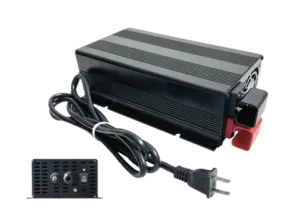
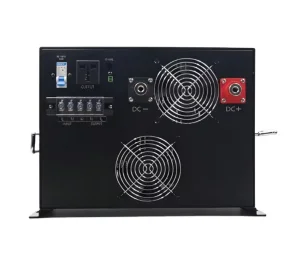
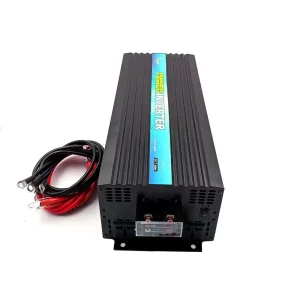
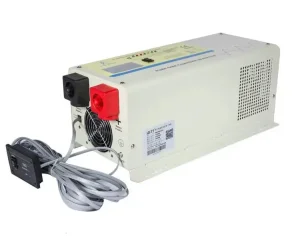
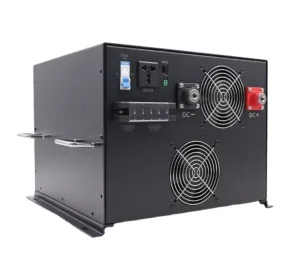
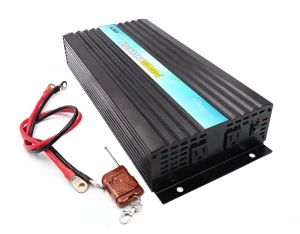
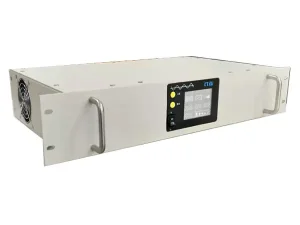
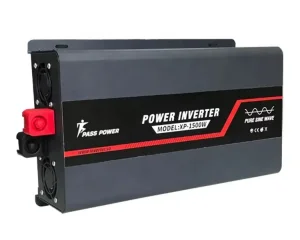
Explore our core certified intelligent battery charging modules, pure sine wave power inverters, and high-efficiency converters designed for commercial, residential, and emergency utility deployments.
For decades, standard primary zinc-manganese dioxide ($\text{Zn/MnO}_2$) alkaline batteries were classified strictly as single-use consumables. However, modern micro-controller advancements, proprietary high-frequency pulse modulation, and precise temperature-compensated voltage termination algorithms engineered by top-tier OEMs have revolutionized this paradigm. Today's commercial-grade CE Certification Alkaline Battery Chargers deliver safe, multi-cycle energy recovery for primary chemistries, dramatically reducing hazardous e-waste while lowering operational expenditure for industrial enterprises.
Standard continuous DC charging forces alkaline cells into rapid thermal degradation, internal gas build-up, and electrolyte leakage due to hydrogen evolution at the zinc anode. Our advanced factory architecture utilizes micro-burst pulse width modulation (PWM). By introducing millisecond-range relaxation intervals between high-frequency current injection pulses, the chemical reaction inside the cell maintains electrochemical balance. This effectively prevents zinc dendrite formation and preserves the structural integrity of the cell wall, yielding up to 20–50 safe recharge cycles depending on depth of discharge (DoD) and initial cell quality.
Understanding how enterprise clients deploy intelligent primary battery charging tech in localized operational environments reveals substantial total cost of ownership (TCO) advantages across global markets.
Utility providers deploying Automated Meter Reading (AMR) units and distributed environmental sensors rely heavily on AA/AAA alkaline batteries for baseline power. Integrating certified localized charging bays at field service centers allows maintenance crews to recycle depleted primary batteries during scheduled service turnarounds, drastically reducing annual procurement volumes.
Large-scale warehousing, fulfillment hubs, and parcel tracking operations consume tens of thousands of dry batteries annually for barcode scanners, mobile label printers, and RFID inventory guns. Factory-grade bulk alkaline chargers provide a reliable localized energy recycling station inside distribution hubs.
Hospitals, diagnostic clinics, and home healthcare units utilize non-critical monitoring devices, otoscopes, pulse oximeters, and portable infusion pumps powered by standard primary batteries. CE-certified chargers ensure stringent electromagnetic compatibility (EMC) without interfering with sensitive clinical telemetry equipment.
High-rise office buildings, hotels, and educational campuses maintain massive inventories of smoke detectors, wireless door locks, panic hardware, and emergency flashlights. Certified smart chargers help facility managers reduce maintenance overhead while verifying battery health via LED status monitors.
Consumer electronics distributors expanding into green tech solutions leverage our white-label manufacturing capabilities to introduce branded alkaline battery maintenance stations for eco-conscious retail consumers across EU and North American markets.
Recharging a primary cell requires precise control over electro-chemical transformation. Standard secondary batteries (NiMH, NiCd, Li-ion) feature chemistry specifically engineered for reversible ion transfer. In contrast, alkaline batteries ($\text{Zn/MnO}_2$) experience physical phase alterations during discharge.
Instead of continuous DC current, our high-frequency switching circuits apply controlled, micro-second current pulses. This prevents localized concentration of zinc oxide ($\text{ZnO}$) around the anode shell, ensuring uniform migration of hydroxide ions ($\text{OH}^-$) back into the active manganese dioxide cathode matrix.
Each independent charging slot is governed by an individual 8-bit RISC microprocessor. The MCU samples real-time terminal voltage at a frequency of 1,000 Hz. If cell voltage rises beyond 1.65V or exhibits a sudden slope shift ($\text{d}V/\text{d}t \le 0$), charging automatically halts to avoid gas evolution.
Overheating is the primary catalyst for alkaline leakage. Embedded Negative Temperature Coefficient (NTC) thermistors monitor bay surface temperatures. If ambient thermal levels exceed $45^\circ\text{C}$, current is instantly throttled down into a micro-trickle state.
| Performance / Safety Parameter | Maili Intelligent Primary Alkaline Charger | Standard NiMH / NiCd Battery Charger | Conventional Li-ion Fast Charger | Single-Use Alkaline Disposal |
|---|---|---|---|---|
| Supported Chemistries | Alkaline ($\text{Zn/MnO}_2$), NiMH, NiCd | NiMH, NiCd Only | Li-ion / LiFePO4 Only | N/A (Disposed on depletion) |
| Charge Control Algorithm | PWM Pulse & Relaxation ($\text{d}V/\text{d}t$) | Negative Delta-V ($-\Delta V$) | Constant Current / Constant Voltage (CC/CV) | N/A |
| Leakage Safety Mechanisms | Triple Guard (Voltage, Temp, Max Time) | Basic Thermal Cutoff | BMS Protection Circuitry | Risk of leakage during storage |
| Level of CE Certification | Full LVD (EN60335-2-29) & EMC Certified | Basic Standard EMC | Strict UN38.3 & CE Standards | Standard Battery Directives |
| Environmental & TCO ROI | Reduces consumable battery cost by up to 70% | High upfront cell purchase cost | High cell cost, potential recycling hazards | Highest TCO & maximum e-waste impact |
Operating out of China's premier industrial electronics hub in Suzhou, our manufacturing facility merges advanced SMT component placement, automated optical inspection (AOI), and strict ISO 9001 quality controls to ensure high-capacity production with zero-defect goals.
Direct strategic procurement of original automotive-grade ICs, flame-retardant ABS polymers (UL94-V0), and high-frequency transformers ensures component stability.
High-speed surface-mount technology (SMT) lines minimize human assembly error, maintaining tight tolerances on high-density PCBA layouts.
Every charger unit undergoes a rigorous 4-hour full-load thermal burn-in aging test inside climate-controlled test chambers prior to packaging.
In-house EMC chamber pre-compliance testing guarantees seamless clearance during formal TUV/SGS laboratory certification audits.
Streamlined export logistics from Shanghai and Ningbo ports with complete customs documentation, white-label packaging, and localized plug adaptations.
Importing primary battery chargers into international territories requires absolute compliance with safety mandates. Our factory engineering guarantees that all exported models meet or exceed the following framework directives:
Strict compliance with EN 60335-1 (Safety of Household and Similar Electrical Appliances) and EN 60335-2-29 (Particular requirements for battery chargers). Insulation resistance, creepage distances, and dielectric strength tests are rigorously documented.
Certified against EN 55014-1, EN 55014-2, EN 61000-3-2, and EN 61000-3-3. Our chargers emit zero harmful electromagnetic field interference, enabling safe usage alongside medical sensors, radio receivers, and sensitive home automation equipment.
100% free of hazardous heavy metals including lead ($\text{Pb}$), cadmium ($\text{Cd}$), mercury ($\text{Hg}$), hexavalent chromium, and restricted flame retardants (PBBs/PBDEs), ensuring seamless compliance with EU Green Deal purchasing guidelines.
Addressing core technical, safety, and commercial questions for enterprise buyers, distributors, and procurement managers.
Yes, provided it is done using an intelligent microprocessor-controlled charger utilizing pulse modulation. Standard continuous DC chargers will overheat an alkaline cell, causing gas expansion ($\text{H}_2$) and electrolyte bursting. Our smart chargers utilize high-frequency pulse-and-rest cycles, monitored by microsecond $\text{d}V/\text{d}t$ cutoffs, which prevents internal pressure buildup and renders the process safe.
Cycle life depends on the cell’s depth of discharge (DoD) prior to charging and overall brand quality. If recharged when capacity drops to approximately 40-50% (terminal voltage around 1.2V), quality alkaline batteries can achieve 20 to 50 stable cycles. Batteries that have been fully drained to 0V or stored depleted for months cannot be recharged and will be rejected by our charger's automatic safety detection circuit.
Every shipment comes fully backed by official CE test reports under LVD (EN60335-1/2-29) and EMC (EN55014) directives issued by accredited laboratory partners (SGS/TUV). We also provide RoHS 2.0 chemical compliance verification, FCC documentation for US markets, and localized plug options (EU, UK, US, AU).
Yes. Our multi-chemistry flagship charger models feature automatic chemical detection algorithms. Upon cell insertion, the internal MCU measures internal resistance and initial voltage profiles to automatically select the optimal charging curve: PWM Pulse for Alkaline, $-\Delta V$ for NiMH/NiCd, or CC/CV for Li-ion platforms.
For standard factory-branded units, MOQ starts at 100 units. For customized white-label projects (including custom silk-screen logos, custom LCD backlights, modified shell colors, and localized retail box packaging), the standard MOQ is 1,000 units with a typical manufacturing lead time of 15 to 25 business days from artwork approval.
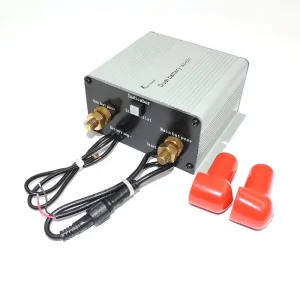
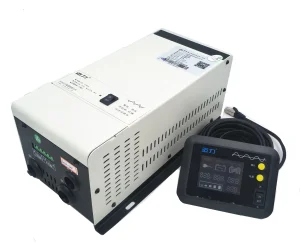
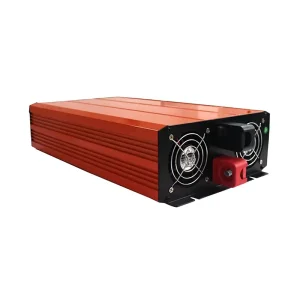
Select from our complete range of high-efficiency dual battery isolators, ultra-thin portable chargers, off-grid tie solar inverters, and high-frequency power conversion systems.