


Explore our top-tier CE-certified smart battery chargers, pure sine wave inverter chargers, and dual battery isolators designed for reliable power conversion.
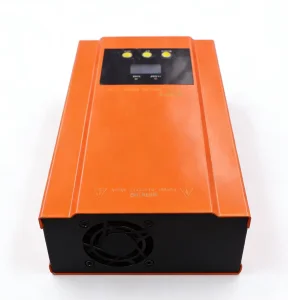
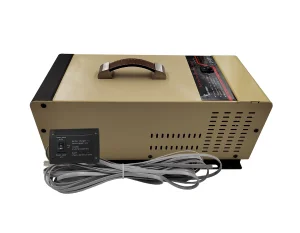
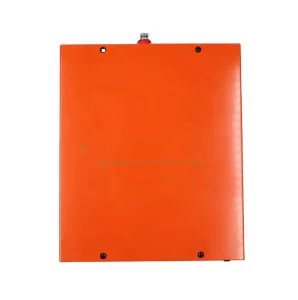
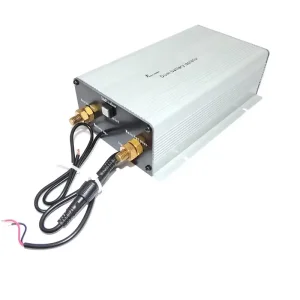
An authoritative deep dive into low-voltage power conversion, safety compliance standards, and advanced multi-stage charging algorithms for global importers and OEM system integrators.
The global demand for high-reliability CE Certification Automatic Battery Charger 12v solutions has witnessed unprecedented acceleration. Driven by the electrification of commercial transport, the rapid expansion of off-grid solar energy storage systems (ESS), emergency service vehicle upgrades, and marine leisure markets, modern 12V battery chargers have evolved from primitive constant-voltage rectifiers into sophisticated, software-defined power conversion centers.
As an established manufacturer and exporter operating under ISO 9001:2015 quality management benchmarks, our production facility delivers high-efficiency automatic 12V battery chargers and hybrid inverter-charger systems that comply directly with European Union directives: the Low Voltage Directive (LVD 2014/35/EU) and Electromagnetic Compatibility Directive (EMC 2014/30/EU), specifically tested against safety standards EN 60335-2-29 and EN 61000 series.
Analyzing regional adoption trends, industrial procurement standards, and macro-economic factors shaping export demand.
Mandatory CE mark, RoHS compliance, and EN 60335-2-29 safety standards drive the market. High demand for LiFePO4-compatible automatic 12V 30A-90A chargers with active Power Factor Correction (PFC) for campervans, commercial fleets, and marine crafts.
Focus on heavy-duty surge tolerance, UL/ETL alignment, and 110V/120V AC input resilience. High-power 12V automatic chargers and inverter-charger combos are extensively deployed in overland travel rigs, service trucks, and telecom back-up banks.
Rapid adoption in off-grid solar storage, marine fishing fleets, and telecommunications. B2B buyers prioritize cost-to-performance ratio, wide AC input range (90V-265V), and rugged aluminum housing designed for tropical, high-humidity environments.
| Parameter | Lead-Acid (Flooded/AGM/Gel) | Lithium (LiFePO4) | Industrial Telecom / Stationary |
|---|---|---|---|
| Nominal Voltage | 12.0V - 12.8V DC | 12.8V - 14.6V DC | 12V DC Floating Array |
| Bulk Charge Voltage | 14.2V - 14.6V DC | 14.4V - 14.6V DC | 13.8V - 14.1V DC |
| Float Voltage | 13.5V - 13.8V DC | 13.5V - 13.6V (or Cut-off) | 13.5V Continuous |
| Thermal Sensitivity | High (-3mV/°C/Cell Compensated) | BMS Managed / Freeze Cut-off | Strict Ambient Monitoring |
| Required CE Directives | EN 60335-2-29, EN 55014 | EN 60335-2-29, EN 61000-6-3 | EN 61000-6-2, EN 60950/62368 |
How high-frequency switch-mode power supply (SMPS) topologies and MCU algorithms maximize battery lifespan and charging speed.
Unlike traditional basic linear chargers that boil battery electrolyte through overcharging or cause sulfation via undercharging, our CE-certified automatic chargers implement precise digital microprocessor-controlled charging stages:
Hardware and firmware work synchronously to ensure absolute reliability in grueling commercial operations:
Deploying robust automatic 12V power chargers across specialized vehicle builds, marine installations, and mission-critical backup power systems.
Integrated shore-power battery charging systems connected to dual battery isolators. Automatically charges house 12V LiFePO4/AGM banks whenever connected to campsite AC grids or generator outlets, switching seamlessly back to inverter mode.
Conformal-coated PCBs and IP30/IP65 aluminum housings withstand salt-mist corrosion and vibration. Multi-output bank charging allows simultaneously maintaining starting batteries and deep-cycle house power onboard yachts and commercial trawlers.
Ambulances, fire command vehicles, and mobile work trucks require instant standby readiness. High-amp auto chargers keep auxiliary power batteries topped up during depot parking via auto-eject shorelines.
Anticipating energy transformation challenges: GaN power switches, CAN-bus digital telematics, and bidirectional vehicle-to-grid integration.
Transitioning from conventional Silicon MOSFETs to Gallium Nitride (GaN) and Silicon Carbide (SiC) semiconductors allows switching frequencies above 200kHz. This dramatically reduces transformer core volume by 40% while raising energy efficiency to 97%.
Modern commercial fleets require real-time state-of-charge (SOC) visibility. Incorporating CAN-bus (RV-C, J1939) and Bluetooth Low Energy (BLE) protocols allows direct telemetry reporting to vehicle master displays and mobile apps.
Unifying automatic battery charging, MPPT solar regulation, and pure sine wave inversion into compact, single-chassis bidirectional energy management nodes capable of feeding excess stored power back to local AC loads.
Addressing key engineering, compliance, and international trade inquiries for B2B buyers and importers.
CE certification for 12V automatic battery chargers requires compliance with two main directives: the Low Voltage Directive (LVD 2014/35/EU) and the Electromagnetic Compatibility Directive (EMC 2014/30/EU). Key harmonized safety standards include EN 60335-1 (general electrical safety) and EN 60335-2-29 (particular requirements for battery chargers). EMC testing involves EN 55014-1/EN 55014-2 or EN 61000-6-1/EN 61000-6-3 to ensure immunity from grid surges and guarantee that electromagnetic emissions do not interfere with nearby communications.
Yes, provided the charger features a DIP-switch or software selector for distinct charging profiles. Lead-acid batteries require a multi-stage profile ending in a Float phase (13.5V–13.8V) and occasional equalization pulses. LiFePO4 batteries, however, require a constant current/constant voltage (CC/CV) profile up to 14.4V–14.6V, followed by immediate charge termination or a non-stressing float mode. Charging lithium batteries on an unadapted lead-acid profile with automatic desulfation can trigger the battery's internal Battery Management System (BMS) over-voltage trip or damage cells.
Chemical reaction rates in lead-acid batteries fluctuate with ambient temperature. In hot environments, charging at standard 25°C voltages causes overcharging, water loss, and grid corrosion. In cold weather, undercharging occurs. Our chargers connect to a remote NTC temperature sensor attached to the battery terminal. The MCU adjusts the absorption and float voltage setpoints automatically by approximately -3mV to -5mV per °C per cell relative to a 25°C baseline.
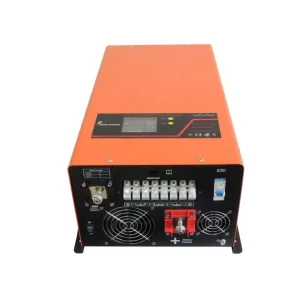
Low frequency inverter-chargers utilize a heavy-duty toroidal copper transformer that provides extreme surge capability (up to 300% of nominal rating for 20 seconds). This allows starting heavy motor loads like air conditioners, compressors, and power tools. Combining a heavy-duty automatic 12V smart charger and pure sine wave inverter in a single enclosure eliminates redundant cabling, reduces installation labor, and incorporates an ultra-fast automatic transfer switch (ATS < 10ms).
As an ISO 9001:2015 direct manufacturer, we provide comprehensive OEM/ODM customization including: custom AC voltage/frequency presets (100V/110V/120V/230V/240V, 50Hz/60Hz), custom DC charge current ratings, tailored charging curves for proprietary battery chemistries, custom metal enclosure colors and branding, customizable LCD display menus, private-label packaging, and custom communication protocols (RS485, CAN-bus, Modbus).
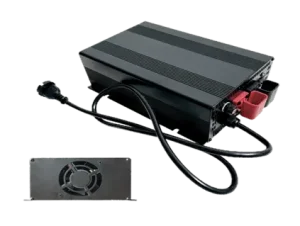
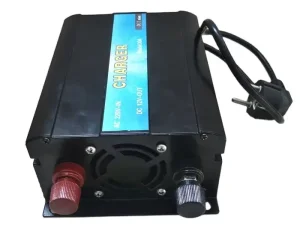
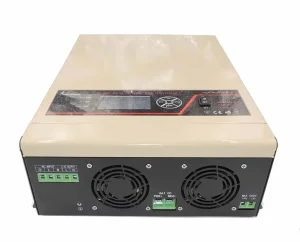
Discover our comprehensive collection of hybrid solar inverters, high-amp battery chargers, and low-frequency off-grid converters.
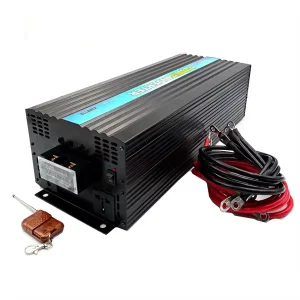
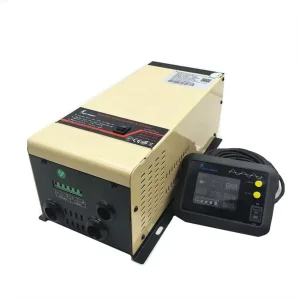
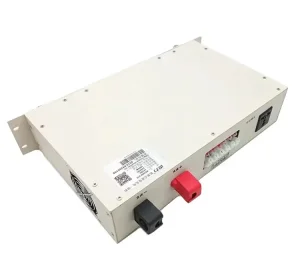
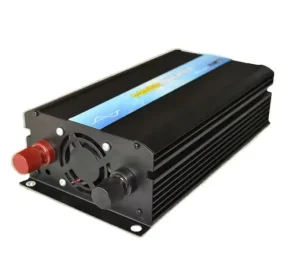
Streamlining supply chain security, compliance assurance, and technical support for global power electronics distributors.
Every single automatic battery charger that leaves our production floor undergoes a multi-step testing regime: IQC component verification, SMT automated optical inspection, 100% full-load thermal burn-in aging testing for 4 to 12 hours, high-voltage dielectric withstand isolation testing, and final ATE dynamic automated parameter calibration.
From initial sample engineering prototypes to mass container shipments, our experienced R&D team supports you through firmware modifications, thermal layout optimization, custom enclosure tooling, CE/CB/SAA certification dossier filings, and fast export logistics fulfillment.
