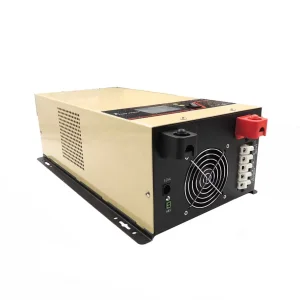
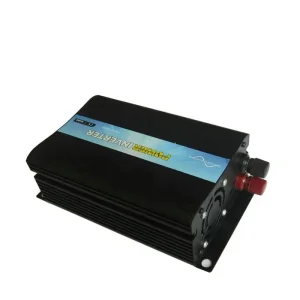
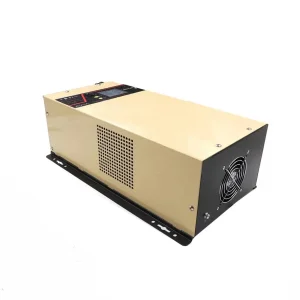
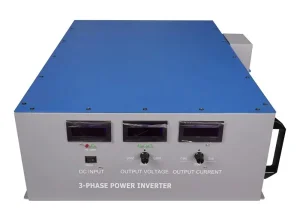
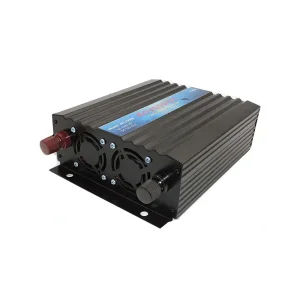
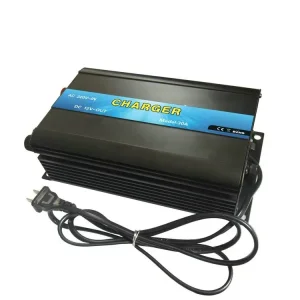
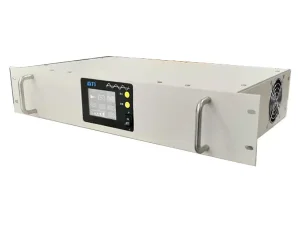
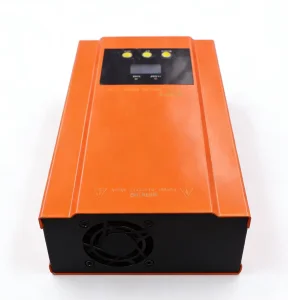
High-reliability power conversion hardware engineered with precision battery temperature compensation circuitry.
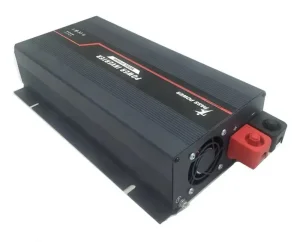
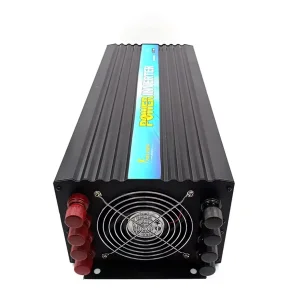
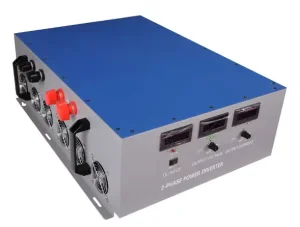
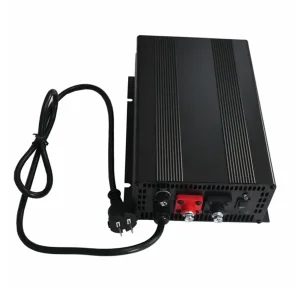
An authoritative analysis of thermal management in industrial energy storage, CE certification compliance standards, and electrochemical lifespan optimization.
Chemical reaction rates inside lead-acid (AGM, GEL, Flooded) and lithium (LiFePO4) chemistries double for every 10°C rise in ambient temperature, requiring automatic setpoint scaling to prevent overcharging.
Full alignment with Low Voltage Directive (LVD 2014/35/EU), Electromagnetic Compatibility (EMC 2014/30/EU), and EN 62477-1 safety standards for grid-tied and off-grid power conversion hardware.
High-precision Remote Temperature Sensing (RTS) probes communicate with microcontroller-driven PWM/MPPT algorithms to modulate output voltage dynamically in real-time.
In industrial energy storage, telecom backup power systems, and off-grid solar microgrids, the battery bank represents a substantial capital expenditure. The chemical reactions governing electrical charge storage within lead-acid (AGM, Gel, Flooded) and specific lithium-based formulations (e.g., LiFePO4 paired with advanced low-temperature cell chemistry) are inherently sensitive to thermal variations.
According to the Arrhenius equation, the rate of internal chemical reactions accelerates exponentially as temperature increases. Specifically, for every 10°C (18°F) rise above the standard baseline temperature of 25°C (77°F), the rate of grid corrosion, gassing, and active material degradation in a lead-acid cell roughly doubles. Conversely, when ambient temperatures drop below 25°C, internal electrolyte resistance rises, slowing down ion mobility and rendering standard charging voltages insufficient to restore the battery to full capacity.
High Thermal Stress (Overcharging): Charging a battery at elevated temperatures without adjusting the voltage downward forces excessive electrical current through the cells. This generates grid corrosion, hydrogen gassing, water loss, and can ultimately trigger catastrophic thermal runaway—where the battery swells, melts, or catches fire.
Low Thermal Stress (Undercharging): Charging at freezing or near-freezing temperatures without elevating the voltage setpoint causes lead sulfate crystals to accumulate on the plates (sulfation), permanent capacity reduction, and stratification.
To mitigate these failure modes, professional-grade inverter-chargers, solar MPPT controllers, and multi-stage AC-to-DC battery chargers utilize a Battery Temperature Compensation (BTC) function. This feature dynamically shifts the absorption, float, and equalization voltage setpoints based on real-time thermal readings supplied by a battery-mounted thermistor sensor (NTC or PTC).
For enterprise procurement directors, project integrators, and B2B equipment distributors, ensuring that charging hardware carries legitimate **CE Certification** is mandatory when entering European and international markets. CE compliance is not merely a label; it is a legally binding verification that the power conversion system complies with strict safety, health, and environmental protection directives.
The standard reference baseline for battery parameters is universally set to 25°C (77°F). The temperature compensation algorithm continuously recalculates the target voltage ($V_{target}$) using the following linear equation:
Where:
Practical Calculation Example: Consider a 48V AGM battery system (24 cells) charging at a baseline absorption setting of 57.6V at 25°C with a compensation coefficient of -4mV/°C/cell. If ambient summer temperatures elevate the battery terminal to 40°C:
Voltage Offset = (40°C - 25°C) × (-0.004V) × 24 cells = +15 × (-0.096V) = -1.44V
Adjusted Absorption Charge Voltage = 57.6V - 1.44V = 56.16V
By reducing the output voltage by 1.44V, the CE-certified charger prevents thermal runaway and excessive water loss while continuing to replenish battery capacity safely.
Installed across desert environments in the Middle East or North Africa, where daytime temperatures frequently surpass 45°C. Temperature compensation prevents premature battery degradation and extends system maintenance cycles.
Cellular towers located in remote mountain ranges or arctic regions face harsh freezing conditions (-30°C). Increased charging voltage ensures backup batteries stay 100% full to prevent network outages during grid failure.
Engine room installations create severe micro-climates. CE-certified inverter chargers continuously monitor deep-cycle house batteries situated near hot diesel engines to optimize charging curves.
Ambulances, fire rescue command trucks, and mobile service rigs rely on dual battery isolators and smart chargers equipped with thermal sensing to keep onboard medical or power tools fully operational 24/7.
As energy storage technology migrates toward high-density lithium chemistries, solid-state batteries, and hybrid grid architecture, Battery Temperature Compensation is evolving from analog thermistor loops into digital thermal telemetry networks:
Expert answers regarding temperature compensation hardware, CE certification standards, and system installation.
Explore our full range of certified high-frequency, low-frequency, and hybrid solar power equipment.