Enterprise Engineering Whitepaper & Industrial Sourcing

CE Certification CE ROHS compliant wind turbine Supplier & Product

Architectural Compliance, Aerodynamic Engineering Roadmaps, Microgrid Hybrid Systems Integration, and Industry 4.0 Manufacturing Rigor for Global Clean Energy Infrastructure.
Featured System Components

Tier-1 Certified Hybrid Inverters & Power Conversion Equipment

High-efficiency power conversion architectures designed for seamless pairing with small-to-medium CE & RoHS compliant wind turbine power plants.
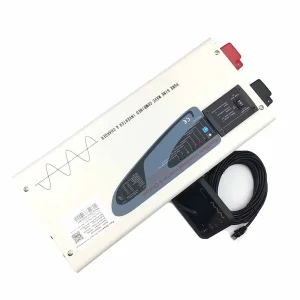
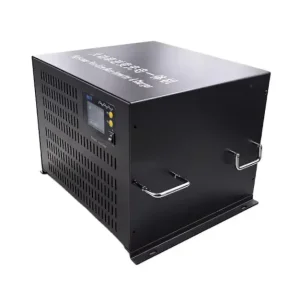
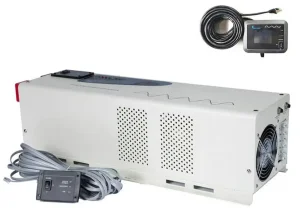
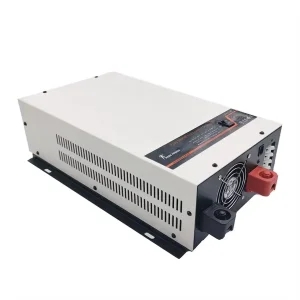
Cheap CE RoHS CB SAA Peak 9000w Rated 3000w Pure Sine Wave Solar Hybrid Power Supply Inverter

Cheap CE RoHS CB SAA Peak 9000w Rated 3000w Pure Sine Wave Solar Hybrid Power Supply Inverter with 60a MPPT Controller Supplier, Exporter

View Product Details
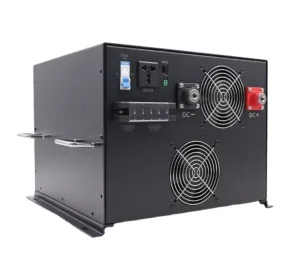
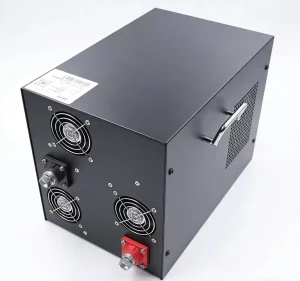
Best Maili QSP-9000 9KW 50/60Hz Single Phase High-power Pure Sine Wave DC/AC Inverter

Best Maili QSP-9000 9KW 50/60Hz Single Phase High-power Pure Sine Wave DC/AC Inverter Multiple Protection 95% Efficiency Manufacturer, Exporter

View Product Details
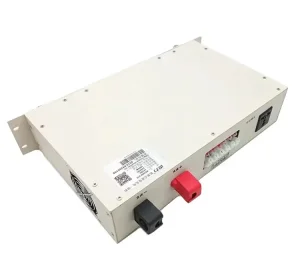
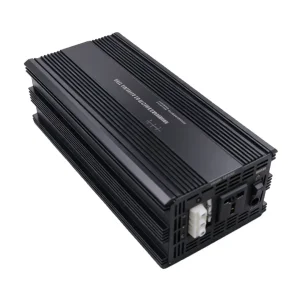
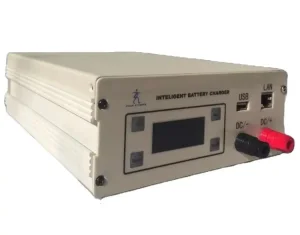
Wholesale Maili 1.2KW Rack-mounted Pure Sine Wave Inverter Charger

Wholesale Maili 1.2KW Rack-mounted Pure Sine Wave Inverter Charger Integrated 110VAC/220VAC with 50/60Hz and Comprehensive Protection Functions Manufacturer, Factories

View Product Details
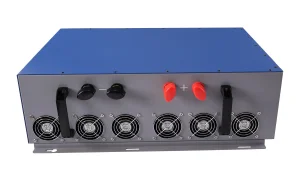
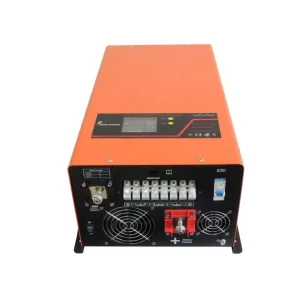
High-Quality Maili High-power 110V/220V AC 8KW Pure Sine Wave 95% Efficiency Inverter Charger

High-Quality Maili High-power 110V/220V AC 8KW Pure Sine Wave 95% Efficiency Inverter Charger Multiple Protection Functions Suppliers, Factories

View Product Details
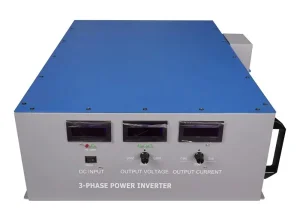
OEM CE ROHS 12000W Off-Grid Pure Sine Wave Inverter 24V 48V DC

OEM CE ROHS 12000W Off-Grid Pure Sine Wave Inverter 24V 48V DC 190V 380V 3-Phase 24000W Peak Power Inverter 3-Year Warranty for Solar System OEM Manufacturer, Product

View Product Details
High-Quality Maili Factory Wholesale DC24V 48V AC 120V AC230V 4000va Hybrid Charger

High-Quality Maili Factory Wholesale DC24V 48V AC 120V AC230V 4000va Hybrid Charger for Car RV Pure Sine Wave Low Idle Current Single Phase Supplier, Products

View Product Details
Best Maili 4KW Hybrid Solar Power Inverter 4000W 24V 230V 60A MPPT

Best Maili 4KW Hybrid Solar Power Inverter 4000W 24V 230V 60A MPPT Single Inverter LCD LED Display Low Frequency Pure Sine Wave 50Hz Output Factory, Product

View Product Details
Custom CE ROHS 6kw high voltage dc 380v to ac 110v and 220v pure sine wave inverter

Custom CE ROHS 6kw high voltage dc 380v to ac 110v and 220v pure sine wave inverter efficiency 94% Factory, Factories

View Product Details
Regulatory Excellence & E-E-A-T Framework

Engineering CE & RoHS Compliance into Small Wind Energy Conversion Systems

In the rapidly evolving landscape of decentralized renewable energy, acquiring a certified CE Certification CE ROHS compliant wind turbine supplier & product is not merely a transactional requirement; it is a foundational prerequisite for grid safety, environmental stewardship, and legal market entry across the European Economic Area (EEA) and international jurisdictions adhering to IEC standards. Small and medium wind turbine (SWT) systems—ranging from 300W micro-turbines to 100kW commercial platforms—operate under extreme dynamic mechanical stresses and variable electrical loads. Ensuring rigorous compliance demands holistic engineering from blade tip aerodynamics down to component-level material chemistry.

"True CE marking and RoHS validation require full alignment with Directive 2006/42/EC (Machinery), Directive 2014/35/EU (Low Voltage), Directive 2014/30/EU (EMC), and IEC 61400-2 safety design principles. Anything less exposes site operators to catastrophic mechanical failure and grid non-compliance."

Directive 2006/42/EC (Machinery)

Requires structural stability analysis under class-specific survival wind speeds (up to 60 m/s), dual redundant aerodynamic/electromagnetic braking mechanisms, and failure-mode containment to prevent blade shedding or tower collapse.

Directive 2014/30/EU (EMC)

Mandates ultra-low electromagnetic interference (EMI) profiles during pulse-width modulation (PWM) and MPPT grid-tie power conditioning, ensuring zero disruption to local telecommunications or sensitive industrial automation networks.

RoHS Directive 2011/65/EU & (EU) 2015/863

Strictly restricts lead (Pb), cadmium (Cd), mercury (Hg), hexavalent chromium (Cr6+), PBBs, PBDEs, and phthalates across all alternator windings, solder joints, power PCBs, and anti-corrosion surface treatments.

Beyond raw compliance documentation, an enterprise-grade CE ROHS compliant wind turbine supplier must prove structural longevity through third-party fatigue testing (IEC 61400-2). Our systems undergo severe vibration screening, salt-spray chamber testing exceeding 1,000 hours (ASTM B117), and accelerated thermal cycle testing from -40°C to +85°C. This guarantees that every permanent magnet generator (PMG) and smart microgrid inverter delivers bankable performance with an operational lifespan exceeding 20 years.

R&D Innovation Horizon

Technical Roadmap & Next-Generation Engineering Outlook

Exploring breakthroughs in low-cut-in aerodynamics, permanent magnet direct-drive alternators, and neural-network MPPT control algorithms.

1.8 m/s
Ultra-Low Cut-In Wind Speed
> 96.5%
PMG Generator Efficiency
Cp 0.48
Peak Aerodynamic Coeff.
100 μs
MPPT Reaction Latency

1. Advanced Aerodynamic Blade Geometry & Carbon Fiber Composites

Traditional small wind turbines suffer from low aerodynamic performance at turbulent, low-speed regimes. Our engineering roadmap integrates low-Reynolds-number airfoils (such as specialized NACA 63-4XX series variants) reinforced with precision carbon-fiber thermosetting polymers. By utilizing resin transfer molding (RTM), blade mass is reduced by 28% while torsional stiffness increases by 40%. This structural optimization eliminates aeroelastic flutter under high-gust conditions and allows start-up torque generation at wind speeds as low as 1.5 m/s.

2. Outer-Rotor Direct-Drive Permanent Magnet Synchronous Generators (PMSG)

Gearboxes represent the single highest failure point in wind energy architectures due to mechanical wear and lubrication breakdown. The future of reliable, maintenance-free wind generation lies in direct-drive PMSG technology. Utilizing high-grade Neodymium-Iron-Boron (NdFeB / N45SH) permanent magnets with thermal resistance up to 150°C, our outer-rotor direct-drive alternators eliminate gear transmission losses entirely. The cogging torque is minimized to under 0.05 N·m through skewed stator slot geometry, yielding cogging-free rotation during light ambient breezes.

3. Predictive AI-Driven MPPT Controllers & Dynamic Dump Load Management

Wind dynamics are inherently stochastic. Traditional Maximum Power Point Tracking (MPPT) algorithms fail to respond effectively to rapid turbulence pulses, causing severe power drop-offs. Next-generation wind turbine power systems incorporate DSP-driven high-speed sampling (10 kHz) paired with predictive machine learning algorithms. The system continuously maps the turbine's real-time Power Coefficient ($C_p$) curve against rotor RPM and wind shear vectors, dynamic-tuning the electronic load torque within microseconds. During storm conditions, an intelligent solid-state PWM dump load absorbs excess kinetic energy without mechanical friction, maintaining complete operational control.

Macro-Level Application Architecture

Turnkey Deployment Scenarios for Industrial Microgrids

Versatile system topology engineered for harsh operating environments, off-grid telecom infrastructure, and hybrid solar-wind power stations.

Remote Telecom 5G Base Stations

Delivers uninterrupted 48V DC power to off-grid cellular towers in rugged terrain. Complemented by high-surge pure sine wave inverters, replacing costly diesel generators and reducing operational OPEX by up to 82%.

Hybrid Solar-Wind Microgrids

Capitalizes on seasonal and diurnal resource complementarity: solar generation peaks during day hours, while wind yields peak during night hours and winter storms. Managed by unified multi-source hybrid power conversion platforms.

Coastal & Extreme Marine Outposts

Built with C5-M anti-corrosion rated marine coatings, electro-galvanized hardware, sealed IP67 generator housings, and dual seals to resist salt fog penetration and humidity in offshore or island microgrids.

System Integration Technical Matrix

Application Scenario Recommended Rated Power DC Bus Voltage System Compliance Standard Key Protection Architecture
Off-Grid Telecom Tower 1kW - 5kW Wind / Solar Hybrid 48V DC CE, RoHS, EN 61400-2, EN 61000-6-3 Class II SPD, Automated Dump Load, Remote SNMP
Agricultural & Water Pumping 3kW - 10kW Direct-Drive 190V - 380V AC 3-Phase CE LVD, CE EMC, RoHS, IEC 60034 Soft-Start VFD Inverter, Over-speed Mechanical Tail Yaw
Island / Marine Microgrid 5kW - 30kW Low-RPM PMG 240V - 600V DC Bus ISO 9227 (Salt Spray), CE, RoHS, IP67 C5-M Heavy Coating, Electromagnetic & Hydraulic Brake
Residential Clean Power 600W - 3kW Compact Vertical/Horizontal 24V / 48V Low Voltage DC CE, RoHS, EN 55032, Low-Noise Directive Ultra-Quiet Aerodynamic Blades, Multi-Stage Battery Charger
Manufacturing Excellence

China Smart Factory 4.0: Supply Chain Resilience & Quality Governance

Combining high-volume manufacturing economies of scale with rigorous ISO 9001:2015 quality control and full component traceability.

Evaluating a CE Certification CE ROHS compliant wind turbine supplier requires looking beyond product datasheets to inspect the manufacturing infrastructure that guarantees repeatability, structural integrity, and long-term supply chain resilience. Operating from advanced manufacturing hubs in China, our state-of-the-art Industry 4.0 production facilities leverage robotic winding, automated dynamic balancing, and digitized quality inspection protocols to eliminate human error at every stage of assembly.

Automated Precision Winding & Vacuum Impregnation

Copper coil stators are wound via CNC multi-axis robotics ensuring optimal slot fill factors (>88%). Vacuum Pressure Impregnation (VPI) with Class H insulation epoxy guarantees zero moisture ingress and thermal endurance up to 180°C.

Computerized Two-Plane Dynamic Rotor Balancing

Every alternator rotor and blade hub assembly undergoes ISO 1940 Grade G2.5 high-precision dynamic balancing. Eliminating micro-vibrations protects bearings from premature fatigue and guarantees silent operation.

100% Full-Load Burn-In & X-Ray Flaw Detection

All finished direct-drive generators undergo 100% full-load dynamic testing on digitized wind-tunnel simulation test benches. Cast aluminum hubs and critical structural components pass X-ray non-destructive testing (NDT).

By controlling the complete vertical integration pipeline—from raw neodymium magnet processing to aluminum die-casting, CNC machining, surface powder coating, and final power electronics assembly—our production ecosystem guarantees component consistency and robust lead-time stability. Importers and OEM partners benefit from lower total cost of ownership (TCO) without compromising international compliance or engineering depth.

B2B Procurement Framework

Global Enterprise Procurement Guide & Technical Verification Checklist

Essential engineering criteria for procurement officers, EPC contractors, and distributor purchasing managers when sourcing wind turbines.

Procuring wind power equipment at commercial scale requires rigorous due diligence to distinguish between self-declared non-compliant products and genuinely certified energy systems. When issuing Requests for Quotation (RFQs) or evaluating supplier factory audits, commercial buyers must mandate the following technical documentation and performance benchmarks:

1. CE Test Report Verification

Ensure test reports are issued by ILAC-MRA or CNAS accredited independent laboratories. Reports must explicitly state test protocols for EN 61400-2 (Small wind turbine safety), EN 61000-6-1/3 (EMC immunity and emissions), and EN 60204-1 (Safety of machinery electrical equipment).

2. RoHS 2.0 Material Mapping

Demand X-ray Fluorescence (XRF) screening reports for all 10 restricted substances across homogenous materials. Verify that heavy-metal restrictions apply to generator copper wiring enamel, PCB solder paste, tail vane bushings, and cable strain reliefs.

3. Power Curve & Annual Energy Yield

Request standardized power curves standardized to sea-level air density ($1.225 \text{ kg/m}^3$). Require certified Annual Energy Production (AEP) estimations calculated across Weibull wind distribution parameters ($k=2, \bar{v}=4-8 \text{ m/s}$).

OEM/ODM Engineering Customization Parameters Available:
• Tailored DC output voltages: 12V, 24V, 48V, 96V, 110V, 380V DC.
• Custom mounting flange adapters: Guyed tower, free-standing lattice tower, or hydraulic tilt-up tower bases.
• Extreme environmental upgrades: Cold-weather steel alloys (-40°C impact tested), anti-icing heated blades, and marine C5-M coatings.
• Smart Communication Gateways: RS485, CANbus, Modbus-RTU, Wi-Fi, and 4G IoT cloud monitoring integration.
System Power Electronics

Compatible High-Efficiency Inverters, Chargers & Isolators

Complete your wind-solar power station with factory-tested high-frequency and low-frequency power conditioning units.
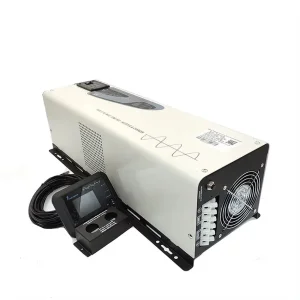
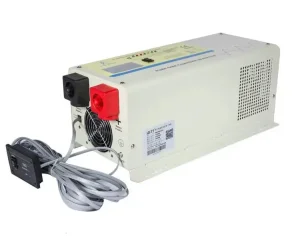
Cheap Maili CE Certified Customizable 6KW Low Frequency Inverter Charger

Cheap Maili CE Certified Customizable 6KW Low Frequency Inverter Charger DC 24V to AC 110V 6000 Watts for Off -grid Solar Power System Manufacturer, Exporters

View Product Details
Best Maili 7KW High-power 110V/220V AC Pure Sine Wave Inverter Charger

Best Maili 7KW High-power 110V/220V AC Pure Sine Wave Inverter Charger & Multiple Protection Functions Converters Product Factory, Exporter

View Product Details
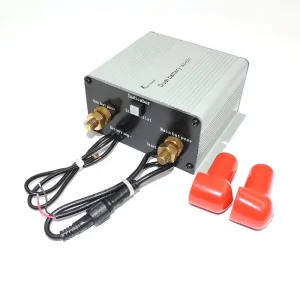
Cheap BS-153 Dual Battery Isolator Kit 24 Volt 200 Amp

Cheap BS-153 Dual Battery Isolator Kit 24 Volt 200 Amp with Voltage Sensitive Relay Boat for RV Car Truck caravan Suppliers, Product

View Product Details
Custom ROHS Approved 1500W Low Frequency Pure Sine Wave Off-Grid Solar Inverter

Custom ROHS Approved 1500W Low Frequency Pure sine wave Off-grid Solar Inverter 1.5KW with High Efficiency for Solar Power System Factory, Exporter

View Product Details
CE Certification Maili 2000W Portable 12V DC Input 220V AC Output Automatic UPS Inverter Charger

CE Certification Maili 2000W Portable 12V DC Input 220V AC Output Automatic DC AC Power Star Pure Sine Wave UPS Inverter Charger Inverter Converter Supplier, Product

View Product Details
High-Quality 3 Phase 4.5KW Power High Frequency Customized CE CB Rohs Inverter

High-Quality 3 Phase 4.5KW Power High Frequency Customized CE CB Rohs 12V/24V/48VDC to 110V/190V/220V/380V AC Out Off-grid Tie Inverters Manufacturers, Supplier

View Product Details
OEM 12V 50A Electric Vehicle Battery Charger

OEM 12V 50A Electric Vehicle (EV) Battery Charger Premium Chargers & Adapters For Electric Vehicles Supplier, Suppliers

View Product Details
Best ML-10KW-3P CE CB Rohs 3 Phase 10kva High Frequency Inverter

Best ML-10KW-3P CE CB Rohs 3 Phase 10kva High Frequency Power 24v 48v Dc to 190v 380v Ac Out 10kw Inverter Price for Off-grid Tie Factory, Factories

View Product Details
Knowledge Base & Technical Support

Frequently Asked Questions (FAQ) & Intent Mining

Expert engineering insights resolving critical search intents regarding CE/RoHS wind power procurement, system sizing, and regulatory standards.

Q1: What specific Directives must a wind turbine satisfy to legally carry the CE mark in Europe?
To earn valid CE certification, a wind energy system must demonstrate full compliance with four primary European Directives:
1. Machinery Directive (2006/42/EC): Covers dynamic structural safety, mechanical braking, over-speed controls, and fatigue limits per EN 61400-2.
2. Low Voltage Directive (2014/35/EU): Applies to electrical equipment operating between 50–1000 VAC or 75–1500 VDC, ensuring electrical insulation and shock protection.
3. Electromagnetic Compatibility Directive (2014/30/EU): Verifies that power electronics and MPPT inverters do not emit excessive electromagnetic disturbances or suffer operational failure under grid surges.
4. RoHS Directive (2011/65/EU and extension 2015/863): Mandates the total elimination or strict limitation of hazardous substances across all electrical components.
Q2: How does RoHS compliance affect the operational reliability of wind generators and controllers?
RoHS compliance requires transitioning from traditional lead-based solders to lead-free silver-copper alloys (SAC305) and eliminating hexavalent chromium coatings. While environmental protection is the primary goal, engineering lead-free electronics requires advanced thermal management during manufacturing to prevent "tin whiskers" or micro-cracks under severe wind turbine vibration profiles. Certified RoHS wind suppliers utilize specialized conformal coatings and automated reflow soldering to ensure long-term mechanical resilience equal to or exceeding conventional industrial electronics.
Q3: Why is direct-drive PMSG technology superior to gear-driven wind turbines for off-grid power generation?
Gearboxes are responsible for over 45% of downtime in small-to-medium wind energy installations due to gear tooth pitting, seal degradation, and lubricant freezing in cold climates. Direct-drive Permanent Magnet Synchronous Generators (PMSG) connect the turbine hub directly to the rotor without high-speed gearboxes. This reduces mechanical friction losses, lowers starting torque, cuts maintenance costs to near zero, and dramatically extends service life in remote, unattended deployments.
Q4: What are the differences between horizontal axis wind turbines (HAWT) and vertical axis wind turbines (VAWT)?
Horizontal Axis Wind Turbines (HAWT) offer higher aerodynamic efficiency ($C_p$ up to 0.48) and are ideal for open-field microgrids, agricultural sites, and coastal facilities with unidirectional laminar winds. Vertical Axis Wind Turbines (VAWT)—including Darrieus and Savonius designs—are omnidirectional, capturing wind from any vector without requiring yaw tracking mechanisms. VAWTs operate at lower noise levels and handle turbulent micro-drafts efficiently, making them suitable for urban rooftops and dense telecom site installations.
Q5: How does an MPPT hybrid wind/solar controller manage dynamic over-speed and gust conditions?
During high-wind gusts or sudden utility grid drops, the wind turbine generator risks catastrophic over-speed rotation. An advanced MPPT controller utilizes continuous electronic load matching. If the battery bank reaches full state of charge (SoC) or wind speeds exceed rated thresholds, the DSP controller activates a high-power PWM electronic dump load. This converts excess rotational kinetic energy into heat energy across ceramic resistor arrays, dynamically braking the turbine to a safe RPM without mechanical friction wear.
Q6: Can CE ROHS compliant wind turbines be customized for high-altitude or low-temperature environments?
Yes. Customization for extreme climates includes engineering specialized low-temperature alloy steels for turbine shafts and hubs, applying heating elements inside generator housings to prevent bearing grease freezing, utilizing UV-stabilized anti-icing blade coatings, and de-rating electrical components to accommodate air density variations at high altitudes above 3,000 meters.