


Explore our tier-1 CE, RoHS, and SAA compliant power chargers, low-frequency pure sine wave inverters, and intelligent power management systems.
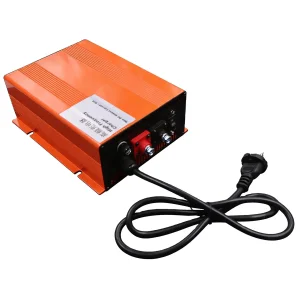
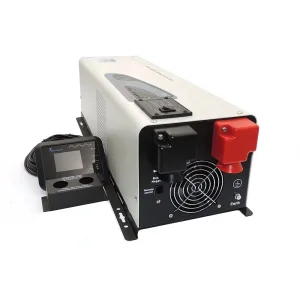
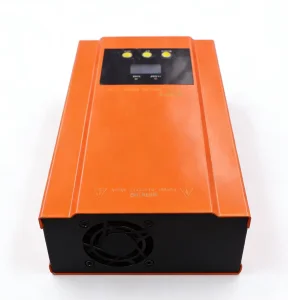
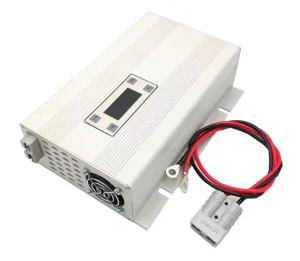
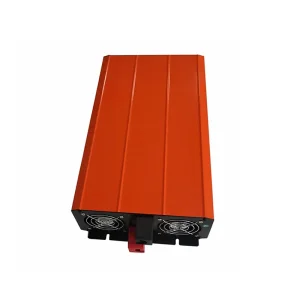
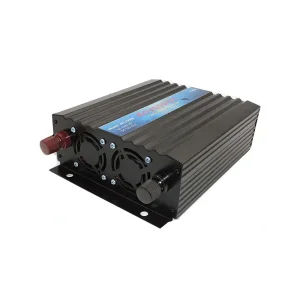
In the contemporary landscape of industrial automation, mobile electrification, and renewable energy integration, the conversion of Direct Current (DC) to Alternating Current (AC) represents a foundational technological pillar. Selecting an enterprise-grade OEM/ODM manufacturing partner for DC to AC power inverters requires an exhaustive evaluation that extends far beyond fundamental wattages and voltage metrics. Enterprise buyers must navigate stringent international safety mandates, electromagnetic compatibility protocols, advanced semiconductor topologies, and supply chain resilience.
This technical whitepaper examines the core engineering principles, manufacturing methodologies, and regulatory certification frameworks—specifically highlighting CE Certification (LVD 2014/35/EU, EMC 2014/30/EU)—that govern high-reliability DC to AC power inversion. Produced by engineering leaders at Suzhou Maili Electrical Appliance Co., Ltd., this document provides system integrators, commercial fleet outfitters, and renewable energy distributors with the actionable insights required to optimize power conversion architectures for mission-critical applications.
The technical evolution of DC to AC inverters is defined by two primary circuit paradigms: Low-Frequency (Transformer-Based) Topologies and High-Frequency (Switching-Mode) Topologies. Understanding the trade-offs between these architectural routes is essential for specifying equipment aligned with distinct operational stresses.
Utilizing robust line-frequency toroidal transformers, low-frequency inverters excel in handling high-inductive loads. They deliver unmatched surge power—often up to 300% of nominal rating for 20 milliseconds—making them indispensable for electric motors, air compressors, refrigeration units, and heavy industrial machinery subject to extreme inrush currents.
By leveraging Pulse Width Modulation (PWM) operating at tens of kilohertz, high-frequency inverters achieve high power density in compact, lightweight enclosures. Next-generation designs integrate Wide Bandgap (WBG) materials such as Gallium Nitride (GaN) and Silicon Carbide (SiC) MOSFETs, reducing switching thermal losses and driving system efficiencies beyond 96%.
Future-proof DC to AC systems are transitioning toward bidirectional topology, enabling unified Inverter/Charger functionality. Integrated software algorithms support seamlessly transitioning between off-grid battery inversion, active AC grid battery charging, vehicle-to-load (V2L), and vehicle-to-grid (V2G) power synchronization with sub-10ms transfer times.
| Technical Parameter | Low-Frequency Toroidal Inverter | High-Frequency Switch-Mode Inverter | Hybrid Solar MPPT Inverter |
|---|---|---|---|
| Primary Application | Motor Loads, RVs, EMS, Heavy Inductive Devices | Electronics, Telecommunications, Light Tools | Off-Grid Home Solar, Microgrids, Commercial PV |
| Peak Surge Capacity | Up to 300% Nominal (3x rating) | 150% - 200% Nominal (<2 seconds) | 200% Nominal (5-10 seconds) |
| Galvanic Isolation | Full Isolation (Heavy Toroidal Transformer) | Electronic / High-Frequency Transformer Isolation | Isolated DC-DC / High-Efficiency Topology |
| THD (Total Harmonic Distortion) | < 2.5% (Pure Sine Wave) | < 3% (Pure Sine Wave) | < 2% (Pure Sine Wave) |
| Thermal Endurance & MTBF | Exceptional thermal mass; MTBF > 100,000 hrs | Dependent on active fan cooling; Moderate thermal mass | High reliability with intelligent heat-sink management |
Exporting electrical equipment into the European Economic Area (EEA) and global markets mandates strict adherence to safety, electromagnetic compatibility, and environmental directives. For B2B procurement, verifying a manufacturer's authentic CE Certification is the baseline for legal compliance and brand risk mitigation.
Ensures that electrical equipment operating within 50 to 1000 VAC or 75 to 1500 VDC offers rigorous protection against electric shock, insulation breakdown, mechanical stress, thermal ignition, and arc flash hazards. Compliance requires rigorous testing per EN 62109-1/-2 safety standards.
Mandates that inverters emit minimal Electromagnetic Interference (EMI) to prevent disrupting surrounding communications, navigation, or medical equipment (EN 61000-6-1/3 standards). Simultaneously guarantees robust immunity against incoming electrostatic discharge (ESD) and line surges.
Restricts lead, mercury, cadmium, hexavalent chromium, and specific phthalates in hardware construction. Guarantees that printed circuit board assemblies (PCBAs), solder alloys, housing coatings, and internal wiring conform to international hazardous substance limits.
In addition to European CE marking, commercial power conversion projects frequently require cross-border harmonization. Our Suzhou manufacturing facility supports turnkey compliance testing for multi-region certification paths:
DC to AC power inversion is not a one-size-fits-all product category. Different enterprise deployment environments require specialized engineering adaptations in casing, cooling pathways, vibration resistance, and electrical isolation.
Vibration-proof internal mechanical layout, ultra-thin wall-mounted enclosures, and dual-battery isolation. Integrates shore power automatic transfer switches (ATS) and low stand-by current draw to preserve house battery reserves.
Integrated MPPT solar charge controllers with wide PV input voltage windows. Features multi-stage charging algorithms optimized for Lithium (LiFePO4), AGM, and GEL chemistry profiles to maximize battery lifespan.
Zero-noise pure sine wave generation protecting sensitive life-support systems, medical diagnostic units, radar, and marine communication radios against electrical ripple and voltage spikes.
High-voltage DC (380VDC) to AC inversion and split-phase topologies designed for enterprise server racks, remote telecom towers, and critical industrial automation monitoring.
Located in the heart of China’s high-tech manufacturing corridor in Suzhou, Jiangsu Province, Suzhou Maili Electrical Appliance Co., Ltd. (Pass Power) operates a modern 2,770 m² facility dedicated exclusively to advanced power electronics production since 2012. Our Industry 4.0 manufacturing methodology integrates strict quality management with competitive Bill of Materials (BOM) cost structures.
Precision automated toroidal core winding ensures uniform flux density and ultra-low copper loss. Surface Mount Technology (SMT) automated pick-and-place lines guarantee high component density and structural thermal consistency across all PCBA boards.
Every manufactured unit undergoes 100% full-load burn-in aging at elevated ambient temperatures, high/low voltage surge stress testing, and real-load motor starting tests before packaging to eliminate infant mortality failures.
Comprehensive ERP component tracking links every semiconductor batch, electrolytic capacitor, and copper winding directly to finished unit serial numbers. Proximity to tier-1 component suppliers in Yangtze River Delta guarantees lean lead times and cost advantages.
We provide full-spectrum OEM and ODM customization for international brands, private-label distributors, and system integrators requiring bespoke electrical or aesthetic modifications.
Custom input voltages (12V, 24V, 48V, 72V, 96V, up to 380V DC) and tailored output voltages (100V, 110V, 120V, 220V, 230V, 240V AC at 50Hz/60Hz).
Custom metal casing geometry, wall-mount brackets, powder-coating colors, silk-screen logos, and customized packaging design.
Universal, European, US NEMA, UK, Australian, and South African AC sockets combined with heavy-duty M8/M10 DC brass terminal posts.
RS485, CAN bus, Modbus, Bluetooth, Wi-Fi telemetry integration, and customized LCD digital display interfaces with brand logos.
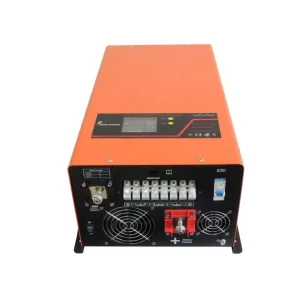
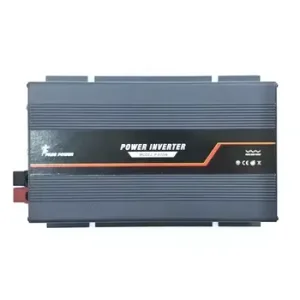
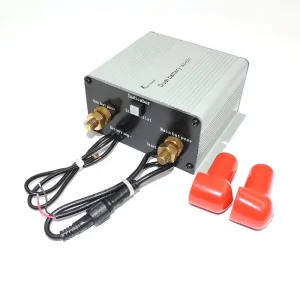
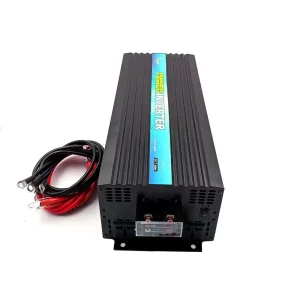
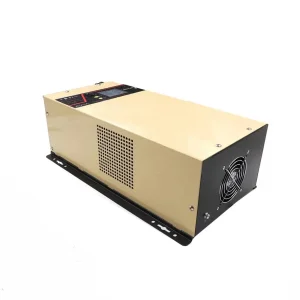
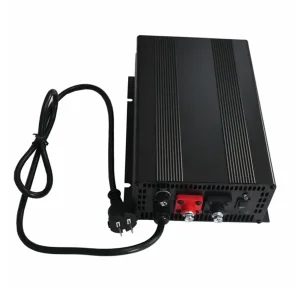
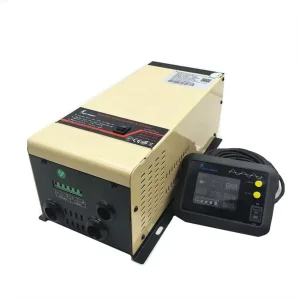
Browse our expanded portfolio of hybrid solar power inverters, high-power pure sine converters, ultra-thin vehicle chargers, and battery isolator kits.
Detailed technical answers compiled by our chief power electronics engineers to assist buyers during procurement evaluation.
CE Certification verifies that the inverter complies with two mandatory European Union directives: the Low Voltage Directive (LVD 2014/35/EU) and the Electromagnetic Compatibility Directive (EMC 2014/30/EU). LVD testing subjects the unit to extreme thermal, voltage isolation, and short-circuit conditions to prevent electric shock and electrical fires. EMC testing ensures that the inverter does not emit excessive high-frequency noise that disrupts nearby radios, navigation, or electronics, while simultaneously confirming the unit can withstand external electrostatic discharges and voltage surges.
The primary distinction lies in the internal transformer topology. Low-frequency inverters utilize a heavy, robust copper toroidal transformer operating at line frequencies (50Hz/60Hz). This design provides massive peak surge capacities (up to 300% for motor starting) and complete galvanic isolation. High-frequency inverters use electronic switching at high kilohertz frequencies with tiny ferrite transformers, resulting in significantly lighter, more compact units with peak conversion efficiencies up to 96%, ideal for resistive electronics and space-constrained environments.
Yes. All Maili intelligent 3-stage battery chargers and low-frequency inverter/chargers feature programmable or dip-switch selectable charging voltage profiles specifically calibrated for Lithium Iron Phosphate (LiFePO4) chemistries, as well as traditional AGM, GEL, and Flooded Lead-Acid batteries. Our chargers prevent overcharging, support low-voltage wake-up for tripped Lithium BMS boards, and offer precise Constant Current / Constant Voltage (CC/CV) transitions.
Our industrial-grade inverters integrate multi-layered protection circuits managed by a micro-controller unit (MCU):
A Pure Sine Wave inverter generates AC electricity that matches or exceeds the quality of utility grid power with Total Harmonic Distortion (THD) under 3%. Modified Sine Wave inverters produce stepped square waves that cause overheating in induction motors, buzzing noise in audio/visual gear, clock distortion in appliances, and potential premature failure of sensitive digital electronics and medical equipment. Pure sine wave delivery ensures universal compatibility and maximum appliance operational lifespan.
Standard OEM modifications (custom silk-screen branding, socket variations, and specialized user manuals) typically require an MOQ of 50 to 100 units with a production turnaround of 15 to 25 business days. Bespoke ODM projects requiring custom PCBA board design, non-standard input voltages (e.g., 96V DC), or customized housing tooling are evaluated individually, with prototype samples usually delivered within 30 to 45 calendar days.
