White Paper & Global Sourcing Guide

CE Certification Intelligent Dual Battery Isolator Exporters & Product

Architectural Analysis, Microprocessor-Controlled Voltage Sensitive Relays (VSR), China Industrial Manufacturing Dominance, and Global Supply Chain Integration for Automotive, Marine, Off-Grid, and Special-Vehicle OEM Applications.

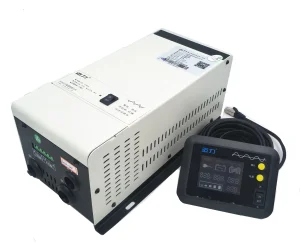
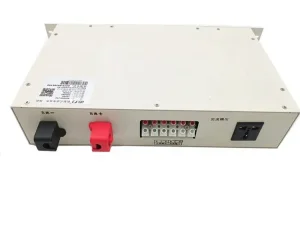
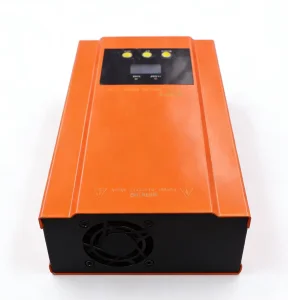
Featured OEM Electrical Power Conversion & Battery Management Products

Explore our flagship CE-certified power electronics, intelligent battery isolators, pure sine wave inverters, and high-efficiency smart battery chargers manufactured in our Suzhou automated production center.
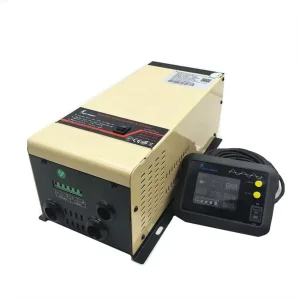
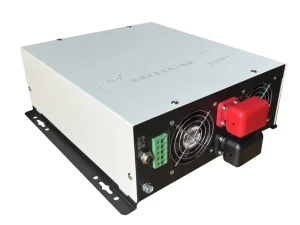
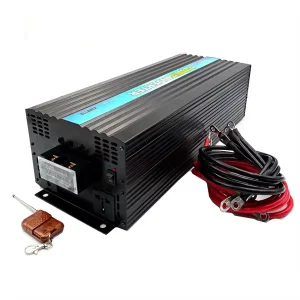
Custom Maili CE ROHS 10KW High Voltage DC Inverter
Custom Maili CE ROHS 10KW High Voltage DC 540V AC 220V Pure Sine Wave Inverter
View Product Details
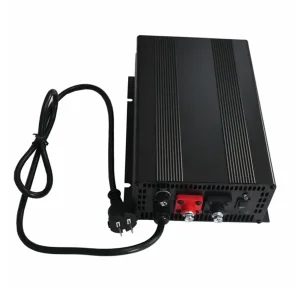
CE Certification MAILI 300W Commercial Vehicle Inverter
CE Certification MAILI 300W Ultra-thin Wall-mounted Commercial Vehicle Inverter Charger
View Product Details
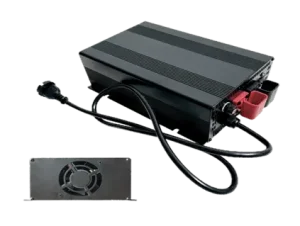
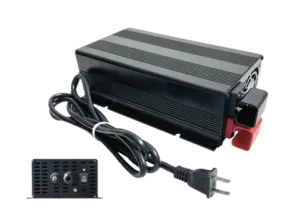
Best CE CB SAA Certified 12V 60A 3 Stages Intelligent Charger
Best CE CB SAA Certified 12V 60A 3 Stages Intelligent Charger Aluminum Casing
View Product Details
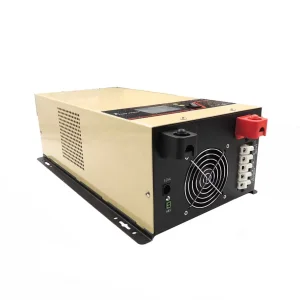
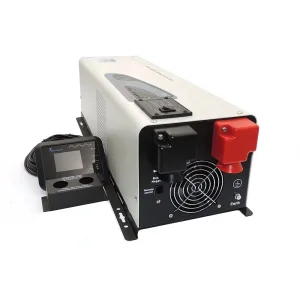
Wholesale MAILI 3KW High-Frequency Inverter
Wholesale MAILI 3KW High-Frequency 110V/220V AC Pure Sine Wave Inverters with Charger
View Product Details
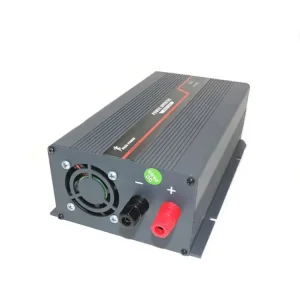
Maili 600w Ultra-thin Portable Intelligent Inverter
Cheap Maili 600W Ultra-thin Portable Intelligent DC AC Power Inverter Charger 24V to 230V
View Product Details
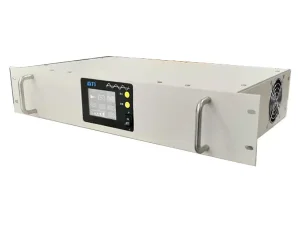
Wholesale Maili 1500W Rack-mounted Pure Sine Wave Inverter
Wholesale Maili 1500W Rack-mounted Pure Sine Wave Inverter & Charger Full Protection
View Product Details
Best 300w 24v Dc to 110v Ac Mini Smart Car Inverter
Best 300W 24V DC to 110V AC Mini Smart Car Off-grid Pure Sine Wave Inverter
View Product Details
OEM 3000 Watt Pure Sine Wave Off-grid Solar Inverter
OEM 3000 Watt Pure Sine Wave Off-Grid Solar Inverter 24V 220V RV Energy System
View Product Details

Executive Summary: Next-Generation Intelligent Dual Battery Isolation Systems

In modern automotive electrical engineering, marine auxiliary power networks, mobile emergency units, and off-grid overland systems, managing multi-battery power topologies is critical to operational continuity. An Intelligent Dual Battery Isolator acts as an automated energy traffic controller that dynamically segregates and connects a vehicle's primary engine-starting battery and secondary auxiliary house battery (such as LiFePO4 or AGM banks). This prevents auxiliary loads from draining the starter battery, eliminating engine no-start scenarios while allowing automated bidirectional or single-direction charging whenever an alternator, solar panel, or AC charger is actively operating.

Technical Core: Unlike primitive legacy diode isolators that suffer from a severe 0.7V–1.2V forward voltage drop and heavy power dissipation as heat, modern CE-Certified Intelligent Isolators utilize microprocessor-controlled Voltage Sensitive Relays (VSR) or ultra-low RDS(on) MOSFET solid-state switching networks. This guarantees a virtually zero voltage drop (<0.02V), maximizing charge delivery efficiency to auxiliary lithium or lead-acid chemistry banks.

As global fleet operators, commercial vehicle upfitters, and marine equipment distributors transition toward high-capacity energy storage systems, the requirement for strict CE Certification (LVD 2014/35/EU and EMC Directive 2014/30/EU) has become paramount. CE certification confirms that the dual battery isolator meets rigorous electromagnetic compatibility standards—preventing RF interference with onboard CAN-bus communication networks, GPS telematics, and sensitive medical or radio instruments—while adhering to structural dielectric and safety limits under harsh thermal operating profiles (-40°C to +85°C).

99.8%
Energy Transfer Efficiency
<0.02V
Ultra-Low Voltage Drop
140A/200A
Continuous Ampere Rating
IP67
Ingress Protection Rating

China Factory Strategic Advantages in Dual Battery Isolator Manufacturing

China has solidified its position as the undisputed global epicenter for automotive power electronics, battery management systems (BMS), and DC distribution hardware. Factory hubs located in advanced technological corridors such as Jiangsu (Suzhou) and Guangdong leverage an unmatchable ecosystem combining raw material sourcing, semiconductor assembly, automated Surface Mount Technology (SMT), and rigorous environmental testing infrastructure.

Automated SMT & MCU Calibration

Leading Chinese exporters utilize high-speed Panasonic and Yamaha SMT lines capable of placing 0201 micro-components with ±0.01mm precision. Microcontrollers (MCUs) undergo automated multi-point voltage threshold programming, ensuring cut-in (e.g., 13.3V) and cut-out (e.g., 12.8V) voltage trigger accuracy within ±0.05V.

Vertical Supply Chain Economy

By co-locating raw copper terminal stamping, flame-retardant PC/ABS housing injection molding, silver-alloy contact relay production, and silicone potted waterproof sealing within a 50-kilometer supply radius, Chinese OEMs reduce component lead times by 65% and offer a 40–50% cost advantage over Western manufacturers without sacrificing quality.

Automotive-Grade QA & Testing

Factory-level Quality Assurance includes 100% full-load aging burn-in testing, thermal shock testing (-40°C to 105°C), salt-spray corrosion resistance tests (ISO 9227), and high-vibration automotive simulated stress screening before units receive final CE compliance clearance.

Macro Industry Dynamics & Technology Trends (2025–2030)

The global intelligent dual battery isolator market is undergoing a structural technological shift driven by three primary macroeconomic catalysts: the exponential boom in off-grid mobile living (RVs, overland vehicles, campervans), the electrification of commercial service fleets, and the rapid replacement of traditional lead-acid auxiliary batteries with high-density Lithium Iron Phosphate (LiFePO4) chemistry.

1. The Dual-Chemistry Paradigm Shift (Lead-Acid + LiFePO4 Integration)

Historically, auxiliary electrical systems utilized flood or AGM lead-acid batteries, which shared similar charging voltage curves with the engine's starter battery. Today, over 70% of new RV, marine, and overland builds feature LiFePO4 auxiliary batteries. Lithium batteries maintain a higher nominal voltage (~13.3V resting) and possess extremely low internal resistance. Legacy mechanical VSRs often fail in dual-chemistry setups because the resting voltage of the lithium battery keeps the relay locked in a connected state, causing constant parasitic discharge into the starter battery. Modern intelligent isolators feature algorithmically programmed dual-chemistry switching protocols that distinguish between active alternator charging and resting voltage levels of lithium banks.

2. Solid-State Electronic Switching vs. Mechanical Relays

While electromagnetic mechanical solenoids remain popular due to low upfront cost, solid-state MOSFET-based battery isolators are taking over high-reliability sectors. MOSFET isolators eliminate moving mechanical parts, completely preventing electrical arcing, contact welding, and mechanical wear caused by engine vibration. Furthermore, solid-state designs enable sub-millisecond response times for reverse-current protection and over-current shutdown.

3. Integration with Smart Fleet Telematics & CAN-Bus Systems

Next-generation dual battery isolators are evolving from standalone analog devices into smart nodes within a vehicle's connected ecosystem. Incorporating LIN-bus or CAN-bus (J1939) protocols allows isolators to transmit real-time telemetry—including line voltages, switching status, terminal temperatures, and diagnostic fault codes—directly to central fleet management dashboards and driver cabin displays.

Localized Application Scenarios & System Topologies

Overland & RV Ecosystems

Recreational Vehicles & Campervans

In off-grid motorhomes, the dual battery isolator connects the vehicle's high-output alternator to the house battery bank while driving. Once the engine shuts off and alternator voltage drops below 12.8V, the isolator disengages within seconds. This preserves 100% of the starter battery's charge for ignition while allowing the auxiliary battery to run 12V DC refrigerators, pure sine wave power inverters, LED lighting, and water pumps.

Emergency & Rescue Fleets

Ambulances, Fire Trucks & Service Fleets

Emergency medical service (EMS) vehicles and fire command trucks carry heavy auxiliary electrical loads including defibrillators, radio repeaters, scene floodlighting, and suction pumps. A CE-certified intelligent dual battery isolator guarantees emergency starting power under all operational conditions, automatically isolating auxiliary power draws during long stationary rescue operations.

Marine Microgrids

Yachts, Workboats & Commercial Fishing

Marine environments require IP67-rated, fully silicone-potted, ignition-protected dual battery isolators (conforming to ISO 8846). They manage power distribution between the main engine starting battery and deep-cycle house or bow-thruster batteries, preventing corrosion-induced contact failures and resisting saltwater spray exposure.

Heavy Transport & Logistics

Long-Haul Commercial Trucking

Commercial sleeper cabs utilize dual battery isolators to isolate main cranking engines from sleeper cabin amenities such as CPAP machines, microwaves, auxiliary air conditioning (APU), and entertainment systems, maintaining compliance with anti-idling regulations across Europe and North America.

Architectural Deep-Dive: Isolator Technology Comparison

Selecting the appropriate dual battery isolation mechanism requires evaluating key engineering parameters such as thermal loss, voltage retention, mechanical fatigue, and safety protections. The matrix below outlines the performance differences across legacy diode isolators, standard mechanical VSRs, and next-generation microprocessor solid-state isolators.

Performance Feature Diode Battery Isolator Mechanical VSR Isolator Intelligent Solid-State MOSFET Isolator
Forward Voltage Drop 0.7V – 1.2V (High Power Loss) <0.05V (Contact resistance only) <0.02V (Ultra-low RDS(on))
Heat Generation & Thermal Load Extreme (Requires massive heatsinks) Low (Negligible in steady state) Minimal (Automotive MOSFETs)
Moving Parts / Arcing Hazard None (Solid state, passive) Mechanical Contacts (Arcing risk) None (100% Solid State)
Dual-Chemistry (LiFePO4) Ready No (Improper voltage regulation) Limited (Risk of latching on) Yes (Programmable Logic MCU)
Manual Boost / Emergency Start Not Available Optional Over-ride Switch Integrated Automated & Remote Boost
Parasitic Standby Current Draw 0 mA 15mA – 30mA <0.5mA (Ultra-low sleep mode)
Vibration & Shock Immunity High Medium (Mechanical chatter risks) Extreme (Vibration-proof)

Global Enterprise Procurement Guidelines & OEM/ODM Engineering

International procurement managers, OEM vehicle engineers, and brand importers must adhere to a strict evaluation checklist when sourcing dual battery isolators at volume. Quality verification extends beyond basic operational specs to encompass safety standard certifications, custom enclosure tooling, and supply chain transparency.

1. Regulatory Compliance & Mandatory Certifications

  • CE Marking (Europe): Verifies conformity with the Low Voltage Directive (LVD 2014/35/EU) and Electromagnetic Compatibility Directive (EMC 2014/30/EU). Test reports must confirm compliance with EN 61000-6-1 and EN 61000-6-3 radiated/conducted emission standards.
  • RoHS & REACH Compliance: Guarantees hazardous substances such as lead, cadmium, hexavalent chromium, and polybrominated biphenyls are strictly within allowable micro-gram limits.
  • IP Ingress Certification: Ingress Protection (IP65 to IP67) testing via independent accredited labs (e.g., SGS, TUV) verifying resistance against dust immersion and high-pressure water jets.
  • E-Mark / ISO 7637-2 Compliance: Essential for European automotive original equipment upfitting, ensuring transient electrical surge immunity along 12V/24V vehicle power lines.

2. OEM/ODM Customization Capabilities

Leading Chinese exporters offer deep hardware and software engineering customization tailored to private-label distributor brands:

Custom Threshold Programming

Customization of cut-in (13.0V–13.8V), cut-out (12.2V–12.8V), and time-delay hysteresis (3 seconds to 120 seconds) tailored for specific lithium BMS cut-off requirements.

Custom Terminals & Enclosures

Selection of M6, M8, or M10 tin-plated copper stud terminals, custom aluminum heat-sink extrusion anodizing, laser-etched branding, and customized wiring harnesses.

Private Labeling & Retail Packaging

Full packaging customization including blister packs, color box packaging, barcode labeling, user manuals, and co-branded digital marketing collateral.

Macro System Architecture: End-to-End DC Distribution Topology

An intelligent dual battery isolator rarely operates in isolation; it forms the frontline defensive node in a comprehensive off-grid or vehicle power system. Below is a macro overview of how an isolator integrates alongside high-power pure sine wave inverters, MPPT solar controllers, and multi-stage AC battery chargers.

Integrated System Workflow:
1. Engine Running (Alternator Active): The engine alternator outputs 14.2V. The dual battery isolator senses voltage >13.3V, engages its contactor within 5 seconds, and directs charging current to both the Starter and House batteries simultaneously.
2. Engine Stopped (Off-Grid Mode): Alternator drops to 0A output. Battery voltage settles. As the House battery runs a 3000W Pure Sine Wave Inverter, system voltage drops. Once starter terminal voltage drops below 12.8V, the isolator disengages, preserving 100% of starter capacity.
3. Solar/Shore Power Charging (Bi-directional VSR): Solar MPPT Controllers charge the House LiFePO4 bank up to 13.6V. Bi-directional intelligent isolators sense auxiliary voltage >13.4V and automatically trickle-charge the primary starter battery, preventing starter battery discharge during extended stationary camping.

Frequently Asked Questions (FAQ) – Engineering & Sourcing

Q1: How does an Intelligent Dual Battery Isolator differ from a DC-to-DC (DCDC) Charger?
An Intelligent Dual Battery Isolator is a high-current, low-voltage-drop switch that directly couples the alternator to the auxiliary battery whenever charging voltage is present, allowing maximum current transfer (e.g., 140A to 200A) limited only by alternator capacity and cable gauge. A DC-to-DC charger, conversely, regulates voltage and current via step-up/step-down conversion, restricting charge rates to fixed limits (e.g., 20A–50A). Isolators offer higher raw charging speeds for high-output alternators at a fraction of the hardware cost.
Q2: Why is CE certification critical for dual battery isolator importers selling in Europe and international markets?
CE certification guarantees that the electrical isolator meets strict European Union safety (LVD) and electromagnetic compatibility (EMC) standards. Without CE certification, electrical equipment can cause severe radio frequency interference with vehicle electronic control units (ECUs), telematics, and navigation systems. Additionally, uncertified electrical components pose legal liability risks and customs seizure during European entry inspections.
Q3: Can an intelligent dual battery isolator safely connect a Lead-Acid starter battery to a Lithium (LiFePO4) auxiliary battery?
Yes, provided the isolator features intelligent microprocessor voltage logic designed for dual-chemistry setups. Because LiFePO4 batteries operate at higher resting voltages (~13.3V) than AGM/Lead-Acid (~12.6V), standard non-intelligent VSRs may remain locked on indefinitely. Our intelligent isolators utilize precise voltage cut-out algorithms and timed delay hysteresis to safely decouple dual-chemistry banks without draining the engine starter battery.
Q4: What happens if the engine starter battery is completely dead? Is there a manual over-ride?
Our intelligent dual battery isolators include an integrated "Emergency Start Assist" (Manual Boost) terminal input. When triggered by a cabin-mounted momentary switch, the internal relay locks engaged for a 30-second window, allowing electrical current from the auxiliary battery to flow directly back to the starter circuit for emergency engine ignition.
Q5: What is parasitic current draw, and how do Chinese smart isolators minimize it?
Parasitic current draw is the continuous idle current consumed by the isolator's internal monitoring circuitry while the vehicle is parked. Legacy isolators consume 20mA–50mA, which can drain a starter battery over several weeks of storage. Our advanced microprocessor isolators enter a deep sleep mode when input voltage drops below 12.8V, reducing parasitic power consumption to under 0.5mA (<500 microamps).
Q6: What lead time and Minimum Order Quantities (MOQ) apply for custom OEM dual battery isolator orders?
Standard factory sample evaluation units ship within 3 to 5 business days. Custom OEM orders (including customized voltage profiles, private label laser engraving, and custom retail packaging) typically feature a baseline MOQ of 200–500 units, with mass production completed in 15 to 25 calendar days.

Complete Industrial Power Electronics Product Catalog

Discover our extended portfolio of rack-mounted inverters, ultra-high efficiency DC power converters, multi-stage smart battery chargers, and MPPT solar charge controllers.
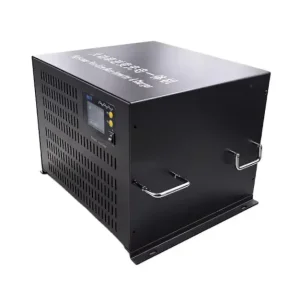
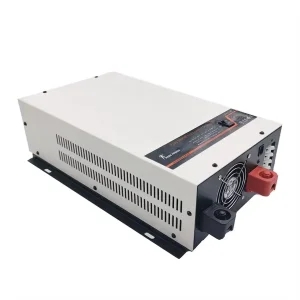
Best Maili 1KW Rack-mounted Pure Sine Wave Charging Inverter
Best Maili 110V/220V AC 1KW Rack-mounted Pure Sine Wave Charging Inverter
View Product Details
Best Maili QSP-9000 9KW Pure Sine Wave Inverter
Best Maili QSP-9000 9KW High-power Pure Sine Wave DC/AC Inverter 95% Efficiency
View Product Details
Wholesale High Power 5kw 5000 Watt Pure Sine Wave Inverter
Wholesale High Power 5kW 5000W Pure Sine Wave Inverter Off-Grid Converter
View Product Details
Wholesale 3 Stages Maili 12V 40A Smart charger
Wholesale 3 Stages Maili 12V 40A Smart Charger Intelligent Battery Charger
View Product Details
CE Certification Maili 2000W Portable Power Star UPS Inverter Charger
CE Certification Maili 2000W Portable 12V DC Input Power Star Pure Sine Wave UPS Inverter
View Product Details
Custom Factory Sell 3 Stages 12V 70A Max output current Intelligent Charger
Custom Factory Sell 3 Stages 12V 70A Max Output Current Intelligent Charger
View Product Details
Best MAILI PS4000 Series 4000 Watt Inverter Charger
Best MAILI PS4000 Series 4000W Inverter Charger Low Frequency Pure Sine Wave
View Product Details
Wholesale MPPT Solar Charging Controller
Wholesale High-Efficiency MPPT Solar Charging Controller Manufacturer & Factory
View Product Details