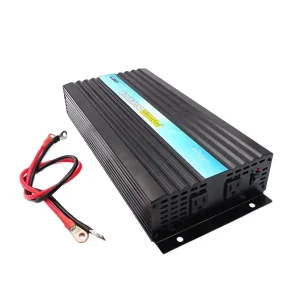
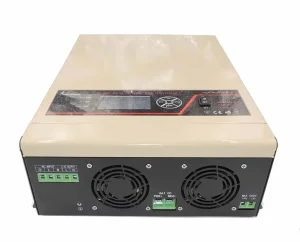
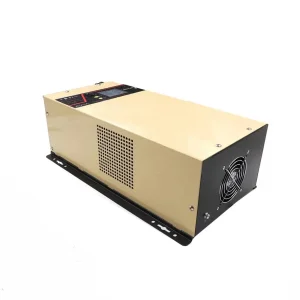
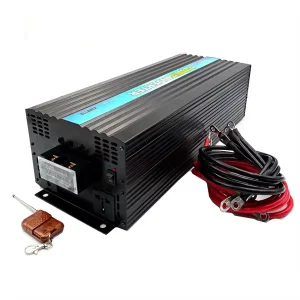
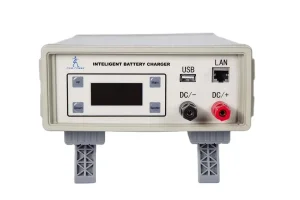
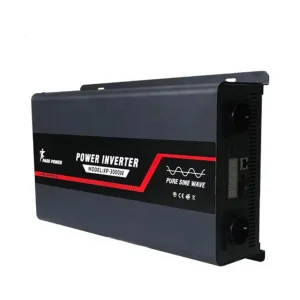
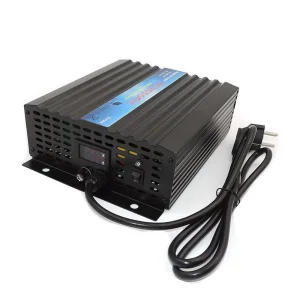
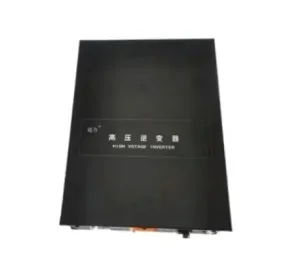
Explore our baseline selection of high-performance pure sine wave power inverters, smart battery chargers, and dual battery isolators certified for global deployment.
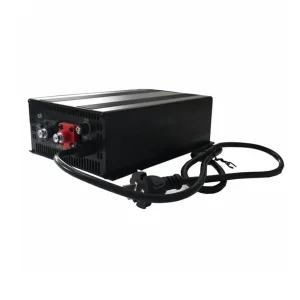
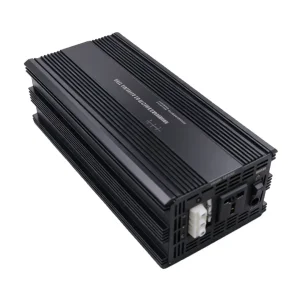
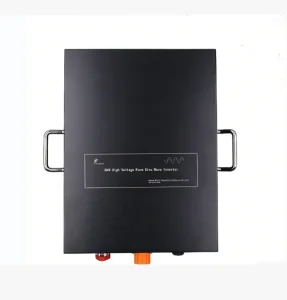
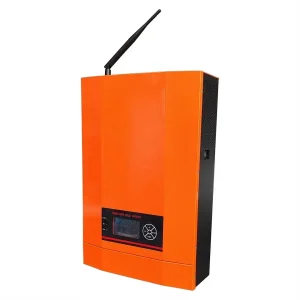
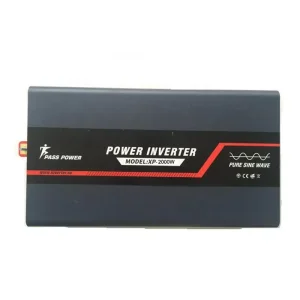
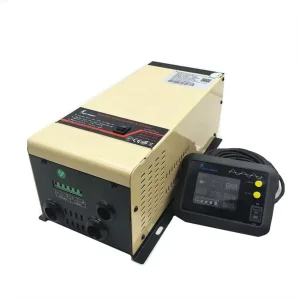
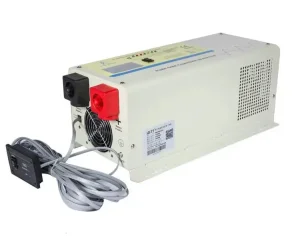
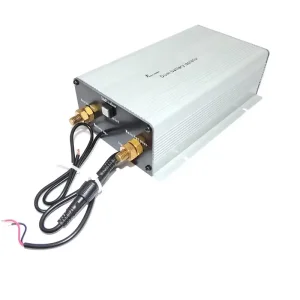
In modern industrial and commercial energy ecosystems, power conversion technology serves as the primary backbone for operational continuity, grid independence, and electro-mobility support. Sourcing a CE Certification Inverter Converter Supplier requires navigating strict electromagnetic compatibility (EMC) regulations, low voltage directives (LVD), thermal management bottlenecks, and high-voltage DC topology transitions.
As energy generation shifts toward decentralized photovoltaic (PV) setups, battery energy storage systems (BESS), and heavy-duty auxiliary commercial vehicles, the demand for dual-frequency, high-efficiency, and low-THD (Total Harmonic Distortion) inverters has intensified. This comprehensive engineering whitepaper examines the critical architectural parameters, regulatory frameworks, localized compliance metrics, and technical roadmaps essential for system integrators, OEM partners, and industrial procurement directors worldwide.
The global power conversion electronics market is currently undergoing a structural transformation driven by decarbonization mandates, the expansion of distributed energy resources (DERs), and stringent EU electrical safety protocols. Modern inverter-converter architectures are no longer isolated DC-to-AC power pass-through units; they are dynamic, intelligent energy hubs capable of managing complex bi-directional power flows, battery chemistries (LiFePO4, AGM, GEL), and high surge inductive loads.
Integrated hybrid solar inverters (e.g., 3.5kW to 5.5kW MPPT systems) buffer fluctuating utility tariffs by prioritizing solar harvesting and storage discharge during peak hours, significantly reducing commercial operational expenditure.
Ultra-thin, low-frequency wall-mounted inverter chargers supply clean AC power to mission-critical diagnostics, refrigeration, and power tools inside utility service vans, ambulances, and mobile command centers.
Transitioning from conventional 12V/24V architectures to high-voltage DC platforms (380V DC to 540V DC) minimizes cable cross-sectional area, cuts I²R copper thermal losses, and achieves system conversion efficiencies up to 94%.
Affixing the CE mark is not merely a legal prerequisite for entering the European Economic Area (EEA); it serves as a rigorous engineering benchmark guaranteeing safety, structural integrity, and electromagnetic harmony. A compliant inverter-converter must simultaneously satisfy two master directives:
Enforces EN 62109-1 and EN 62109-2 standards for power converters in photovoltaic systems. Assesses insulation clearance, dielectric strength, temperature limits under abnormal operations, and physical enclosure protection (IP ratings).
Mandates compliance with EN 61000-6-2 (Immunity for industrial environments) and EN 61000-6-4 (Emission standards). Ensures high-frequency PWM switching noise does not interfere with surrounding telecommunications or micro-controllers.
Guarantees all internal components, solder joints, and PCB fabrications are completely free of hazardous substances such as lead (Pb), mercury (Hg), cadmium (Cd), and polybrominated biphenyls (PBB).
| Certification Domain | Reference Test Standard | Critical Engineering Metric | Supplier Quality Verification |
|---|---|---|---|
| Electrical Safety (LVD) | EN 62109-1 / EN 60950-1 | Dielectric Withstand Voltage > 1500VAC / creepage distance | Third-party TUV / SGS Lab Test Reports |
| EMC Conducted Emissions | EN 55032 / CISPR 32 Class A/B | High-frequency filtering, toroidal EMI suppression | Anechoic Chamber Spectrum Sweep Data |
| EMC Radiated Immunity | EN 61000-4-3 | Field strength withstand 10V/m across 80MHz–6GHz | Continuous full-load operational logging |
| Environmental Safety | RoHS Directive 2011/65/EU | XRF Spectrophotometry material analysis | Complete Hazardous Substance Declaration |
Choosing the proper topology determines the physical footprint, thermal envelope, surge resilience, and financial viability of an energy conversion system. Manufacturers typically segment products into Low-Frequency Heavy-Duty Toroidal Transformer Inverters and High-Frequency Switching-Mode Inverters.
LF inverters utilize a robust, heavy-duty line-frequency copper toroidal transformer operating at 50Hz/60Hz. This design provides massive galvanic isolation between the DC battery bank and AC output loads.
HF inverters step up low-voltage DC via fast-switching MOSFETs/IGBTs to high-voltage DC (typically 380V-400V DC) before synthesizing a pure sine wave AC output via Pulse Width Modulation.
Power conversion requirements vary substantially depending on geographic grid infrastructure, ambient operating conditions, and localized load patterns. Below are four primary field application vectors where CE-certified inverter converters deliver critical energy security.
In remote regions across Southern Europe, Latin America, and Southeast Asia, hybrid solar inverters (such as 3.5kW / 5.5kW MPPT platforms) bridge the gap between unreliable utility grids and off-grid solar arrays. Integrated MPPT charge controllers track solar irradiance with 99.5% efficiency, prioritizing direct PV consumption while maintaining 3-stage charge algorithms for 24V or 48V battery storage.
Recreational vehicle (RV) builders and commercial van upfitters rely on ultra-thin low-frequency wall-mounted inverter chargers paired with intelligent dual battery isolators (e.g., 12V/24V 400A). The isolator automatically disconnects starter batteries when idling to prevent vehicle drainage, while the inverter supplies smooth, pure sine wave power to air conditioning units, induction cooktops, and specialized gear.
Ambulances, mobile medical clinics, and fire rescue trucks demand continuous AC power with zero tolerance for voltage sag or harmonic interference. Pure sine wave inverters featuring soft-start PCB technology prevent inrush current trips, protecting sensitive defibrillators, oxygen concentrators, and field computing hardware.
Industrial commercial EVs operate high-voltage traction batteries (380V DC to 540V DC). High-voltage DC pure sine wave converters step down this high DC voltage directly to single-phase (110V/220V AC) or split-phase power, converting electric utility fleets into mobile power generators for emergency disaster relief.
As power electronics advance toward wide bandgap (WBG) semiconductors and smart grid integration, our research and engineering teams focus on four major technological breakthroughs:
Replacing silicon MOSFETs with SiC devices reduces switching losses by up to 70%, allowing operating switching frequencies above 100kHz. This enables even smaller magnetics, reduced heatsink weight, and overall efficiency exceeding 97%.
Machine learning algorithms analyze historical cloud cover patterns and real-time I-V curves to eliminate partial shading loss in PV panels, accelerating solar yield by 5–8% over standard MPPT tracking techniques.
Future inverter-converter nodes will support bidirectional power flow (Vehicle-to-Load and Vehicle-to-Grid), enabling battery banks and vehicle batteries to feed power back into commercial microgrids during blackout events.
CE certification ensures that the device meets EU-wide directives regarding safety (Low Voltage Directive 2014/35/EU) and electromagnetic non-interference (EMC Directive 2014/30/EU). Non-CE-certified inverters risk operational hazards, electrical fires, interference with communication networks, and customs confiscation at European ports.
A Pure Sine Wave inverter outputs smooth AC power matching grid quality (THD < 3%), making it safe for inductive loads, variable-speed motors, medical tools, and delicate microcontrollers. Modified Sine Wave inverters produce stepped square waves that cause overheating, buzzing noises, electrical stress, and potential component failure in motor-driven appliances.
High-voltage DC conversion lowers current draw for a given wattage rating. Low current allows systems to use thinner copper wiring, reduces heat generated by I²R losses, improves overall conversion efficiency up to 94%, and reduces hardware weight in large-scale residential energy storage and electric vehicle platforms.
Yes. Our multi-stage smart chargers feature selectable charge profiles engineered specifically for lithium iron phosphate (LiFePO4) as well as traditional AGM, GEL, and lead-acid batteries. Dual battery isolators automatically manage charge voltage cut-offs to prevent over-charging or thermal damage.
Absolutely. We support OEM/ODM projects including custom DC input ranges (such as 96V DC), customized AC output sockets, communication protocols (RS485, CAN bus, Modbus), custom branded LCD monitors, and tailored chassis colors.
Browse additional CE-approved products across our high-voltage inverter, hybrid solar, low-frequency vehicle power, and multi-stage battery charger series.