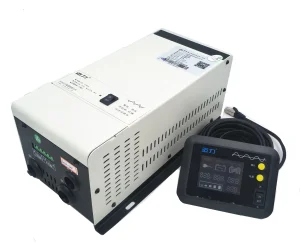
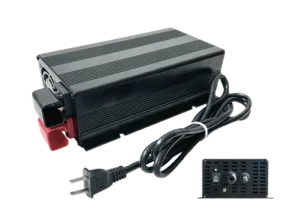
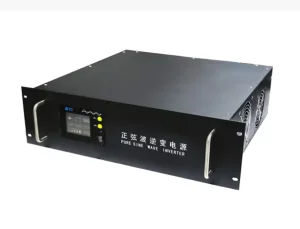
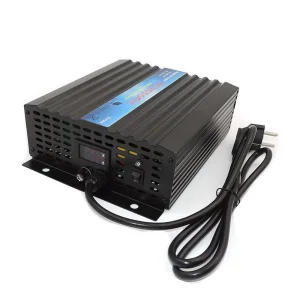
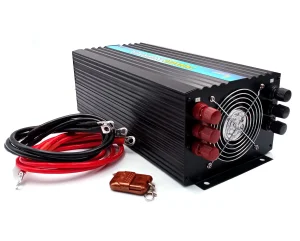
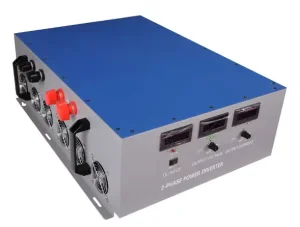
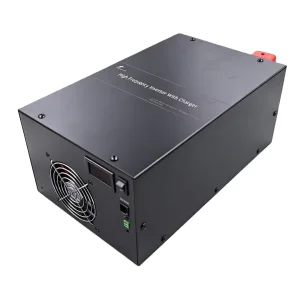
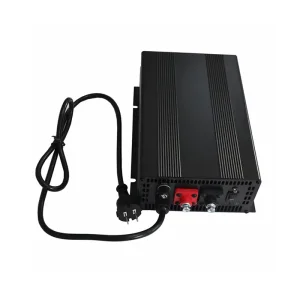
Heavy-duty power conversion systems engineered for off-grid solar, industrial machinery, and vehicle energy storage.
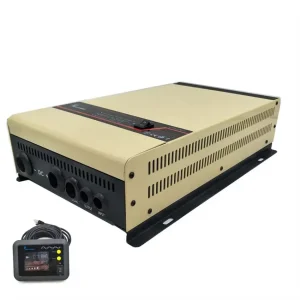
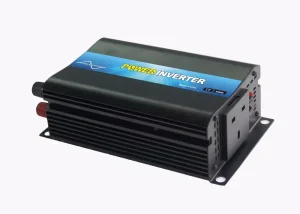
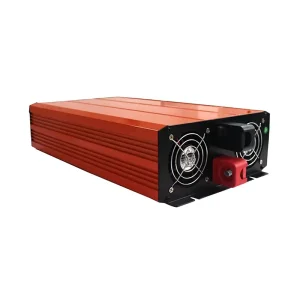
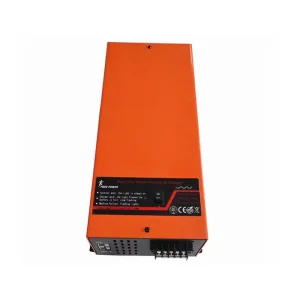
An authoritative analysis of core geometry, flux density, stray magnetic radiation, and surge power dynamics in off-grid energy storage.
Unlike traditional EI laminated transformers with rectangular air gaps, toroidal cores are manufactured from a continuous ribbon of grain-oriented silicon steel. This seamless ring design ensures that magnetic flux follows the direction of grain orientation, reducing no-load core losses by up to 85% and significantly minimizing magnetizing current draw.
Electric motors, HVAC compressors, water pumps, and power tools demand initial starting currents up to 3 to 5 times their nominal rating. Toroidal low-frequency inverters buffer energy mechanically within their massive magnetic field, allowing them to deliver up to 300% surge capacity for 20 seconds without triggering thermal shutdown or voltage collapse.
Because windings are symmetrically distributed over the entire surface of the ring, stray magnetic field emissions from toroidal cores are extremely low (typically 1/10th of EI transformers). This makes toroidal inverters ideal for medical mobile units, military communications, marine electronics, and audio recording vehicles.
| Technical Parameter | Toroidal Low-Frequency Inverter | Traditional EI-Core Inverter | High-Frequency Switch-Mode Inverter |
|---|---|---|---|
| Surge Power Cushion | 300% Nominal (Up to 20s) | 200% Nominal (Up to 5s) | 150% - 200% Nominal (< 100ms) |
| No-Load Power Draw | Ultra-Low (0.3% - 0.8%) | High (1.5% - 3.0%) | Low (0.5% - 1.2%) |
| Thermal Dissipation & Efficiency | 94% - 96% Conversion Peak | 82% - 88% Efficiency | 92% - 95% Efficiency |
| Acoustic & Stray EMI Noise | Near Silent (< 35dB) | Moderate Audible Hum (> 50dB) | High High-Frequency Switching Noise |
| Galvanic Isolation Safety | Full Primary-Secondary Isolation | Full Isolation | Partial / Non-Isolated Topologies |
| Primary Application Spectrum | RVs, Off-Grid Solar ESS, Heavy Motors | Legacy Backup UPS | Computers, Telecommunications, Light Loads |
When selecting inverters for rugged off-grid environments or machinery with high inductive loads, low-frequency toroidal transformer platforms offer unexcelled thermal longevity and transient surge resilience compared to fragile high-frequency MOSFET switching circuits.
Navigating European Union regulatory compliance: LVD 2014/35/EU, EMC Directive 2014/30/EU, and EN 62109 Safety Standard Protocols.
The LVD ensures electrical equipment within voltage limits (50–1000 VAC and 75–1500 VDC) provides ultimate safety protection against electrical shock, thermal burns, and arc flashing. CE-certified toroidal inverters undergo rigorous isolation resistance testing (500V DC megohm test exceeding 100MΩ) and dielectric strength withstand tests (1500V AC for 1 minute between primary circuits and metallic chassis) to comply with EN 62109-1 (General Safety) and EN 62109-2 (Solar Inverter Requirements).
Commercial power converters must neither emit excessive electromagnetic disturbance nor suffer performance degradation from ambient radio signals. Modern CE compliance evaluates:
Engineered for mission-critical reliability across harsh off-grid, marine, emergency automotive, and industrial solar environments.
RVs, motorhomes, and expedition trucks require robust energy conversion to power air conditioners, microwave ovens, and induction cooktops simultaneously. Toroidal inverter-chargers seamlessly switch between shore power, generator input, and battery power via built-in Automatic Transfer Switches (ATS) with rapid transfer times under 10ms.
For remote agricultural farms, island telecommunication towers, and eco-lodges, clean pure sine wave AC power is vital. Hybrid toroidal inverters integrated with MPPT solar charge controllers optimize solar energy harvesting while preserving battery bank lifecycle through multi-stage smart charging algorithms.
Ambulances, mobile surgical units, and fire command vehicles depend on uncompromised electricity to operate life-support monitors, defibrillators, and heavy hydraulic extraction cutters. Pure sine wave output with THD under 3% ensures sensitive medical equipment operates without signal distortion or electromagnetic noise.
How modern factories are integrating Silicon Carbide (SiC) semiconductors, DSP digital controls, and smart battery communications.
Traditional analog inverter control boards suffered from thermal drift and voltage fluctuations under varying loads. Modern CE-compliant toroidal inverters utilize 32-bit Digital Signal Processors (DSP) running High-Frequency Pulse Width Modulation (SPWM) algorithms. This real-time feedback loop monitors voltage and current waveforms 20,000 times per second, maintaining crystal-clear sine wave fidelity regardless of battery discharge state.
With the global transition to LiFePO4 (Lithium Iron Phosphate) battery banks, modern inverter chargers must dynamically communicate with Battery Management Systems (BMS). Via integrated RS485 or CAN-bus protocols, the inverter dynamically adjusts maximum charging current, absorption voltage, and low-voltage cut-offs based on cell temperature, state of charge (SoC), and health status (SoH).
Replacing silicon IGBTs with wide-bandgap semiconductors to push conversion efficiency beyond 97.5% while shrinking heat sink footprints.
Enabling Vehicle-to-Home (V2H) and Vehicle-to-Grid (V2G) power feeds to support urban microgrid stabilization.
Embedded Wi-Fi/4G modules enabling B2B distributors to perform OTA firmware updates and predict battery maintenance globally.
Customizing input/output voltages, socket configurations, custom housing designs, and brand-label packaging.
Engineering customized DC input platforms tailored to specific battery configurations: 12V, 24V, 48V, 96V, or High-Voltage 380V DC systems. AC output configurations can be dialed into 100V, 110V, 120V, 220V, 230V, or 240V at 50Hz or 60Hz pure sine wave, including split-phase (120V/240V) for North American RV markets.
Factory customization of LCD display screens showing real-time battery SoC percentage, AC input/output voltage, load wattage, ambient temperature, and fault diagnostics. Private label logo integration on front panels, aluminum casings, and packaging materials.
Equipping units with regional socket standards including Universal, Schuko (EU), UK 3-Pin, US NEMA 5-15R / 5-20R, Australian 3-Pin, or heavy-duty hardwire terminal blocks for high-power industrial wiring installations.
Expert insights for electrical engineers, sourcing managers, and wholesale distributors.
Air conditioners, refrigerators, and power tools utilize induction motors that require massive starting surge currents (often 3x to 5x their rated operational power). High-frequency inverters rely on small electronic transformers and fast-switching MOSFETs that instantly shut down under high initial surge spikes to protect their components. In contrast, low-frequency toroidal transformer inverters store energy magnetically in their heavy continuous core, absorbing the transient surge spike safely and delivering reliable motor startup without tripping fault protections.
Inverters imported into the European Economic Area must comply with two main directives: the Low Voltage Directive (LVD 2014/35/EU), governed by safety standards such as EN 62109-1 and EN 62109-2, and the Electromagnetic Compatibility (EMC) Directive 2014/30/EU, governed by EN 61000-6-1 (immunity) and EN 61000-6-3 (emissions). Additionally, compliance with the RoHS Directive (2011/65/EU) ensures the restriction of hazardous substances in electrical components.
Yes. Modern CE-certified toroidal inverter-chargers feature programmable 3-stage or 4-stage intelligent battery charging profiles. By customizing the constant current (bulk), constant voltage (absorption), and float voltage parameters—or by selecting the pre-configured Lithium battery mode—the inverter safely charges LiFePO4 chemistry without overcharging or triggering the battery’s internal BMS disconnect circuit.
High-quality toroidal transformer inverters achieve peak DC-to-AC conversion efficiency ratings between 94% and 96%. Furthermore, because toroidal ring cores possess no magnetic air gaps, their idle/no-load self-consumption power draw is extremely minimal (often under 0.5% of nominal capacity), preserving stored battery energy over prolonged standby periods.
Standard factory OEM customization (such as custom branding, socket alterations, and packaging) typically carries an MOQ of 50 to 100 units per model series with production lead times of 15 to 25 business days. Full ODM engineering (including custom voltage platforms or specialized outer chassis dies) involves sample prototyping within 3 to 4 weeks followed by pilot mass production upon approval.
Portable, rack-mounted, and multi-phase power electronics engineered for international compliance.