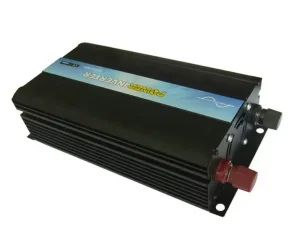
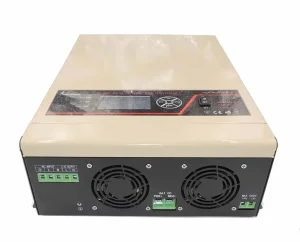
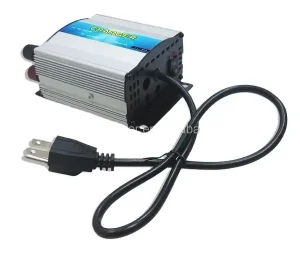
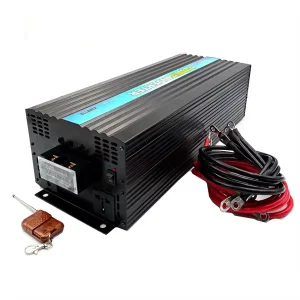
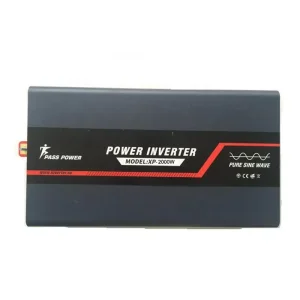
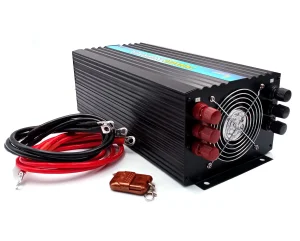
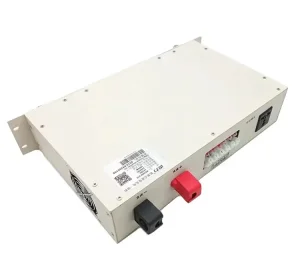
Explore our flagship heavy-duty off-grid low frequency inverters, MPPT solar chargers, and intelligent battery systems optimized with multi-stage electrical safeguards.
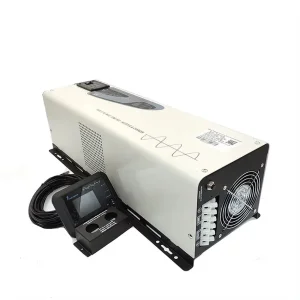
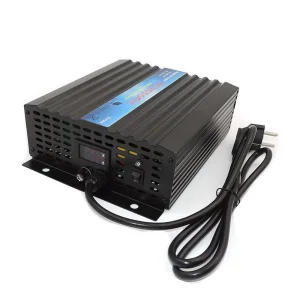
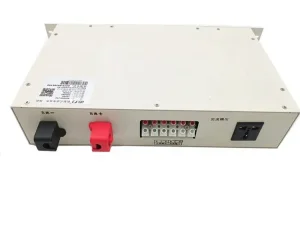
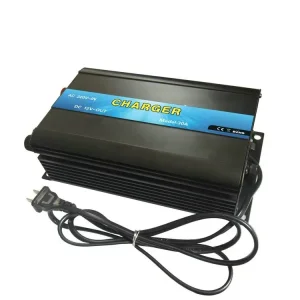
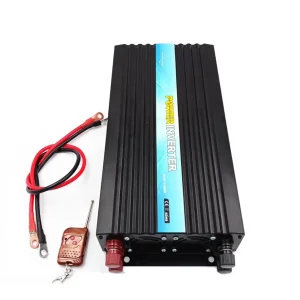
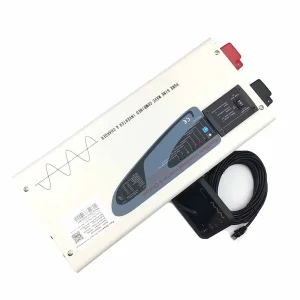
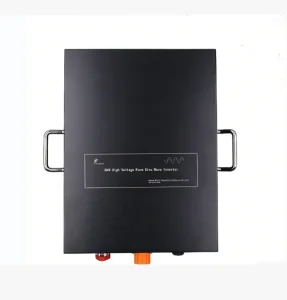
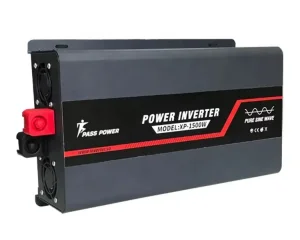
In high-reliability industrial off-grid energy storage, specialized commercial vehicles, emergency medical units, and remote residential solar deployments, electrical power conversion equipment acts as the critical heart of the entire power architecture. A power inverter or charger failure does not merely disrupt electrical delivery—it exposes sensitive downstream loads to catastrophic over-voltage transients, electrical fires, and expensive battery pack degradation.
To mitigate operational risks, global procurement teams, fleet outfitters, and system integrators mandate compliance with European Conformity (CE Certification) standards paired with multi-layered, redundant protection topologies. This technical whitepaper delves into the engineering principles of modern pure sine wave inverters, analyzing low-frequency toroidal transformer topologies versus high-frequency switching circuits, the integration of advanced Microcontroller Unit (MCU) protection algorithms, and the manufacturing advantages offered by China's advanced power electronics supply chain.
Modern industrial-grade power inverters and intelligent 3-stage battery chargers require active, real-time electrical monitoring. Rather than relying solely on passive thermal fuses or simple analog comparators, high-performance units utilize high-speed digital signal processing (DSP) and specialized MCU architectures to continuously monitor electrical parameters across DC input, internal power stage, and AC output terminals.
DC bus voltage is continuously sampled via precision resistor dividers. Under-voltage lockout prevents destructive deep discharge of Lithium (LiFePO4) or AGM batteries, while OVP isolates input stage power MOSFETs from voltage spikes caused by sudden load dumps or alternator regulation faults.
Utilizing high-side current sensing transformers and shunt resistors, the circuit detects short-circuit events within microseconds (<10µs). Current-limiting hardware triggers immediate PWM gate drive shutdown to preserve primary switching transistors (IGBTs/MOSFETs).
Negative Temperature Coefficient (NTC) thermistors embedded directly on heat sinks and transformer windings provide multi-point thermal telemetry. Intelligent variable-speed cooling fans adjust according to load profiles, triggering thermal shutdown if temperatures cross 85°C.
To eliminate high-cost field returns caused by reversed battery leads, premium units incorporate zero-loss MOSFET-based reverse protection or heavy-duty internal relay decoupling, replacing legacy high-loss blocking diodes.
Complete physical and electrical isolation between DC battery circuits and high-voltage AC output. Heavy-duty copper toroidal transformers prevent high DC fault voltages from back-feeding into home wiring or vehicle chassis ground systems.
Low-frequency inverters feature an extended 300% peak power surge tolerance (e.g., 3000W rated power sustaining 9000W surge for 20 seconds). MCU logic allows smooth startup of high-inductive motor loads (air conditioners, compressors, power saws).
While high-frequency inverters rely on high-speed switching transformers and offer compact, lightweight form factors suitable for consumer electronics, Low-Frequency Inverters with Toroidal Transformers offer unparalleled thermal mass and magnetic flux density. This mechanical robustness inherently protects against high-voltage inductive kickback, making low-frequency models the gold standard for heavy industrial machinery, marine vessels, and ambulance fleets.
To legally market power conversion equipment within the European Economic Area (EEA) and global markets recognizing EU standards, manufacturers must demonstrate strict compliance with core directives. CE certification is not merely a label—it requires rigorous third-party laboratory testing against harmonized directives:
| Regulatory Directive | Harmonized Test Standard | Critical Compliance Parameter | Industrial Application Impact |
|---|---|---|---|
| LVD (2014/35/EU) | EN IEC 62368-1:2020 | High-voltage hi-pot insulation test (>1500VAC input to output isolation) | Prevents user electric shock and chassis energization in moist or marine environments. |
| EMC Emission | EN 55032 Class B / EN 61000-3-2 | Total Harmonic Distortion (THD < 3%) and EMI filtering | Ensures clean AC sine wave without causing audio noise, screen flicker, or radio static. |
| EMC Immunity | EN 61000-4-2 / EN 61000-4-5 | Electrostatic Discharge (8kV contact / 15kV air) and 2kV Surge protection | Guarantees continuous uptime during lightning storms and industrial power switching transients. |
| Ingress Protection | EN 60529 / IP30 - IP65 | Conformal PCB coating, dust and splash resistance | Protects internal MOSFETs and control ICs from salt spray, humidity, and fine dust accumulation. |
China remains the unquestioned global hub for power electronics manufacturing, with specialized industrial clusters driving technical innovation and cost efficiencies. Facilities situated in key manufacturing corridors like Suzhou, Jiangsu leverage an unparalleled ecosystem:
From automated SMT surface mount lines placing high-speed switching controllers to in-house toroidal core winding, vacuum-pressure resin impregnation, and sheet metal enclosure fabrication. Vertical integration eliminates tier-2 markups and dramatically shrinks lead times for custom voltage runs.
Tier-1 factories enforce ISO 9001:2015 Quality Management Systems. Every completed inverter undergoes 100% full-load burn-in testing inside high-temperature environmental chambers, subjected to rapid thermal cycling and extreme voltage dynamic loads prior to final packing.
B2B buyers, commercial vehicle OEMs, solar distributors, and engineering contractors face varied grid standards, battery chemistries, and installation footprints across international jurisdictions. Off-the-shelf catalog products frequently fail to meet specialized project requirements. Professional manufacturers fulfill strategic OEM/ODM customization across key dimensions:
The industrial power conversion market is undergoing rapid technological evolution. Sourcing managers must align their long-term supply chain strategies with these major technological shifts:
1. Silicon Carbide (SiC) & Gallium Nitride (GaN) Switching: Next-generation high-frequency power inverters are transitioning from legacy Silicon MOSFETs to SiC and GaN devices. Wide-bandgap semiconductors allow switching frequencies exceeding 100kHz with dramatically lower switching losses, yielding inverter energy efficiencies above 96% and shrinking heat sink requirements by up to 40%.
2. Smart Grid & Bi-Directional Power Flow: Modern hybrid solar inverters are evolving from static off-grid converters to smart, bi-directional grid-interactive nodes capable of Vehicle-to-Load (V2L), Vehicle-to-Home (V2H), and Peak Shaving functions.
3. AI-Driven Predictive Maintenance: Advanced MCU firmware incorporates Machine Learning (ML) algorithms that evaluate thermal decay curves, capacitor ripple currents, and switching speed degradation. System operators receive automated warnings prior to component breakdown, preventing unscheduled downtime in critical infrastructure.
Ambulances and emergency rescue trucks rely on heavy-duty pure sine wave low-frequency inverters paired with dual battery isolators to run sensitive medical monitors, suction pumps, and power tools without voltage drop during engine cranking.
Integrated inverter-chargers with built-in automatic shore-power transfer switches allow seamless transitions between camp power and battery reserves, starting 15,000 BTU roof air conditioners with zero glitching.
Hybrid solar MPPT inverters deliver dependable, un-attended AC power for isolated cell towers, weather stations, and off-grid mountain cabins operating under harsh climatic extremes (-20°C to +50°C).
Discover high-frequency pure sine wave converters, all-in-one solar MPPT hybrid inverters, and high-voltage vehicle power units.