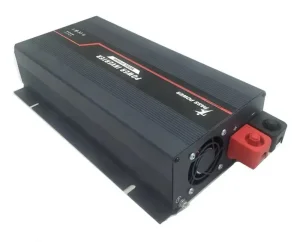
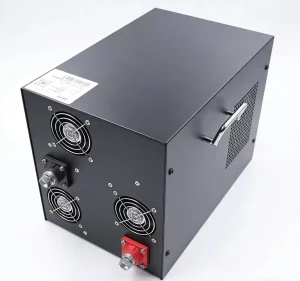
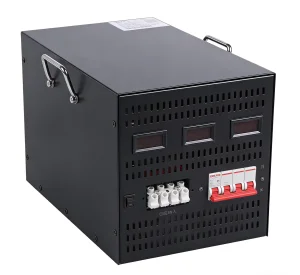
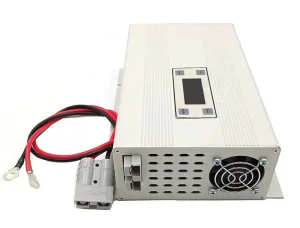
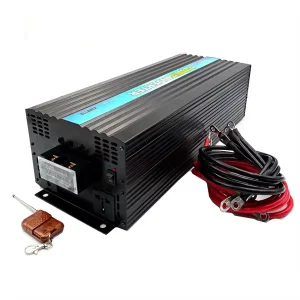
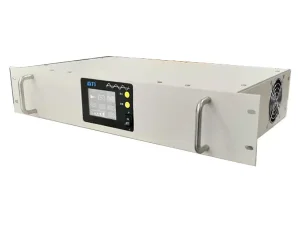
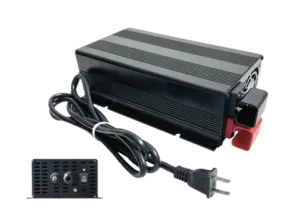
Factory-direct OEM/ODM solutions tested to European CE, CB, and RoHS standards for off-grid solar, commercial fleets, and heavy industrial applications.
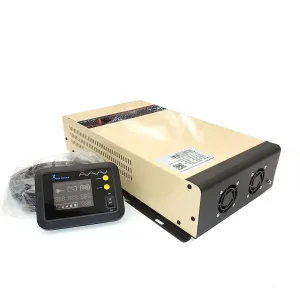
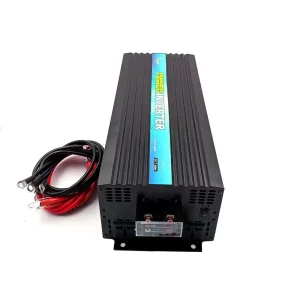
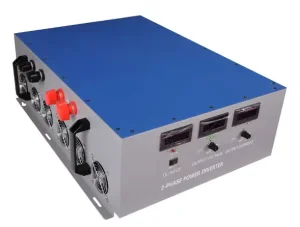
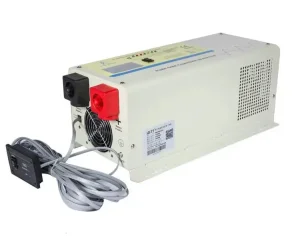
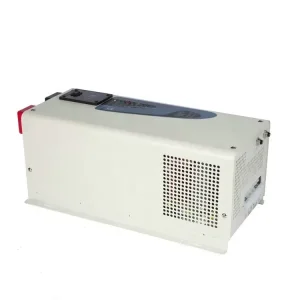
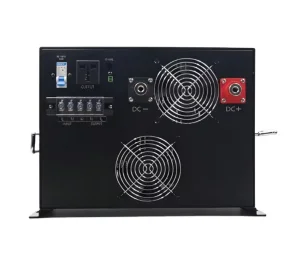
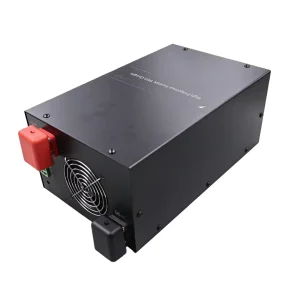
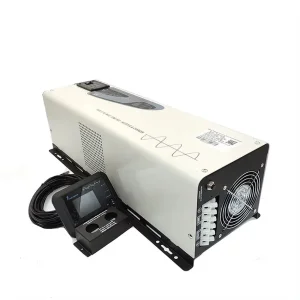
As off-grid renewable integration, vehicle electrification, and industrial microgrids accelerate, power conversion architecture is undergoing a foundational paradigm shift.
The industrial power conversion sector is migrating from traditional Silicon IGBTs to Wide-Bandgap (WBG) semiconductors—specifically Silicon Carbide (SiC) and Gallium Nitride (GaN). This transition enables switching frequencies exceeding 100 kHz, drastically minimizing magnetic component size while elevating conversion efficiency beyond 95%.
Modern inverter-chargers are no longer isolated converters; they act as the primary energy management hub. Advanced multi-stage AC chargers now feature dynamic RS485/CANbus protocols that directly interface with Lithium Iron Phosphate (LiFePO4) Battery Management Systems to execute real-time voltage balancing and thermal throttling.
Strict European Electromagnetic Compatibility (EMC) and Low Voltage Directives (LVD) demand rigorous harmonic mitigation. Pure sine wave output with THD under 2% ensures seamless compatibility with sensitive medical equipment, telemetry tools, and variable-speed motor drives without line degradation.
Engineered to resolve complex operational constraints across diverse industrial deployment environments.
Off-grid installers require robust power conversion capable of enduring high ambient temperatures and solar fluctuations. Integrated MPPT charge controllers paired with low-frequency toroidal transformers deliver unmatched inductive surge capacity for agricultural water pumps, deep-well submersibles, and remote telecommunications towers.
Caravan builders, emergency vehicle upfitters (ambulances, mobile command centers), and marine engineers require compact, vibration-resistant high-frequency inverter-chargers. Key features include zero-grounding fault protection, shore-power auto-transfer switching, and smart remote LCD monitoring panels.
Manufacturing facilities and mission-critical datacenters utilize 3-Phase high-voltage DC (380V) pure sine wave inverters to guard against brownouts and phase imbalances. Rapid transfer switching (<10 ms) protects sensitive PLCs and automated robotics from unexpected line dropouts.
Selecting the optimal electrical architecture depends on load dynamics, surge demands, weight limitations, and thermal constraints.
| Electrical Parameter | Low Frequency (Toroidal Transformer) | High Frequency (Switching Power Topology) |
|---|---|---|
| Primary Converter Architecture | Heavy-duty copper toroidal transformer with iron core isolation | Compact electronic switching circuits (PWM) with high-speed MOSFETs |
| Surge Capacity Multiplier | 300% Continuous Power (10 to 20 seconds) | 150% - 200% Power (Short pulse < 2 seconds) |
| Inductive Load Capability | Exceptional (Compressors, Air Conditioners, Heavy Power Tools) | Moderate (Resistive loads, electronics, light motors) |
| Power Efficiency & Weight | 88% - 92% Efficiency; Heavier physical footprint | 93% - 96% Efficiency; Ultra-lightweight & compact |
| Galvanic Isolation | Complete physical isolation between DC input and AC output | Electronic isolation via high-frequency ferrite transformer |
| Idle Consumption (No-Load) | Slightly higher due to transformer core magnetizing loss | Ultra-low power standby mode (< 0.5A idle current) |
Navigating global power grids requires robust compliance engineering, safety certifications, and tailored voltage output profiles.
Our entire inverter-charger catalog complies fully with the European Union's Low Voltage Directive (LVD 2014/35/EU) and EMC Directive (2014/30/EU) under EN 62109-1 and EN 62109-2 standards. CB test certificates simplify localized re-certification across over 50 participating IECEE member nations.
To support global distributors, equipment is factory-configurable for all worldwide utility standards:
• North America: 110V / 120V AC, 60Hz (Single/Split Phase)
• Europe / Asia / Africa: 220V / 230V / 240V AC, 50Hz/60Hz
• Industrial Commercial: 3-Phase 190V / 380V AC output
Integrated microprocessors continuously monitor systemic operational health. Hardware protection protocols include input reverse-polarity detection, over-voltage/under-voltage shutdown, over-temperature thermal throttling, output short-circuit protection, and ground-leakage insulation resistance tracking.
What technical innovations will shape power conversion equipment over the next decade?
Integrating artificial intelligence algorithms within the inverter's control DSP allows real-time load forecasting. By analyzing dynamic usage patterns and ambient temperatures, the system proactively adjusts cooling fan RPMs and charger stage transitions, extending semiconductor lifespan by over 30%.
Next-generation pure sine wave inverters are featuring integrated Wi-Fi, 4G, and Bluetooth IoT modules. Fleet managers and commercial operators can monitor real-time battery state of charge (SoC), energy yield, and fault codes remotely via mobile application or central cloud management software.
As Vehicle-to-Grid (V2G) and Vehicle-to-Load (V2L) technologies standardise, hybrid inverters are evolving to support bidirectional energy flow. This enables mobile energy storage units to export surplus power back into microgrids or regional utilities during peak tariff windows.
Expert answers to common engineering, procurement, and deployment inquiries.
Pure Sine Wave output duplicates household utility grid power with smooth AC voltage wave transitions and Total Harmonic Distortion (THD) under 2% to 3%. Modified sine wave inverters produce harsh, blocky square waves with THD exceeding 20% to 30%. Running sensitive electronics, inductive motors, medical equipment, or variable-speed power tools on modified sine waves results in high thermal stress, electrical noise, motor humming, reduced device efficiency, and premature equipment failure.
An inverter with integrated AC charger features an internal automatic transfer switch (ATS). When external AC grid power or generator input is detected, the unit routes AC power directly to connected loads while simultaneously activating its multi-stage battery charger to replenish the DC battery bank. When utility grid power drops out, the ATS automatically switches the load back to inverter DC-to-AC power within 8 to 10 milliseconds, preventing server rebooting or operational downtime.
As an original manufacturer, we offer extensive OEM/ODM engineering customization, including: customized DC input voltages (12V, 24V, 48V, 96V, 380V DC); AC output voltages (110V, 120V, 220V, 230V, 380V AC split/3-phase); custom charger current limits; custom metal enclosure designs and branding colors; specialized communication protocols (CANbus, Modbus RS485); customized regional AC output sockets; and tailored LCD interface software.
Inductive loads—such as air conditioners, refrigerators, water pumps, and air compressors—draw an initial inrush current (locked rotor amperage) that is typically 3 to 7 times higher than their continuous running wattage rating. To prevent overload tripping, choose a low-frequency inverter with a toroidal transformer capable of sustaining peak surge output (e.g., a 3000W continuous low-frequency inverter delivering 9000W peak surge power for 10-20 seconds).
To import power conversion equipment legally into the European Union, products must bear the CE mark, backed by technical documentation proving compliance with EN 62109-1 and EN 62109-2 (safety of power converters in solar systems) for the Low Voltage Directive (LVD), EN 61000-6-1 and EN 61000-6-3 for Electromagnetic Compatibility (EMC), and RoHS compliance testing for hazardous material restriction.
High-frequency converters, multi-phase systems, and smart battery charger units engineered for maximum power density.