


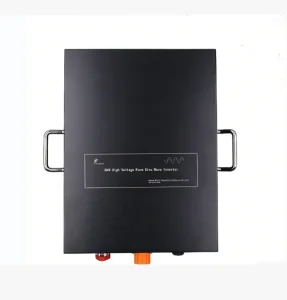
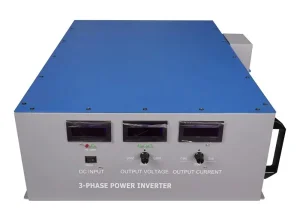
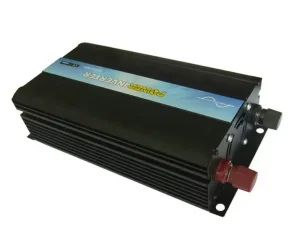
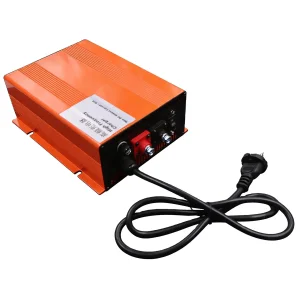
Direct factory supply of high-frequency smart chargers, high-voltage pure sine wave inverters, and dual battery isolators certified for global export.
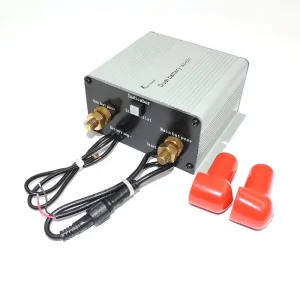
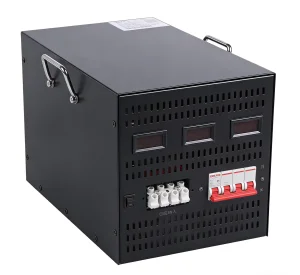
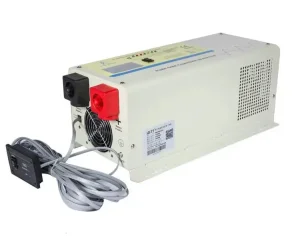
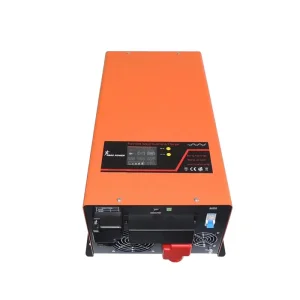
In modern power electronics, the transition from conventional constant-voltage/constant-current (CV/CC) linear charging topographies to high-frequency, microcontroller-driven (MCU/DSP) smart battery chargers represents a pivotal paradigm shift. As global electrification accelerates across industrial fleets, renewable storage, electric vehicles (EVs), marine equipment, and telecom backup systems, the demand for CE-certified smart chargers manufactured by high-precision original equipment factories has reached unprecedented height.
CE Certification for industrial smart battery chargers is far more than a simple regulatory sticker; it mandates strict adherence to the Low Voltage Directive (LVD 2014/35/EU), Electromagnetic Compatibility Directive (EMC 2014/30/EU), and RoHS Directive (2011/65/EU). Factory exporters must demonstrate active Power Factor Correction (PFC > 0.99), galvanic isolation exceeding 3000VAC withstand voltage, and radiated immunity under EN 61000-6-2/4 industrial noise environments.
| Performance Metric | Legacy SCR / Linear Chargers | High-Frequency CE Smart Chargers | B2B Operational Impact |
|---|---|---|---|
| Power Topology | Low-frequency 50Hz Transformer / SCR | High-Frequency Resonant LLC / SiC MOSFETs | Up to 70% weight and volume reduction |
| Energy Efficiency | 65% - 78% Total System Efficiency | 93% - 96.5% Conversion Efficiency | Substantial thermal reduction & power cost savings |
| Battery Chemistry Support | Single Profile (Lead-Acid / Flooded) | Multi-Chemistry (LiFePO4, NMC, AGM, GEL) | Universal fleet applicability and extended battery lifespan |
| Control Precision | Analog drift, voltage regulation ±3% | 32-bit DSP digital loop control ±0.2% | Eliminates thermal runaway and plate sulfation risks |
| Telemetry & Integration | None / Basic Dry Contacts | CAN-bus 2.0B, RS485, Modbus-RTU, IoT Wireless | Seamless BMS integration & remote predictive maintenance |
As the global renewable energy ecosystem matures, smart charging infrastructure is transitioning from standalone power conversion boxes into intelligent, grid-interactive energy nodes. Original manufacturing exporters are investing heavily in five key technical pillars.
The integration of Silicon Carbide (SiC) Schottky diodes and Gallium Nitride (GaN) FETs allows switching frequencies to push beyond 200kHz. This drastically shrinks passive magnetic components (transformers and inductors), reduces switching losses, and elevates thermal performance under continuous full-load export scenarios.
Modern Smart Chargers no longer apply static charging curves blindly. Through CAN-bus protocol handshakes (SAE J1939, CANopen), the charger dynamically receives real-time Cell Voltage, Temperature, and State of Charge (SOC) metrics directly from the Lithium Battery Management System (BMS), adjusting current output dynamically within milliseconds.
Leading exporters are establishing technical routes for bi-directional AC/DC charging topologies. Chargers can convert AC utility power to charge battery banks or discharge stored DC energy back into the local microgrid during peak tariff hours, serving as essential Virtual Power Plant (VPP) building blocks.
To endure heavy industrial, marine, and off-road environments, CE smart chargers utilize IP67 potting compounds, vacuum-impregnated high-frequency transformers, and intelligent variable-speed cooling fans governed by NTC thermal sensor arrays to prevent thermal stress oxidation.
Through USB, RS485, or Bluetooth field interfaces, technical operators can reflash internal DSP memory to introduce customized multi-stage charging algorithms (e.g., Pre-charge, Constant Current, Constant Voltage, Equalization, Float, and Auto-Wakeup for sleeping LiFePO4 BMS units).
Cross-border B2B procurement demands unified testing platforms. Smart charger factories now engineering units certified across CE (Europe), CB (International), FCC (Americas), RoHS, and UL safety standards concurrently to lower compliance friction for global brand importers.
Commercial buyers, original equipment manufacturers (OEMs), and regional distributors do not simply purchase hardware; they invest in operational continuity, field safety, and reduced Total Cost of Ownership (TCO). High-capacity exporter factories must deliver macro-level technical solutions tailored to distinct market segments.
Operational Demand: Dual-battery isolation, fast AC-to-DC bulk charging from shore power, and automatic seamless switching between alternator DC charging and grid AC power.
Factory Solution: Integrated High-Frequency Pure Sine Wave Charger-Inverters equipped with 3-Stage Smart Charging, adjustable current limiters (5A-80A), and Voltage Sensitive Relays (VSR) for auxiliary battery prioritization.
Operational Demand: Rapid turnaround charging under extreme ambient temperatures, vibration isolation, and high surge capability for heavy power tools and life-support equipment.
Factory Solution: Ruggedized aluminum-cased smart chargers featuring low-frequency toroidal transformer options, vibration-proof SMT assemblies, IP30/IP65 ratings, and multi-stage active thermal throttling.
Operational Demand: High-voltage DC solar integration, maximum power point tracking (MPPT) efficiency, hybrid grid-interactivity, and split-phase or 3-phase output power distribution.
Factory Solution: 1KW to 10KW CE/CB certified hybrid solar chargers and high-voltage DC inverters capable of accepting up to 540V DC input, maintaining 95%+ power factor conversion.
Navigating international trade barriers requires transparent, rigorous quality management systems. Reliable factory exporters eliminate client risk by establishing comprehensive compliance protocols and localized engineering backup.
Compliance with EN 62368-1 / EN 60335-2-29 safety standard frameworks ensures robust creepage and clearance distances, internal thermal fuse protections, high-pot isolation withstand (>3000V AC), and touch-temperature safety under full load operation.
Adherence to EN 55032 Class B (Emissions) and EN 61000-4 series (Immunity) prevents high-frequency electrical switching noise from interfering with delicate onboard electronics, GPS navigation, cellular telemetry, or medical sensors.
Strict raw material screening using XRF spectroscopy guarantees complete elimination of hazardous substances (Lead, Cadmium, Hexavalent Chromium, PBBs, PBDEs, phthalates) in compliance with EU Directive 2011/65/EU and 2015/863 amendments.
A professional smart charger exporter backs global logistics with technical support programs: including local spare parts inventory fulfillment, Modular PCB replacement kits, remote Firmware-Over-The-Air (FOTA) diagnostics, and direct engineer-to-engineer assistance for custom installation troubleshooting.
Tailoring power electronics hardware to exact B2B distributor specifications requires an agile, highly structured engineering lifecycle certified under ISO 9001:2015 factory quality frameworks.
Defining AC/DC input-output ranges, battery chemistry algorithms, CAN-bus dictionary protocols, mechanical enclosures, pinouts, and socket types.
FEA thermal modeling, ANSYS EMI loop simulation, PCB trace design, DSP firmware coding, and rapid functional 3D prototype creation.
Subjecting prototypes to environmental chamber thermal shock (-40°C to +85°C), 100% full-load burn-in aging, drop testing, and CE/CB lab approval.
Automated SMT pick-and-place, wave soldering, optical ICT inspection, conformal coating, custom brand silk-screening, and export packaging.
Expert technical answers regarding smart battery charger manufacturing, CE compliance standards, battery chemistry integration, and OEM customization.
Explore our expanded export product line including rack-mounted chargers, off-grid hybrid power units, and high-voltage DC smart converters.
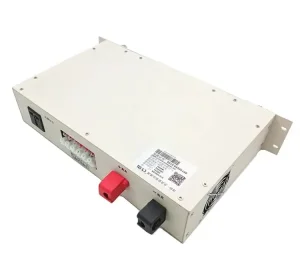
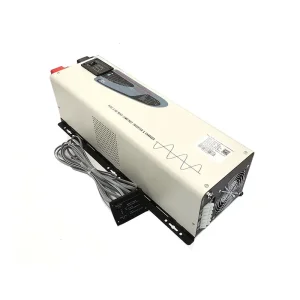
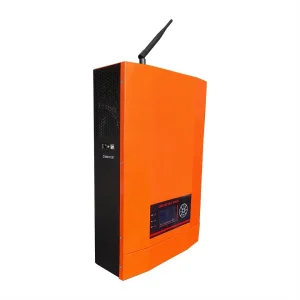
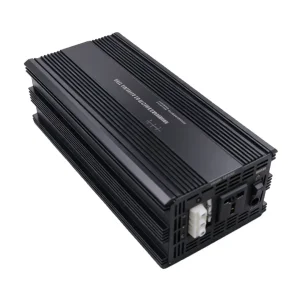
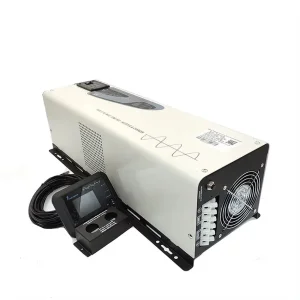
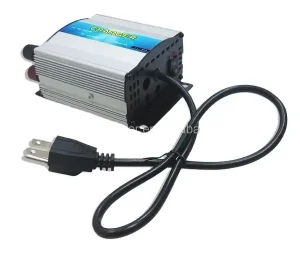
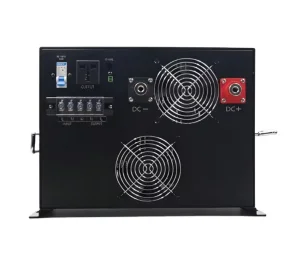
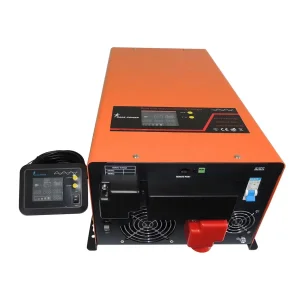
Expand your product portfolio with factory-direct, CE-certified smart chargers, pure sine wave inverters, and intelligent dual battery isolators engineered for long-term commercial reliability.
