


Explore our export-grade range of pure sine wave hybrid solar inverters, high-surge low-frequency power units, and intelligent multi-stage battery chargers engineered for industrial and residential applications.
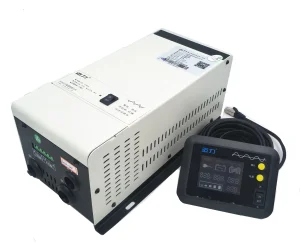
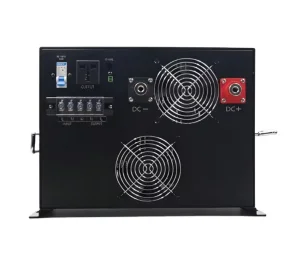
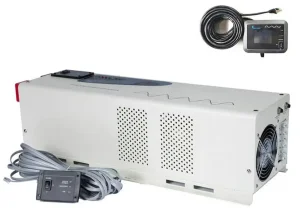
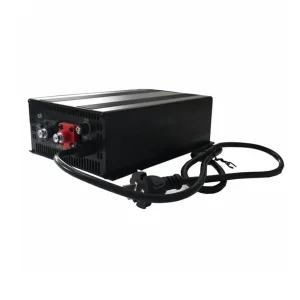
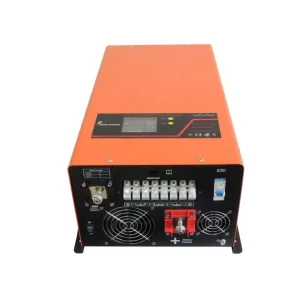
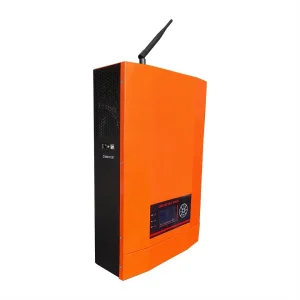
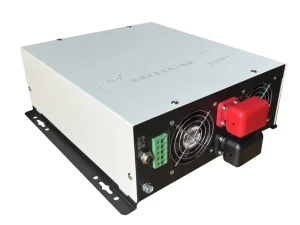
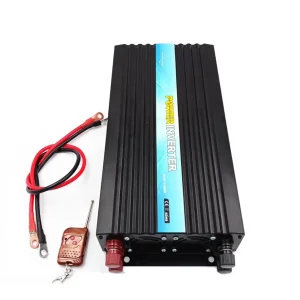
Analyzing the Convergence of Photovoltaic Inversion, Grid Interactivity, and Advanced Battery Charge Control Systems in 2026 and Beyond.
The global renewable energy architecture has migrated rapidly from single-function DC-to-AC conversion units toward integrated power conversion platforms. Modern enterprise users require hybrid solar inverters featuring internal multi-stage AC chargers, high-efficiency Maximum Power Point Tracking (MPPT) controllers, and zero-transfer-time static switches to safeguard mission-critical loads.
For B2B importers, EPC contractors, and OEM brand distributors, CE Certification is not merely a legal prerequisite for entering the European Economic Area (EEA)—it serves as a benchmark for Low Voltage Directive (LVD 2014/35/EU) compliance, Electromagnetic Compatibility (EMC 2014/30/EU), and operational reliability under harsh ambient grid stress.
Next-generation inverters incorporate firmware-configurable charging profiles that adjust dynamically to diverse battery chemistries (LiFePO4, Ternary Lithium, AGM, Gel, and Sodium-ion). Integrated thermal sensors and CAN/RS485 communication interfaces prevent battery degradation caused by overcharging, thermal runaway, and irregular depth of discharge (DoD).
Market vectors transforming off-grid solar energy deployment across residential, commercial, industrial, and specialized transportation sectors globally.
High-frequency solar inverters are transitioning rapidly from traditional Silicon MOSFETs to Silicon Carbide (SiC) and Gallium Nitride (GaN) switching devices. This technological shift reduces thermal losses by up to 40%, enables significantly smaller magnetic components, and increases overall power density, resulting in lighter, ultra-thin inverter chassis with higher energy throughput.
Modern charging control algorithms no longer rely on static voltage thresholds. Integrated microcontrollers evaluate historical photovoltaic output data, instantaneous load demand, ambient temperature gradients, and electricity tariff schedules to optimize charge timing—prioritizing solar harvest over AC grid draw during peak pricing windows.
Global procurement demands are shifting from 12V/24V systems toward 48V, 96V, and high-voltage DC (380V–540V) bus architectures. High-voltage DC topologies significantly reduce copper cable sizing requirements, lower I²R resistance losses, and streamline coupling with commercial battery storage units and electric vehicle charging equipment.
A Regional Sourcing Roadmap for B2B Importers, System Integrators, and Wholesalers Navigating Regulatory Directives and Power Grid Standards.
| Target Region | Mandatory Certifications | Voltage & Grid Topology | Key Procurement Drivers |
|---|---|---|---|
| European Union (EU) | CE (LVD 2014/35/EU, EMC 2014/30/EU), EN 62109-1/-2, RoHS, REACH | 230V AC Single Phase / 400V AC Three Phase (50Hz) | Grid compliance, LiFePO4 BMS interoperability, low standby idle consumption (<15W), eco-design compliance. |
| North America (US & CA) | UL 1741, UL 458 (Mobile/RV), FCC Part 15 Class B, CSA C22.2 | 120V / 240V Split Phase (60Hz) | High surge capacity for inductive motor loads (HVAC, pumps), neutral-ground bonding transfer relays, remote LCD monitoring. |
| Latin America & Caribbean | CE Mark, IEC 62109, NOM (Mexico), INMETRO (Brazil) | 110V/220V Dual Voltage (50Hz/60Hz Selectable) | Wide AC input voltage tolerance (85V–270V) to withstand unstable municipal grids, robust lightning/surge protection. |
| Middle East & Africa (MEA) | CE, CB Scheme Test Reports, SASO (Saudi Arabia), SONCAP | 220V/230V Single Phase / 400V 3-Phase (50Hz) | Thermal resilience under high ambient operating temperatures (+50°C), heavy-duty toroidal transformer construction, dust protection. |
| Asia-Pacific & Australia | CE, RCM (Australia/NZ), SAA Compliance, IEC 62109 | 230V/240V Single Phase / 415V Three Phase (50Hz) | High MPPT voltage window, IP65 water/dust resistance for outdoor installs, mobile vehicle DC-DC integrated charge isolation. |
Enterprise buyers must ensure that vendor CE claims include both EMC testing reports (EN 61000-6-1/3) and Low Voltage Directive safety verifications (EN 62109-1 for inverter units, EN 60335 for standalone battery chargers). Genuine suppliers maintain verified test laboratory records (SGS, TUV, Intertek) with full component traceability.
How Modern Advanced Manufacturing Hubs (such as Suzhou Facilities) Deliver Scale, Customization Precision, and Uncompromising Quality Control.
Leading Chinese inverter factories utilize Surface Mount Technology (SMT) pick-and-place lines integrated with 3D Automated Optical Inspection (AOI) and Solder Paste Inspection (SPI). Automated toroidal transformer winding machinery ensures consistent copper wire density, minimal flux leakage, and maximized surge capacity in low-frequency power units.
Quality assurance is embedded at every manufacturing stage. Printed Circuit Board Assemblies (PCBAs) undergo conformal coating application to protect against humidity and saline atmosphere corrosion. Assembled inverters undergo 100% full-load aging and burn-in testing under elevated ambient thermal stress before packaging.
China's comprehensive power electronics ecosystem enables rapid engineering customization. Overseas enterprise clients can tailor DC input voltage parameters (12V/24V/48V/96V/540V), modify AC output wave shape specifications, customize LCD communication menus, adjust enclosure color schemes, and specify regional AC socket standards without excessive lead times.
Evaluating Toroidal vs. High-Frequency Switching Topologies, MPPT Charge Controller Efficiency, and Battery Longevity Engineering.
Selecting between low-frequency and high-frequency inverter topologies depends heavily on load profiles and physical installation constraints:
Real-World Deployment Matrices Across Emergency Vehicles, Off-Grid Telecom, RV Caravans, and Microgrid Infrastructures.
In mobile application scenarios (RVs, travel trailers, fire engines, emergency ambulances), low-frequency pure sine wave inverter chargers with integrated dual battery isolators allow alternator auxiliary charging while on the road, combined with shore-power automatic switching and solar rooftop integration.
For rural residences, mountain cabins, and island microgrids operating disconnected from utility lines, hybrid solar inverters (3.5kW–10kW) with 60A/80A MPPT controllers provide primary AC power while managing battery charge balance from solar arrays and auxiliary diesel generators.
Cellular base transceiver stations (BTS) and remote monitoring stations demand high operational availability. Rack-mounted integrated inverter chargers (48V DC input) deliver uninterrupted clean AC power with remote SNMP / Modbus telemetry monitoring capabilities.
Expert Answers to Critical Engineering, Regulatory Compliance, and B2B Sourcing Questions.
Explore additional high-voltage DC inverters, 3-phase commercial systems, rack-mounted power conversion modules, and multi-stage battery chargers for global distribution.
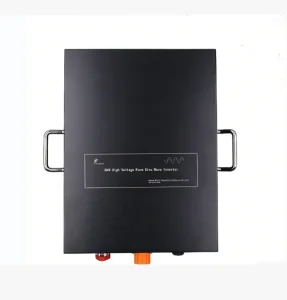
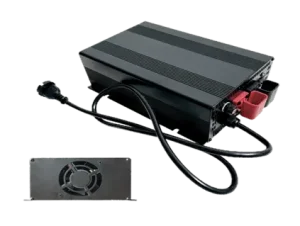
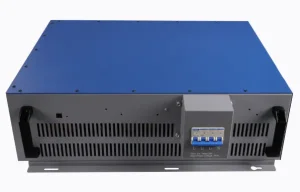
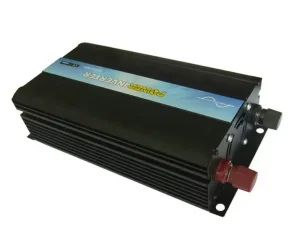
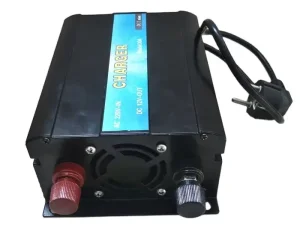
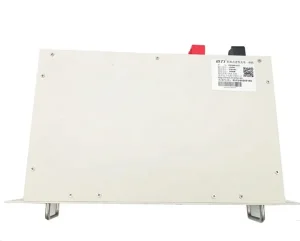
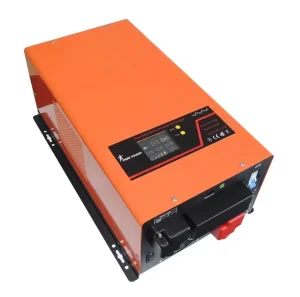
Partner with an ISO 9001:2015 certified manufacturer in Suzhou for customized CE-certified solar inverters, intelligent battery chargers, and OEM/ODM private label programs.
