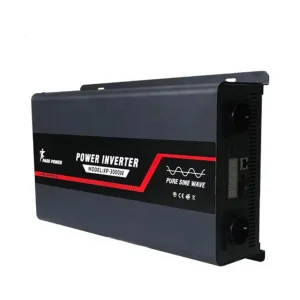
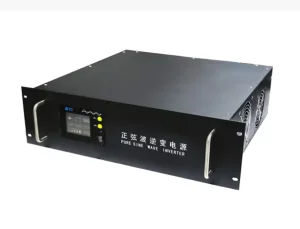
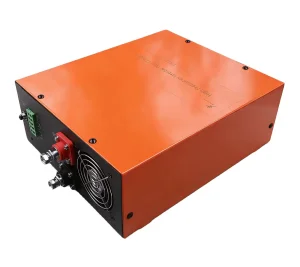
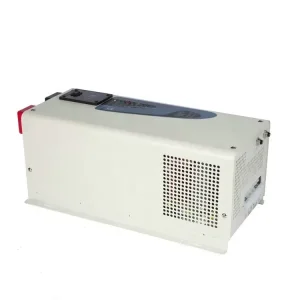
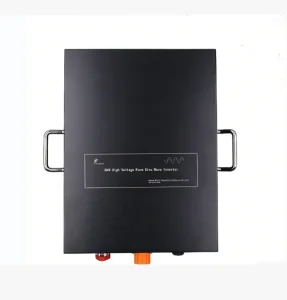
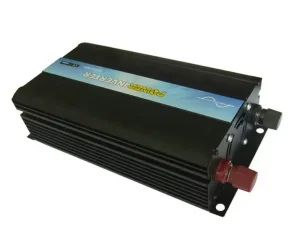
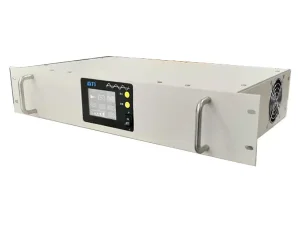
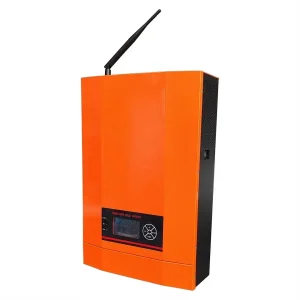
Explore factory-direct power conversion equipment, intelligent 3-stage battery chargers, and high-surge low/high-frequency pure sine wave inverters compliant with global grid standards.
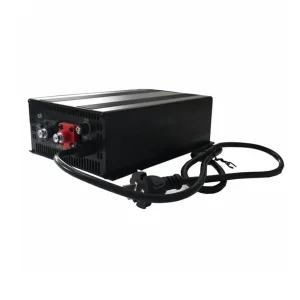
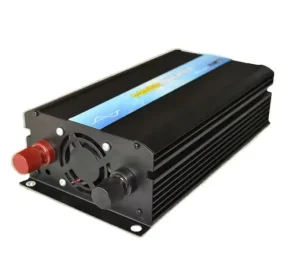
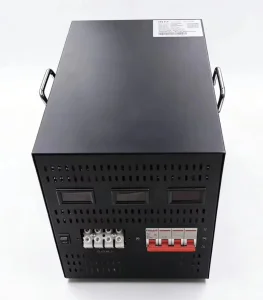
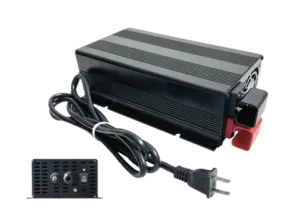
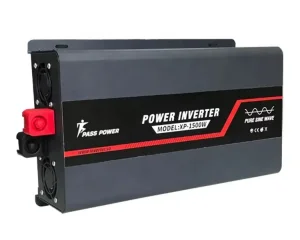
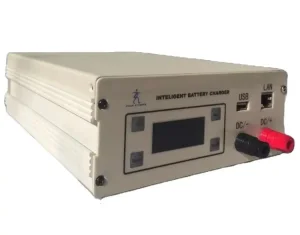
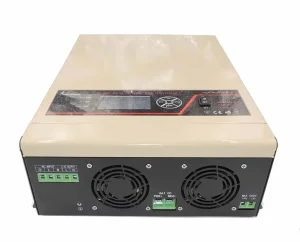
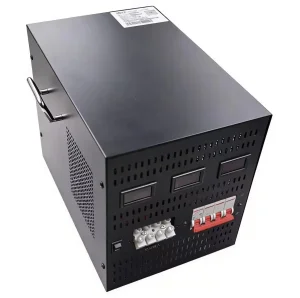
In modern power electronics, the requirement to convert alternating current (AC) at standard commercial grid voltages—specifically 110V/120V AC (North America, Japan, Taiwan) and 220V/230V/240V AC (Europe, Asia, Oceania, South America)—into regulated, ultra-stable 12V Direct Current (DC) represents the backbone of global industrial electrification. As industries undergo rapid digital transformation, automated logistics expansion, and off-grid renewable transition, sourcing verified cheap 110V/220V AC to 12V DC supplier & suppliers without sacrificing dielectric isolation, thermal resilience, and electromagnetic compatibility (EMC) has become a key strategic objective for OEM engineers and procurement managers.
The commercial keyword search term "Cheap 110V/220V AC to 12V DC Supplier & Suppliers" often triggers intense price-driven scrutiny in global trade channels. However, enterprise-grade purchasing mandates a total cost of ownership (TCO) perspective. True "cheapness" or cost optimization in industrial supply chains is not achieved by sacrificing copper wire purity or utilizing recycled MOSFETs; rather, it is unlocked through advanced LLC resonant soft-switching topologies, automated surface-mount technology (SMT) production lines, optimized power factor correction (PFC) circuitry, and direct factory-level manufacturing scale.
Converting single-phase or multi-phase 110V/220V AC utility power to a clean 12V DC bus requires sophisticated multi-stage power conditioning. Enterprise suppliers employ diverse circuit topologies depending on power rating (ranging from 50W auxiliary modules to 9000W industrial inverter/charger units). Understanding these topologies allows procurement engineers to evaluate factory expertise during technical audits.
Ideal for low-to-medium power requirements (5W to 250W). Flyback converters utilize a coupled inductor (flyback transformer) to store energy during the switch-on period and transfer it to the 12V secondary side during turn-off, providing simple isolation and low component count. Forward converters add an output choke to improve output current delivery for higher continuous 12V loads.
Preferred for high-power (300W to 5000W+) applications where thermal loss is critical. LLC resonant circuits achieve Zero Voltage Switching (ZVS) on the primary side and Zero Current Switching (ZCS) on the secondary rectifiers. This dramatically reduces switching losses, allowing efficiency metrics to exceed 94% under 110V/220V AC input while minimizing heatsink size.
Active Power Factor Correction (Boost PFC) corrects input current phase angles, achieving a power factor of >0.98 and meeting IEC 61000-3-2 harmonic standards. On the 12V DC output stage, traditional Schottky diodes are replaced with low-Rds(on) power MOSFETs (Synchronous Rectification), slashing output conduction loss by up to 70%.
| Topology Class | Input Range (AC) | Efficiency (@220V AC) | Ripple & Noise (12V DC) | Isolation Rating | Primary Target Industry |
|---|---|---|---|---|---|
| PFC + Flyback SMPS | 85V – 264V AC | 86% – 89% | < 100 mVp-p | 3000 VAC Isolation | IoT, Telecom Routers, LED Drivers |
| Half-Bridge LLC Resonant | 90V – 264V AC | 92% – 95% | < 50 mVp-p | 3750 VAC Isolation | Industrial Automation, Server Racks |
| 3-Stage Smart Charger (Bi-directional) | 110V / 220V Auto-Switch | 90% – 94% | < 80 mVp-p | 4000 VAC Reinforced | EV Chargers, Marine & RV House Power |
| Low-Frequency Toroidal Transformer | 110V / 220V Selectable | 88% – 92% | < 30 mVp-p | 5000 VAC Heavy Duty | Medical Devices, High-Surge Motors |
The demand for 110V/220V AC to 12V DC converters, inverters, and battery chargers spans virtually every physical sector of the global economy. By standardizing high-capacity 12V DC power buses, industrial operators gain compatibility with standard lead-acid, AGM, Gel, and Lithium (LiFePO4) battery chemistry systems.
Commercial vehicles, ambulances, travel trailers, and marine vessels require robust AC-to-DC smart chargers to re-energize 12V house battery banks from shore power (110V in US ports / 220V in European docks). Advanced 3-stage charging profiles (Bulk, Absorption, Float) ensure rapid energy restoration without thermal runaway or plate sulfation.
Remote residential and commercial off-grid microgrids utilize hybrid power converters that interface high-voltage PV arrays (up to 500V DC) and incoming AC generator lines (110V/220V AC) to maintain a continuous 12V/24V/48V DC battery storage system while delivering clean pure sine wave AC output to localized loads.
Cell towers and edge-computing server enclosures rely on rack-mounted 110V/220V AC to 12V DC power supplies to drive low-voltage monitoring sensors, active cooling fan arrays, emergency illumination, and backup communication modules during primary grid outages.
The power electronics sector is experiencing a massive paradigm shift driven by wide bandgap (WBG) semiconductors and digital power management architectures. Sourcing partners must continuously evaluate supplier tech roadmaps to ensure product longevity.
Replacing legacy Silicon MOSFETs with GaN FETs allows switching frequencies to increase from 65kHz to over 500kHz. High switching speeds drastically reduce the physical footprint of magnetic components (transformers and output chokes), yielding power density increases of up to 300% for 110V/220V AC to 12V DC converters.
Modern enterprise buyers demand real-time diagnostics. Next-generation 12V power supply units incorporate embedded ARM microcontrollers with RS485 (Modbus RTU) or CANbus interfaces, allowing central SCADA systems to monitor input AC voltage quality, output 12V DC current draw, internal heatsink temperature, and remaining operating lifespan.
The convergence of inverter and battery charger technologies has birthed unified bi-directional converters. These systems act as high-current 110V/220V AC to 12V DC chargers when grid power is present, and seamlessly reverse power flow to output 110V/220V AC pure sine wave power within 10 milliseconds upon AC utility failure.
Procuring "cheap" power converters from unverified suppliers exposes enterprise importers to severe operational liabilities, including electrical fires, high failure rates (RMA), and regulatory customs seizures. Evaluating a supplier’s factory capabilities requires verifying compliance across five core dimensions:
Conducted and radiated emissions must conform to FCC Part 15 Subpart B (Class A/B) and EN 55032 / EN 55035 standards. Integrated multi-stage EMI filter networks (X/Y capacitors and common-mode chokes) prevent noise propagation back into the AC grid.
High voltage AC input traces must maintain strict physical creepage and clearance distances (>6.4mm) from accessible 12V DC output terminals. Double or reinforced insulation systems rated for 3000VAC to 4000VAC guarantee user safety under catastrophic fault conditions.
Industrial units feature active protection circuits including Over-Voltage Protection (OVP), Over-Load Protection (OLP via constant-current limiting), Short-Circuit Protection (SCP with auto-recovery), and Over-Temperature Protection (OTP via NTC sensors).
Expert answers to technical inquiries commonly raised by electrical engineers, system integrators, and B2B procurement managers regarding 110V/220V AC to 12V DC power conversion equipment.
Discover our industrial-grade pure sine wave inverter series, rack-mounted power supplies, high-voltage converters, and off-grid solar equipment engineered for commercial buyers.