Cheap 3kVA Solar Inverter Factory & Exporters Blueprint

Comprehensive Technical Specification, Industrial OEM Engineering, & Supply Chain Infrastructure Analysis for Global Energy Procurement Directors

Factory Direct Output: High-Efficiency Inverters & Converters

Explore our export-certified solar energy conversion equipment manufactured under ISO 9001:2015 strict quality control protocols.

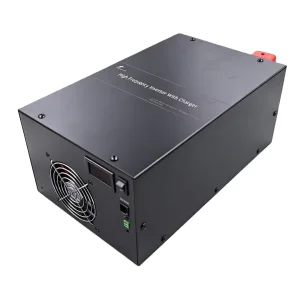
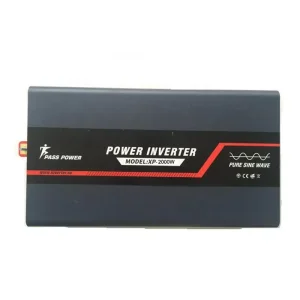
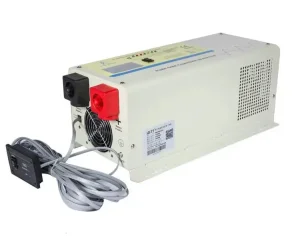
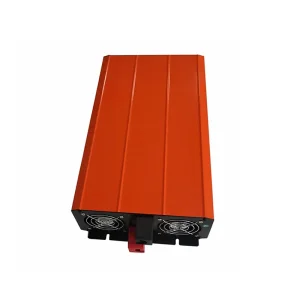
High-Quality CE ROHS 2000w high frequency pure sine wave inverter
High-Quality CE ROHS 2000W Pure Sine Wave Inverter with 90A Charger
View Product Details
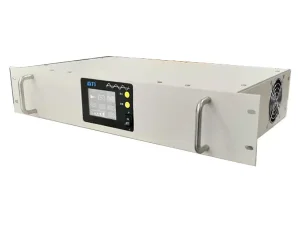
Best Maili 110V/220V AC 1KW Rack-mounted Pure Sine Wave Inverter
Best Maili 110V/220V AC 1KW Rack-Mounted Pure Sine Wave Converter
View Product Details
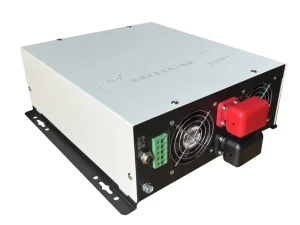
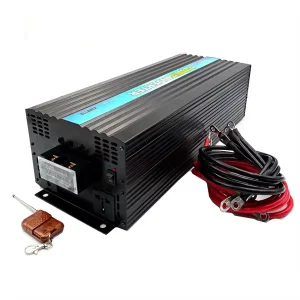
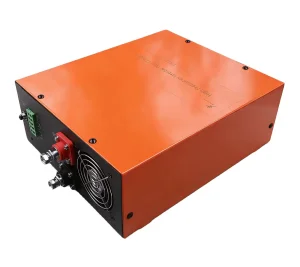
Wholesale MAILI 3KW High-Frequency Inverters
Wholesale MAILI 3KW High-Frequency Pure Sine Wave Inverter with Charger
View Product Details
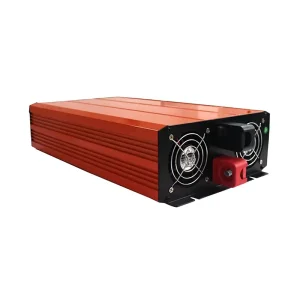
3000w high frequency pure sine wave inverter
CE Certified 3000W High Frequency Pure Sine Wave Inverter (92% Efficiency)
View Product Details
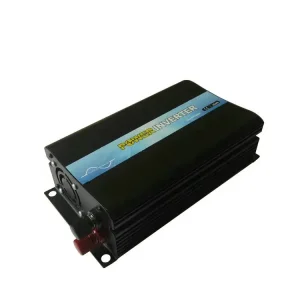
600W Power Inverter Pure Sine Wave
OEM High Quality 600W Power Inverter Pure Sine Wave 24V to 120V AC
View Product Details
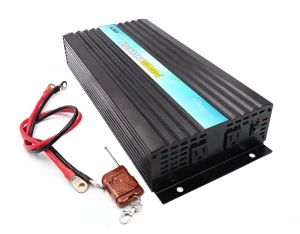
Maili 2000W Power Inverter Single-Phase
High-Quality Maili 2000W Power Inverter Single-Phase LCD Display
View Product Details
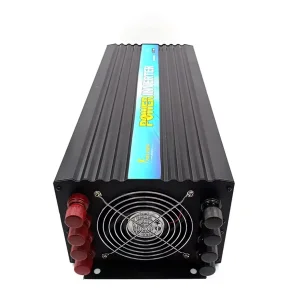
Wholesale High Power 5kw 5000 Watt Inverter
Wholesale High Power 5KW Pure Sine Wave Off-Grid Inverter (10000W Peak)
View Product Details
Custom Intelligent Inverter 8000w
Custom Intelligent High Frequency Pure Sine Wave Inverter 8000W 48V
View Product Details

Strategic Overview: Value Engineering in 3kVA Solar Inverter Architecture

In the rapidly evolving landscape of decentralized power generation, the term "cheap 3kva solar inverter factory & exporters" no longer implies a compromise on engineering integrity or thermal longevity. Instead, it represents the modern convergence of advanced power electronics, automated SMT (Surface Mount Technology) assembly, and streamlined global supply chain logistics originating from specialized industrial hubs like Suzhou, China.

A 3kVA (typically rated at 2.4kW to 3.0kW real power output depending on the power factor) solar inverter serves as the foundational unit for residential off-grid, light commercial backup, and emergency telecommunications infrastructure. Achieving cost efficiency while upholding high Mean Time Between Failures (MTBF) requires deep domain knowledge across power semiconductor selection, topology choice (High-Frequency vs. Low-Frequency), thermal dissipation modeling, and digital control loop optimizations.

95.4%
Peak Conversion Efficiency
< 10ms
UPS-Grade Transfer Speed
100,000h
Design MTBF Lifetime
ISO9001
Automated Factory Control

By transitioning from legacy multi-board configurations to highly integrated single-board DSP (Digital Signal Processor) control architectures, top-tier Chinese original equipment manufacturers (OEMs) have reduced passive component counts by up to 28%. This optimization drastically lowers manufacturing bill-of-materials (BOM) costs while simultaneously decreasing internal point-of-failure risks.

1. Technical Roadmap & Engineering Future Outlook for 3kVA Inverters

The technological evolution of 3kVA off-grid and hybrid solar inverters is driven by the demand for higher power density, wider Maximum Power Point Tracking (MPPT) voltage windows, and real-time cloud-edge interoperability.

Wide-Bandgap Semiconductors (SiC & GaN)

The integration of Silicon Carbide (SiC) MOSFETs and Gallium Nitride (GaN) switching elements into the primary DC-DC boost and DC-AC inversion stages allows switching frequencies to increase from legacy 20kHz rates up to 100kHz+. This drastically reduces the physical volume and copper weight of magnetic components (inductors and transformers) by over 40%, yielding compact footprints and reduced transport logistics overhead.

Advanced MPPT Dynamic Tracking

Next-generation 3kVA solar inverters utilize dynamic perturb-and-observe (P&O) and incremental conductance algorithms enhanced by fuzzy logic. This ensures tracking efficiency exceeding 99.8% even under complex partial shading conditions, fast-moving cloud cover, or non-uniform solar array degradation across multi-string arrays.

Smart Grid & V2G Protocol Readiness

Modern export-grade 3kVA units are built with communication buses (RS485, CAN 2.0B, Wi-Fi, GPRS) capable of executing Modbus-RTU and SunSpec protocols. This facilitates seamless synchronization with Battery Management Systems (BMS) for LiFePO4 chemistry and paves the way for Virtual Power Plant (VPP) aggregation in localized microgrids.

Engineering Comparison: High-Frequency vs. Low-Frequency 3kVA Inverter Topologies

Technical Parameter High-Frequency (HF) Transformerless Low-Frequency (LF) Heavy-Duty
Power Density & Weight High (~6.5 kg to 9.0 kg); Wall-mountable Lower (~18.0 kg to 25.0 kg); Industrial heavy enclosure
Surge Capacity (Peak) 2x Rated Power (300ms duration) 3x Rated Power (Up to 10 seconds for motor starts)
Peak Conversion Efficiency 93% - 96% 88% - 92%
No-Load Power Consumption Ultra-low (< 15W - 25W) Moderate (< 35W - 55W due to core losses)
Primary Application Profile Residential, TV, Lighting, Lithium Battery systems Inductive loads, Pumps, Compressors, Heavy Machinery
Manufacturing Cost Factor Cost-Optimized (High CapEx efficiency) Higher Copper/Iron Content (Premium BOM)

2. Macro Industry Solutions & Multi-Scenario Deployments

A versatile 3kVA solar inverter is a foundational element across diverse macro-economic sectors, bridging energy poverty gaps in developing regions and providing reliable resilient backup in developed markets.

Rural Off-Grid Microgrids

In off-grid agricultural communities across Sub-Saharan Africa, Southeast Asia, and Latin America, 3kVA solar inverters function as central power hubs. Paired with 100Ah-200A LiFePO4 battery banks and 1.5kWp-2.4kWp PV arrays, these systems power household electrification, refrigeration for vaccine preservation, and community water purification units.

Telecom Base Transceiver Stations (BTS)

Telecommunications operators require uninterrupted 24/7/365 operational uptime. 3kVA hybrid inverters with wide DC input ranges (24V/48V options) provide reliable backup power for cellular towers in regions prone to grid instability, reducing diesel generator runtime and cut operating expenses (OpEx) by up to 60%.

RV, Marine & Mobile Commercial Units

High-vibration, mobile environments demand ruggedized power electronics. Conformal coated PCB boards, heavy-duty chassis designs, and integrated transfer switches allow 3kVA inverters to power mobile medical clinics, food trucks, and overland recreational vehicles with clean pure sine wave AC electricity.

Commercial Water Pumping & Agriculture

Combining 3kVA solar inverters with specialized variable frequency drive (VFD) soft-start logic enables direct off-grid powering of single-phase surface and submersible water pumps. This drastically accelerates agricultural irrigation deployment in remote farmlands without requiring expensive grid extensions.

3. Localized Support & Global Compliance Assurance

Navigating international trade standards requires rigorous certification compliance, localized voltage/frequency adaptations, and rapid spare-parts distribution channels.

International Certification Matrices

A certified factory direct exporter guarantees that every 3kVA inverter model satisfies regional safety, electromagnetic compatibility (EMC), and environmental mandates:

  • European Union: CE Marking compliance via EN 62109-1 (Safety of Power Converters), EN 62109-2 (Particular Requirements for Inverters), and EN 61000-6-1/3 (EMC Directive). RoHS compliant assembly.
  • North America: Built to align with UL 1741 and CSA C22.2 standards for off-grid and grid-interactive power systems, utilizing split-phase (120V/240V) custom output configurations.
  • Global Tropics / IP Ratings: Conformal PCB coating (Type UR) engineered to resist high humidity (> 95% non-condensing), salt fog exposure, and dust ingress in IP21 to IP32 rated enclosures.

Localized Voltage & Grid Frequency Flexibility

Global deployment requires instant factory-level parameter adaptability. Exporters provide preset or software-selectable parameters covering:

  • 220V / 230V / 240V AC Single Phase: Standard for European, Asian, African, and Australian grids (50Hz / 60Hz auto-sensing).
  • 110V / 120V AC North American Standard: Dedicated low-voltage AC high-frequency output stages.
  • Adjustable Battery Cutoff Thresholds: Compatible with Lead-Acid (AGM/Gel), LiFePO4, and custom Lithium-Ion voltage profiles via customizable DIP switches or LCD programming menus.

4. China Factory 4.0: Supply Chain Resilience & Efficiency Advantages

The ability to offer competitive pricing on 3kVA solar inverters without sacrificing structural reliability relies on the advanced manufacturing ecosystems found in Chinese industrial centers.

Automated SMT & DIP Production Lines

High-speed Surface Mount Technology (SMT) lines place tens of thousands of micro-components per hour with sub-millimeter precision. Combined with 3D Automated Optical Inspection (AOI) and Automated X-ray Inspection (AXI) for solder joint integrity, manufacturing defect rates drop below 50 PPM (Parts Per Million).

Full-Load Burn-In & Environmental Stress Screening

Every 3kVA unit coming off the assembly line undergoes rigorous 100% full-power burn-in testing inside high-temperature thermal chambers (45°C - 50°C) for a minimum of 4 to 8 hours. Dynamic load switching tests simulate real-world inductive surge events prior to final boxing.

Upstream Component Clustering

Proximity to tier-one semiconductor packaging plants, high-frequency magnetic core manufacturers, and aluminum enclosure extruders in Jiangsu and Zhejiang provinces reduces raw material lead times to days instead of weeks, insulating international buyers from global supply disruptions.

5. Global Enterprise Procurement Demands & Sourcing Strategies

For B2B importers, regional brand owners, and EPC (Engineering, Procurement, and Construction) contractors, selecting a solar inverter manufacturing partner involves evaluating key metrics beyond initial purchase price.

Total Cost of Ownership (TCO) & Landed Costing

Sourcing directly from an established OEM factory reduces middleman markup by 20% to 35%. Procurement teams must analyze landed costs by evaluating pallet density, ocean freight container optimization (20GP vs 40HQ load counts), customs duty tariffs, and warranty replacement reserve allocations.

OEM / ODM White-Label Customization

Enterprise clients require tailored hardware aesthetics and software interfaces. Leading manufacturers offer custom chassis silk-screening, custom silk-screened metal casing colors, private-label box packaging, custom boot-up LCD brand graphics, and localized mobile app user interfaces.

SLA & After-Sales Spare-Parts Support

To maintain customer trust, factories support B2B buyers with 1% to 2% mainboard spare unit allocations (main control boards, power MOS boards, LCD modules) shipped alongside bulk orders. This enables local turn-around repairs within 24 hours without requiring cross-border return logistics.

Extended Inventory: Specialized Solar & Hybrid Converters

Browse our complete catalog of factory-direct power conversion solutions designed for global export markets.

Wholesale CE ROHS intelligent inverter 2kw
Wholesale CE ROHS Intelligent 2KW Home Off-Grid Solar Power Inverter
View Product Details
Custom ROHS Approved 1500W Low Frequency Inverter
Custom ROHS Approved 1500W Low Frequency Pure Sine Wave Off-Grid Inverter
View Product Details
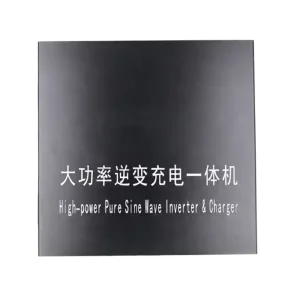
Best Maili 7KW High-power Inverter Charger
Best Maili 7KW High-Power 110V/220V AC Pure Sine Wave Inverter Charger
View Product Details
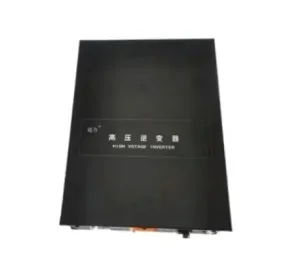
Custom Maili 10KW High Voltage DC Inverter
Custom Maili 10KW High Voltage DC 540V to AC 220V Pure Sine Wave Inverter
View Product Details
Custom CE ROHS 3kw Wind Turbine Inverter
Custom CE ROHS 3KW Wind Turbine High Frequency Pure Sine Wave Inverter
View Product Details
CE Certification MLP1500W Inverter
CE Certified MLP1500W Pure Sine Wave Inverter for Wind Turbines
View Product Details
2000W High frequency inverter with charger
CE ROHS 2000W High Frequency Inverter with Charger (95% Efficiency)
View Product Details
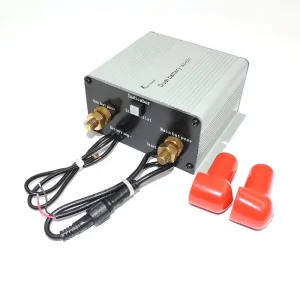
Cheap BS-153 Dual Battery Isolator Kit
BS-153 Dual Battery Isolator Kit 24V 200A with Voltage Sensitive Relay
View Product Details

Technical & Sourcing Frequently Asked Questions (FAQ)

In-depth responses curated by power electronics engineers for procurement directors and technical importers.

How does a 3kVA solar inverter differ from a 3kW solar inverter?
The difference lies in the difference between apparent power (measured in Volt-Amperes, kVA) and real active power (measured in Watts, kW). Apparent power represents the total vector sum of active and reactive power drawn by a load. The active power output is calculated using the formula: Real Power (kW) = Apparent Power (kVA) × Power Factor (PF). Modern high-frequency off-grid 3kVA solar inverters are typically designed with a unity power factor (PF = 1.0), meaning a 3kVA unit delivers a full 3000W of active power. However, legacy low-frequency or budget units may have a PF of 0.8, providing 2400W of real power. It is critical for engineering procurement teams to specify the PF requirement when evaluating factory direct quotes.
What safety protections are integrated into export-grade 3kVA pure sine wave inverters?
Industrial-grade 3kVA solar inverters feature multi-layered, hardware- and software-enforced protection mechanisms:
  • DC Input Protections: Reverse polarity protection via MOSFET switches or fuse networks, DC over-voltage shutdown, and low-battery voltage warning/disconnect stages.
  • AC Output Protections: Fast-acting short-circuit protection (< 20 microseconds response), AC over-current protection, and over-load protection (typically permitting 110% load for 5 minutes, 150% load for 10 seconds).
  • Thermal Protections: Dual NTC thermistors placed on internal power switch heat sinks and transformers triggering forced-air variable-speed cooling fans at 45°C, with emergency thermal shutdown occurring at 85°C.
  • Galvanic Isolation: Optocoupler isolation separating high-voltage DC stages from low-voltage logic control buses.
Why is Pure Sine Wave output critical for sensitive electronic equipment compared to Modified Sine Wave?
A Modified Sine Wave inverter outputs a blocky, square-step waveform with high Total Harmonic Distortion (THD > 30%). When powering inductive loads (such as refrigerator compressors, air conditioner motors, or water pumps) or sensitive electronics (medical monitors, audio equipment, laptops), modified sine wave current causes high harmonic heating, audible humming noise, reduced equipment operational lifetime, and potential component destruction. A Pure Sine Wave 3kVA inverter maintains THD < 3%, reproducing grid-quality (or superior) smooth sinusoidal AC voltage, ensuring optimal energy efficiency, cool motor operation, and electromagnetic compatibility.
What are the key considerations when matching a 3kVA inverter with LiFePO4 battery banks?
When interfacing a 3kVA off-grid inverter charger with Lithium Iron Phosphate (LiFePO4) energy storage, ensure the following parameters are configurable via the inverter's control interface:
  1. Custom Bulk/Absorption and Float Voltages: Ability to set precise voltage thresholds (e.g., 28.4V bulk, 27.0V float for a 24V system; or 56.8V bulk, 54.0V float for a 48V system).
  2. BMS Communication Interoperability: Built-in CANbus or RS485 communication protocols allowing the inverter DSP to dynamically adjust charge currents based on real-time cell temperatures, State of Charge (SOC), and voltage balance reported by the battery BMS.
  3. Low-Temperature Cutoff Handling: Inhibiting charging commands when ambient battery temperatures drop below 0°C to prevent lithium plating hazards inside the cells.
How do Chinese exporters manage quality control during large-scale OEM manufacturing runs?
Leading manufacturing facilities in China operate under structured ISO 9001:2015 frameworks utilizing a 5-Stage Quality Assurance protocol:
  • IQC (Incoming Quality Control): Testing raw electronic components (MOSFETs, capacitors, PCBs) using AQL (Acceptable Quality Limit) sampling.
  • IPQC (In-Process Quality Control): Automated SMT optical scanning, solder paste height checking, and manual line checks.
  • FQC (Final Quality Control): Functional calibration testing of output voltage, frequency tolerance, and MPPT tracking efficiency.
  • 100% Thermal Burn-In Testing: Continuous full-load operation in elevated thermal chambers to catch infant-mortality failures.
  • OQC (Out-going Quality Control): Final packaging drop testing, vibration simulation, and anti-static seal verification before container loading.