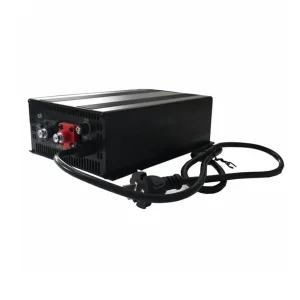
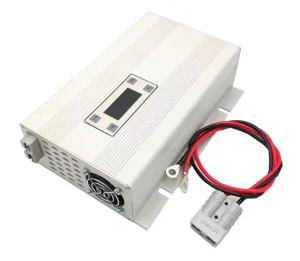
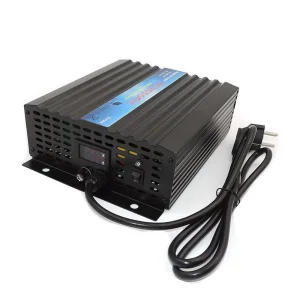
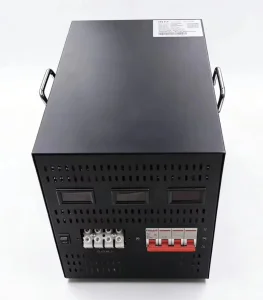
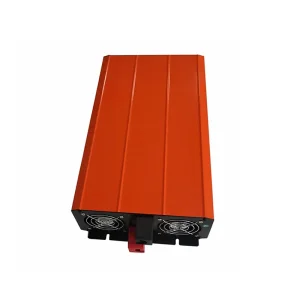
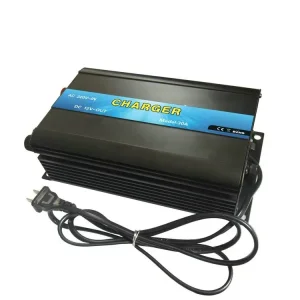
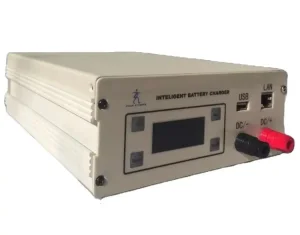
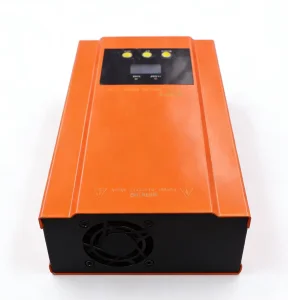
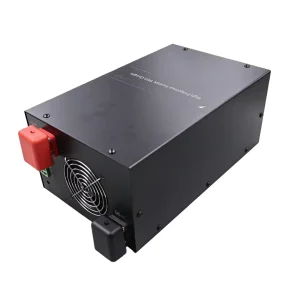
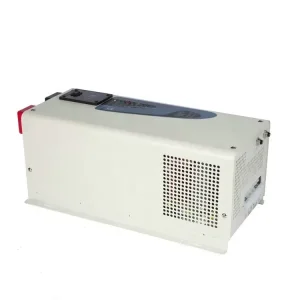
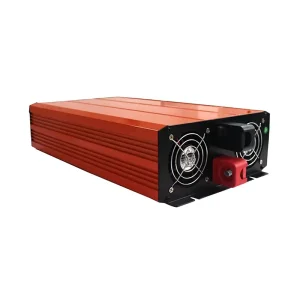
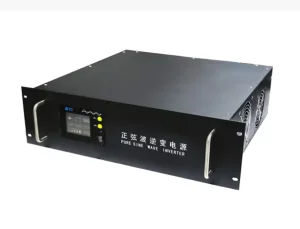
Explore our top 8 featured high-efficiency power inverters and energy conversion modules engineered for off-grid resilience, RV systems, and heavy commercial loads.
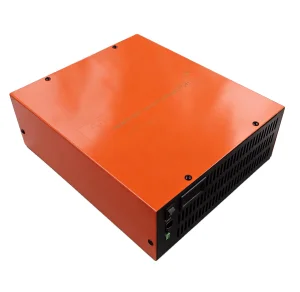
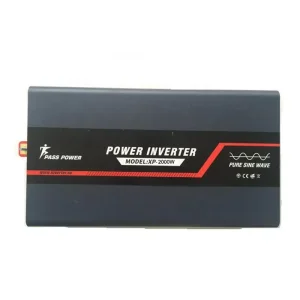
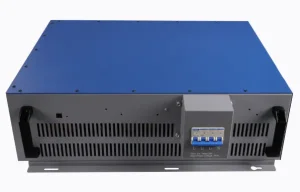
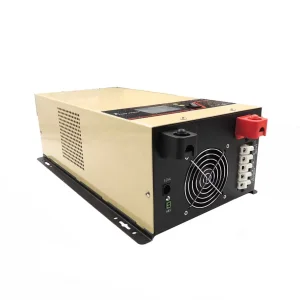
Why initial purchase price is only 30% of total lifecycle cost—and how tier-1 Chinese factories achieve cost-efficiency without compromising engineering integrity.
In global power electronics procurement, sourcing a cheap 4000 W power inverter supplier & factory often presents a strategic dilemma for commercial procurement managers, solar system integrators, and fleet upfitters. Historically, the market associated low procurement cost with compromised components—such as low-grade MOSFETs, sub-standard transformer copper density, and rudimentary thermal dissipation designs that lead to thermal throttling and premature field failures. Today, enterprise sourcing demands a shift toward Total Cost of Ownership (TCO) optimization.
Achieving a low bill-of-materials (BOM) cost without sacrificing reliability is the hallmark of modern, vertically integrated power inverter manufacturers. By leveraging automated Surface Mount Technology (SMT) assembly, scaled regional component sourcing in industrial hubs like Suzhou and Guangdong, and advanced topology design (such as high-frequency zero-voltage switching), leading OEM factories deliver highly competitive 4000W power conversion platforms. These units support continuous continuous loads while managing 3x surge demands (up to 12,000W peak) for motor-driven inductive equipment.
Designed to start high-inrush inductive loads, including air conditioning compressors, commercial pumps, and power tools without voltage collapse or inverter shut-down.
Pure sine wave output engineered with closed-loop digital signal feedback, safeguarding sensitive medical devices, microprocessors, and variable-frequency drives.
Dual ball-bearing intelligent temperature-controlled cooling fans with aluminum heat-sink extrusion channels for silent low-load operation and high ambient stability.
The power electronics industry is transitioning toward wider bandgap semiconductors, hybrid multi-input topologies, and integrated IoT monitoring platforms.
The 4000-watt power inverter segment occupies a strategic sweet spot in off-grid energy storage and mobile electrification. It delivers sufficient power to operate multiple household or industrial appliances simultaneously (e.g., HVAC units, microwave ovens, power tools, and high-capacity battery chargers) while remaining compatible with standard 12V, 24V, or 48V DC battery banks.
| Inverter Architecture | High-Frequency (HF) Transformerless | Low-Frequency (LF) Toroidal Heavy-Duty |
|---|---|---|
| Typical Weight & Footprint | Compact, Lightweight (8kg - 14kg) | Heavy, Solid Enclosure (22kg - 38kg) |
| Surge Capacity Performance | 200% Rated Power (up to 2 seconds) | 300% Rated Power (up to 10-20 seconds) |
| Best Suited Application | RVs, Consumer Electronics, Light Solar Systems | Heavy Motors, Industrial Air Conditioners, Pumps |
| Peak Efficiency | 93% - 96% Efficiency | 88% - 92% Efficiency |
| Cost Profile (BOM) | Lower Manufacturing Cost (Highly Competitive) | Higher Copper/Iron Material Cost |
A structured evaluation checklist for B2B buyers, wholesalers, and brand distributors when auditing manufacturing facilities in China.
ISO 9001:2015 certified production lines, automated 100% full-load burn-in testing chamber for 4-8 hours at high operating temperatures.
Built-in RFI/EMI line filters compliant with CE-EMC and FCC Part 15 Class B standards to prevent interference with radios and comms.
Integrated safeguards for low DC voltage alarm, reverse polarity protection, over-voltage, short circuit, and ambient over-temperature auto-shutdown.
Custom DC inputs (12V/24V/48V/96V/380V), tailored AC socket types (GFCI, Universal, EU, UK, AU), customized branding, and custom enclosure colors.
From utility work fleets to off-grid telecom installations, our 4000W inverter infrastructure delivers stable AC power across demanding operating environments.
Mobile service vans and utility trucks require instant 120V/230V AC power for heavy power tools, air compressors, and battery bank chargers. A 4000W pure sine wave inverter connected to an alternator-fed secondary lithium battery system eliminates the need for noisy diesel generators, reducing carbon emissions and fuel costs.
In remote off-grid cabins, eco-resorts, and rural housing, 4000W hybrid inverters serve as the main energy management hub. Integrating MPPT solar inputs with automatic generator start (AGS) dry contacts ensures 24/7 power for refrigeration, water pumping, lighting, and climate control systems.
5G cellular repeater stations and remote monitoring infrastructure require clean power, wide temperature tolerances, and zero-maintenance operation. Industrial 4000W 48V DC rack-mounted inverters provide reliable backup power during utility grid outages.
Navigating global electrical safety standards to guarantee seamless custom clearance, grid compliance, and liability protection.
Procuring low-cost power electronics from overseas suppliers requires strict adherence to international electrical safety standards. Premium suppliers back their manufacturing with verified test reports from recognized testing bodies (SGS, TUV, Intertek).
UL 1741 & CSA C22.2 No. 107.1 standards for utility-interconnected and off-grid power conversion equipment, along with FCC Part 15 Class B electromagnetic emission limits.
CE-LVD (EN 62109-1 / EN 62109-2) for safety of power converters in photovoltaic systems, CE-EMC (EN 61000 series), and RoHS 2.0 directive compliance for environmental safety.
Compliance with regional codes such as AS/NZS 4777.2 (Australia/New Zealand), G99/G100 (UK), and IEC 62109 international standards for renewable integration.
Detailed answers to technical questions raised by electrical engineers, system integrators, and procurement directors.
High quality 4000W pure sine wave inverters feature an advanced dynamic surge control architecture. Low-frequency models equipped with heavy toroidal transformers can sustain up to 300% rated power (12,000W) for up to 10–20 seconds. High-frequency transformerless models use smart pulse-width modulation (PWM) power boost algorithms to supply 150%–200% surge capacity for up to 2 seconds, preventing voltage collapse during initial motor startup.
For a 4000W continuously rated system, specifying a 48V DC battery input is strongly recommended. At 4000W output, a 12V system draws over 350 Amps of DC current, requiring extremely thick, heavy-gauge copper cabling (2/0 or 4/0 AWG) and producing higher resistive thermal losses ($I^2R$). A 48V input reduces current draw to approximately 88 Amps, increasing efficiency, lowering cable costs, and significantly reducing operating temperatures.
We recommend auditing suppliers for 100% full-load burn-in testing protocols conducted inside environmental heat chambers (40°C - 50°C) for a minimum of 4 hours. Quality factories perform automated optical inspections (AOI) on PCB assemblies, high-voltage dielectric withstand testing (Hi-Pot), and dynamic thermal imaging to verify heat dissipation across all power switching MOSFETs prior to final packaging.
Yes, provided the unit features a programmable or pre-set multi-stage intelligent lithium charge algorithm. Unlike lead-acid batteries, lithium iron phosphate (LiFePO4) chemistry requires constant-current/constant-voltage (CC/CV) profiles without equalizing stages. Advanced 4000W inverter-chargers include dry contacts and CAN/RS485 communication protocols to interface directly with the battery’s BMS for automated charge termination and temperature-compensated charging.
Explore our full range of intelligent battery chargers, dual battery isolators, and high-frequency inverters to build complete off-grid energy storage ecosystems.