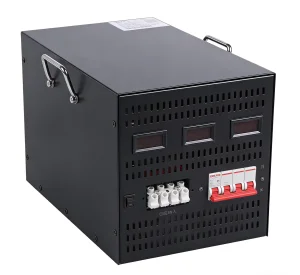
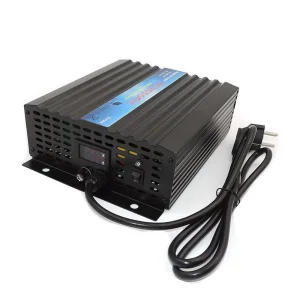
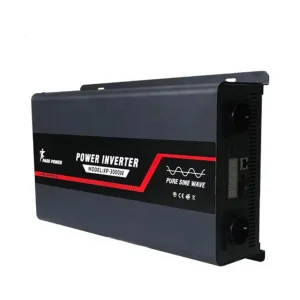
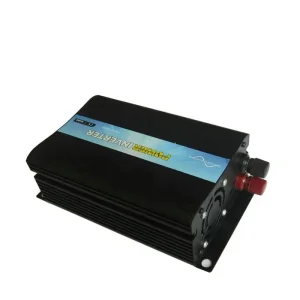
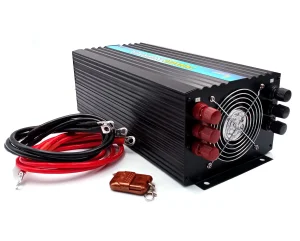
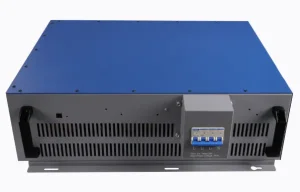
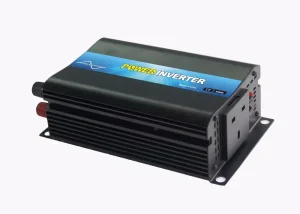
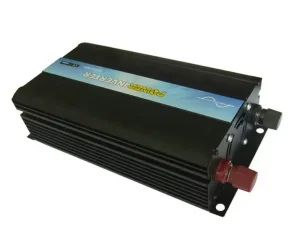
Commercial-grade power isolation, high-efficiency low/high-frequency inverters, and intelligent battery chargers engineered for heavy-duty vehicle integration and industrial export.
Understanding the shift from legacy mechanical cut-off switches to micro-processor-driven solid-state power distribution networks in global commercial transportation and off-grid power infrastructure.
Traditional solenoid isolators suffer from mechanical contact wear, arcing, and significant parasitic drag. Modern 24V isolators utilize ultra-low RDS(on) MOSFET arrays, reducing thermal dissipation while eliminating mechanical failure points across multi-thousand-cycle operational lifespans.
With fleet electrification standardizing on Lithium Iron Phosphate (LiFePO4) auxiliary banks alongside legacy lead-acid starter batteries, smart 24V Voltage Sensitive Relays (VSR) must incorporate adaptive voltage threshold switching to prevent alternator over-excitation and thermal runaway.
Diode-based isolators traditionally introduced a 0.6V–0.8V forward voltage drop, drastically starving auxiliary batteries of adequate charging voltage. Today’s premium export-grade 24V isolators achieve continuous voltage drop ratings under 0.02V DC at 200A operating currents.
How institutional buyers, commercial vehicle OEMs, and marine equipment distributors evaluate cheap 24v battery isolator suppliers without compromising on structural safety or compliance.
In the global power management supply chain, the query term "cheap battery isolator 24v suppliers & exporters" represents a highly specific commercial procurement intent. Institutional buyers are not seeking lower technical standards; rather, they demand optimizing the Total Cost of Ownership (TCO) through direct OEM manufacturing margins, automated Surface Mount Technology (SMT) production lines, and scaled bulk material sourcing.
Direct export suppliers optimize 24V isolator manufacturing by sourcing high-yield silicon-carbide or high-spec N-channel MOSFETs in multi-million unit batches. By integrating microcontrollers directly onto aluminum-substrate PCBs, thermal heat sinks are minimized, reducing physical weight and shipping container volume for overseas buyers.
For fleet operators in North America, Europe, and Australia, a single isolated power system failure causes costly vehicle downtime. Qualified 24V isolator exporters provide 100% automated optical inspection (AOI) and burn-in load testing under 125% rated current before export dispatch.
Top exporters provide flexible custom firmware to tailor engagement voltages (e.g., 27.2V turn-on) and disengagement thresholds (e.g., 25.6V cut-off with 10-second delay), allowing distributors to rebrand a single hardware baseline across diverse agricultural, commercial fleet, and marine product lines.
An authoritative technical evaluation comparing various isolation topologies across operational parameters critical to system architects.
| Parameter / Topology | Silicon Diode Isolator | Solenoid Mechanical Relay | Smart MOSFET VSR (24V) | Isolated DC-DC Charger |
|---|---|---|---|---|
| Voltage Drop @ 100A | 0.7V – 1.1V (High Loss) | < 0.05V | < 0.01V (Zero Loss) | 0.00V (Regulated Output) |
| Thermal Output | Extreme (Requires massive heatsink) | Moderate (Coil heating) | Negligible (Cold solid-state) | Controlled Active Fan Cooling |
| Contact Degradation | None (Solid State) | High (Arcing & Pitting) | None (Infinite switching) | None (Solid State) |
| Reverse Current Protection | Inherent | Requires External Controller | Bi-Directional Smart Logic | Inherent Isolation |
| Unit B2B Cost Profile | Low Initial Cost | Ultra-Low Initial Cost | Optimal TCO & High Reliability | Higher Capital Expense |
How engineered 24V isolators integrate with heavy machinery, commercial transportation, marine vessels, and off-grid remote energy infrastructure.
Heavy-duty trucks and mining rigs operate on 24V starter architectures. A high-amp smart battery isolator allows secondary auxiliary banks (powering hydraulic lifts, refrigeration units, or cab HVACs) to charge seamlessly during alternator operation while guaranteeing starter battery isolation during resting engine periods.
Commercial fishing and marine vessels require IP68 waterproof, anti-corrosive, spark-proof dual battery isolators. Marine-grade 24V units protect critical nav-com equipment from being drained by house lighting, winches, or secondary water pumps.
Remote telecommunication towers operating on 24V battery solar arrays leverage bi-directional smart isolators to divert excess charging energy to dump loads or backup storage banks automatically when primary storage reaches absorption capacity.
Navigating global regulatory hurdles and strict quality verification essential for importing power electronics into regulated markets.
To successfully market 24V battery isolators in global jurisdictions, B2B exporters must adhere strictly to international safety and electromagnetic compatibility (EMC) benchmarks. Below are the core regulatory standards incorporated into export-grade 24V isolation electronics:
Ensures the 24V isolator generates no electromagnetic interference (EMI) capable of disrupting onboard ECU electronics, radar systems, or mobile communication bands.
Mandatory certification for European entry, verifying electromagnetic compatibility alongside restricting heavy metals (lead, cadmium, mercury) in PCB assembly.
Guarantees structural resilience against extreme physical shock, continuous thermal cycling (-40°C to +85°C), and multi-axis vibrational stress typical of off-road commercial machinery.
Enclosure housing materials engineered with self-extinguishing polycarbonate-ABS blends to mitigate thermal events during accidental sustained over-current conditions.
Anticipating the technological shifts shaping power isolation hardware through 2030 and beyond.
Future 24V smart isolators feature integrated CAN-bus (SAE J1939) protocols, transmitting real-time voltage levels, temperature data, and current flow directly to central vehicle telemetry servers for predictive maintenance alerting.
Next-gen switching topologies are adopting GaN power transistors, reducing physical PCB footprint by 40% while operating at ultra-high switching frequencies with near-zero heat generation.
Edge AI algorithms embedded directly into the MCU analyze historical battery discharge rates, dynamically calculating optimal disconnect timing to extend auxiliary battery health by up to 35%.
Technical and commercial answers addressing common engineering queries regarding 24V battery isolation sourcing.
Partner with a trusted manufacturing exporter for 24V battery isolators, high-efficiency inverters, and custom off-grid power components. Download technical datasheets or consult with our engineering team today.
Contact Export Sales TeamExplore our wholesale product line engineered for stable 12V/24V/48V off-grid conversion, multi-phase industrial setups, and fast automotive charging.