


Analyzing global adoption trajectories, wide-bandgap (WBG) silicon replacement economics, and high-efficiency power delivery infrastructure for global B2B procurement leaders.
For over four decades, silicon-based MOSFETs served as the foundational building block for switched-mode power supplies (SMPS). However, silicon has reached its physical limits regarding switching speeds, thermal dissipation, and volumetric power density. The modern power landscape—driven by ultra-fast smartphone charging standards (USB PD 3.1 Extended Power Range up to 240W), high-capacity consumer electronics, light electric vehicles (LEVs), and distributed energy storage—demands a fundamental semiconductor paradigm shift.
Gallium Nitride (GaN), a wide-bandgap III/V semiconductor material, exhibits a breakdown field strength ten times greater and electron mobility twice that of legacy silicon. This allows GaN power devices to switch at frequencies exceeding megahertz ranges while dramatically lowering conduction and switching losses.
In high-volume B2B wholesale and OEM procurement, the phrase "Cheap GaN Chargers Supplier & Factory" often triggers quality concerns among enterprise buyers. However, industry-wide economic data demonstrates that cost reduction in modern GaN manufacturing is not achieved by sacrificing component integrity, but through **system-level BOM optimization** and high-yield automated production.
By operating at 3x to 5x higher switching frequencies, GaN power stages allow engineers to downsize passive magnetics (transformers, inductors) and bulk filter capacitors by up to 60% in physical volume. The reduced physical footprint translates directly into lower copper, ferrite, and aluminum housing raw material costs, counterbalancing the premium cost of GaN FET dies.
Industrial-grade off-grid power, pure sine wave converters, and multi-stage smart battery chargers manufactured to ISO 9001:2015 and CE/RoHS standards.
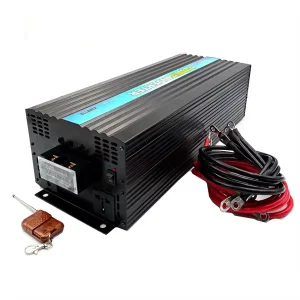
Wholesale High Power 5kw 5000 Watt Pure Sine Wave Inverter DC AC Off-Grid Converter 10000W Peak Power Solar Power Inverter for House Water Pump Exporters
View Product Details →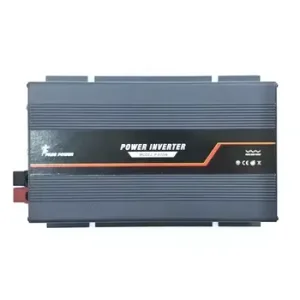
ODM CE Certified 600W Power Pure Sine Wave Home Use Car Inverter Single Output DC to AC 12V to 110V 12V 110V Invertor & Converter Manufacturer
View Product Details →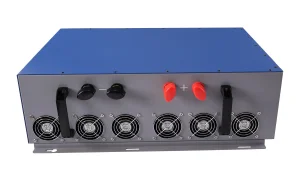
OEM CE ROHS 12000W Off-Grid Pure Sine Wave Inverter 24V 48V DC 190V 380V 3-Phase 24000W Peak Power Inverter 3-Year Warranty for Solar System
View Product Details →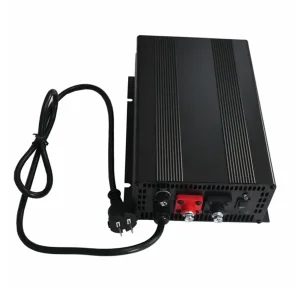
Custom Factory Sell 3 Stages 12V 70A Max output current Intelligent Charger Maili Smart Charger for Home Use With LED indicator Suppliers
View Product Details →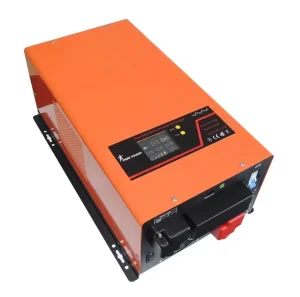
OEM Maili 6KW Hybrid Solar MPPT Inverter Low Frequency 48VDC to 220VAC 6000W Off-grid Pure Sine Wave Single DC To AC Inverter Converter
View Product Details →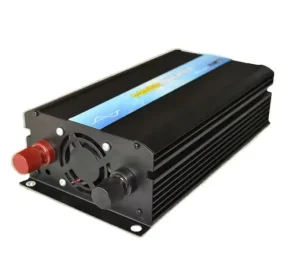
Cheap Maili 800W DC to AC Pure Sine Wave Inverter 24VDC Input 220VAC & 12VDC Output for Home Use and Solar Power System Manufacturer
View Product Details →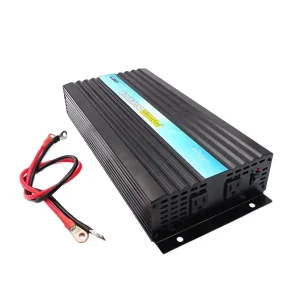
Wholesale CE Certified 500W Pure Sine Wave DC to AC Inverter Soft Start Power Supply 12V to 230V New Program PCB Board Soft Start Converter
View Product Details →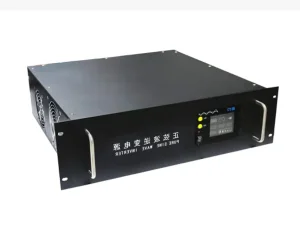
Cheap Maili Rack-mounted 230±3%V AC 6000W Pure Sine Wave Charging Inverter RM-6000W 95% Efficiency Electric Suitable for Home/Office
View Product Details →A rigorous physical and electronic engineering comparison detailing why GaN semiconductors outperform standard Si-MOSFETs across switching speed, power density, and operational thermal limits.
| Physical / Electrical Parameter | Silicon (Si) Legacy MOSFETs | Gallium Nitride (GaN) HEMT | Engineering Benefit in GaN Systems |
|---|---|---|---|
| Bandgap Energy (eV) | 1.1 eV | 3.4 eV (Wide Bandgap) | Higher breakdown voltage capacity per unit substrate thickness. |
| Breakdown Electric Field (MV/cm) | 0.3 MV/cm | 3.3 MV/cm (11x higher) | Allows ultra-thin, low-resistance conduction channels. |
| Electron Mobility (cm²/V·s) | 1,500 | 2,000 | Significantly reduced conduction losses ($R_{DS(on)}$ per unit area). |
| Reverse Recovery Charge ($Q_{rr}$) | High (Substantial losses) | Zero ($Q_{rr} \approx 0$) | Eliminates primary switching loss in hard-switched bridge topologies. |
| Typical Switching Frequency | 50 kHz – 150 kHz | 500 kHz – 3.0 MHz | Dramatically downsizes planar transformers and inductors. |
| Volumetric Power Density | 0.8 – 1.2 W/cm³ | 3.0 – 4.5 W/cm³ | Enables ultra-compact form factors for travel and fleet chargers. |
By utilizing GaN devices in ACF topologies, leakage energy stored in the transformer magnetizing inductance is recycled back to the output rather than dissipated as heat across a passive snubber. This achieves Zero Voltage Switching (ZVS) across varying load profiles.
For power levels above 100W up to multi-kilowatt off-grid inverters, GaN-based LLC resonant converters operate at constant high efficiency near the resonant frequency, minimizing electromagnetic interference (EMI) and harmonic distortion.
Eliminating the traditional full-wave diode bridge rectifier, Totem-Pole Power Factor Correction utilizing zero $Q_{rr}$ GaN transistors raises AC-to-DC front-end efficiency from ~95% to over 98.8%, drastically lowering thermal stress inside sealed enclosures.
Inside the operational workflows of leading GaN charger factories: How automated Surface Mount Technology (SMT), automated optical inspection (AOI), and scale achieve disruptive wholesale pricing.
Navigating the global power electronics supply chain requires a nuanced understanding of manufacturing overheads. When sourcing from verified, direct-factory suppliers, B2B buyers tap into advanced automated SMT assembly infrastructure capable of placing thousands of micro-components per hour with sub-micron accuracy.
Cheap GaN chargers produced under stringent ISO 9001:2015 frameworks leverage **Integrated GaN Power ICs** (which combine the GaN HEMT, gate driver, logic, and protection circuits onto a single die). This integration eliminates complex discrete drive circuitry, reducing component count on the PCB by up to 30%, minimizing potential points of mechanical failure, and shortening cycle times.
Comparative analysis of cost distribution in a 65W fast charger unit manufactured in volume:
*Net Result: The passive component and enclosure savings in GaN production offset the raw semiconductor die cost, delivering lower overall system-level manufacturing costs at scale.
How GaN power architectures and hybrid charging inverters solve high-density power delivery challenges across consumer, commercial, industrial, and off-grid verticals.
High-wattage (65W – 240W) multi-port desktop and wall power adapters utilizing dynamic Intelligent Power Allocation (IPA). Simultaneously charges laptops, tablets, and mobile devices with over 94% efficiency in compact form factors.
Ruggedized, IP65/IP67 rated onboard and off-board chargers for e-bikes, delivery fleets, and Automated Guided Vehicles (AGVs) operating in warehouse and logistics hubs requiring rapid, high-reliability battery replenishment.
Pairing wide-bandgap switching stages with low-frequency toroidal transformers or high-frequency solar MPPT topologies to power residential air conditioners, water pumps, emergency vehicles, and marine electrical systems.
48V DC power distribution architectures utilizing GaN rectifiers to reduce thermal cooling loads in remote telecom cabinets and dense server racks, maximizing operational uptime and reducing cooling energy expenses.
Ensuring seamless market entry into North America, the European Union, Asia-Pacific, and emerging markets through rigorous certification frameworks and local grid adaptation.
Direct-factory units engineered for 110V/120V 60Hz grid specifications meet **UL 62368-1** (Audio/video, information and communication technology equipment) and **FCC Part 15 Class B** electromagnetic compatibility standards.
UL 62368-1 · FCC Class B · DoE Level VI EfficiencyCompliant with 230V 50Hz grid requirements, featuring full **CE LVD** (Low Voltage Directive), **CE EMC**, **UKCA**, and **RoHS/REACH** environmental chemical compliance for hazardous substance reduction.
CE LVD/EMC · UKCA · RoHS · REACH CompliantSupporting **PSE** (Japan), **KC** (Korea), **RCM** (Australia/New Zealand), and **CB Scheme** certification reports to allow seamless brand localization and expedited regional approval processes.
CB Scheme · PSE · KC · RCM CertifiedInstantaneous hardware clamping against grid voltage spikes.
Cycle-by-cycle cycle limiting and auto-recovery protection.
NTC thermistor monitoring with active thermal throttling.
Sub-microsecond latch-off protection to prevent component damage.
Pioneering advancements in wide-bandgap semiconductor fabrication, integrated drive ICs, and bidirectional power conversion topologies.
Widespread industrial adoption of Enhancement-mode (E-mode) GaN HEMTs monolithically integrated with drivers, electrostatic discharge (ESD) protection, and zero-voltage-detection on standard 8-inch silicon substrates.
Transition towards dual-gate bidirectional GaN switches capable of blocking voltage in both directions. Enables single-stage AC-to-DC/DC-to-AC bidirectional charging for Vehicle-to-Grid (V2G) and microgrid energy storage.
Commercial maturation of Vertical GaN devices built on native GaN substrates, unlocking 1200V+ breakdown ratings with ultra-low capacitance for heavy industrial EV traction inverters and megawatt grid utility systems.
Advanced rack-mounted chargers, ultra-thin portable power converters, hybrid solar MPPT systems, and wind turbine power solutions.
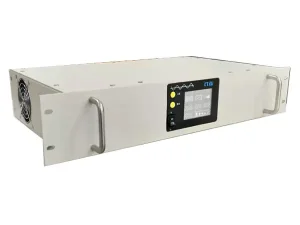
Best Maili 120V/230V AC 3KW Rack-mounted Pure Sine Wave Charging Inverter RM-3000W 95% Efficiency Office/Caravan Use with Multiple Protection
View Product Details →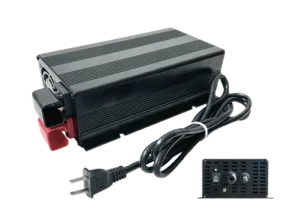
Wholesale Maili Intelligent Small Portable 12V 50A 3 Stages smart Charger for Home Solar System and Vehicle Use Multiple modes are selectable
View Product Details →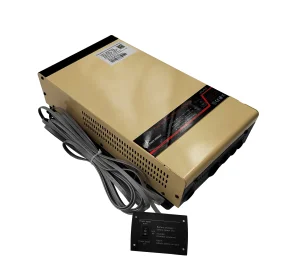
CE Certification New Tpye Ultra-thin 1000W 12v to 220v Offgrid Pure Sine Wave Power Inverter with AC Charger Wall Mouted Ups for RV Motorhom Truck
View Product Details →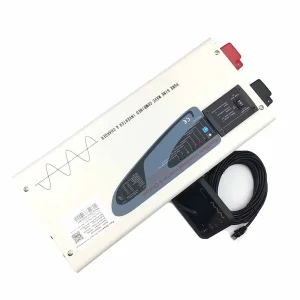
Cheap CE RoHS CB SAA Peak 9000w Rated 3000w Pure Sine Wave Solar Hybrid Power Supply Inverter with 60a MPPT Controller Supplier Exporter
View Product Details →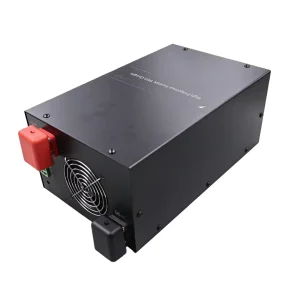
High-Quality CE ROHS 2000w high frequency pure sine wave inverter with 90A battery charger Manufacturers Product
View Product Details →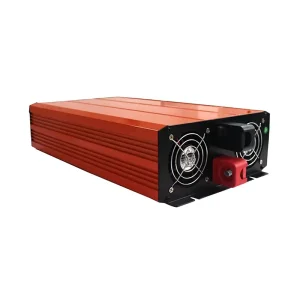
Custom CE ROHS 3kw Wind Turbine Inverter New Design DC to AC 12v 24v 220v Pure Sine Wave High Frequency Power Inverter Manufacturers
View Product Details →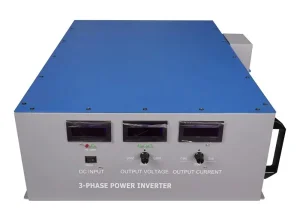
Best ML-10KW-3P CE CB Rohs 3 Phase 10kva High Frequency Power 24v 48v Dc to 190v 380v Ac Out 10kw Inverter Price for Off-grid Tie Factory
View Product Details →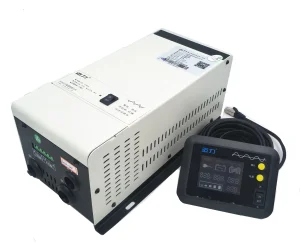
Cheap Maili 600w Ultra-thin Portable Intelligent DC AC Power Inverter Charger 24V to 230V for Home Solar System & Vehicle Use Factory
View Product Details →Addressing core procurement questions regarding wholesale pricing, OEM customization, thermal safety limits, and factory audits.
