Tier-1 Photovoltaic Engineering Report

Cheap Grid Tie Solar Inverter Manufacturer & Manufacturers

Demystifying Cost-Effective Commercial & Residential Grid-Tied Inverter Manufacturing: Value Engineering, Global Supply Chain Dynamics, and LCOE Optimization from China's Advanced Electronics Hubs.

Featured Commercial & Industrial Inverter Solutions

Explore our factory-direct, highly efficient grid-tie and hybrid solar power conversion platforms engineered for maximum ROI and long-term grid compliance.
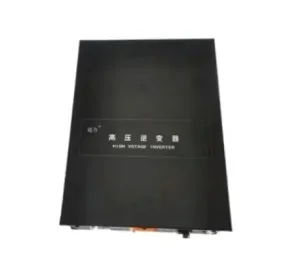
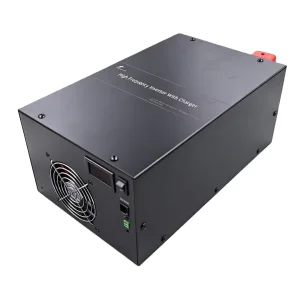
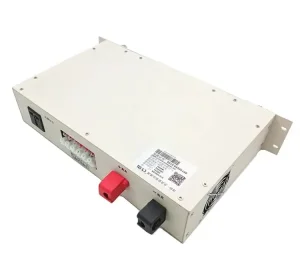
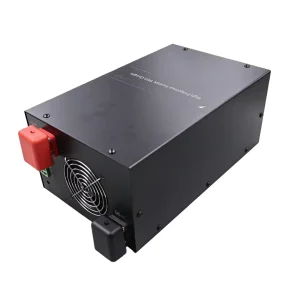
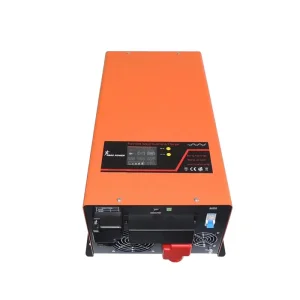
ODM Maili 4000W 230VAC Charging Inverter
ODM Maili 4000W 230VAC±3% Single Rack-mounted Pure Sine Wave Inverter
View Product Specifications
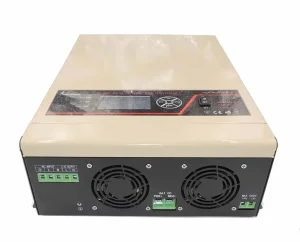
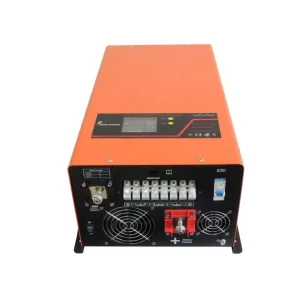
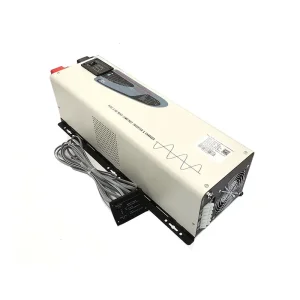
PASSPOWER All-in-One Hybrid Solar Inverter 5.5KVA
PASSPOWER All-in-One Hybrid Solar Inverter 5.5KVA 5500W MPPT 100A
View Product Specifications
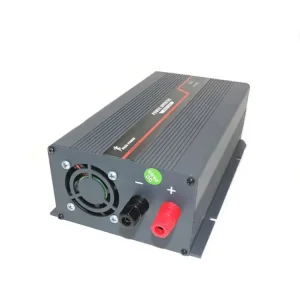
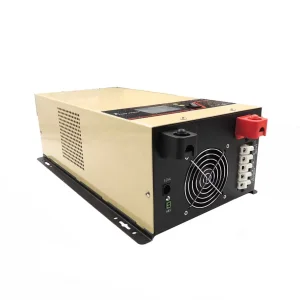
300w 24v DC to 110v AC Mini Inverter
300W 24V DC to 110V AC Mini Smart Off-Grid Pure Sine Wave Inverter
View Product Specifications
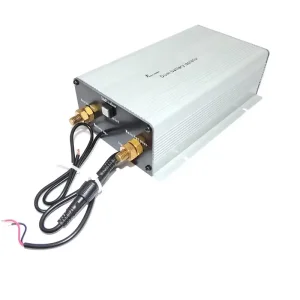
Custom Maili 10KW High Voltage DC Inverter
Custom Maili CE ROHS 10KW High Voltage DC 540V AC 220V Pure Sine Inverter
View Product Specifications
OEM Maili Dual Battery Isolator
OEM Maili BS-173 Dual Battery Isolator 12/24V 400A Auto Switch
View Product Specifications
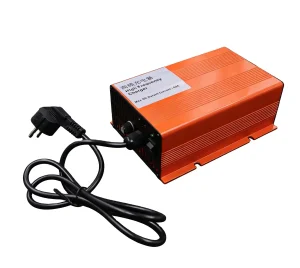
OEM Maili Portable High-frequency Charger
OEM Maili Portable High-Frequency Charger 110V/220V AC to 12V DC 60A
View Product Specifications
3000w high frequency pure sine wave inverter
CE Certified 3000W High Frequency Pure Sine Wave Inverter + 110A Charger
View Product Specifications
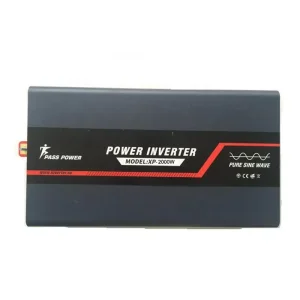
Maili 2000W Power Inverter
Maili 2000W Single-Phase DC to AC Pure Sine Wave Inverter with LCD
View Product Specifications

Global Grid-Tie Solar Inverter Market: Procurement & Manufacturing Dynamics

An in-depth technical analysis of cost structure optimization, power density advances, and Tier-1 factory capabilities for international solar EPCs and distributors.

99.2%
Max Conversion Efficiency
1500V
DC Bus Voltage Standard
< 3%
Total Harmonic Distortion (THD)
25 Yrs
Designed Operational Lifespan
1. The Shift Toward Cost-Effective High-Efficiency Photovoltaic Conversion

The global solar energy ecosystem is undergoing a fundamental structural transition. As energy markets achieve grid parity across residential, commercial, industrial (C&I), and utility-scale sectors, the economic spotlight has intensely focused on reducing the Levelized Cost of Energy (LCOE). At the epicenter of this economic evolution is the grid-tie solar inverter—the critical gateway responsible for converting Direct Current (DC) generated by photovoltaic (PV) arrays into grid-compliant Alternating Current (AC).

When enterprise procurement managers search for a "cheap grid tie solar inverter manufacturer," the industry definition of "cheap" has shifted. Today, top-tier global buyers do not seek sub-standard components; rather, they demand value-engineered power electronics that deliver high power density, exceptional thermal performance, and bulletproof grid protection at minimized capital expenditure (CAPEX). China's OEM and ODM manufacturing hubs have responded by implementing highly automated Surface Mount Technology (SMT) lines, Silicon Carbide (SiC) semiconductor topologies, and ultra-dense magnetic designs that drastically lower unit costs while improving reliability.

Key Information Gain: Defining "Value Engineering" vs. Low Quality

True manufacturing cost reduction stems from topology optimization (e.g., transformerless HERIC or H6 bridge topologies), bulk component purchasing power, and automated optical inspection (AOI), NOT from compromising on capacitor operational lifespans or thermal dissipation capacity.

2. Anatomy of Low-Cost High-Performance Inverter Topologies

Modern grid-tie string inverters engineered by high-volume Chinese factories leverage sophisticated topologies designed to maximize yield under complex environmental conditions. Below is a comparative technical matrix illustrating how modern transformerless designs achieve lower bill-of-materials (BOM) costs while delivering superior conversion metrics.

Inverter Architecture Typical Efficiency BOM Cost Metric Weight & Thermal Load Ideal Application Scenario
Transformerless (HERIC / H6 Topology) 98.5% - 99.2% Optimized (Lowest) Ultra-light, passive/forced air cooling C&I Rooftops & Grid-Tied Utility Systems
High-Frequency Isolated Hybrid 95.0% - 96.5% Moderate Compact, intelligent fan management Residential Off-Grid & Microgrid Backup
Low-Frequency (Toroidal Transformer) 90.0% - 94.0% Higher (Copper Heavy) Heavy duty, high surge capacity Heavy Industrial Motor Drives & Marine/RV
1500V DC Utility String Inverter 99.0% + Lowest per Watt ($/W) High density, centralized thermal ducting Large Scale Ground-Mounted Solar Farms

Why China Factory Efficiency Dictates Global Solar Inverter Pricing

Unpacking the structural manufacturing advantages, localized supply chain density, and technological clusters driving cost leadership in power conversion electronics.

Supply Chain Density

Over 85% of global passive power components, semiconductor packaging, magnetic toroidal cores, and extruded aluminum heat sinks are produced within a 100-kilometer radius in East and South China manufacturing zones.

Mass SMT Automation

High-speed Yamaha and Panasonic SMT lines eliminate manual soldering errors, reducing labor expenses to under 4% of total unit manufacturing cost while ensuring zero defect rates on high-voltage control boards.

Full-Load Burn-In QC

Tier-1 OEM plants utilize automated burn-in chambers that subject every inverter to 100% full-power thermal stress cycling at 50°C ambient temperatures for 4 to 12 hours prior to international shipment dispatch.

Unlocking OEM/ODM Flexibility for International B2B Brands

For solar brands in North America, Europe, Australia, and South America, partnering directly with experienced Chinese inverter factories provides unmatched custom engineering. Inverter manufacturers do not merely produce standardized off-the-shelf boxes; they offer deep modular customization across 8 critical dimensions:

  • Wide DC Input Range Tuning: Adjusting Maximum Power Point Tracking (MPPT) voltage windows (e.g., 80V–550V or 200V–1000V) to match specific panel string sizing.
  • Custom AC Grid Code Firmware: Pre-loading country-specific grid compliance protocols such as German VDE-AR-N 4105, US UL 1741 SB, Italian CEI 0-21, or Australian AS/NZS 4777.2.
  • Integrated Arc Fault Circuit Interruption (AFCI): AI-powered DC arc detection algorithms that de-energize circuits within 2.5 milliseconds upon detecting micro-arcing.
  • Enclosure & Ingress Customization: Die-cast aluminum housings engineered to IP65 or IP66 standards with anti-corrosion C5 marine grade powder coating for harsh coastal installations.

Localized Application Scenarios for Grid-Tie Inverters

Real-world deployment analysis across diverse global climatic zones and infrastructure environments.

European C&I Commercial Rooftops

Focused on high efficiency during low-irradiance winter months and strict grid injection controls. Inverters must support RS485/Ethernet communication, Modbus RTU, and dynamic zero-export limits.

Southeast Asian Industrial Microgrids

High humidity and ambient heat require specialized PCB conformal coatings, dual-fan smart cooling arrays, and anti-PID (Potential Induced Degradation) modules to maintain maximum peak power tracking.

North American Farm & Agrivoltaics

Requires split-phase (120V/240V) or 208V/480V three-phase output with heavy-duty surge suppression, rapid shutdown (NEC 2020 690.12) integration, and rugged outdoor NEMA 4X rated enclosures.

Future Technology Trends: The 2025–2030 Inverter Roadmap

How next-generation semiconductor physics, AI edge computing, and Virtual Power Plant (VPP) software are reshaping the solar power manufacturing landscape.

1. Silicon Carbide (SiC) and Gallium Nitride (GaN) Dominance

Traditional silicon IGBTs (Insulated Gate Bipolar Transistors) are rapidly approaching their physical switching speed and thermal limits. Leading grid-tie inverter manufacturers are transitioning to SiC MOSFET switches. SiC reduces switching losses by up to 70%, enables switching frequencies above 100 kHz, and reduces the physical footprint of internal inductors and capacitors by 40%. This technological leap significantly shrinks shipping dimensions, lowering overseas container freight costs per megawatt shipped.

2. AI-Driven Smart Monitoring & Grid Support

Modern grid-tie inverters are no longer passive power conversion boxes; they function as intelligent micro-computers at the grid edge. Equipped with ARM Cortex microprocessors, modern string inverters perform real-time I-V curve scanning in under 5 seconds to identify panel cracking, shading, or diode degradation. Furthermore, native integration with VPP (Virtual Power Plant) protocols allows utilities to remotely control active and reactive power (Volt-VAR / Watt-Frequency response) to stabilize regional grid voltages.

Frequently Asked Questions (FAQ) for Commercial Procurement

Expert answers addressing technical specifications, factory selection criteria, and international compliance standards for solar distributors and project developers.

How can a "cheap" grid tie solar inverter manufacturer maintain tier-1 quality?
Cost reduction in high-volume Chinese manufacturing centers is achieved through extreme supply chain integration, automated SMT lines, bulk component procurement (e.g., buying millions of MOSFETs directly from semiconductor foundries), and optimized transformerless topologies. Lower costs do not imply inferior components; it represents lean manufacturing efficiency and low margins at factory scale.
What is the difference between On-Grid, Off-Grid, and Hybrid Solar Inverters?
Grid-Tie (On-Grid) Inverters synchronize directly with the utility grid frequency and voltage, feeding power into the local grid without requiring batteries. Off-Grid Inverters create an isolated AC island, requiring battery storage banks to operate. Hybrid Inverters combine both capabilities, managing PV arrays, battery storage, local loads, and utility grid connections seamlessly with intelligent power-flow prioritization.
Why is MPPT Efficiency crucial when evaluating grid-tie inverter specifications?
Maximum Power Point Tracking (MPPT) algorithms dynamically calculate the optimal voltage and current point of a solar array under fluctuating irradiance and temperature conditions. A high static and dynamic MPPT efficiency (>99.5%) ensures that nearly 100% of available solar energy is harvested, directly driving up daily kilowatt-hour (kWh) energy yields and improving system payback time.
What international certifications should buyers demand from Chinese inverter factories?
For global compliance, enterprise buyers should verify certification according to local market requirements: CE and RoHS for Europe; UL 1741, IEEE 1547, and FCC for North America; AS/NZS 4777.2 for Australia; along with factory-level ISO 9001:2015 Quality Management and ISO 14001 Environmental Management certifications.
How do inverter manufacturers ensure long lifespan under extreme outdoor conditions?
Tier-1 manufacturers utilize heavy die-cast aluminum heat sinks, internal component potting, IP65 or IP66 sealed enclosures, high-grade 105°C rated Japanese solid capacitors, and smart forced-air cooling fans with IP68 waterproof ratings to guarantee 10 to 25 years of continuous operational service.

Complete Clean Energy & Battery Conversion Equipment

Browse our extended portfolio of multi-stage battery chargers, high-frequency power inverters, and industrial battery isolation units.
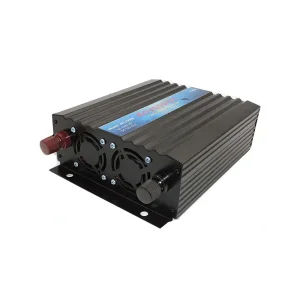
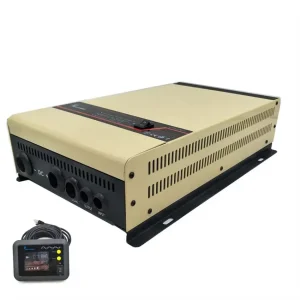
OEM 3 Stages Intelligent Battery Charger
OEM 3-Stage Intelligent Battery Charger AC220V DC24V 30A Lithium/Lead-Acid
View Product Specifications
Maili High Efficiency 95% Pure Sine Wave Inverter Charger
Maili 95% High Efficiency Pure Sine Wave Inverter Charger 1500W 24V/110V
View Product Specifications
Maili 4KW Hybrid Solar Power Inverter
Maili 4KW Hybrid Solar Power Inverter 4000W 24V 230V MPPT 60A LCD
View Product Specifications
2000w high frequency pure sine wave inverter
High-Quality 2000W High Frequency Inverter with 90A Battery Charger
View Product Specifications
3000w Low Frequency Dc to Ac Inverter
3000W Low Frequency DC to AC Inverter with Toroidal Transformer
View Product Specifications
Custom Maili 5kw Pure Sine Wave Inverter
Custom Maili 5KW Low Frequency Pure Sine Wave Inverter + LCD Display
View Product Specifications
Wholesale MAILI 3KW High-Frequency Inverter
Wholesale MAILI 3KW High-Frequency Pure Sine Wave Inverter Charger
View Product Specifications
OEM 3000 Watt Pure Sine Wave Off-grid Solar Inverter
OEM 3000W Pure Sine Wave Off-Grid Solar Inverter 24V to 220V RV Power
View Product Specifications