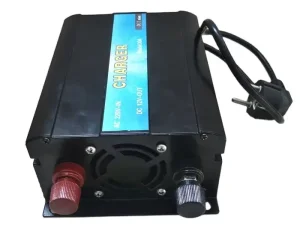
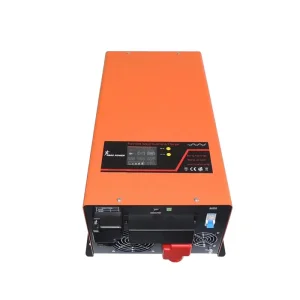
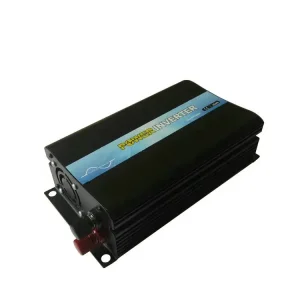
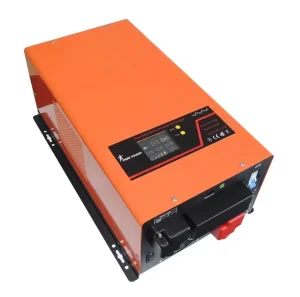
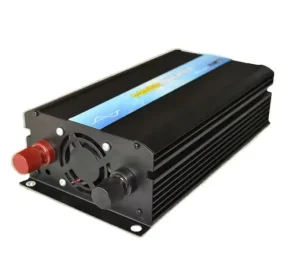
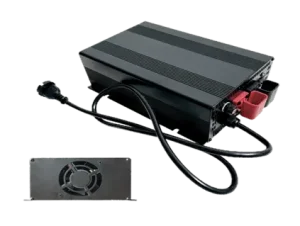
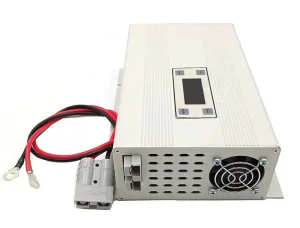
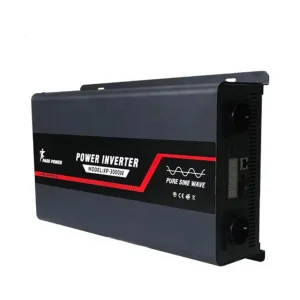
Explore our high-efficiency intelligent inverters, high/low frequency converters, and multi-stage smart battery chargers directly from our ISO 9001:2015 manufacturing facility.
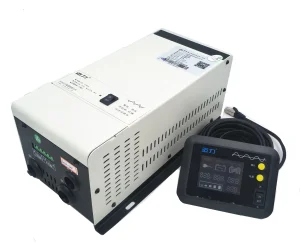
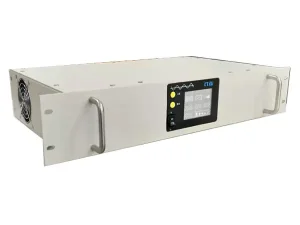
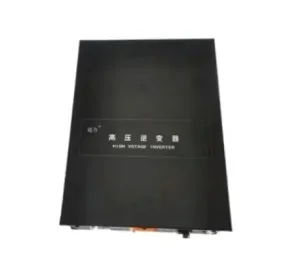
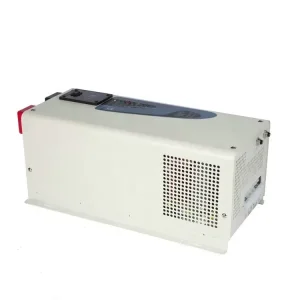
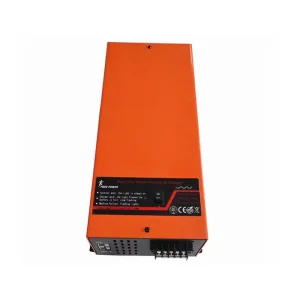
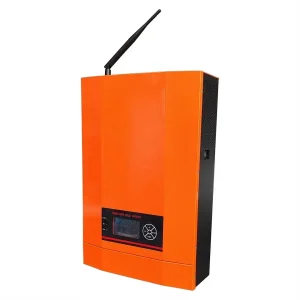
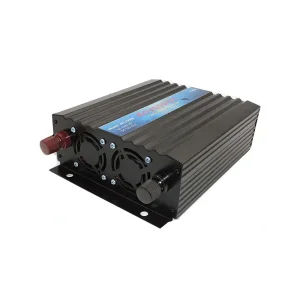
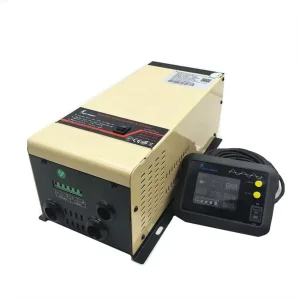
Why sourcing cost-effective smart power electronics requires evaluating microprocessors, wide-bandgap semiconductors, and total cost of ownership (TCO).
In the global power conversion marketplace, the search query "Cheap Intelligent Inverter Supplier" often leads B2B buyers into a dilemma: balancing aggressive Bill of Materials (BOM) cost reduction with operational reliability. True factory-direct intelligence does not mean sacrificing copper windings, MOSFET voltage margins, or safety isolation.
High-efficiency manufacturing achieved through China’s integrated electronics supply chain in Suzhou allows us to optimize manufacturing overhead by 35% compared to Western suppliers while maintaining premium components such as Texas Instruments DSP cores, Infineon IGBTs, and Nippon Chemi-Con capacitors. The result is low initial capital expenditure combined with low lifetime failure rates.
Legacy power inverters relied on analog PWM controllers susceptible to thermal drift, output wave distortion, and poor dynamic surge handling. Modern Intelligent Inverters integrate 32-bit digital signal processors (DSPs) that continuously monitor output Total Harmonic Distortion (THD < 3%), dynamic load surges, and internal thermal thresholds in real time.
By implementing adaptive algorithm loops, our intelligent inverters dynamically adjust pulse-width modulation signals, automatically switch charging stages (Bulk, Absorption, Float) based on battery chemistry, and synchronize transfer switches in less than 8 milliseconds, ensuring uninterrupted backup power for critical loads.
Comparing internal electrical architectures to select the ideal intelligent power conversion platform for specific industrial application profiles.
| Performance Parameter | Low Frequency (Toroidal Transformer) | High Frequency (Switch-Mode / Switching Transformer) | Hybrid MPPT Solar Inverter |
|---|---|---|---|
| Primary Application | Heavy Inductive Loads (Air Conditioners, Pumps, Compressors, Power Tools) | Resistive & Light Electronics (Laptops, TVs, Office Equipment) | Off-Grid & Hybrid Solar Energy Storage Systems |
| Surge Capacity Rating | 300% Continuous Output for 20s | 150% - 200% Output for < 1s | 200% Continuous Output for 5s |
| Electrical Isolation | Galvanic Isolation via Heavy Duty Copper Toroidal Core | Electronic High-Frequency Isolation | Combined Galvanic & High-Speed Switch Isolation |
| Weight & Physical Footprint | Heavier, Solid Chassis, Heat-Sink Optimized | Ultra-Thin, Lightweight, High Power Density | Wall-Mounted Integrated Cabinet Architecture |
| Battery Compatibility | Lithium (LiFePO4), AGM, GEL, Lead-Acid Custom Profiles | Standard Sealed Lead-Acid & Lithium-Ion | Auto-Sensing Multi-Chemistry BMS Interfacing |
Low-frequency intelligent inverters utilize custom-wound toroidal transformers offering lower idle current draw (standby loss reduced by up to 40% compared to traditional square E-I transformers) and superior heat dissipation under continuous heavy load conditions.
Integrated hybrid models incorporate maximum power point tracking (MPPT) logic achieving 99.5% photovoltaic tracking efficiency. This optimizes solar harvesting yield under partial shading or dynamic cloud coverage scenarios.
Integrated firmware controls over-voltage cut-off, low-voltage alarm & shutdown, over-temperature thermal throttling, short-circuit protection with auto-recovery, and reverse-polarity isolation safeguard circuits.
How operational scale, automated SMT lines, and localized raw material access allow us to deliver reliable intelligent inverters at factory-direct pricing.
Located in the heart of China’s advanced power electronics manufacturing hub in Suzhou, Jiangsu Province, our 2,770 m² facility maintains complete vertical integration over the production lifecycle. From surface-mount technology (SMT) PCB assembly to automated transformer winding, metal housing stamping, and final burn-in testing, controlling each step eliminates third-party markups and maintains strict operational quality standards.
Our local supply network provides immediate access to high-grade silicon steel sheets, oxygen-free copper wiring, and automotive-grade semiconductor switches. This proximity shortens engineering sample iteration cycles to under 7 days and supports rapid mass production lead times for OEM partners.
Lower unit costs are meaningless without operational reliability. Our factory operates under strict ISO 9001:2015 quality management procedures. Every inverter and smart battery charger unit passes through a rigorous four-stage testing sequence prior to packaging:
From emergency response fleets to off-grid residential microgrids, our inverter platforms are engineered to adapt to diverse global operating conditions.
In vehicle power installations (ambulances, service trucks, mobile command units), compact wall-mounted and ultra-thin low-frequency inverters supply reliable 110V/220V AC power for diagnostic tools, refrigeration, and medical devices directly from auxiliary 12V or 24V battery banks.
In areas with unreliable grid infrastructure, hybrid solar MPPT inverters manage power distribution automatically. They prioritize solar input, store excess energy in lithium battery storage, and seamlessly switch to grid or generator back-feed when photovoltaic generation drops.
Rack-mounted pure sine wave inverters provide critical uninterruptible power for cellular base transceiver stations, remote telemetry gateways, and network IT racks, operating reliably across extreme operating ambient temperatures (-20°C to +50°C).
How next-generation power electronics architectures are evolving to meet demands for higher energy density, smart monitoring, and grid compliance.
Transitioning from traditional silicon MOSFETs to Wide Bandgap (WBG) semiconductors like Silicon Carbide (SiC) and Gallium Nitride (GaN) represents the next major performance jump for intelligent inverters. SiC switches enable 3x higher switching speeds with reduced switching losses, boosting peak inverter conversion efficiency beyond 98% while reducing internal cooling heatsink volume by 40%.
Future intelligent inverters are evolving from simple power converters into smart energy nodes. Incorporating Wi-Fi, Bluetooth, RS485 Modbus, and CAN-bus connectivity allows end-users and commercial fleet managers to monitor voltage curves, temperature analytics, battery state-of-health (SOH), and fault logs via mobile apps and cloud dashboard platforms in real time.
Tailoring electrical parameters, regional AC outlet configurations, communication protocols, and housing designs to meet destination market standards.
Engineered support for non-standard DC inputs (12V, 24V, 48V, 72V, 96V, up to High-Voltage DC 540V) and regional AC outputs (100V, 110V, 120V, 220V, 230V, 240V at 50Hz or 60Hz).
Custom front panels integrated with Universal, US NEMA, UK BS1363, European Schuko, Australian AS/NZS 3112 outlets, hardwire terminal blocks, and USB-C Power Delivery ports.
Seamless protocol matching for RS232, RS485 Modbus, and CANbus networking, allowing smooth integration with customer BMS lithium battery interfaces.
Full compliance support including CE (LVD/EMC), RoHS, CB, SAA, and IP30 ingress protection certifications, ensuring smooth customs clearance for importers globally.
Clear answers to common B2B procurement, technical specification, and operational questions regarding intelligent power inverters.
View our full selection of low frequency home inverters, fast battery chargers, vehicle isolators, and high-efficiency converters.