Direct Factory Sourcing | ISO 9001:2015 Certified Manufacturing | Global Export Standards
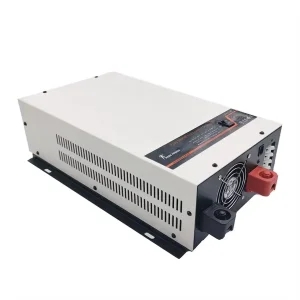
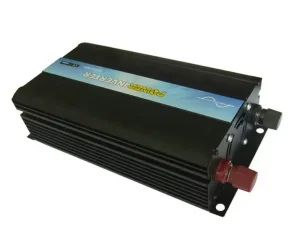
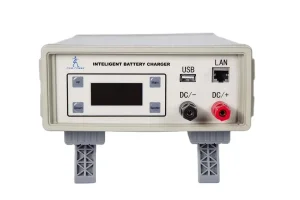
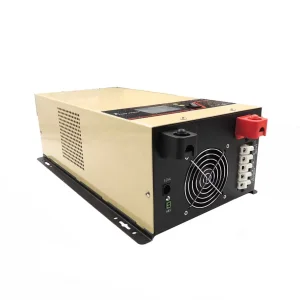
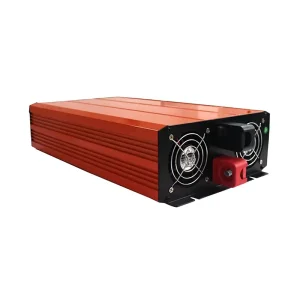
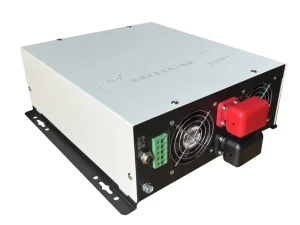
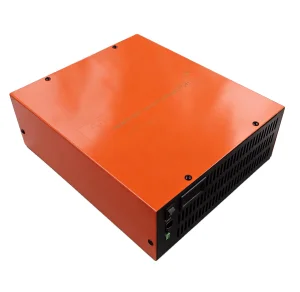
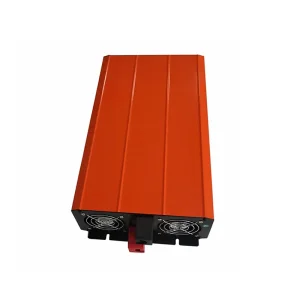
In the modern industrial power landscape, searching for a "Cheap Intelligent Lead Acid Battery Charger Factory & Exporters" is no longer an exercise in finding stripped-down, budget-grade analog power supplies. Instead, global B2B procurement managers, automotive OEMs, and off-grid power system integrators require cost-optimized, highly sophisticated digital power conversion platforms. The term "cheap" in an advanced manufacturing context translates directly to high manufacturing efficiency, low Total Cost of Ownership (TCO), minimized warranty returns, and direct-from-factory economies of scale.
Lead-acid technology—encompassing Flooded, Sealed (SLA), Absorbed Glass Mat (AGM), Gel, and Enhanced Flooded Batteries (EFB)—remains the global workhorse for industrial mobility, commercial marine energy, backup UPS infrastructure, and off-grid renewable storage. However, premature battery degradation due to sulfation, acid stratification, and thermal runaway costs global industries billions annually. Specialized OEM factories, such as Suzhou Maili Electrical Appliance Co., Ltd. (Pass Power), bridge the gap between initial hardware expenditure and long-term operating efficiency by integrating multi-stage micro-controller unit (MCU) intelligence directly into cost-effective charging topographies.
Market Drivers, Regional Adoption, and Cost Optimization Dynamics in Lead-Acid Sourcing
Despite the rapid rise of lithium chemistry, global lead-acid battery demand continues to grow at a steady CAGR of 4.8%. Regions across North America, Europe, Australia, and Central Asia heavily rely on 12V, 24V, and 48V lead-acid banks for cold-weather starting, heavy-duty material handling, and remote telecom backup where lithium battery management systems (BMS) struggle with thermal cutoffs.
Low-cost traditional analog chargers rely on brute-force linear transformers that generate massive heat waste, overcharge lead-acid plates, and boil off electrolyte fluids. Modern China export factories leverage high-frequency Switched-Mode Power Supply (SMPS) design, cutting copper and aluminum enclosure mass by up to 60% while dramatically reducing shipping freight rates and unit costs.
Global exporters must navigate stringent compliance standards, including CE, RoHS, CB, SAA, and California Energy Commission (CEC) limits. Intelligent lead-acid chargers optimized for international markets incorporate standby zero-watt power modes and auto-detect float management to fulfill stringent energy conservation mandates without inflating wholesale prices.
How Algorithmic Pulse Repair and Multi-Profile Curves Eliminate Sulfation and Battery Failure
To achieve optimal charge acceptance without thermal stress, high-grade factory chargers utilize proprietary 8-stage automatic charging profiles controlled via high-speed 8-bit or 32-bit Microcontroller Units (MCUs). Below is the precise engineering breakdown of how these stages protect lead-acid battery chemistries:
| Stage | Charging Phase | Technical Mechanism | Primary Industrial Benefit |
|---|---|---|---|
| Stage 1 | Desulfation (Pulse Repair) | High-frequency voltage pulses break down crystalline lead sulfate ($PbSO_4$) on depleted plates. | Restores deeply discharged batteries; extends overall cycle life by 200–300%. |
| Stage 2 | Soft Start | Controlled low-current input introduced gradually to test battery voltage stability. | Prevents thermal shock and high current surges into damaged or shorted cells. |
| Stage 3 | Bulk Charge (Constant Current) | Maximum rated current (e.g., 25A/30A) delivered until battery reaches ~80% capacity. | Minimizes downtime; rapidly charges commercial fleets and heavy machinery. |
| Stage 4 | Absorption (Constant Voltage) | Voltage held constant while current tapering down as internal resistance increases. | Ensures full 100% saturation without electrolyte boil-off or outgassing. |
| Stage 5 | Analysis / Battery Test | MCU pauses current for 90 seconds to monitor open-circuit voltage drop rates. | Identifies failing cells, micro-shorts, or invalid state-of-charge retention instantly. |
| Stage 6 | Recondition (Equalization) | Elevated voltage step forces controlled gassing to remix stratified acid layers. | Eliminates acid stratification in Flooded/AGM commercial truck battery banks. |
| Stage 7 | Float Charge | Constant lowered maintenance voltage keeps battery at 100% charge indefinitely. | Safe long-term winter storage; ideal for emergency standby generators & UPS systems. |
| Stage 8 | Pulse Maintenance | Monitors terminal voltage and delivers periodic pulse charges if voltage drops. | Keeps standby power arrays completely fresh with zero risk of overcharging. |
Tailored OEM/ODM Deployments Across Mobile, Maritime, and Industrial Sectors
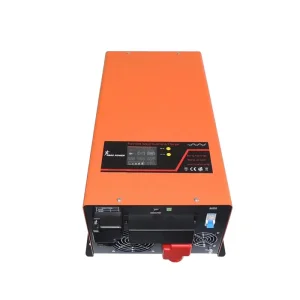
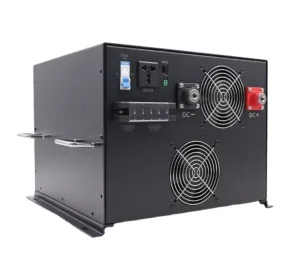
Recreational vehicles require dual-functionality: rugged pure sine wave AC inversion combined with automatic multi-stage lead-acid charging. When connected to shore power or diesel generators, Maili’s integrated QSP and PS Series Inverter Chargers automatically switch modes within 10ms, charging house AGM/Gel battery banks while seamlessly powering air conditioning units, onboard tools, and refrigeration systems.
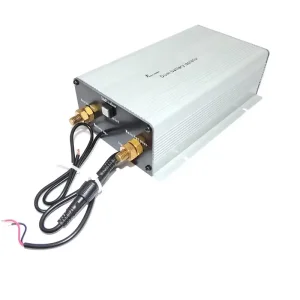
Mission-critical vehicles cannot afford a dead starter battery. Implementing Intelligent Dual Battery Isolators (BS-173 Series) paired with smart lead-acid maintenance chargers allows emergency vehicle alternators to prioritize the primary starter battery before automatically bridging to charge auxiliary lead-acid or lithium equipment batteries. Integrated thermal compensation ensures safe charging under extreme engine-bay temperatures.
In rural agricultural or off-grid telecom installations, lead-acid deep-cycle banks are charged via solar MPPT controllers or wind turbine inverters. Intelligent AC chargers serve as the ultimate system backup: when solar irradiance fails during prolonged bad weather, auto-generator start (AGS) terminals trigger external standby diesel generators, running cheap high-amp lead-acid chargers to restore power banks rapidly.
The Evolution of High-Frequency GaN Switching, IoT Telemetry, and Hybrid Chemistry Adaptability
Next-generation chargers from leading export factories are transitioning from Silicon MOSFETs to GaN switching devices. This hardware upgrade reduces thermal dissipation losses by up to 40%, allowing 12V 30A chargers to shrink to pocketable sizes without sacrificing heat sink thermal mass.
Industrial fleet operators demand remote battery health monitoring. Modern chargers incorporate Modbus, CAN-bus, or Bluetooth mesh protocols, allowing operational personnel to analyze real-time internal resistance ($m\Omega$), cell temperature trends, and cumulative charge throughput remotely via cloud dashboards.
Factory-direct flexibility now allows a single intelligent charger to toggle seamlessly between traditional Flooded, AGM, Gel, Calcium, and $LiFePO_4$ (Lithium Iron Phosphate) settings via digital LCD interfaces, eliminating inventory fragmentation for global wholesale importers.
Suzhou Maili Electrical Appliance Co., Ltd. — Your OEM Sourcing Partner Since 2012
We tailor non-standard DC input voltages (12V, 24V, 48V, up to 96V DC), adjustable charging currents (5A to 50A+), custom AC output sockets (US, EU, UK, AU, Universal), and specialized split-phase or 3-phase high-voltage power topographies based on target market requirements.
From custom aluminum extrusion enclosure colors to silk-screened logos, custom carton packaging, and branded LCD boot screens—we provide turnkey white-label solutions that empower distributors to establish strong local brand equity.
Operating out of a 2,770 m² ISO 9001:2015 certified factory in Suzhou, every single unit undergoes 100% full-load computer-controlled aging tests, automated ATE electrical validation, drop testing, and high-voltage insulation dielectric checks before packing.
Expert Answers to Essential Sourcing and Technical Selection Questions
Explore Full-Line Modular Inverters, Industrial Chargers & Isolators