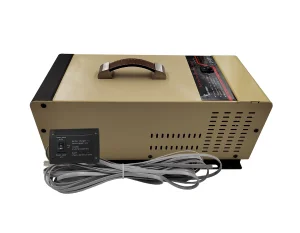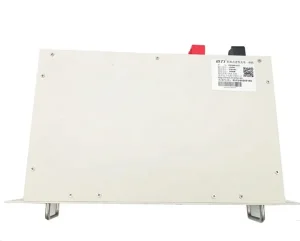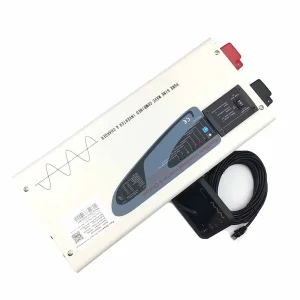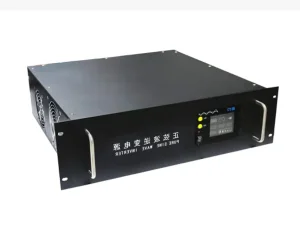
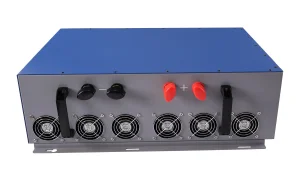
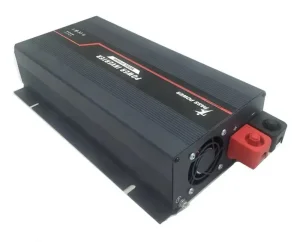
Understanding why heavy-duty inductive applications demand heavy copper-transformer topologies over high-frequency switching technology.
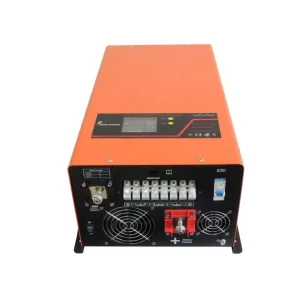
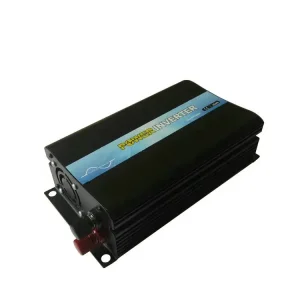
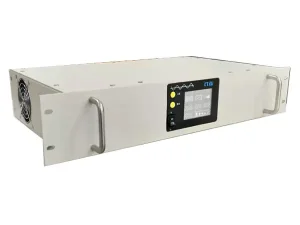
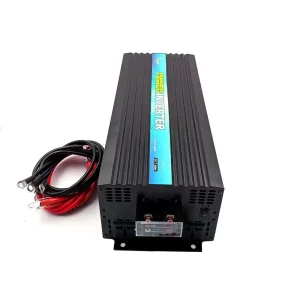
In modern off-grid energy storage, marine vehicle power engineering, and remote industrial microgrids, selecting the proper inversion topology dictates total system lifespan, thermal tolerance, and transient overload capability. While high-frequency (HF) inverters dominate light-duty consumer electronics due to compact size and low initial cost, low frequency (LF) 5000W inverters featuring heavy-duty toroidal transformers remain the undisputed engineering gold standard for driving heavy motor loads, HVAC compressors, electric pumps, and precision industrial power tools.
When sourcing from global OEM manufacturing hubs, evaluating a "cheap low frequency inverter 5000w" requires separating compromised bill-of-materials (BOM) designs from genuinely cost-efficient, high-volume production models. True factory-direct economic leverage is achieved not by eliminating critical copper windings or downgrading MOSFET switching arrays, but by leveraging automated toroidal winding processes, standardized chassis stamping, and direct OEM supply chains.
The core structural distinction lies in how the DC-to-AC conversion step handles current amplification. Low frequency systems elevate low-voltage DC to high-voltage AC directly through a robust line-frequency iron-core or toroidal transformer operating at 50Hz or 60Hz. High-frequency inverters, conversely, utilize multi-stage PWM circuits with small ferrite transformers operating at tens of kilohertz.
| Performance Standard | 5000W Low Frequency Inverter (Toroidal) | 5000W High Frequency Inverter (Ferrite) | Engineering Impact |
|---|---|---|---|
| Inrush / Surge Capability | 300% (Up to 15,000W for 20s) | 150% - 200% (For < 2 seconds) | LF handles locked-rotor current (LRA) of motors effortlessly without trigger shutoff. |
| Galvanic Isolation | Complete magnetic isolation via heavy primary/secondary windings | Electronic isolation via optocouplers and micro-transformers | LF isolates sensitive DC battery banks and communication lines from AC grid transients. |
| Thermal Overload & Tolerance | High thermal mass; slow temperature rise; high heat dissipation surface | Low thermal mass; rapid silicon junction heating under heavy continuous stress | LF excels in extreme ambient environments (-20°C to +55°C) and heavy continuous loads. |
| THD (Total Harmonic Distortion) | < 3% (Clean linear sine wave output) | 3% - 5% (Higher susceptibility to switching noise) | Cleaner power for sensitive medical devices, audio gear, and variable frequency drives. |
| Unit Mass & Size | 25 kg - 45 kg (Heavy duty) | 8 kg - 15 kg (Lightweight) | HF is optimal for portable handheld loads; LF is built for fixed, marine, RV & backup sites. |
Inside the 5000W toroidal core: electromagnetic efficiency, soft-start algorithms, and multi-stage charging design.
Toroidal transformers feature a continuous, gapless grain-oriented silicon steel tape winding. Unlike conventional E-I laminated cores, toroidal geometries eliminate sharp corners, reducing magnetic flux leakage by up to 90% and no-load idle consumption down to less than 1.2 Amps on a 48V DC battery bank.
To mitigate high initial magnetizing inrush current associated with large toroidal cores, advanced supplier designs implement digital microcontroller-driven soft-start algorithms. Microseconds-level phase control ramps up secondary voltage gradually, preventing circuit breakers from tripping during initial cold start.
Integrated 5000W LF inverter-chargers combine dual functionality. The heavy transformer acts reversely during utility grid or generator availability, delivering up to 70A-100A 4-stage intelligent charging (Bulk, Absorption, Float, Equalization) customizable for LiFePO4, AGM, Gel, and flooded lead-acid batteries.
A commercial-grade 5000W low frequency power inverter incorporates comprehensive hardware- and software-level safety suites to ensure uninterrupted operation under adverse grid conditions:
Deploying 5000W low frequency conversion solutions across diverse global grid standards and harsh environments.
Grid Voltage: 120V / 240V Split Phase, 60Hz
Heavy demand in off-grid RV motorhomes, work trucks, and remote cabins. Requires 120V/240V split-phase 5000W low frequency inverters capable of running dual roof-top air conditioners (15,000 BTU) alongside heavy kitchen microwave appliances simultaneously.
Grid Voltage: 230V Single Phase, 50Hz
Driven by residential PV energy storage retrofits, off-grid eco-lodges, and mobile service workshops. Mandatory compliance with CE-LVD, EN62109 safety standards, and strict RoHS material safety directives.
Grid Voltage: 240V Single Phase, 50Hz
High exposure to rugged bush environments, agricultural pumping stations, and off-grid solar microgrids. Inverters require IP30+ structural dust filters, high ambient thermal tolerance up to 50°C, and SAA compliance certificates.
Grid Voltage: 220V/230V Variable Grid
Critical demand for commercial backup solutions due to severe grid instability and brownouts. Requires wide AC voltage input tolerance (160V-275V) to charge batteries safely without disconnecting during grid drops.
Engineered deployment patterns for industrial B2B procurement managers and EPC integrators.
Utility service trucks, mobile repair vans, and emergency relief vehicles require on-demand 120V/230V AC to power air compressors, welding units, and power tools directly from the vehicle engine's auxiliary battery bank. The 5000W low frequency inverter provides the necessary 15,000W peak current to start heavy electric motors without causing voltage drops across the vehicle line.
For off-grid homes utilizing 24V or 48V LiFePO4 energy storage arrays, a 5000W LF unit acts as the primary central power plant. Paired with MPPT solar controllers, it drives continuous household loads including refrigerators, deep freezers, well pumps, induction cooktops, and washing machines while offering automatic generator control interface options via dry contacts.
Cellular towers, remote weather stations, and border security sites in remote geographical zones face severe ambient temperature fluctuations and dust exposure. The toroidal magnetic construction provides complete electrical isolation against lightning surges and line noise, ensuring 99.999% uptime for sensitive telemetry transmitters.
How B2B procurement officers evaluate supplier authenticity, material quality, and real production costs.
Finding a cheap low frequency inverter 5000w supplier does not mean accepting substandard performance. Cost reductions should stem from structural manufacturing optimization, automated winding, localized supply chains, and high-volume component procurement. When auditing Chinese and Asian OEM factories, buyers should inspect the following three critical hardware benchmarks:
Budget suppliers often attempt to replace primary toroidal transformer copper wire with CCA. While CCA reduces upfront cost by 25%, it increases internal resistance, creates excessive heat, and lowers overall efficiency to below 82%. Ensure your supplier guarantees 100% oxygen-free pure copper wire for both primary and secondary windings.
The DC-to-AC switching stage depends heavily on MOSFET current ratings and low Rds(on) values. High-tier factories utilize brand-new MOSFETs from International Rectifier (Infineon), IXYS, or STMicroelectronics. Inspect factory burn-in test procedures to confirm refurbished or unbranded MOSFETs are not used.
A certified ISO 9001:2015 factory subjects every finished 5000W low frequency inverter to at least 4 to 8 hours of continuous 100% full-load burn-in testing inside an elevated temperature chamber (45°C–50°C), followed by dynamic 300% surge shock testing prior to final chassis sealing.
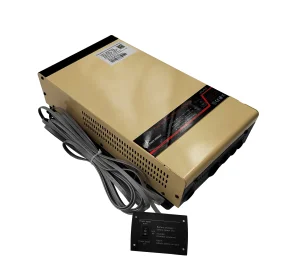
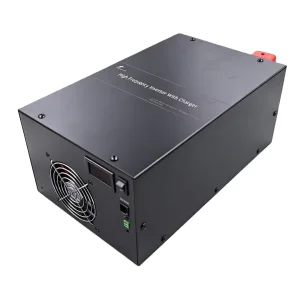
Detailed answers addressing engineering specifications, system sizing, and OEM customization inquiries.