


Explore our factory-direct industrial inverters, customized multi-voltage power converters, and intelligent battery charging systems optimized for high inductive loads and harsh operational environments.
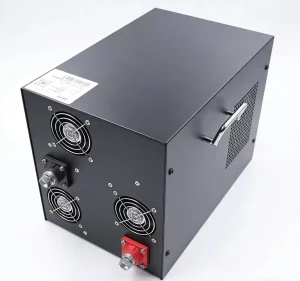
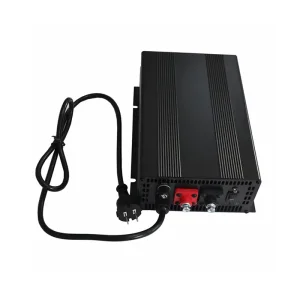
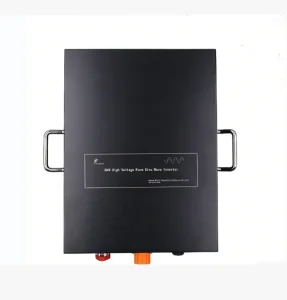
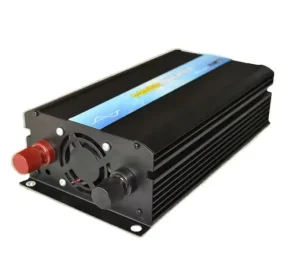
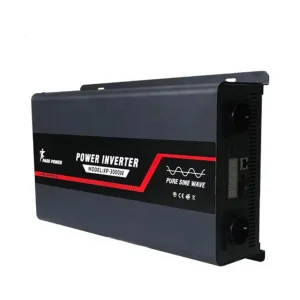
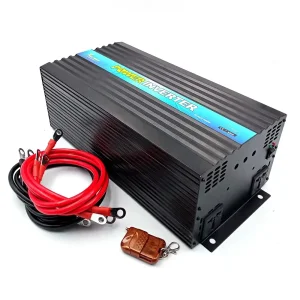
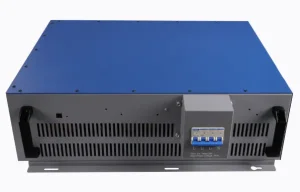
When global energy system integrators, commercial fleet builders, and off-grid solar equipment importers evaluate off-grid power conversion hardware, understanding the foundational distinctions between Low Frequency (LF) and High Frequency (HF) inverter architectures is critical. While both designs convert direct current (DC) stored in battery banks or photovoltaic arrays into clean alternating current (AC), their internal physics, thermal stability, surge handling capacity, and long-term durability diverge significantly.
Low frequency pure sine wave inverters utilize heavy, line-frequency iron-core or copper toroidal transformers operating directly at 50Hz or 60Hz. DC voltage from the battery is first switched via robust IGBT or MOSFET bridges into low-voltage AC, which is then stepped up through the heavy toroidal transformer to 110V/220V/380V AC.
High frequency inverters step up DC battery power to high-voltage DC (typically 380V-400V DC) using fast electronic switching (50kHz - 100kHz) and compact ferrite transformers before inverting back to AC. While lighter and less expensive to manufacture, HF topologies trade off heavy inductive load starting capacity.
| Performance Specification | Low Frequency (Toroidal Transformer) | High Frequency (Ferrite/Electronic) |
|---|---|---|
| Peak Surge Rating (Inrush Current) | 3x Nominal Rating for 10–30 Seconds | 1.5x–2x Nominal Rating for < 100ms |
| Inductive Load Compatibility (Pumps/Compressors) | Outstanding (Air Conditioners, Power Tools, Pumps) | Limited (May trigger overload or thermal shutdown) |
| Galvanic Isolation Protection | True Galvanic Isolation (Transformer-based) | Non-isolated or Optocoupler-isolated |
| Waveform Quality (THD) | Ultra-Pure Sine Wave (< 2.5% THD) | Pure Sine Wave (3% - 5% THD) |
| Expected Equipment Lifespan (MTBF) | 10 - 15+ Years (Heavy-duty component design) | 5 - 8 Years (Capacitor & MOSFET wear) |
| Target Manufacturing Cost Structure | Higher Material Mass (Copper/Steel), High Durability Value | Lower BOM Cost, Highly Competitive Entry-Level Pricing |
The global competitiveness of cheap low frequency pure sine wave inverter manufacturers in China stems not from compromised engineering quality, but from unmatched industrial clustering, vertical supply chain integration, raw material availability, and advanced manufacturing automation. Located in primary industrial hubs such as Jiangsu (Suzhou) and Guangdong (Shenzhen), modern power electronics factories leverage localized ecosystems to achieve significant economies of scale.
In low frequency inverter production, the toroidal transformer accounts for over 45% of total Bill of Materials (BOM) cost. Leading Chinese factories maintain internal core-winding shops. By directly processing cold-rolled grain-oriented (CRGO) silicon steel sheets and oxygen-free copper wire, factories eliminate tier-2 supplier margins, reduce magnetic core losses, and strictly control temperature rise parameters.
Main control boards (PCBAs) are produced on high-speed Surface Mount Technology (SMT) lines. Automated 3D Solder Paste Inspection (SPI) and AOI systems verify solder joint integrity for every microcontroller, gate driver, and sensing resistor. Conformal coating is automatically applied to protect circuit boards against moisture, salt fog, and tropical humidity.
Before dispatch, every low frequency inverter undergoes 100% full-power burn-in testing inside temperature-controlled aging chambers for 8 to 24 hours. The units are tested under simulated full-load inductive step-changes (switching heavy compressor loads on/off) to ensure thermal stability of the switching MOSFETs and secondary rectifiers.
For global brand owners, regional distributors, and engineering contractors, selecting an inverter factory requires looking beyond basic price-per-watt figures. Successful B2B partnerships rely on detailed technical customization options, reliable Minimum Order Quantities (MOQs), flexible packaging customization, and structured warranty support.
Standard off-the-shelf inverters cover 12V, 24V, and 48V DC inputs. However, enterprise buyers often require specialized platforms: 96V DC for telecommunication banks, 192V/384V DC for industrial UPS systems, or high-voltage DC 540V for EV charging and solar microgrids. Custom AC outputs include split-phase (120V/240V AC for North America) and three-phase (190V/220V/380V/415V AC for industrial plants).
Modern off-grid installations require seamless communication with diverse lithium battery chemistries (LiFePO4, NMC). OEM factories provide customized CANbus and RS485 Modbus communications to integrate directly with tier-1 Battery Management Systems (BMS), enabling automatic low-temperature charge throttling and custom equalization voltages.
Industrial buyers can request customized heavy-duty sheet metal enclosures, powder-coated color options (RAL matching), custom silkscreen branding, and upgraded ingress protection ratings (from standard IP20/IP30 up to conformal-coated IP54 NEMA enclosures for marine or outdoor installation).
Low frequency pure sine wave inverters are deployed across demanding environments where power interruption or equipment failure is unacceptable. Below are field-proven application benchmarks demonstrated by global clients.
Recreational vehicles require continuous operation of rooftop air conditioners (12,000–15,000 BTU), induction cooktops, and microwaves simultaneously. A 12V or 24V 3000W–5000W low frequency inverter charger handles the high starting current (locked rotor amperage) of air conditioner compressors without tripping voltage protections or dipping AC output.
Onboard marine power electronics face intense vibration, ambient moisture, and saline corrosion. Low frequency inverters with internal toroidal isolation prevent galvanic corrosion issues between shore power earth ground and the vessel's hull, providing reliable power for water makers, deep freezers, and navigation radar suites.
Submersible water pumps and remote off-grid cell towers require 24/7 continuous duty cycles under extreme ambient temperatures (-20°C to +55°C). The thermal inertia of heavy toroidal cores allows low frequency inverters to sustain ambient heat and intense voltage surges from deep-well pump motors without thermal breakdown.
Ambulances, fire trucks, and mobile disaster relief stations rely on stable pure sine wave AC to operate vital monitoring equipment, defibrillatory gear, suction pumps, and radio repeaters. Automatic AC transfer switches within inverter chargers ensure zero-perceptible-delay UPS switching when transitioning from generator or shore grid power to battery power.
Entering regulated markets in North America, Europe, Australia, and South America requires strict compliance with international safety and electromagnetic compatibility (EMC) standards. Partnering with certified Chinese manufacturers ensures smooth customs clearance, regulatory approval, and risk-free commercial distribution.
Inverters shipped to European Union markets strictly conform to EN 62109-1 and EN 62109-2 safety of power converters for use in photovoltaic systems, alongside EN 61000-6-1 / EN 61000-6-3 EMC radiation and immunity parameters, preventing interference with radios and communication gear.
All circuit boards, solder pastes, transformers, and housing components undergo hazardous substance testing in accordance with the RoHS 2.0 (Directive 2011/65/EU) mandate, guaranteeing lead-free, cadmium-free, and polybrominated biphenyl-free construction.
To support global distributors, leading export factories offer modular mainboard replacement kits (plug-and-play driver boards, control boards, and power MOSFET modules), detailed component schematics, remote engineering diagnostic support, and local service center authorization programs.
The low frequency inverter sector is undergoing rapid technological evolution. While the fundamental toroidal transformer core remains unrivaled for heavy inductive surges, next-generation engineering advancements are boosting baseline operating efficiency and intelligence:
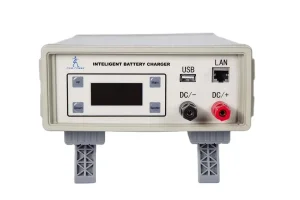
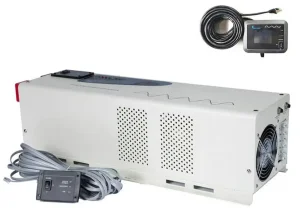
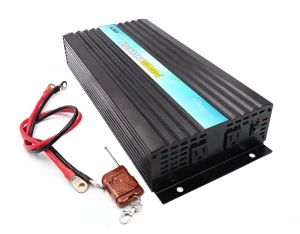
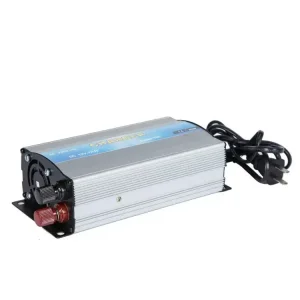
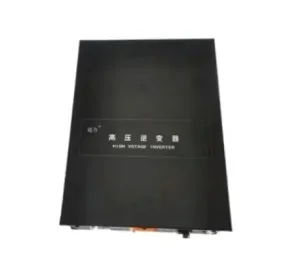
Review our second collection of factory-direct power products including multi-stage smart battery chargers, hybrid solar storage inverters, and high-voltage vehicle power conversion modules.
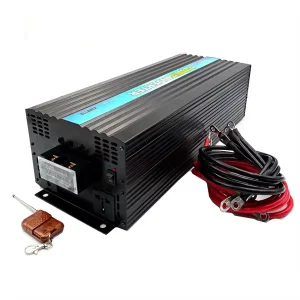
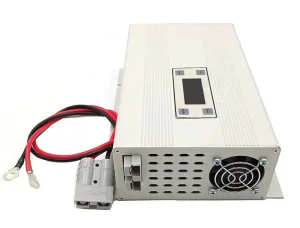
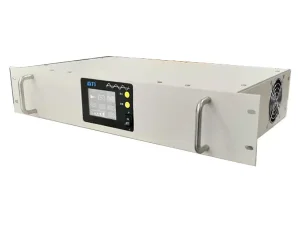
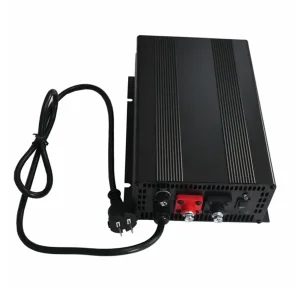
Find answers to essential technical, quality control, and commercial sourcing questions asked by enterprise buyers when sourcing low frequency pure sine wave inverters from Chinese factories.
Low frequency inverters incorporate a massive toroidal line-frequency transformer. When an inductive load (like a water pump or air conditioner compressor) starts, it draws an instantaneous inrush current up to 300-400% of nominal rating. The iron core and heavy copper windings of a toroidal transformer store kinetic magnetic energy and absorb high voltage back-EMF spikes without experiencing magnetic saturation or triggering semiconductor over-current shutdown. High frequency switching circuits lack this physical magnetic reservoir and rely solely on electronic cutoff protections.
Cost efficiency in modern Chinese manufacturing is achieved through vertical integration and raw material supply chain density. Leading factories produce their own toroidal cores in-house using automated winding machinery, direct-sourcing cold-rolled grain-oriented (CRGO) steel and electrolytic copper in multi-ton coils directly from primary mills. Furthermore, automated SMT PCBA assembly and high-volume standardized chassis stamping significantly reduce labor hours per unit, passing substantial BOM savings to global importers.
OEM/ODM integration capabilities typically cover eight key technical areas: 1) Customized DC input voltages (12V/24V/48V/96V/540V DC); 2) AC output voltage & frequency tuning (110V/120V/220V/230V/380V at 50Hz/60Hz); 3) Customizable AC output sockets (GFCI, Universal, Schuko, UK, Australian); 4) Communication protocols (CANbus, RS485 Modbus, SNMP); 5) Custom LCD display interfaces and user menu languages; 6) Powder-coated enclosure colors and private brand labeling; 7) Selectable lithium or lead-acid charging curves; and 8) Integrated solar MPPT charge controller sizing.
Yes. Modern low frequency inverter chargers feature user-programmable 3-stage smart battery chargers. Users or system integrators can adjust Absorption voltage, Float voltage, Low DC Cut-off voltage, and Constant Current charging limits via the LCD control panel or DIP switches. Many models feature dry contact relay signals to trigger external BMS safety contactors or automatic generator auto-start during low battery state-of-charge (SOC) events.
Comprehensive factory quality assurance follows ISO 9001:2015 frameworks across four stages: 1) Incoming Quality Control (IQC) testing copper wire purity, MOSFET gate performance, and transformer steel permeability; 2) In-Process Quality Control (IPQC) conducting automated optical inspection (AOI) on PCBAs; 3) 100% full-power thermal aging in heated burn-in chambers under dynamic load cycles; and 4) Outgoing Quality Assurance (OQA) testing high-voltage dielectric withstand, ground bonding resistance, and drop-test structural integrity in export packaging.
