B2B Wholesale & Enterprise Manufacturing

Cheap Motorcycle Charger Supplier & Products

High-Efficiency Smart Battery Charging Architecture, Factory-Direct Wholesale Pricing & OEM Manufacturing Solutions for Global Power System Distributors

Featured Industry-Grade Power & Charger Solutions

Explore our core product line engineered for motorcycle battery maintenance, high-frequency smart charging, and off-grid power integration. Manufactured directly under ISO 9001:2015 certified standards.
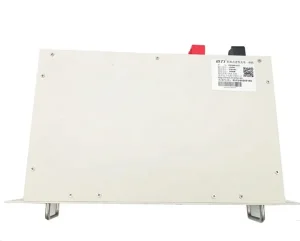
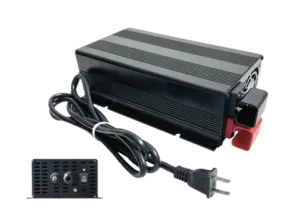
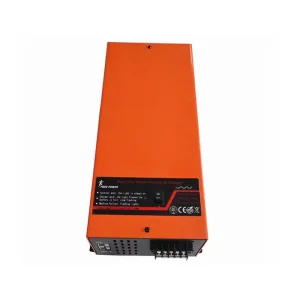
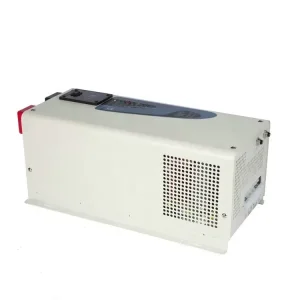
Custom Maili 2KW Rack-mounted Pure Sine Wave Integrated Inverter Charger
Custom Maili 2KW Rack-mounted Pure Sine Wave Integrated Inverter Charger, 110V/220V AC, 50/60Hz, Multiple Protections
View Technical Specs
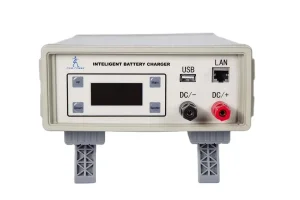
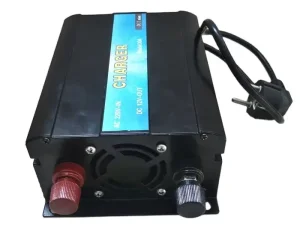
Wholesale 3 Stages Maili 12V 40A Smart charger
Wholesale 3 Stages Maili 12V 40A Smart Charger 110/220VAC 12/24/48VDC Intelligent Lead Acid Battery Charger
View Technical Specs
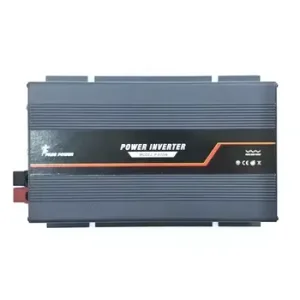
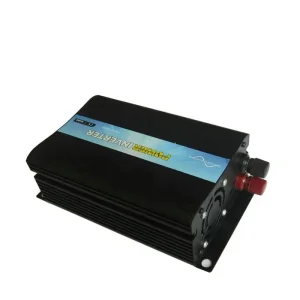
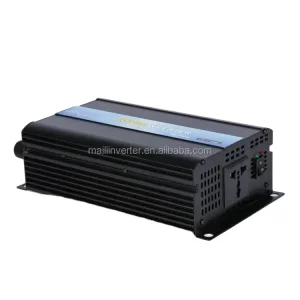
ODM CE Certified 600W Power Pure Sine Wave Home Use Car Inverter
ODM CE Certified 600W Power Pure Sine Wave Single Output DC to AC 12V to 110V Converter
View Technical Specs
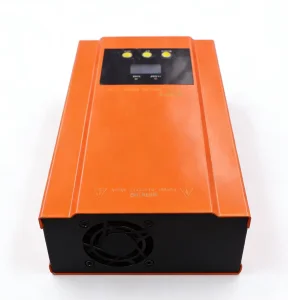
Wholesale MPPT Solar Charging Controller
Wholesale MPPT Solar Charging Controller High-Efficiency Battery Charging Solution
View Technical Specs
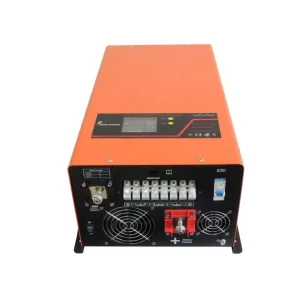
Best Maili 4KW Hybrid Solar Power Inverter
Best Maili 4KW Hybrid Solar Power Inverter 4000W 24V 230V 60A MPPT Pure Sine Wave
View Technical Specs
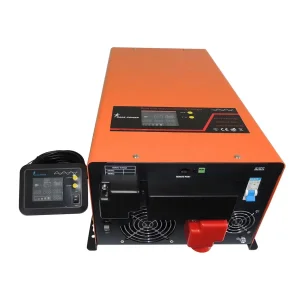
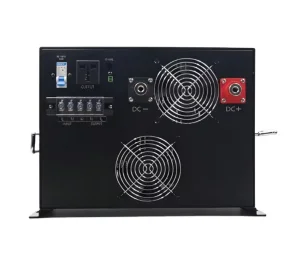
Cheap Low Frequency Hybrid Solar Pure Sine Wave Inverter Charger
Cheap Low Frequency Hybrid Solar Pure Sine Wave Inverter Charger 5KW 24V 48V to 230V with 60A MPPT
View Technical Specs
High-Quality Maili 1500W True Pure Sine Wave Digital LCD Display Inverter
High-Quality Maili 1500W True Pure Sine Wave Digital LCD Display DC to AC Low Frequency Charger
View Technical Specs
OEM High Quality 8 Stages Smart USB Battery Charger
OEM High Quality 8 Stages Smart USB Battery Charger 12V 25A Automatic Battery Charger
View Technical Specs
13+
Years Industry Expertise
99.4%
Yield Pass Rate
50+
Export Destinations
2,770m²
ISO9001 Factory Footprint

1. Global Commercial Landscape of Motorcycle Charging Infrastructure

The global powersport and motorcycle industry is experiencing a rapid technological transition. From traditional internal combustion engine (ICE) motorcycles requiring robust trickle maintenance to the explosive growth of electric motorcycles (E-motos) and urban delivery fleets, battery charging solutions are now critical infrastructure. Procurement directors searching for a cheap motorcycle charger supplier face a dual mandate: reducing landed unit costs without compromising safety, thermal durability, or battery lifespan.

Historically, the term "cheap" in power electronics triggered concerns regarding compromised copper wire gauges, inferior MOSFET switching components, or inadequate electromagnetic compatibility (EMC) shielding. However, modern industrial power manufacturing—anchored in China’s specialized electronics clusters—has fundamentally redefined cost efficiency. Today, "cheap" represents optimized design-for-manufacturability (DFM), high-volume automated SMT assembly, and streamlined global supply chain integration.

Powersports & Winterization Maintenance

Traditional 12V flooded lead-acid, AGM, and Gel batteries require micro-current trickle chargers during extended off-season storage to prevent destructive sulfation plates from forming on the lead grids.

Urban Electric Delivery Fleets

Commercial courier and last-mile delivery motorcycles utilize high-capacity LiFePO4 (Lithium Iron Phosphate) battery packs that demand fast, high-current CC/CV (Constant Current/Constant Voltage) multi-stage charging algorithms.

Emergency & OEM Fleet Integration

Police escort motorcycles and emergency response units require ruggedized, vibration-resistant charging hardware capable of rapid deployment under wide operating temperature windows (-20°C to +60°C).

2. The China Manufacturing Advantage: Achieving Structural Cost Efficiency

How does an established OEM facility achieve highly competitive unit costs without degrading product performance? The answer lies within the industrial ecosystem of the Yangtze River Delta power electronics cluster in Suzhou. By combining high-speed automated Surface Mount Technology (SMT) with localized magnetic core winding and raw material sourcing, production overhead is dramatically reduced.

Cost Vector Standard Western Procurement China Factory Direct (Maili Supply Chain) Structural Advantage
Raw Material Sourcing Multi-tiered distributor markup on MOSFETs & Copper Direct mill contracts for magnetic cores & pure copper wire 18% - 25% Material Cost Reduction
PCB Assembly Semi-automated manual insertion lines High-speed fully automated Yamaha SMT pick-and-place lines 99.8% First-pass yield, zero manual error
Testing & Burn-in Sample batch testing (5-10% statistical sampling) 100% Full-load automated thermal burn-in for 4 hours Substantially reduced warranty return liability
Certification Overhead Third-party regional lab fees amortized over small batches In-house pre-compliance lab with unified CE/RoHS/SGS filings Lower compliance cost per unit shipped

By leveraging this operational structure, wholesale importers, brand owners, and motorcycle aftermarket chains can offer highly lucrative retail price points while providing end customers with enterprise-grade durability.

3. Technical Architecture: Multi-Stage Smart Charging Topology

A motorcycle battery is exceptionally sensitive to overcharging and thermal runaway due to its compact cell volume and thin separator plates. Standard direct-current power supplies risk boiling the electrolyte in flooded lead-acid batteries or triggering the internal BMS cutoff in lithium cells. Advanced motorcycle chargers employ a micro-controller unit (MCU) that dynamically executes multi-stage charge profiles.

Anatomy of an 8-Stage Automatic Smart Charger

  1. Desulfation / Pulse Recovery: Detects deeply discharged or lightly sulfated batteries, applying high-voltage high-frequency pulse trains to break down lead-sulfate crystals on internal plates.
  2. Soft Start: Gradually introduces charging current to verify cell integrity and prevent sudden thermal spikes in damaged batteries.
  3. Bulk Charge (Constant Current): Delivers maximum rated current (e.g., 25A or 40A depending on unit capacity) to replenish up to 80% of battery state-of-charge (SOC).
  4. Absorption (Constant Voltage): Tapers current gradually while holding terminal voltage at peak threshold (typically 14.4V for AGM, 14.6V for LiFePO4), bringing the battery to 100% capacity safely.
  5. Analysis & Diagnostics: Temporarily pauses charging current to monitor self-discharge rates, detecting shorted cells or internal degradation.
  6. Recondition / Equalization: Applies elevated controlled voltage to balance internal cell chemical densities and eliminate acid stratification.
  7. Float Charge: Maintains battery voltage indefinitely at a gentle 13.6V threshold, compensating for internal parasitic drain without causing water loss or gassing.
  8. Pulse Maintenance: Monitors battery terminal voltage and sends periodic refresh micro-pulses whenever voltage drops below 12.8V, keeping the vehicle turn-key ready.

4. Localized Application Scenarios for Global Markets

Engineered chargers must adapt to diverse environmental conditions, grid power stability, and regional market preferences. Below are primary global deployment scenarios:

North American Powersport Maintenance

Primary Concern: Winter storage temperatures dropping below freezing in northern US states and Canada.

Required Technology: Smart temperature compensation sensors that automatically adjust charging voltage up in cold weather to overcome increased internal cell resistance.

Southeast Asian E-Motorcycle Fleets

Primary Concern: Extreme ambient humidity, heavy monsoon rains, and dusty outdoor charging environments in Vietnam, Indonesia, and Thailand.

Required Technology: IP65/IP67 sealed housing with conformal anti-corrosion coating on internal PCB circuitry to resist humidity oxidation.

European Green Logistics & Micro-Mobility

Primary Concern: Strict Eco-design directives, standby low-power consumption rules, and rigorous CE/RoHS safety compliance.

Required Technology: High-efficiency power factor correction (PFC > 0.95) with ultra-low standby power draw (<0.5W) when idle.

5. OEM / ODM Private Label Capabilities & Quality Management

For B2B distributors seeking to establish an exclusive product line, working with a flexible manufacturer is critical. Our manufacturing infrastructure supports comprehensive OEM and ODM customization across 8 key engineering dimensions:

  • Custom DC Voltage Output: Standard 12V, 24V, 36V, 48V, or high-voltage 72V/96V customized profiles for specialized motorcycle platforms.
  • Selectable Charging Currents: Micro-switches allowing user selection between low maintenance current (e.g., 2A/4A) and rapid charging (25A/40A).
  • Custom Connector Terminals: O-ring terminal harnesses, heavy-duty alligator clips, SAE quick-disconnect plugs, or custom waterproof EV plugs.
  • Housing Color & Extrusion Design: Anodized aluminum alloy shells, rugged flame-retardant ABS enclosure moldings, and custom laser-etched branding logos.
  • Digital Interface Options: Backlit LCD status displays showing real-time voltage, charge current, capacity percentage, error codes, and battery temperature readings.
  • Communication Protocols: Integrated CAN-bus or RS485 communication ports for direct telemetry monitoring in commercial fleet management software.

6. Future Horizons: Smart Charging, GaN Semiconductors & Solar Hybrid Integration

The motorcycle charger landscape is evolving rapidly toward higher power density and smart grid interactivity. Key technology trends shaping the next 5 years include:

Gallium Nitride (GaN) Power Converters: By replacing silicon MOSFETs with GaN power semiconductors, next-generation motorcycle chargers achieve switching speeds up to 10 times faster. This dramatically reduces transformer core size, allowing a 12V 20A charger to fit inside a pocket-sized footprint while achieving efficiency ratings above 95%.

Solar PV Integrated Trickle Systems: For remote powersport operators, off-grid adventure riders, and agricultural utility vehicles, chargers featuring integrated Maximum Power Point Tracking (MPPT) allow direct battery charging from portable 20W to 100W solar panels without requiring external AC grid power.

Complete Industrial Portfolio & Auxiliary Power Units

Review our extended series of off-grid solar inverters, high-current smart battery chargers, and multi-stage power systems engineered for industrial and automotive applications.
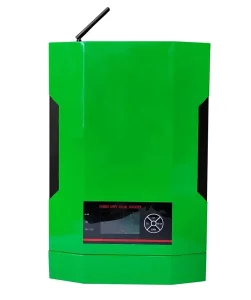
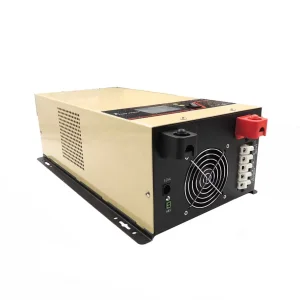
High-Quality CE ROHS Ready Stock 5.5KW 48V MPPT Solar Inverter
High-Quality CE ROHS Ready Stock 5.5KW 48V Single Phase MPPT Solar Inverter with LCD Display & WiFi
View Technical Specs
OEM 3000 Watt Pure Sine Wave Off-grid Solar Inverter
OEM 3000 Watt Pure Sine Wave Off-Grid Solar Inverter 24V 220V RV Energy System with Charger
View Technical Specs
ODM Maili 10KW High-power Inverter Charger
ODM Maili 10KW High-Power 110/220VAC Single Phase Pure Sine Wave Inverter & Charger
View Technical Specs
Custom 48V 220V 300W High Frequency Solar Inverter
Custom 48V 220V 300W High Frequency Pure Sine Wave Solar Inverter Off-Grid Soft Start
View Technical Specs
High-Quality Directly From Supplier Portable 12V 30A Battery Charger
High-Quality Directly From Supplier Portable 12V 30A Lead-Acid Battery Charger & Solar Controller
View Technical Specs
Wholesale Maili 3000W 110V/220V AC Pure Sine Wave Inverter
Wholesale Maili 3000W 110V/220V AC Single Phase 30A Pure Sine Wave Inverter Charger All-in-One
View Technical Specs
Wholesale Portable 12V 30A Car Battery Charger
Wholesale Directly From Supplier Portable 12V 30A Battery Charger with Extension Cord
View Technical Specs
Cheap 2000W Solar Inverter Battery Charger Kit
Cheap 2000W Solar Inverter Battery Charger Kit 24V 120V Pure Sine Wave Off-Grid Inverter
View Technical Specs

7. Frequently Asked Questions (FAQ) for B2B Importers & Procurement Directors

Find clear answers regarding minimum order quantities, factory certification standards, custom OEM tooling, and technical safety mechanisms.

Q1: How does your factory maintain competitive wholesale pricing without sacrificing component quality?
Our Suzhou facility leverages long-term direct supply agreements for primary semiconductors, high-purity copper windings, and aluminum extrusions within the Yangtze Delta manufacturing hub. Automated Yamaha SMT lines maximize throughput efficiency, while ISO 9001:2015 yield management eliminates manual rework costs.
Q2: Are your smart motorcycle chargers compatible with Lithium LiFePO4 chemistry?
Yes. Our smart 3-stage and 8-stage chargers feature selectable mode micro-switches or dedicated lithium charge algorithms. The CC/CV profile charges LiFePO4 cells to 14.6V before disabling current to prevent BMS over-voltage lockouts.
Q3: What safety protection features are integrated into your smart chargers?
All units incorporate six core hardware protections: reverse polarity spark-proof protection, output short-circuit auto-recovery, over-voltage clamping, over-current thermal throttling, over-temperature shutoff, and internal fault diagnostics.
Q4: What is the Minimum Order Quantity (MOQ) for custom OEM branding?
Standard white-box or catalog shipments have flexible MOQs starting at 50 to 100 units. Custom laser-etched logos, branded user manuals, and customized color box packaging typically require an OEM baseline of 300 to 500 units depending on chassis specifications.
Q5: What international regulatory certifications do your chargers hold?
Our products undergo testing to satisfy CE, RoHS, IP30/IP65 dust/water ingress standards, and SGS verification. Detailed test reports and Declaration of Conformity (DoC) paperwork are supplied with export documentation.
Q6: Can your factory engineer chargers for severe outdoor conditions?
Yes. We offer potted IP67 weatherproof enclosures with internal silicone encapsulation to withstand severe vibration, road spray, salt fog, and outdoor temperatures from -20°C up to +60°C.