


Factory-direct pure sine wave, low frequency, high frequency, and hybrid solar MPPT solutions certified for global export.
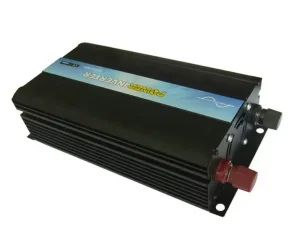
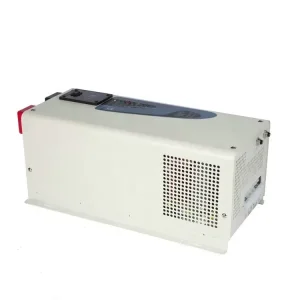
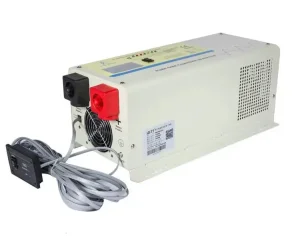
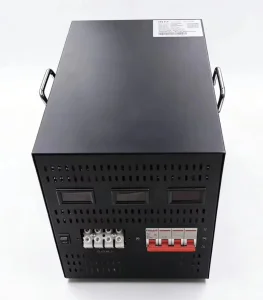
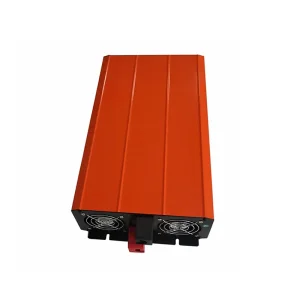
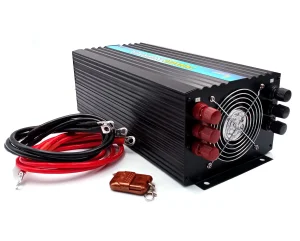
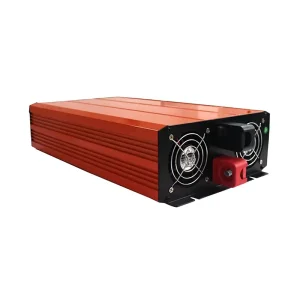
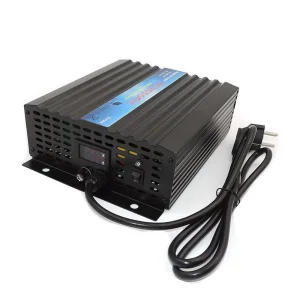
Decoding the economic intent behind commercial procurement: How OEM scaling, Bill of Materials (BOM) optimization, and advanced topology achieve low cost per watt without technical compromise.
In global utility and C&I solar projects, the search for "cheap Solis PV inverters" reflects a strategic focus on Levelized Cost of Energy (LCOE). By maximizing string DC/AC ratios up to 150% and utilizing high-density topology, balance-of-system (BOS) CAPEX is reduced by up to 18%.
High cost-efficiency is achieved through automated Surface Mount Technology (SMT) and vertical supply chain integration. Leading Solis-compatible OEM facilities eliminate labor variance while ensuring 99.5% peak MPPT efficiency across wide input ranges.
"Affordable" must never mean non-compliant. High-quality Solis string platforms integrate AFCI 3.0 arc-fault protection, anti-PID algorithms, IP66 ingress sealing, and rapid shutdown capabilities, conforming strictly to IEEE 1547 and UL 1741 SB standards.
SEO Intent Insight & E-E-A-T Benchmark: Commercial procurement search queries for low-cost string inverters are driven by EPC contractors, project developers, and regional distributors seeking high reliability with fast payback periods. Information Gain lies in evaluating specific circuit design parameters—such as switching frequency, thermal derating thresholds, and active power regulation—rather than baseline pricing alone.
Comprehensive comparison of modern power inverter topologies, efficiency metrics, dynamic thermal management, and surge handling parameters.
| Inverter Topology Type | Transformer Isolation | Peak Efficiency | Surge / Overload Capacity | Optimal Application Scenario | BOM Cost Profile |
|---|---|---|---|---|---|
| Solis Multi-MPPT String Inverter | Transformerless (TL) High Dens. | 98.3% – 98.8% | 110% Continuous / 150% Peak (10s) | Commercial & Industrial Rooftops, Utility PV | Low (Optimized Mass Production) |
| High Frequency Pure Sine Wave | HF Ferrite Core Transformer | 90.0% – 94.5% | 200% Peak (Instantaneous < 2s) | RVs, Mobile Offices, Residential Standby | Very Low (Compact & Lightweight) |
| Low Frequency Heavy-Duty Inverter | Toroidal / Copper Line Frequency | 88.0% – 92.0% | 300% Peak Surge (10s-20s) | Heavy Inductive Loads (Compressors, Pumps) | Medium-High (Heavy Iron & Copper) |
| Hybrid Energy Storage Inverter (ESS) | Bi-Directional High Vol. DC | 97.5% (PV-DC) / 95.5% (Bat-AC) | 150% Backup Peak Output | Off-Grid Microgrids, Self-Consumption PV | Moderate (Integrated BMS & Transfer) |
Next-generation Solis-class string inverters adopt SiC MOSFETs in the DC-DC boost and DC-AC inverter bridges. This innovation reduces switching losses by up to 45%, decreases total harmonic distortion (THDi < 2%), and enables smaller passive magnetics without elevating thermal stress.
Featuring up to 10 independent Maximum Power Point Tracking (MPPT) channels per unit, modern Solis string architectures maintain precise tracking (>99.9% dynamic tracking accuracy). This mitigates partial shading mismatch losses on complex roof geometries.
Deploying high-reliability PV inverters across diverse climatic zones, extreme ambient temperatures, and complex electrical grids.
Designed for factories, logistics hubs, and commercial complexes. High power-density units (50kW to 110kW) simplify installation with integrated DC switches, Type II SPD surge protection, and direct cloud telemetry via Wi-Fi/LAN/4G dongles.
Combining rooftop PV generation with battery storage systems (LiFePO4). Integrated rapid backup switching (<10ms) guarantees zero-interruption power supply for critical home appliances during utility power outages.
Equipped with IP66 aluminum alloy enclosures and C5 corrosion-resistant powder coatings. Tested under desert heat (up to 60°C operational limit with smart fan cooling) and high-humidity coastal salt spray environments.
How standardized component selection, automated production, and rigorous aging testing deliver premium quality at competitive pricing.
Incorporating automotive-grade Infineon/Fuji IGBT modules, Nippon Chemi-Con electrolytic capacitors, and Texas Instruments DSP processors for long-term field stability.
High-precision automated SMT placement lines coupled with 3D Automated Optical Inspection (AOI) to eliminate soldering defects and thermal hot spots on PCB assemblies.
Every manufactured unit undergoes a minimum 4-hour full-load thermal burn-in test under high ambient humidity before packaging, ensuring zero-defect out-of-box operation.
Customizing voltage thresholds, custom firmware LCD interfaces, housing colors, communications protocols (RS485, CAN, Modbus), and private label packaging.
Anticipating grid requirements: Higher DC operating voltages, grid-forming intelligence, and AI-assisted health diagnostics.
Shift towards 1500V DC operating topologies in string inverters reduces DC cable copper requirements, minimizes combiner box requirements, and lowers overall BOS costs by up to 5% in utility and large C&I plants.
Transitioning from grid-following to grid-forming control algorithms. Future Solis-compatible platforms provide synthetic inertia, black-start capabilities, and voltage/frequency stabilization during weak grid conditions.
Integrating machine-learning models directly into DSP microcontrollers allows real-time I-V curve scanning, predictive capacitor degradation alerts, and automated insulation resistance monitoring.
Harmonizing inverters, battery chargers, isolators, and energy storage systems into a cohesive power architecture.
Seamless coupling of hybrid solar inverters with high-voltage battery enclosures. Multi-stage intelligent chargers regulate charge curves dynamically to extend cell cycle life beyond 6,000 cycles.
Used extensively in mobile commercial vehicles, RVs, and marine setups. Intelligent isolators separate starter and auxiliary battery banks while prioritizing alternator charge management.
Real-time export limitation and dynamic tariff optimization via standard Modbus RTU / SunSpec protocols, allowing seamless integration with third-party Energy Management Systems (EMS).
Explore additional off-grid solar, split phase, low frequency, and multi-stage intelligent chargers.
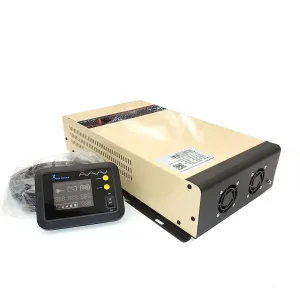
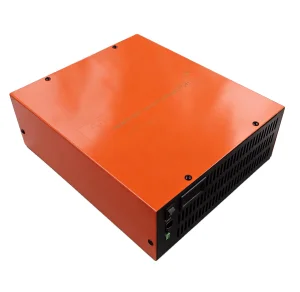
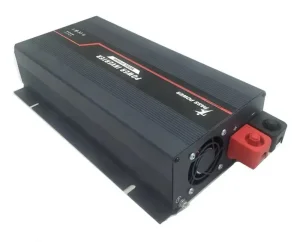
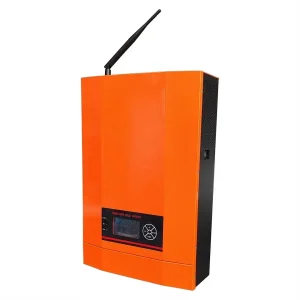
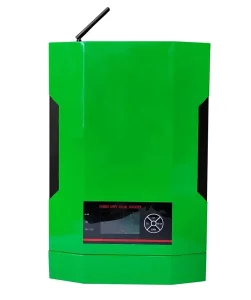
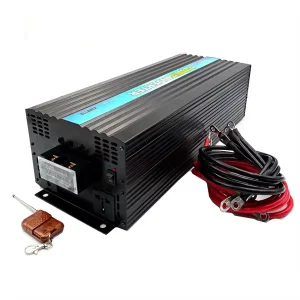
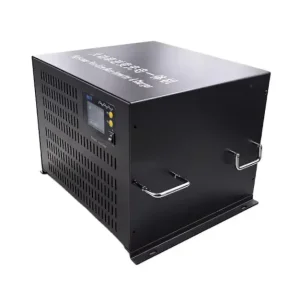
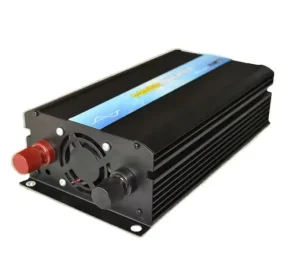
Addressing B2B procurement concerns, technical parameters, compliance certifications, and OEM/ODM engineering customization.
Cost-efficiency in Solis-class PV string inverters stems from high-volume automated manufacturing, optimized Bill of Materials (BOM) sourcing, and advanced transformerless topology. By increasing component integration on a single multi-layer PCB and utilizing high-efficiency Silicon Carbide (SiC) switches, raw material usage (such as copper and aluminum heat sinks) is minimized while operational reliability is elevated.
A string solar inverter (such as Solis architectures) connects multiple solar panels in series DC strings directly to high-voltage MPPT inputs, converting power efficiently for grid connection or large energy storage setups. Low-frequency inverters utilize heavy toroidal transformers to provide high surge currents for motor loads (like AC compressors), whereas high-frequency inverters use compact ferrite transformers for lightweight, cost-effective off-grid electronics.
For international distribution, inverters must meet target grid codes and safety regulations. Essential certifications include CE (LVD/EMC), RoHS, IEC 62109-1/-2 for safety, IEC 61000 for electromagnetic compatibility, and local grid compliance such as IEEE 1547 / UL 1741 SB for North America, CEI 0-21 for Italy, and VDE-AR-N 4105 for Germany.
Yes. OEM/ODM manufacturers can customize DC input voltage ranges, AC output socket configurations, communication protocols (Modbus, CAN bus), LCD interface branding, and enclosure IP ratings to meet specific commercial vehicle, industrial off-grid, or regional grid requirements.
DC electrical arcs caused by damaged cabling or loose connectors pose a primary fire risk in rooftop solar systems. Integrated AFCI 3.0 utilizes artificial intelligence to scan DC current waveforms in real-time, shutting down inverter operation within less than 0.5 seconds of detecting an arc, far exceeding standard safety requirements.
Industrial-grade PV string inverters are engineered for a 20 to 25-year design lifespan. Standard factory warranties range from 5 to 10 years, with options for extended warranty programs backed by full component traceability and replacement module availability.
