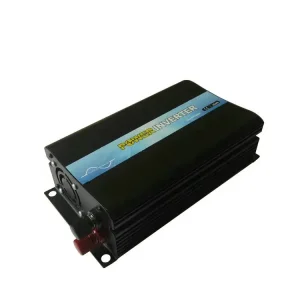
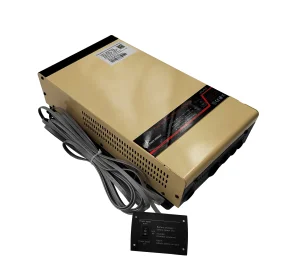
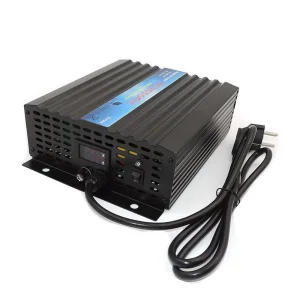
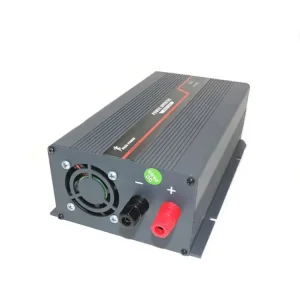
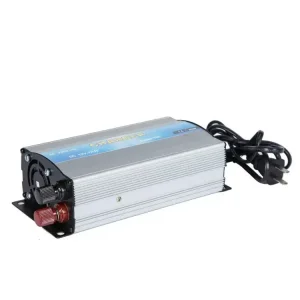
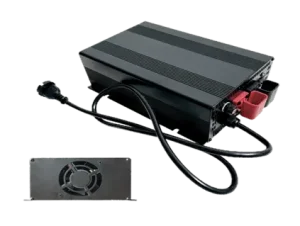
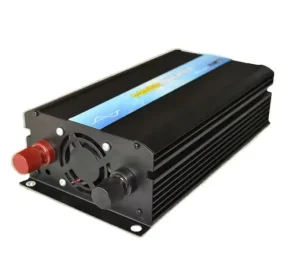
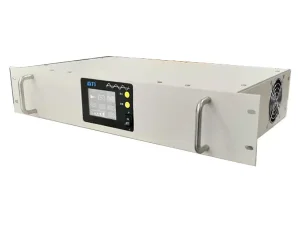
Explore our factory-direct inventory of marine-grade smart chargers, off-grid pure sine wave inverters, and integrated power distribution units certified for global commercial deployments.
Modern marine vessel electrical architectures have evolved exponentially from basic single-engine lead-acid configurations into complex, multi-battery ecosystem platforms requiring precision multi-channel management.
Modern commercial and recreational vessels simultaneously deploy diverse battery chemistries: LiFePO4 (Lithium Iron Phosphate) for high-draw trolling motors, AGM for electronics, and flooded lead-acid for engine cranking. Custom 4-bank chargers must provide isolated, per-bank chemistry profile selection.
Standalone analog chargers are rapidly being phased out. Enterprise marine buyers require fully integrated 4-bank charging systems equipped with CAN-bus, NMEA 2000, or Bluetooth connectivity for real-time telemetry, remote state-of-charge (SOC) telemetry, and system alarm logging.
With tight engine compartment spaces and ambient temperatures exceeding 60°C, high-efficiency GaN/SiC power stages and Universal AC Active Power Factor Correction (PFC 0.99) are mandatory to maximize charging current while minimizing thermal dissipation.
Engineering a custom 4-bank marine charger requires strict galvanic isolation between output channels to eliminate parasitic ground loops, electrolysis, and cross-bank noise interference across the boat's common chassis ground.
In traditional multi-bank chargers, shared transformer secondary windings lead to voltage drag across linked banks. Our proprietary custom 4-bank architecture uses individual high-frequency planar transformers for each bank. Each bank operates its own closed-loop micro-controller (MCU) driven feedback loop.
This dynamic current distribution ensures that if Bank 1 (Engine Start) is fully charged at 100% SOC, excess thermal and electrical budget is automatically diverted to deplete-heavy banks (such as a 36V LiFePO4 trolling motor setup mapped across Banks 2, 3, and 4).
Each channel independently runs an optimized multi-stage charge profile based on the selected battery chemistry dip-switch or software register:
| Performance Specification | Custom 4-Bank Isolated Charger | Standard Commercial 4-Bank | Relay / Isolator Combiner |
|---|---|---|---|
| Galvanic Isolation | 100% Channel-to-Channel (>2500V DC) | Shared Common Ground | None (Direct Metallic Link) |
| Chemistry Mixing | Per-Bank Independent (LiFePO4/AGM/GEL) | Global Uniform Mode Only | Single Chemistry Profile |
| Thermal Dissipation | Full Epoxy Encapsulation / IP68 | Air Cooled / Vented Shell | Convection Ambient Air |
| Electrolysis Prevention | Zero Stray Current Interference | High Risk in Saltwater | Critical Hull Corrosion Risk |
| NMEA 2000 Integration | Native OEM Bus Firmware Option | Not Supported | None |
Marine vessel manufacturers (OEMs), defense shipyards, and commercial fleet distributors face rigid procurement requirements. Sourcing custom 4-bank chargers requires strict alignment with mechanical, electrical, and regulatory specifications.
Space within outboard transoms and center console helm compartments is tight. We provide tailored extruded aluminum housings, custom mounting flange dimensions, and specific cable exit orientation (90-degree potted strain relief vs inline marine wiring looms).
Empower your brand equity. We deliver turnkey private labeling including customized silkscreen anodized enclosures, custom packaging, branded Bluetooth app displays, and bespoke charge voltage/current ceilings optimized for your battery supplier.
Global vessel export demands seamless operation across variable marina power grids. Our chargers accept 90V-264V AC input, automatically adapting to 50Hz or 60Hz without manual switch toggling, protected against extreme shore power voltage spikes.
All custom 4-bank marine charger units undergo 100% full-load thermal burn-in testing for 8 consecutive hours under high-humidity conditions. Our manufacturing lines strictly operate under ISO 9001:2015 quality management systems to guarantee an annualized field failure rate (AFR) under 0.15%.
Custom multi-bank charging systems serve diverse marine sectors, each presenting unique operating constraints, electrical loads, and environmental stresses.
Configured for 12V engine starting plus a 36V (3 x 12V in series) trolling motor battery system. Provides high peak amperage charging so tournament anglers fully recharge in under 4 hours overnight.
Configured for dual engine crank banks, dedicated generator start bank, and house power bank. Features ultra-quiet zero-fan convection designs to eliminate cabin acoustic noise.
Heavy-duty, high-vibration resistant aluminum chassis tested to military standards. Dual redundant thermal sensors per bank ensure uncompromised operation in high-heat engine rooms.
Specialized high-voltage custom chargers engineered for electric outboard motor banks, incorporating real-time thermal throttling and emergency disconnect relays.
Marine electrical safety demands strict adherence to international maritime body regulations. Non-compliant chargers installed in engine spaces create severe fire, explosion, and stray-current corrosion hazards.
Compliant with American Boat and Yacht Council (ABYC) A-31 standard for battery chargers and United States Coast Guard 33 CFR 183.410 ignition protection standards, permitting safe installation inside gasoline engine compartments.
Engineered and independently tested in accordance with ISO 8846 Small Craft Electrical Devices Ignition Protection. Full CE compliance under EN 60335-2-29 marine charger directives and Electromagnetic Compatibility (EMC) Directive 2014/30/EU.
Integrated reverse polarity protection, output short-circuit suppression, over-voltage spark suppression, temperature compensation sensors, and automatic AC ground isolation to prevent stray-current galvanic hull damage.
As marine power demands increase, our R&D roadmap focuses on wide-bandgap power electronics, bi-directional vehicle-to-vessel power management, and AI-driven predictive health monitoring.
Transitioning from silicon MOSFETs to GaN switching devices enables 3x higher switching frequencies, shrinking transformer volume by 40% while pushing total thermal conversion efficiency past 97.5%.
Next-generation custom 4-bank microcontrollers will execute real-time Electrochemical Impedance Spectroscopy (EIS) to detect battery micro-short circuits, thermal runaway risks, and capacity degradation before catastrophic failure at sea.
Future 4-bank chargers will support bi-directional power flow, allowing trolling motor battery banks to feed backup power into vessel emergency systems or navigation electronics during alternator failures.
In-depth answers to common engineering, compliance, and procurement questions regarding custom 4-bank marine battery chargers.
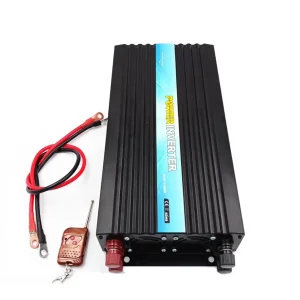
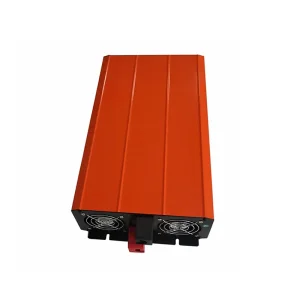
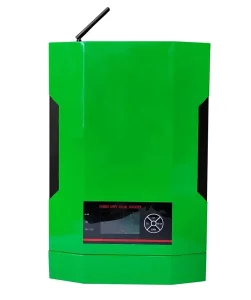
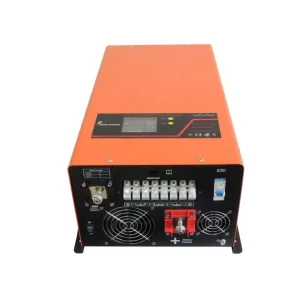
Complete your power conversion architecture with our heavy-duty pure sine wave inverters, MPPT solar hybrid controllers, and high-frequency charging systems engineered for long-term commercial reliability.