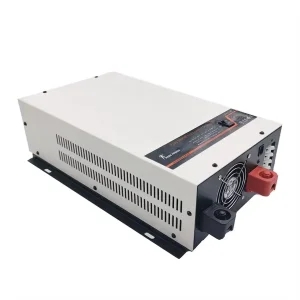
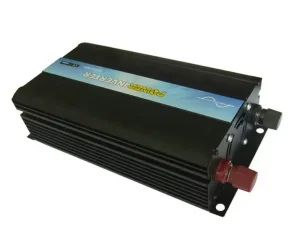
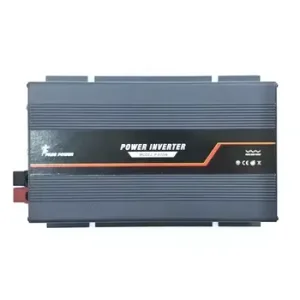
Engineered for extreme reliability across motive power, renewable microgrids, commercial electric transport, and critical backup infrastructure.
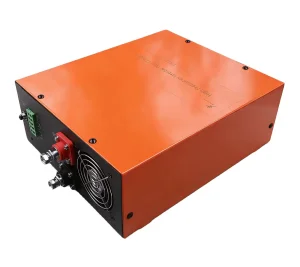
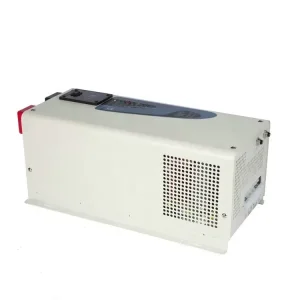
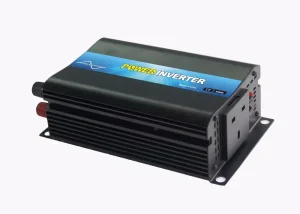
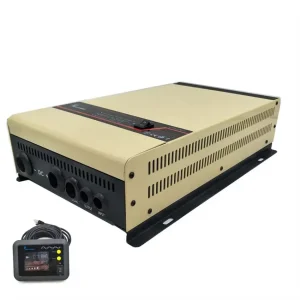
As global industries accelerate electrification across logistics, utility mobility, and off-grid renewable infrastructure, low-voltage high-current direct-current (DC) power management has transitioned from conventional analog power supplies to intelligent, digitally controlled power platforms. 6-Volt battery configurations—frequently coupled in series-parallel arrays to form 12V, 24V, 36V, 48V, or standalone 6V high-capacity banks—remain the backbone of heavy-duty deep-cycle storage systems.
Automated Guided Vehicles (AGVs), Automated Mobile Robots (AMRs), and floor maintenance scrubbers rely heavily on high-ampere-hour 6V monoblocks. Custom charging exports enable high duty-cycle rapid charging without shortening cycle lifespan.
Commercial golf fleets, resort utility transport, and low-speed electric vehicles (LSVs) utilize 6V deep-cycle packs (e.g., GC2 group sizes). Custom exporters supply programmed multi-bank voltage sensing for prolonged fleet longevity.
Remote telecommunication towers, off-grid agricultural pumping, and solar arrays deploy series-connected 6V lead-carbon or lithium storage due to superior plate thickness and thermal mass over standard 12V blocks.
Designing a high-performance custom 6V battery charger requires strict engineering tolerances. Because 6-Volt nominal systems exhibit low nominal operating voltages, line resistance and MOSFET conduction losses represent a significantly higher percentage of energy dissipation. Our export-grade power architectures incorporate High-Frequency LLC Resonant Topologies and Synchronous Rectification to minimize heat, maximize energy efficiency, and deliver ripple-free DC current.
Standard chargers supply static voltage curves, causing excessive gassing in flooded batteries or cell imbalance in lithium packs. Our custom 6V export models utilize digital Signal Processors (DSP) to dynamically adjust current profile across 5 distinct phases:
Exported across diverse international electrical environments, our custom 6V chargers incorporate redundant multi-layer active and passive safety measures:
| Battery Chemistry | Bulk Stage (CC) Voltage | Absorption (CV) Voltage | Float Hold Voltage | Temp Compensation | Recommended Max Current |
|---|---|---|---|---|---|
| Flooded Lead-Acid (Deep Cycle) | 7.20V - 7.35V | 7.35V - 7.50V | 6.60V - 6.75V | -15 mV / °C (6V) | 0.15C - 0.25C |
| AGM (Absorbed Glass Mat) | 7.10V - 7.25V | 7.20V - 7.30V | 6.60V - 6.70V | -12 mV / °C (6V) | 0.20C - 0.30C |
| GEL Cell | 7.00V - 7.15V | 7.10V - 7.20V | 6.50V - 6.60V | -12 mV / °C (6V) | 0.15C - 0.20C |
| Lithium Iron Phosphate (LiFePO4) | 7.10V - 7.30V | 7.30V (Cell Balance) | 6.80V (N/A Float) | Disabled / BMS Locked | 0.50C - 1.00C |
As a dedicated global exporter, we provide complete engineering tailored to original equipment manufacturers (OEMs), regional brand distributors, and industrial contract buyers. Our Suzhou design and manufacturing center handles everything from circuit board firmware flashing to ruggedized mechanical enclosure development.
Custom micro-controller software programming for CAN-Bus 2.0B, RS485, Modbus, or Bluetooth IoT connectivity. Sync charger telemetry directly with master fleet management displays or vehicle BMS units.
Choose from compact portable plastic housings, fan-cooled aluminum extruded chassis, or completely potted IP67 waterproof vibration-resistant enclosures designed for onboard equipment mounting.
Complete flexibility for output connectors: Anderson Powerpole connectors, REMA industrial plugs, heavy-duty insulated alligator clamps, ring terminals, or custom OEM automotive harness assemblies.
Our custom 6V battery chargers operate reliably across diverse regional environmental conditions, from high-humidity marine ports to freezing sub-zero mining operations.
In North America, GC2 6V golf cart batteries dominate commercial turf utility and warehouse floor scrubbers. Custom 6V/24V multi-bank export models provide 120V AC input compatibility (NEMA 5-15P), fully compliant with California Energy Commission (CEC) efficiency regulations and UL safety mandates.
European commercial vessels and emergency medical vehicles utilize specialized 6V gel auxiliary batteries for low-noise standby power. Exporters receive 230V AC wide-range units certified under CE, RoHS, and IEC 60335-2-29 with low electromagnetic emissions (CE EMC Class B).
In harsh Outback environments, agricultural monitoring stations use 6V deep-cycle tubular lead-acid or lithium banks exposed to extreme heat. IP65 potted chargers with active temperature compensation prevent over-charging during peak summertime heat spikes.
Vintage car collectors and automotive restoration importers require precise 6-Volt trickle/maintenance chargers for rare 6V electrical systems. Built-in pulse desulfation keeps legacy starter batteries active during winter storage.
Navigating international trade standards requires rigorous manufacturing discipline. Every custom 6V battery charger line leaving our production facilities undergoes 100% full-load burn-in testing and comprehensive safety validation under ISO 9001:2015 quality management procedures.
Compliant with European LVD (Low Voltage Directive) and EMC Directives for seamless EU market distribution.
Engineered to satisfy UL 1564 (Industrial Battery Chargers) and CSA C22.2 performance requirements.
International CB Scheme test certificates enabling rapid localized approval in over 50 member countries.
Complete traceability, lot tracking, component testing, and automated optical inspection (AOI).
Power conversion efficiency and smart connectivity are entering a transformation phase. As a pioneer in commercial charger export solutions, our R&D roadmap focuses on three technological breakthroughs:
Migrating from traditional Silicon MOSFETs to wide-bandgap GaN power switches allows switching frequencies above 500kHz. This shrinks magnetic transformer sizes by 45% while increasing power density and overall efficiency up to 98%.
Embedded edge-computing chips analyze impedance spectrum response (EIS) during charging. Predictive algorithms forecast remaining battery cycle life and detect internal micro-shorts prior to cell failure.
Future 6V/12V industrial platforms will incorporate vehicle-to-grid (V2G) power capabilities, enabling equipment battery banks to feed emergency power back into local facility microgrids during peak grid tariff hours.
Expert answers to common engineering, procurement, and exporter questions regarding custom 6-Volt battery charging systems.
Charging individual 6V monoblocks directly prevents cell voltage imbalance. When two 6V batteries are charged together in a 12V series loop without a balancer, slight variance in internal resistance causes one battery to overcharge while the other undercharges, dramatically shortening battery service life.
Yes. We supply dual-mode automatic sensing or hardware-selectable dip-switch chargers. When set to Lithium mode, the charger bypasses desulfation equalisation pulses and configures optimal CC/CV thresholds with BMS wake-up pulse initiation.
Engineering prototypes are typically delivered within 10 to 15 business days. Once client validation and sample sign-off occur, standard mass export production cycles range from 25 to 35 days depending on housing customization and volume requirements.
Electrochemical reaction rates increase at higher ambient temperatures. Our chargers utilize an external NTC thermistor to lower target absorption and float voltages by approximately -3mV per cell per °C as temperature rises, preventing electrolyte boil-off and thermal runaway.
We offer IP20/IP30 ventilated housings for indoor cabinet installations, as well as IP65 and IP67 fully potted aluminum die-cast housings suitable for wash-down environments, marine mounting, or exposed outdoor service vehicles.
Explore our full export catalog including rack-mount converters, heavy-duty UPS battery chargers, high-frequency off-grid inverters, and automotive power management units.